



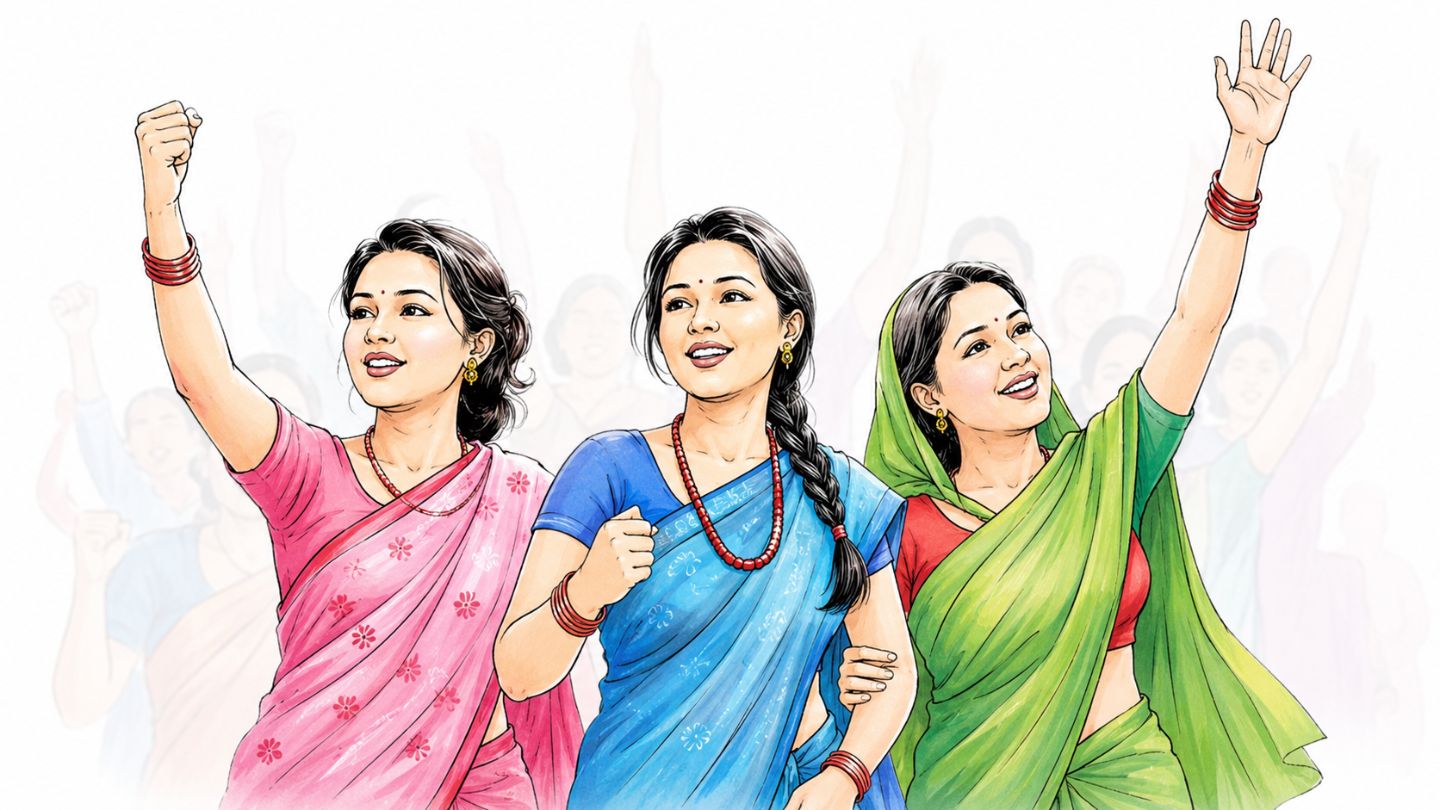
Nepali women have played an important role in promoting human rights, gender equality, community justice, and social reform. Their work can be seen in legal advocacy, anti-trafficking movements, survivor support, education, peacebuilding, local leadership, health rights, and campaigns against gender-based violence.
Nepal has made progress through constitutional guarantees and legal reforms. However, women and girls still face barriers linked to patriarchal norms, caste and class inequality, violence, economic exclusion, limited access to services, and unequal decision-making power. In this context, women’s activism has helped move human rights and social justice from policy language into public debate, community action, and institutional reform.
Table of Content
- Historical and Social Context
- Human Rights and Social Justice in Nepal
- How Nepali Women Have Advanced Human Rights and Social Justice
- Women’s Political Participation
- Challenges Faced by Nepali Women Activists
- Policy and Institutional Support
- Way Forward
- Conclusion
Historical and Social Context
Nepal’s social structure has been shaped by patriarchy, caste hierarchy, economic inequality, and unequal access to education and public power. These systems have affected women differently depending on caste, ethnicity, class, geography, disability, language, religion, and family background.
Traditional gender expectations still influence girls’ education, women’s mobility, property rights, employment, leadership, and family decision-making. Practices such as child marriage, dowry-related pressure, menstrual restrictions, domestic violence, and discrimination against widows or single women continue to affect some communities, although their form and intensity vary across regions and social groups.
The problem is not only cultural. Unequal access to land, finance, formal employment, legal support, quality education, health care, and political networks also limits women’s participation in public life. A wider discussion of social expectations is available in Gender Roles in Modern Society.
Human Rights and Social Justice in Nepal
The Constitution of Nepal provides a legal foundation for equality and inclusion. Article 18 guarantees equality before the law and prohibits discrimination on grounds including sex, caste, tribe, origin, physical condition, health condition, marital status, pregnancy, economic condition, language, region, ideology, and similar grounds. Article 38 specifically recognizes women’s rights, including equal lineage rights, safe motherhood and reproductive health, protection from violence and exploitation, proportional participation in state bodies, and equal rights of spouses in property and family affairs.
Nepal has also created institutions and laws to address women’s rights. The National Women Commission Act, 2074 gives the Commission responsibilities related to monitoring women’s rights, reviewing government policies and programs from the perspective of gender justice, and making recommendations for reform.
Despite these protections, implementation remains a major challenge. Legal rights do not automatically guarantee safety, equal access to justice, economic independence, or social acceptance. Women who experience violence or discrimination may face stigma, family pressure, weak institutional response, financial dependence, or limited access to legal aid. A related explanation of violence and social harm is available in Forms of Gender Violence in Society.
How Nepali Women Have Advanced Human Rights and Social Justice
1. Legal and Policy Advocacy
Women’s rights activists, lawyers, civil society leaders, and community organizers have helped push gender equality into Nepal’s legal and policy agenda. Their advocacy has contributed to debates on domestic violence, sexual violence, trafficking, citizenship rights, reproductive health, property rights, menstrual dignity, political participation, and access to justice.
Nepal’s legal system now recognizes marital rape as a crime, but legal experts and advocates continue to point out weaknesses in sentencing, reporting, investigation, and survivor protection. This shows an important reality: legal recognition is progress, but practical justice depends on enforcement, survivor support, and institutional accountability.
2. Anti-Trafficking and Survivor Support
Nepali women have been central to anti-trafficking work, rescue support, rehabilitation, public awareness, and survivor-led advocacy. Anuradha Koirala, founder of Maiti Nepal, is one of the best-known figures in this field. Maiti Nepal identifies her as its founder and notes that she was named CNN Hero of the Year in 2010 for her work against trafficking and exploitation.
Organizations such as WOREC Nepal have also worked on violence against women, trafficking prevention, women’s rights, and social justice. WOREC states that it began with the objective of preventing trafficking of women and children and advocating for survivors’ rights, later expanding its work to broader women’s rights concerns.
3. Grassroots Leadership and Community Justice
Many Nepali women have contributed to social justice outside formal political power. Women’s groups, community mediators, local representatives, teachers, health workers, legal volunteers, and human rights defenders have helped communities address violence, discrimination, harmful practices, and exclusion.
This grassroots leadership is especially important in rural and marginalized communities where formal legal services may be difficult to access. Women’s local leadership can help survivors find support, encourage families to educate daughters, challenge harmful norms, and connect communities with public services.
4. Education and Economic Empowerment
Education has been one of the strongest tools for women’s empowerment in Nepal. Women’s organizations and activists have worked to improve girls’ access to school, adult literacy, vocational skills, leadership training, legal awareness, and financial independence.
Economic empowerment is also linked to human rights. When women have income, skills, property rights, and access to finance, they are often better able to make decisions, leave abusive situations, support children’s education, and participate in community life. Related reading is available in Role of Education in Empowering Women and Empowering Women Through Financial Independence.
5. Menstrual Dignity and Health Rights
Nepali women have also contributed to rights-based discussions on menstruation, dignity, health, and bodily autonomy. Dr. Radha Paudel is a nurse, author, activist, and founder of the Global South Coalition for Dignified Menstruation. Her work has helped frame menstruation not only as a health issue but also as a matter of dignity, equality, education, and human rights.
This work is important because menstrual restrictions and stigma can affect girls’ education, mobility, health, self-confidence, and social participation. Addressing menstrual discrimination is therefore part of wider gender justice.
6. Child Rights and Social Care
Women’s leadership in Nepal has also contributed to child rights and social care. Pushpa Basnet founded the Early Childhood Development Center in 2005 to support children of incarcerated parents. ECDC describes itself as a registered non-governmental, non-profit organization founded by Basnet when she was 21.
Her work highlights an important part of social justice: protecting children affected by circumstances beyond their control. It also shows how women-led initiatives can address overlooked issues that sit between child rights, prison reform, education, and family welfare.
Women’s Political Participation
Women’s representation in public institutions has increased because of constitutional and legal inclusion measures. The 2015 Constitution helped strengthen women’s participation in federal, provincial, and local governance. Studies on women’s political participation in federal Nepal note that the Constitution secured a minimum level of women’s representation at the local level.
However, representation alone is not enough. Many women in politics still face barriers such as limited access to party leadership, unequal campaign financing, gender bias, social expectations, harassment, and exclusion from key decision-making spaces. Meaningful participation requires women not only to hold seats but also to influence policy, budget priorities, justice systems, and development planning.
Challenges Faced by Nepali Women Activists
Nepali women working for human rights and social justice often face multiple challenges:
-
Patriarchal resistance
Women who challenge social norms may face criticism, family pressure, threats, or attempts to silence their work. -
Limited resources
Many grassroots organizations depend on unstable funding, volunteer labor, and short-term projects, which can limit long-term impact. -
Weak implementation of laws
Even when rights are protected on paper, survivors and marginalized women may struggle to access justice, protection, and services. -
Intersectional discrimination
Dalit women, Indigenous women, Madhesi women, Muslim women, women with disabilities, LGBTQI+ people, single women, migrant women, and women from remote areas may face overlapping forms of discrimination. -
Safety risks for human rights defenders
Women who work on trafficking, gender-based violence, land rights, citizenship, caste discrimination, or accountability may face social and security risks. -
Digital and public harassment
Women leaders and activists increasingly face online abuse, misinformation, and reputational attacks, which can discourage public participation.
Policy and Institutional Support
Nepal has created several legal and institutional mechanisms to promote gender equality, including constitutional guarantees, the National Women Commission, anti-trafficking laws, domestic violence laws, local representation provisions, and gender-related public programs.
These mechanisms are important, but their impact depends on practical implementation. Stronger coordination is needed among federal, provincial, and local governments, courts, police, schools, health institutions, shelters, legal aid providers, and civil society organizations.
Good governance is central to this process. Human rights cannot be protected only through laws; they require accountable institutions, transparent procedures, accessible services, and public trust. Related context is available in Good Governance, Human Rights and Sustainable Development in Nepal.
Way Forward
Nepal can strengthen the contribution of women to human rights and social justice by focusing on the following priorities:
-
Improve implementation of laws related to violence, trafficking, discrimination, property rights, reproductive health, and access to justice.
-
Ensure safe, affordable, and survivor-sensitive legal aid, shelter, health care, and psychosocial support.
-
Increase funding and institutional support for women-led grassroots organizations.
-
Expand girls’ education, adult literacy, digital access, and vocational training.
-
Support women’s economic independence through skills, finance, property rights, and decent work.
-
Strengthen women’s meaningful participation in political parties, local governments, public institutions, and community decision-making.
-
Protect women human rights defenders from threats, harassment, and retaliation.
-
Address intersectional discrimination affecting women from marginalized communities.
-
Involve men and boys in changing harmful gender norms and preventing violence.
-
Use reliable data to monitor progress and hold institutions accountable.
Conclusion
Nepali women have made significant contributions to human rights and social justice through activism, legal reform, anti-trafficking work, education, community leadership, survivor support, political participation, and public advocacy. Their work has helped challenge discrimination, support vulnerable communities, and expand public understanding of equality and justice.
At the same time, gender equality in Nepal remains unfinished. Constitutional rights and legal reforms must be matched by strong implementation, accessible services, safe institutions, and social change at the community level. The contribution of Nepali women shows that human rights progress is not achieved only through policy; it is built through persistent local action, public courage, and the demand for equal dignity for all.







Comments 0
No comments yet. Be the first to start the conversation.