




Failing an exam can feel personal, even when the reason is practical. A score can trigger worry about your ability, your future, and how others will react. Still, the most useful way to treat a failed exam is as feedback: it points to a gap between what the exam required and what your preparation and performance delivered on that day.
If you searched “failed an exam what now” or “what to do when you fail an exam,” you likely want clear steps, not comfort lines. This exam recovery plan focuses on actions that students can apply across subjects and education systems. It stays non-commercial and avoids promises. The goal is simple: help you recover from a failed exam, rebuild your preparation, and walk into the next assessment with a better method and a calmer routine.
What a failed exam means and what it does not
A failed exam means your answers did not meet the marking standard in that format: timed, graded, and structured around a syllabus or learning outcomes.
A failed exam does not prove you lack ability. It does not prove you cannot learn the subject. It does not prove you will fail again. It shows that something in the system did not work: understanding, practice style, exam skills, time management, health, stress, or the match between your study method and the exam’s demands.
Exam score vs course grade vs progression
Start by clarifying what the exam controls in your setting:
-
A single test inside a course grade (with assignments and classwork still counting)
-
A final exam that determines pass/fail for the course
-
A standardized or board-style exam with fixed retake rules
This matters since the best next step changes with the stakes. If coursework still carries weight, you may recover the overall grade through later assessments. If the exam is the gate, your focus shifts to a retake exam study plan and exam-room skills.
Common reasons students fail after putting in time
Failure after long study hours often comes from one of these patterns:
-
Passive study that feels productive (re-reading notes, highlighting) yet does not train recall under pressure
-
Practice that does not match the exam (too easy, one-topic drills, no timing, no marking standard)
-
Weak exam technique (poor question order, misreading commands, running out of time)
-
Stress that disrupts recall and decision-making
A recovery plan starts by identifying which pattern fits your situation.
The first 48 hours: calm steps and clear facts
The first two days are for stabilizing and gathering information. Large decisions made in panic tend to create extra problems.
Quick checklist before you act
-
Confirm the official result and the grading breakdown, if available
-
Check if exam review is allowed (paper viewing, feedback session, rubric access)
-
Check retake or resit dates and registration rules
-
Check whether a recheck or remark process exists and the deadline
-
If you are in college, read your department rules on failed courses, credits, and progression
What to write down from memory
Capture what you can before details fade
Write short notes on:
-
topics that appeared
-
question formats (definitions, problem solving, essays, short answers)
-
where you lost time
-
where you froze or guessed
-
mistakes you noticed after leaving the room
These notes become useful evidence for diagnosis, even when the exam paper is not available.
Diagnose the result with an error log
Diagnosis is the turning point. If you skip it, the next attempt often repeats the same study habits with more stress.
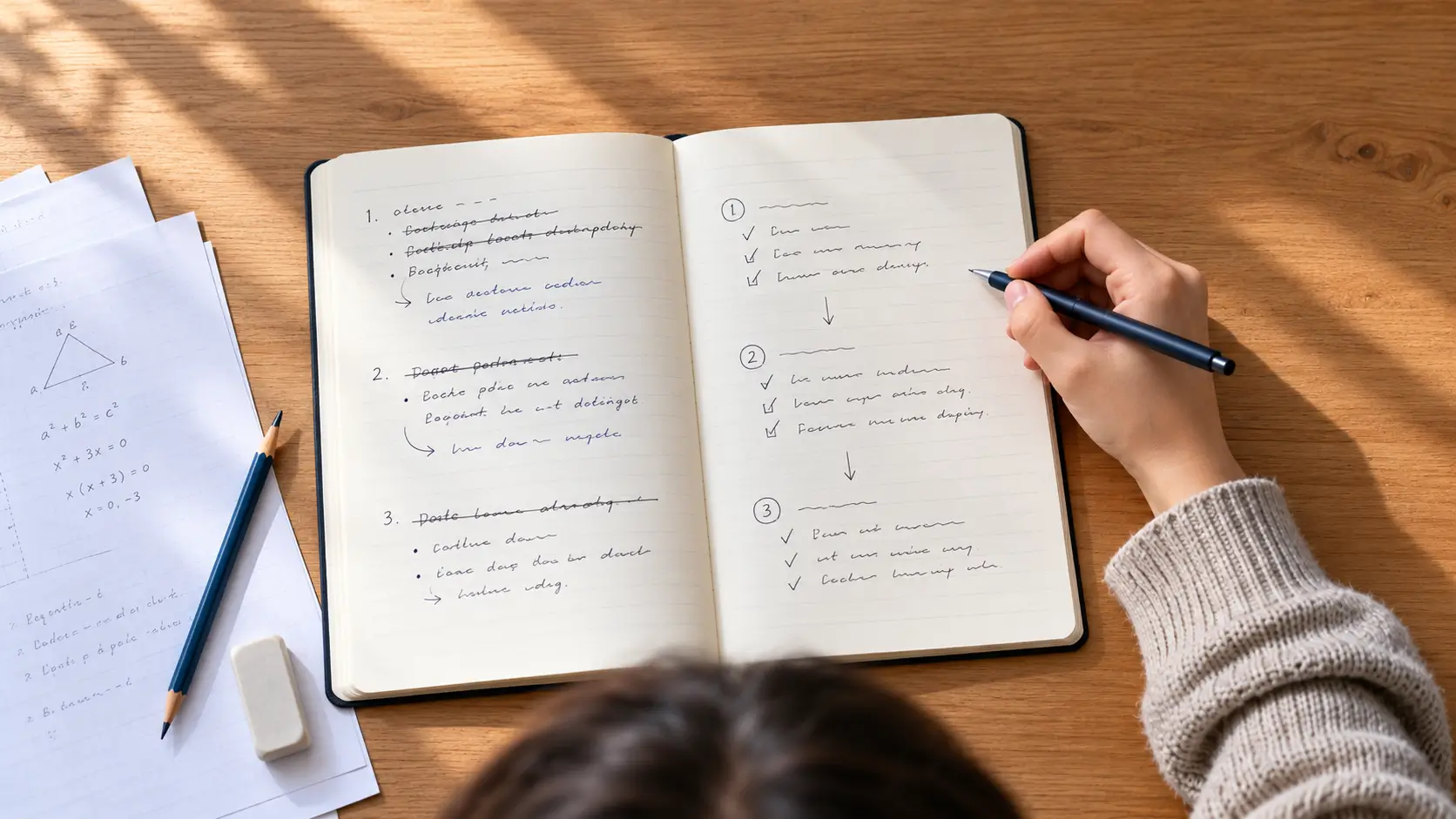
An error log is a simple record of lost marks and why they happened. It works for math, science, law, management, and theory subjects.
Four mistake types that cover most failures
-
Knowledge gap: you did not know the concept, definition, formula, or rule
-
Process gap: you knew it, yet could not apply it step by step
-
Reading gap: you misunderstood the question or missed a condition
-
Time gap: you spent too long on one part and lost easy marks later
For each error, add two lines:
-
What would have prevented this?
-
What is the next action?
Examples of “next action”:
-
build a short note page for one concept
-
practice 10 questions on one method
-
ask your teacher how the marking scheme awards steps
-
train timing with short drills
How to review feedback without guessing
If you can review the paper or rubric
Look for patterns, not single mistakes:
-
repeated errors tied to one topic
-
lost marks from missing steps (common in calculation-heavy subjects)
-
lost marks from weak structure (common in essays and short answers)
-
marks lost from not following command words like “compare,” “justify,” or “evaluate”
If the paper cannot be reviewed, use your memory notes, then compare them with the syllabus outcomes and past papers.
Talk to the right people early
Many students avoid talking after a failed exam. That delay can cost time and options.
Questions to ask your teacher or instructor
Go in with a short, practical list:
-
Where did I lose most marks: content, steps, structure, or interpretation?
-
What does a strong answer look like for this question type?
-
Which topics predict the next assessment most strongly?
-
Which resources match your exam style and marking standard?
This approach turns the conversation into a learning plan, not a debate.
Recheck, remark, retake rules
Rules vary by institution and country. Some systems allow a recheck of totals, some allow remarks for subjective questions, some allow neither. Use the official policy page and deadline from your school or board. If you are unsure, ask the exam office or course coordinator for the written rule.
Choose a recovery path that fits your situation
“What to do after failing a final exam in college” can look different from failing a midterm in school. Pick a path based on your rules, time, and the role of the exam in your program.
Retake, resit, or replacement assessment
A retake plan fits when:
-
the subject is required for progression
-
your error log shows fixable gaps
-
you can access past papers or exam-style question sets
A replacement assessment path fits when:
-
your institution allows it
-
your performance issue is narrow (one poor exam day, one format mismatch)
-
you still plan to fix the underlying study method for future courses
If your academic standing is affected
If the failed exam affects progression, scholarships, or academic standing, read your official policy and talk to an academic advisor early. Focus on facts: credit requirements, retake limits, and timelines.
Study methods that hold up under exam conditions
A strong retake exam study plan depends on methods that build recall and application, not recognition.
Research in learning science supports two core approaches for durable learning:
-
retrieval practice (practice testing)
-
spaced practice (review spread across time)
A widely cited review of learning techniques ranked practice testing and spaced practice among the most effective strategies for many learners and tasks.
Retrieval practice and practice testing
Retrieval practice means pulling information from memory before checking notes. It feels harder than reading. That difficulty is part of the point: exams demand retrieval.
Practical ways to do it:
-
Convert notes into questions. Answer without looking.
-
Use past papers as practice tests. Mark your work.
-
Use “blank-page recall”: write what you know from memory, then check and correct.
-
After marking, write one sentence on why each error happened.
If you studied a lot yet failed, this is often the first change that produces results. Passive study can create familiarity. Retrieval practice builds usable recall.
Spaced practice
Spaced practice means reviewing the same material across days and weeks.
A simple spacing rhythm:
-
learn today
-
review tomorrow
-
review after 3–4 days
-
review after one week
Spaced practice reduces the last-minute pile-up and gives your brain repeated chances to strengthen memory.
Interleaving for problem-solving subjects
Interleaving means mixing problem types in one practice set, not doing 20 of the same type in a row. This trains a skill many exams test: choosing the right method.
How to do it:
-
build practice sets with mixed question types
-
after each question, write a short note: “What clue told me which method to use?”
Interleaving is often helpful in subjects like mathematics, accounting, physics, and chemistry where method choice matters.
Practice first, then study the solution
Some students learn more when they attempt a question before reading the worked answer. That attempt reveals what they do not yet understand.
A safe way to apply it:
-
attempt 2–4 exam-style questions without notes
-
check the solution
-
redo the same question without looking
This prevents copying from becoming “practice.”
A practical 14-day exam recovery plan
This plan suits a short retake window. Adjust the time blocks to match your schedule.
Days 1–2: map the gaps
-
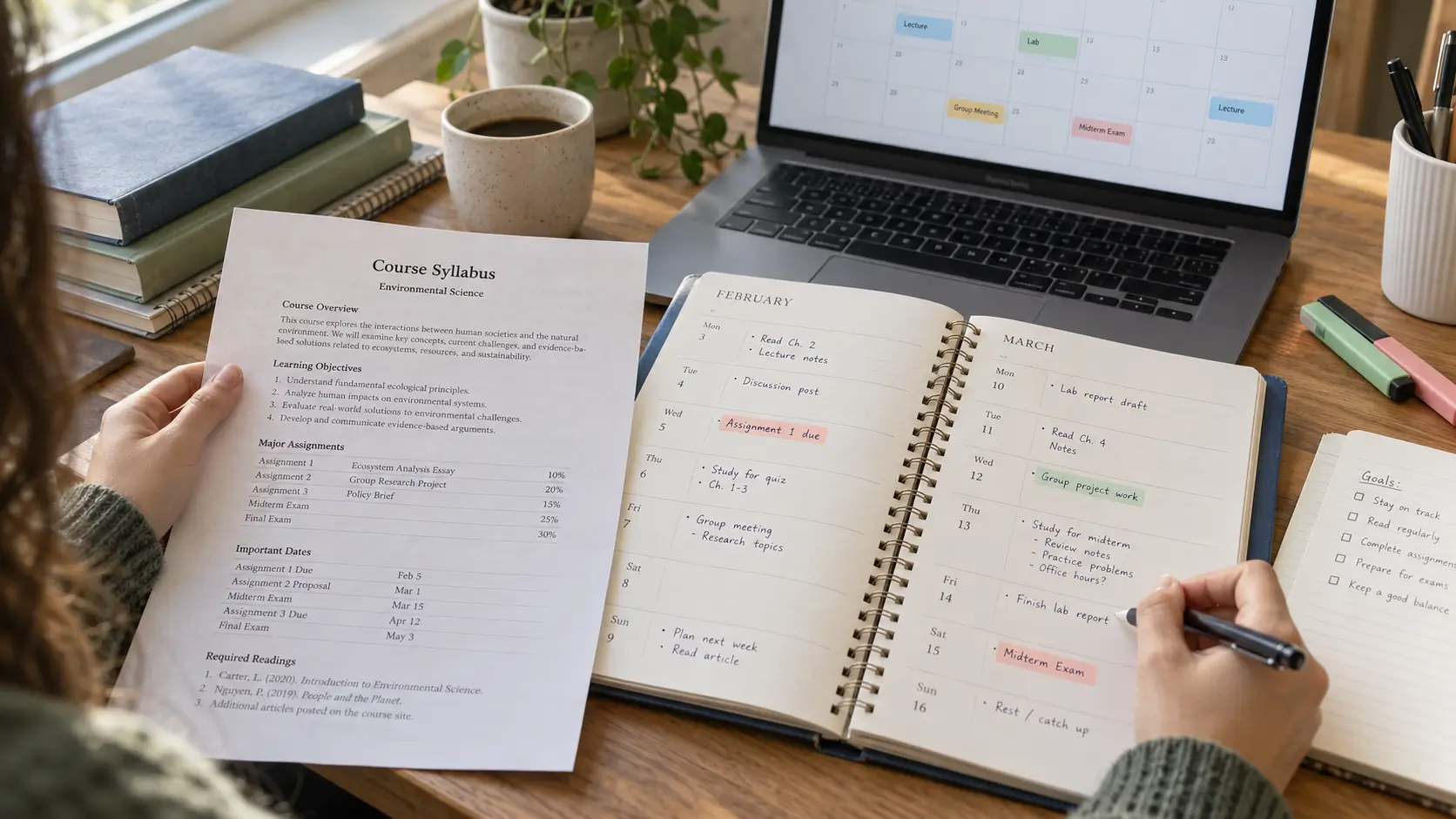
collect syllabus outcomes, past papers, rubrics, and teacher guidance
-
list topics in three groups:
-
weak: cannot start
-
shaky: start yet get stuck
-
steady: can solve under time
-
Pick one target: move weak topics into shaky. That is measurable progress.
Days 3–7: build recall and accuracy
Daily structure:
-
20–30 minutes: review one weak topic (short notes, one worked example)
-
45–60 minutes: retrieval practice (closed-book questions)
-
10–15 minutes: update your error log
Focus on quality. If a question goes wrong, redo a similar one the same day. Then redo it again two days later as spaced practice.
Days 8–12: mix topics and add timing
-
shift to mixed practice sets (interleaving)
-
add timing in small steps: 10-minute drills, then 20, then 40
-
train question choice: secure easy marks early, then return to heavy items
This stage prepares you for the real exam environment.
Days 13–14: full simulation and final fixes
-
sit one full past paper under exam rules
-
mark it strictly
-
list your top recurring errors and drill them
This step turns your plan into performance under time pressure.
Exam-room skills that stop easy marks from leaking
Students can lose marks through avoidable habits even with good preparation.
Time strategy and question order
A simple three-pass method works across subjects:
-
pass 1: answer questions you can complete quickly
-
pass 2: medium questions
-
pass 3: heavy questions
This protects you from spending most of the time on one hard question and losing easy marks.
Read the question the way the marker reads it
Reading gaps can look like knowledge gaps. Build a habit in practice:
-
underline the command word (define, compare, justify, calculate)
-
write a one-line plan before starting
-
check the plan against the command word before moving on
This can recover marks quickly, especially in short-answer and essay exams.
Test anxiety and memory freezes
Test anxiety is common in students and has been studied for decades in education psychology. Anxiety can interfere with attention and recall, which matters in timed exams.
Quiet calming skills you can use in the exam
-
Slow exhale breathing: breathe out longer than you breathe in
-
Task focus language: give your brain a simple instruction (“Read the command word. Write two points.”)
-
Posture reset: feet flat, shoulders down, jaw relaxed
These steps do not replace preparation. They protect access to what you already know.
When extra support makes sense
Consider extra support when:
-
anxiety leads to repeated freezing across exams
-
sleep is poor for weeks
-
study avoidance keeps growing
Many institutions offer counseling and learning support. If anxiety is severe or persistent, a licensed professional can help.
Sleep, procrastination, and attention traps
A recovery plan can fail if your daily routine works against memory and focus.
Sleep and academic performance
Sleep supports attention, learning, and recall. Research reviews link poor sleep habits with lower academic performance in student populations. Treat sleep as part of your study plan, not a reward after studying.
Practical sleep targets:
-
steady sleep and wake times through the week
-
no all-night study sessions before a retake
Procrastination patterns and fixes
Procrastination is a common self-regulation problem in students. It often grows when tasks feel unclear, large, or emotionally loaded.
Practical fixes:
-
lower the starting barrier: open the past paper and do one question
-
use short timers: 20 minutes work, 5 minutes break
-
remove friction: keep materials ready, keep the phone away during work blocks
The goal is repeated starts. Repeated starts build consistency.
A mindset that supports action, not slogans
Mindset can support effort, yet it cannot replace training. Keep the mindset practical and tied to your plan.
Growth mindset: what to take from the research
Growth mindset research suggests that changing how students think about ability can support learning behavior in certain settings, with outcomes varying by context. The useful takeaway for an exam recovery plan is simple: treat skills as trainable, then train them with methods that match the exam.
Self-respect after a failure
A failed exam can trigger shame. Shame often leads to avoidance. A more useful response is respect for facts:
-
accept the result without turning it into a label
-
diagnose the cause
-
follow the plan
That approach keeps you moving.
Sources used for the evidence base
-
Dunlosky, J., Rawson, K. A., Marsh, E. J., Nathan, M. J., Willingham, D. T. (2013). Improving Students’ Learning With Effective Learning Techniques. Psychological Science in the Public Interest.
-
Roediger, H. L., Karpicke, J. D. (2006). Test-Enhanced Learning. Psychological Science.
-
Cepeda, N. J., Pashler, H., Vul, E., Wixted, J. T., Rohrer, D. (2006). Distributed Practice in Verbal Recall Tasks. Psychological Bulletin.
-
Rohrer, D., Taylor, K. (2007). The Shuffling of Mathematics Problems Improves Learning. Instructional Science.
-
Hembree, R. (1988). Correlates, Causes, Effects, and Treatment of Test Anxiety. Review of Educational Research.
-
Hershner, S., Chervin, R. (2014). Causes and Consequences of Sleepiness Among College Students. Nature and Science of Sleep.
-
Steel, P. (2007). The Nature of Procrastination: A Meta-Analytic Review. Psychological Bulletin.
-
Yeager, D. S., et al. (2019). A National Experiment Reveals Where a Growth Mindset Improves Achievement. Nature.
Conclusion
If you fail an exam, the fastest way forward is a clear sequence: get the facts, diagnose the cause with an error log, then change your preparation with retrieval practice, spaced review, and exam-style practice under time limits. Add simple exam-room routines for time and question reading, and protect sleep and daily focus. This is how you move from a painful score to a trained retake.
FAQs
1) What to do when you fail an exam and feel stuck?
Start with facts and one small action. Confirm retake rules, write memory notes, then complete one short practice set. Action reduces mental noise faster than rumination.
2) Failed an exam after studying a lot. What should change first?
Shift from passive review to retrieval practice. Use closed-book questions, mark your work, then write an error log entry for each mistake.
3) How to make a retake exam study plan when time is short?
Use a 14-day structure: map gaps (days 1–2), retrieval practice with spaced review (days 3–7), mixed timed sets (days 8–12), then a full simulation (days 13–14).
4) How do I stop running out of time in exams?
Train timing in practice. Use a three-pass strategy in the exam: easy marks first, medium next, heavy last. Practice that order with past papers under a timer.
5) How to recover from a failed exam if anxiety causes freezing?
Pair preparation with calm skills: slow exhale breathing, task-focused self-talk, and timed simulations. If freezing repeats across exams, seek support through your institution or a licensed professional.



Comments 0
No comments yet. Be the first to start the conversation.