




The Biggest Dilemma of Life
You have either just finished your Grade 12 examinations or you are waiting for the results. Society, family, and relatives have the same question: “What next?”
Doctor, engineer, Chartered Accountant (CA), or straight to study abroad? Are these the only options?
In my 15 years of experience in career counselling and the education sector, I have met thousands of students. Most 18-year-olds are under deep mental stress (anxiety) and confusion. Some want to fulfil their parents’ dreams, while others try to do whatever their friends are doing.
But the bitter truth is this: in school, we are never taught “how to think” about career choices. We are only drilled on “what to study.”
In this article, I will not give you any “motivational” talk. I will speak based on facts, psychology, and the current reality of the global market (market reality). A decision made at 18 can shape the next 40 years of your life. That is why you must decide strategically, not emotionally.
The 18-Year-Old Brain and Decision-Making
First, you must understand yourself. Science says the human brain’s “prefrontal cortex” (Prefrontal Cortex)—the part that handles reasoning, planning, and analysing long-term outcomes—does not fully develop until around the age of 25.
What does that mean?
It means that at 18, many of your decisions may be driven by immediate emotion, peer pressure, or fear.
What does research say?
According to a study from the University of Rochester, adolescents make risk-taking decisions differently than adults. So, feeling “I have passion for this” at 18 may not always be the full truth. Your interests are changeable.
Problem:
In a context like Nepal, we are pressured at 18 to choose “one path for life.”
Solution:
Do not treat your decision as “final.” A career is not a straight line; it is a journey. What you choose today may not work for you five years from now. So, maintaining flexibility is the smartest approach.
The Myth and Reality of “Passion”
The advice we always hear is: “Follow your passion.” But in my experience, for an 18-year-old, this can be one of the most dangerous pieces of advice.
Why?
-
At 18, you have limited exposure to different fields, so your “passion” may be based on incomplete information.
-
Passion alone does not pay bills. The market must have demand for that passion.
So, what should you do?
The well-known author Cal Newport, after deep research, writes in his book So Good They Can’t Ignore You: “Don’t follow your passion; develop rare and valuable skills. Passion comes after mastery.”
Practical method (The Practical Method):
You should view your career at the intersection of three circles (known in Japanese as “Ikigai,” but we will adapt it to our context here):
-
What are you good at? (What are you good at?)
Examples: writing, mathematics, speaking with people, coding, management. -
What does the world need? (What the world needs?)
Which skills are in demand in the market? -
What will people pay for? (What people will pay for?)
This is the most important one.
Example:
You may love writing poetry (passion). But in Nepal, it is difficult to make a living only by writing poetry (market reality). However, if you have writing skill and you connect it with “digital marketing” or “content writing,” it can become a strong career.
The Lie of “Scope”: It Is in the Person, Not the Subject
In Nepal, the word hanging on the tongues of students and parents is “scope.”
“Study science, it has scope.”
“Study IT, it has scope.”
I want to break this misconception. No subject has “scope” on its own. Scope exists within the student.
If you look at the reality:
Nepal has thousands of unemployed engineers.
Thousands of management graduates are working for low salaries.
Yet some people study agriculture or arts, earn in the millions, and create real impact in society.
What is the real truth?
The market does not buy your “degree.” The market buys your “problem-solving skill.” If you are a topper but cannot work with a team in an office, you have no scope. If you are an average student but can learn quickly and stay updated with technology, your scope is immense.
University Degree and Skills: What Should You Prioritise?

This is one of the biggest debates of the 21st century. Do you need a degree?
My answer: yes, you do. But it is not enough on its own.
In a developing country like Nepal, a degree works like a “safety net.” For many government jobs, corporate jobs, and even for going abroad, a degree is a basic eligibility criterion. So, education cannot be rejected entirely.
But the mistake happens here:
Students spend 3 to 4 years only reading college course books. When they enter the market, they have “knowledge” but no “skills.”
Five “high-income skills” you should build between ages 18 and 22:
-
Communication skills: The ability to speak and write clearly. This separates you from the crowd.
-
Sales and marketing: Whether you are a doctor or an engineer, you must know how to sell your service or yourself.
-
Data literacy: This is the age of data. Basic Excel and data understanding are essential.
-
Digital literacy: Not just using social media, but using it for branding. Knowing how to use AI tools (such as ChatGPT).
-
Financial literacy: Not only how to earn money, but how to manage and invest it.
The Study Abroad Craze: Desire or Compulsion?
Right now, after Grade 12, 90% of students plan “abroad”—Australia, the USA, Canada, or Europe.
As a responsible writer, I will not say going abroad is “wrong.” Global exposure can be valuable. But do not go abroad just by following the crowd (Fear of Missing Out - FOMO).
Research checklist (Research Checklist):
-
Are you going to study or to earn? If it is only to earn, life there is not as easy as people imagine. At 18, living away from family and balancing hard work with study requires strong mental resilience.
-
ROI (Return on Investment): If you spend 3 to 4 million NPR, will the investment of money and time return or not?
-
Opportunities are also being created in Nepal. Through outsourcing, freelancing, and the startup ecosystem, more young people are earning in dollars while living in Nepal.
Go abroad, but only with a concrete plan. The mindset of “everyone went, so I will go too” can push you toward depression.
Gap Year: Why Is It Treated as Forbidden in Nepal?
In Western countries, taking one “gap” year after Grade 12 is normal. But in Nepal, it is viewed negatively as “a wasted year.”
I want to say to both parents and students: if you are confused, taking one gap year is a thousand times better than wasting four years and millions of rupees in the wrong field.
What to do in a gap year?
-
Do an internship: Go to different offices and learn how work is done.
-
Take short-term courses.
-
Travel.
-
Do volunteering.
These help you understand the world and discover what you actually like.
The Financial Side: Salary vs Growth
At 18, many people focus on “earning quick money.” This is natural. But in the early stage of a career (ages 20 to 25), chase learning, not money.
Rule:
Earn or Learn. If it is neither, leave it.
Even if the salary is low at the beginning, if there is a chance to learn (mentorship), that job is better than a high-paying job where you learn nothing. The age from 20 to 30 is the time for “investment.” The skills you build then give “compounding” returns after 30.
Mental Health and Social Pressure
Your neighbour’s son may have secured engineering admission, your friend may have gone to Australia. You may feel: “I am falling behind.”
This feeling is called “comparative anxiety.” Remember, life is not a race; it is a marathon. Some graduate at 22 and spend five years searching for a job. Some start at 25 and succeed by 28.
You have your own timeline. Others’ success does not define your failure. Prioritise your mental health. Talk openly with your parents. If they do not understand, seek help from a career counsellor or experts.
Some Emerging Fields for the Future
As a supplementary section to the article, I am discussing some fields whose demand will be high in Nepal and the global market over the next 10 years. This can help you when choosing a subject.
AI & Data Science
The coming era is AI. But this does not mean everyone must become a programmer. Knowing how to apply AI in your own field (whether agriculture or law) will be a major skill. Fields like “prompt engineering” and “data analytics” will grow significantly.
Sustainability & Green Energy
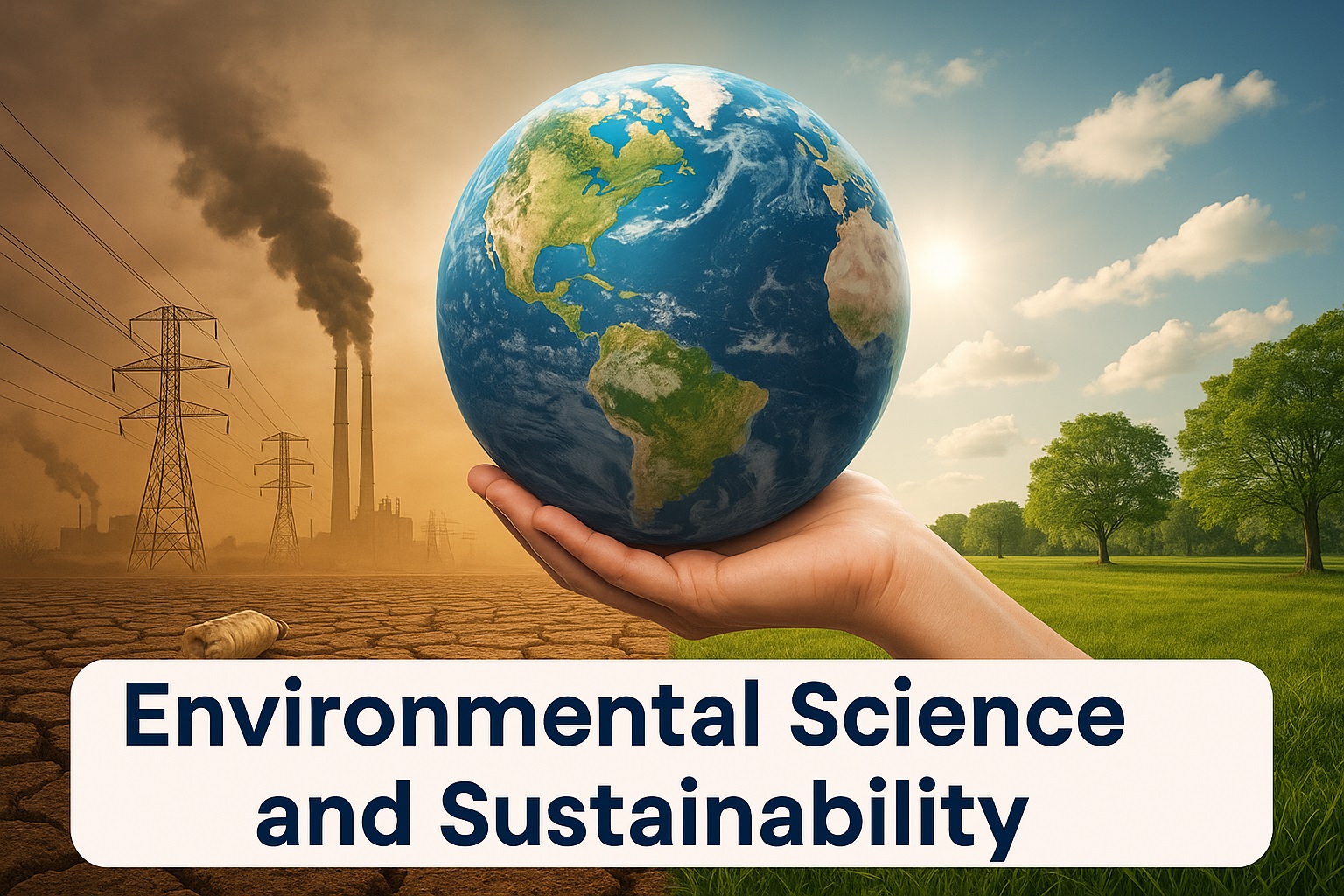
With the impact of climate change, the world is moving toward clean energy. In Nepal, there will be strong demand for experts in hydropower, environmental science, and sustainable agriculture.
Mental Health & Care Economy
The more people connect with technology, the more loneliness and mental challenges are increasing. Job opportunities will rise sharply in psychology, counselling, and geriatric care.
Digital Content and the Creator Economy
Instead of traditional advertising, companies now prefer marketing through influencers and content creators. Video editing, storytelling, and digital branding have become serious careers.
Agri-Preneurship
In Nepal’s context, there is strong potential not in traditional farming, but in technology-friendly modern agriculture. People working in organic production, food packaging, and supply chain management can earn well.
Practical FAQs for Readers (FAQs)
Here are answers to some questions I often hear from students in seminars.
I do not want to study science, but my parents pressure me. What should I do?
This is a very common problem. Your parents’ concern is for your “secure future.” You must help them understand—with data and examples—how a safe and successful career can be built outside science as well. Do not solve it through conflict; solve it through conversation. If needed, arrange a meeting with a career counsellor.
My studies are weak (low GPA). Is my career finished?
Not at all. Your marksheet does not fully measure your intelligence. Many successful people in the world were average students. Now you must beat weak academic numbers with skills and hard work.
I do not even know what to study. I am confused.
In such a situation, it can be safer to choose broader subjects such as liberal arts or management, which keep multiple pathways open later. Or, as stated above, take a short gap and explore different options.
Conclusion
In the end, at 18 you do not need to prepare the full map of your life. You only need to know what the “next right step” is.
Action plan (Action Plan):
-
Self-assessment: Sit calmly. Write down your interests, strengths, and weaknesses.
-
Deep research: Not only YouTube and Google—meet people who are working in the field. Use platforms like LinkedIn.
-
Skill up: Along with college study, start learning at least one additional technical or practical skill.
-
Networking: Build good company. Stay close to friends who think like you and want to grow.
Your future is in your hands. Do not be afraid. Do not panic. You should not fear making mistakes, but it is frightening not to learn from mistakes. This is your time—use it well.
Final suggestion:
After reading this article, close your eyes for a moment and think: “What do I truly want?” The answer is not outside; it is within you.
(Note: This article has been prepared for educational and career guidance purposes. Before making any serious decision, it is appropriate to consult experts in the relevant field directly.)





Comments 0
No comments yet. Be the first to start the conversation.