



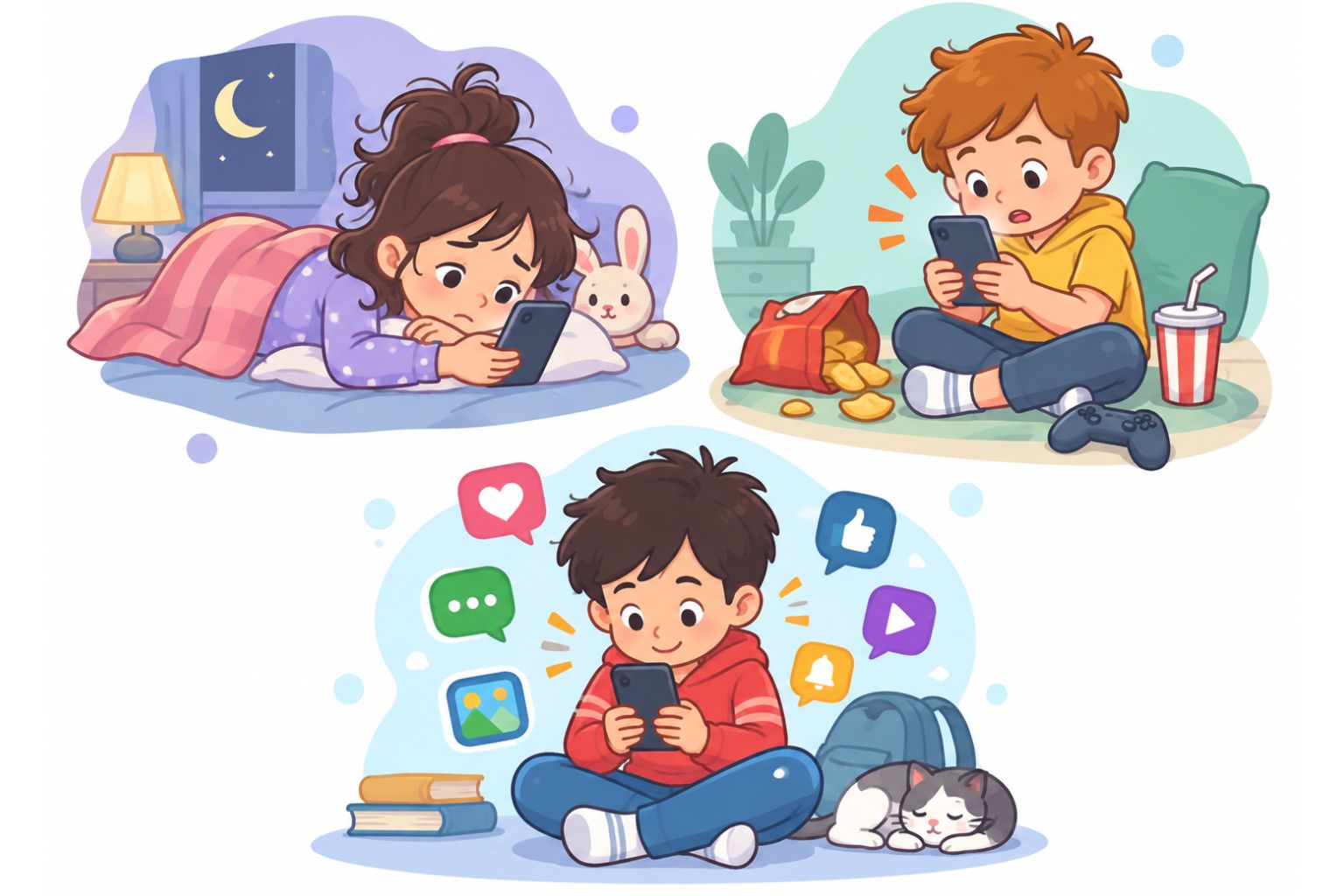
Rising Smartphone Addiction in Children: Impact on Learning and Need for Balanced Use
Smartphones and the internet, which became alternative means of learning during the COVID-19 pandemic, have now become major sources of entertainment and addiction among children. According to the experiences and analyses of stakeholders who have worked in education administration for many years, uncontrolled use of technology is having a serious impact on children’s learning, health, and creativity.
COVID-19 Pandemic and the Expansion of Technology
The teaching system, which once relied on dusters and blackboards, gradually progressed to whiteboards, computer labs, multimedia projectors, and now smartphones, tablets, and artificial intelligence (AI).
When schools were closed because of the COVID-19 pandemic, the government gave priority to online classes, digital content, and mobile-based learning. Even parents with limited financial resources made considerable efforts to provide mobile phones and internet access so that their children could continue learning.
However, even after schools reopened and regular classes resumed following the pandemic, children did not give up their mobile phones. Devices initially provided for education gradually became tools for social media, short videos, online games, and entertainment.
Negative Impact on Learning and Health
Excessive screen use has created additional challenges for children’s physical, mental, and social development. Spending long periods on mobile phones has been associated with increased eye strain, sleep problems, physical inactivity, obesity, and neck and back pain. Unsafe digital use has also increased the risks of cyberbullying, online fraud, and access to inappropriate content.
Teachers have also observed declining interest in studies, reduced concentration, less handwriting practice, and a growing tendency among students to look for short answers.
Although tools such as Google and AI can be useful, complete dependence on them is weakening children’s analytical thinking and creativity. Some students have reached a point where they struggle to pay attention even in the classroom, become irritable, and lose patience.
Global Practices and the Reality of Technology
In recent years, schools in various countries have begun reconsidering the use of digital devices. Some countries have tightened restrictions on personal mobile phone use in schools while placing greater emphasis at the primary level on handwriting, reading books, direct interaction between teachers and students, and learning through play.
Technology itself is not education; it is only a tool that can make learning easier. It has become clear that simply making technology available does not automatically improve the quality of education.
International organizations have also emphasized that educational usefulness and balance should be the basis for the use of digital technology. Therefore, rather than focusing only on whether technology should or should not be used, there is a need for clear policies on where it should be used, how much it should be used, and for which age groups.
Solutions and the Role of Stakeholders
The problem seen among children is not their weakness alone. Families, schools, and society also have an influence. Along with urbanization, the shortage of playgrounds and child-friendly spaces, as well as the habit of parents giving children mobile phones to keep them quiet, has also contributed to the problem.
A joint effort by the state, schools, and families is essential to address this challenge:
-
Education Policy: Clear policies and practical measures should be developed so that technology remains a support tool for learning. Reading books and creative activities should be given priority.
-
Local Governments: Local governments should focus on developing child-friendly public spaces, playgrounds, and libraries.
-
Role of Parents: Families need to increase communication and establish practices such as “No-Phone” routines at home.
Technology cannot be completely rejected in the digital age, but developing a culture of responsible and thoughtful use has become necessary. Only through appropriate policies, healthy habits, and balanced use can children be protected from becoming dependent on technology while guiding their intellectual and emotional development in the right direction.






Comments 0
No comments yet. Be the first to start the conversation.