



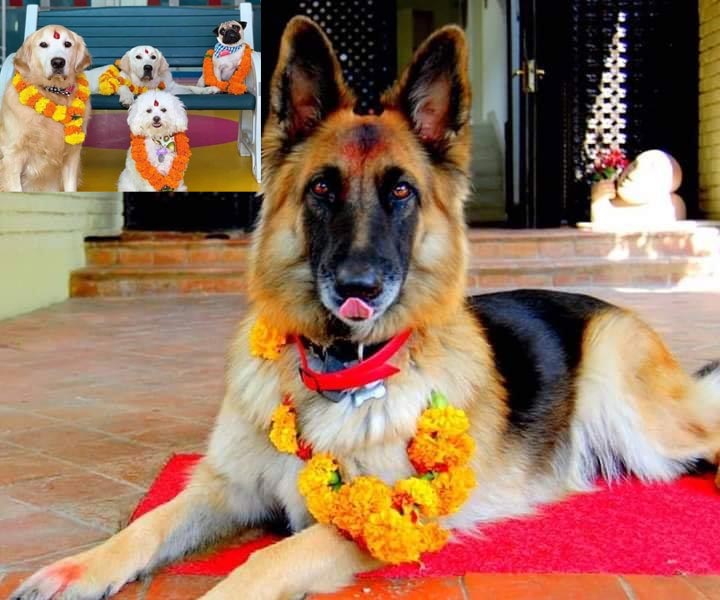
Kukur Tihar is celebrated on the second day of Tihar (Yamapanchak), Nepal's second-largest cultural festival. Observed annually on Chaturdashi, the fourteenth lunar day of the waning moon in the month of Kartik, the festival honors dogs, which are regarded as among humanity's most loyal and dependable companions.
On this day, people traditionally worship dogs with special respect and offer them various foods.
The five-day Tihar festival highlights the interconnected relationship between nature, animals, birds and human beings. Just as crows, regarded as messengers, are worshipped on the first day, dogs are honored on the second day as protectors of homes and communities, obedient helpers and selfless companions.
The tradition is not limited to pet dogs. Community and street dogs are also honored by applying red tika to their foreheads and placing marigold garlands around their necks.
Kukur Tihar encourages people to put compassion, gratitude and peaceful coexistence with animals and birds into practice.
Cultural and Mythological Significance
In Nepali culture and Sanatan Hindu traditions, dogs are regarded not merely as domestic animals but also as symbols of righteousness, justice and protection.
According to Hindu mythology, dogs are considered the beloved messengers and gatekeepers of Yamaraj, the god of death and justice.
There is a religious belief that worshipping and feeding dogs on Kartik Krishna Chaturdashi pleases Yamaraj and protects families from fear and misfortune.
Several important stories and beliefs associated with dogs are found in Hindu mythology and historical traditions.
1. The Mahabharata and the Symbol of Dharma
According to the Mahaprasthanika Parva of the Mahabharata, when the Pandavas began their journey toward heaven through the Himalayas, a dog accompanied Dharmaraj Yudhishthira from the beginning until the end.
During the journey, Draupadi and Yudhishthira's four brothers died, but the dog remained by his side.
When Lord Indra eventually arrived in his chariot to take Yudhishthira to heaven, he informed Yudhishthira that the dog could not accompany him.
However, Yudhishthira refused to enter heaven if doing so meant abandoning the faithful creature that had accompanied him throughout the journey.
According to the epic, Dharma, who had taken the form of the dog, then revealed his identity and praised Yudhishthira for his unwavering commitment to righteousness and compassion.
2. Shyama and Shabala in Vedic Tradition
The Rigveda and Puranic traditions contain references to two four-eyed dogs named Shyama and Shabala, associated with Sarama, the divine female dog.
According to religious belief, these dogs guard the routes and gates leading to Yamaloka, the realm of Yama.
3. Dogs as the Vehicle of Lord Bhairava
In Shaivite and Tantric traditions, the dog is regarded as the vehicle (vahana) of Lord Bhairava, a fierce and protective manifestation of Lord Shiva.
Particularly in temples throughout the Kathmandu Valley and Nepal's hilly regions, representations of dogs can be found alongside images of Bhairava.
Because dogs are associated with Bhairava, there is a traditional belief that worshipping them provides protection from unseen fears and dangers.
Kukur Tihar Worship Rituals and Traditions
The principal rituals of Kukur Tihar are generally performed in the morning.
Both families that keep dogs and those without pets celebrate the festival according to their circumstances and traditions.
1. Morning Cleaning and Preparation
People traditionally wake up early and clean their homes and courtyards.
Families with pet dogs may bathe or clean them before the worship ceremony.
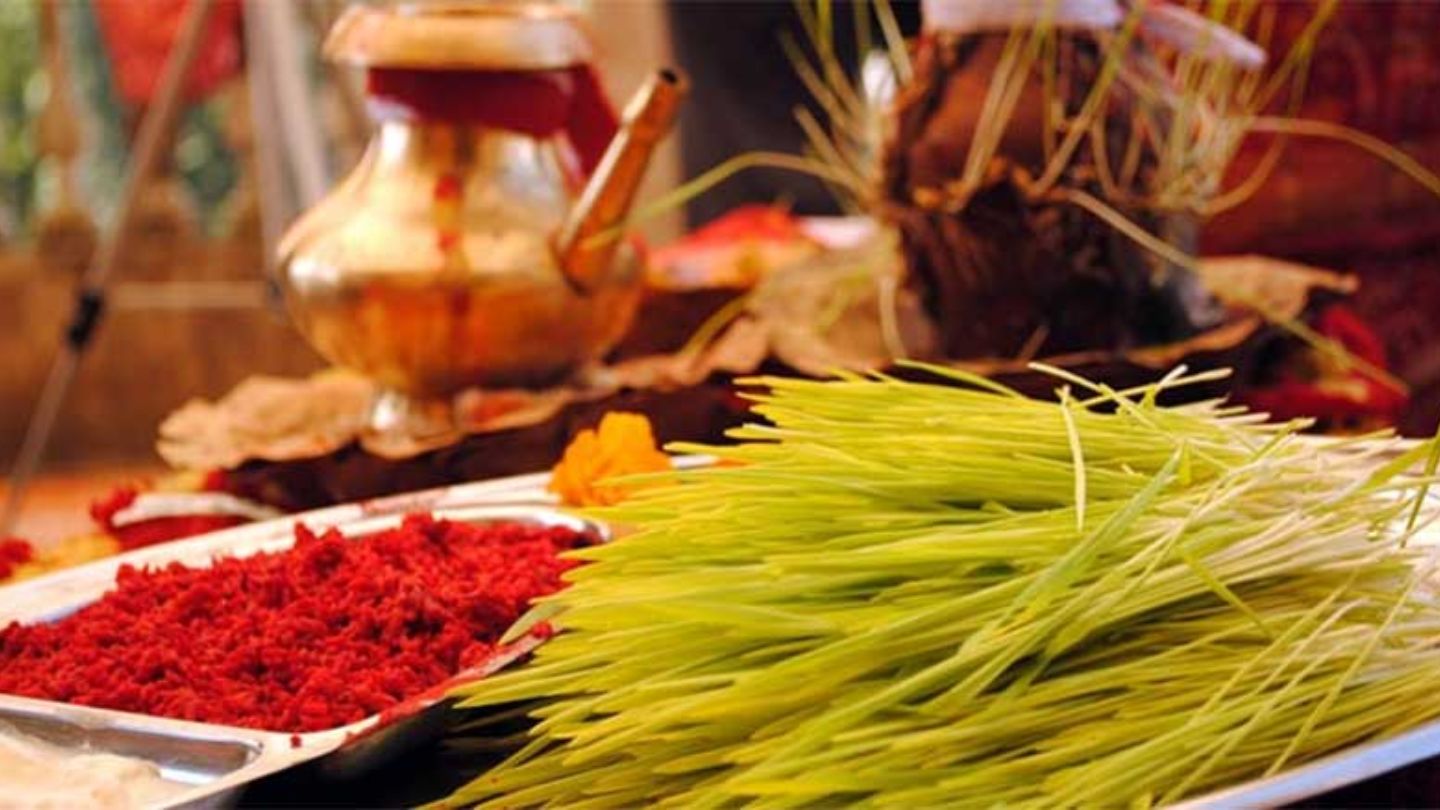
A worship plate is prepared with ritual materials such as vermilion or saffron, akshata (uncooked rice used in worship), an oil lamp, a kalash (ritual water vessel), and garlands made from marigold or globe amaranth flowers.
2. Offering Tika and Flower Garlands
An oil lamp is lit, and the dog is worshipped according to traditional rituals.
Red tika is applied to the dog's forehead, and a marigold garland is placed around its neck.
These gestures symbolize respect, affection and gratitude toward dogs.
3. Offering Special Food
After the worship ceremony, dogs are traditionally offered foods considered special or nutritious.
Common offerings mentioned in the tradition include milk, yogurt, rice, meat, eggs, roti and biscuits.
The practice reflects people's desire to express gratitude and affection toward dogs by offering them food.
4. Honoring Community and Street Dogs
One of the most distinctive aspects of Kukur Tihar is that people who do not keep dogs at home also participate in the celebration.
They visit streets, alleys and neighborhoods to offer tika, flower garlands and food to community dogs.
The sight of dogs walking through neighborhoods wearing flower garlands reflects the goodwill and compassion toward animals associated with the festival.
5. Special Recognition by Security Agencies
Special ceremonies are also organized at canine divisions and dog training centers of the Nepal Police and Armed Police Force, Nepal.
Trained dogs that have performed important duties in criminal investigations, explosive detection and disaster rescue operations are traditionally honored with medals, garlands and special food.
Practical, Social and Human Significance
Beyond religious beliefs, dogs have played an important role in the development of human civilization.
Dogs are widely regarded as the earliest animals domesticated by humans, with their association extending back to the transition from early human societies toward agriculture and animal husbandry.
1. Protection of Homes and Property
Since ancient times, dogs have helped farmers protect their homes, livestock shelters, crops and domestic animals from thieves and wild animals.
Their ability to remain alert and guard homes at night has established them as dependable protectors.
2. Crime Prevention and Disaster Management
Dogs have highly developed senses of smell and hearing, which are considerably more sensitive than those of humans.
Because of these natural abilities, security agencies train dogs to assist in investigations involving murder, theft, drug trafficking and the detection of explosives.
Trained dogs also play an important role in disaster response.
During natural disasters such as earthquakes, floods and landslides, search-and-rescue dogs help locate people trapped beneath debris and support efforts to rescue survivors.
3. Mental Health and Emotional Companionship
Dogs can respond to their owners' emotions and demonstrate affection and companionship.
Their presence can help reduce feelings of loneliness and emotional stress.
For people with visual impairments and certain physical disabilities, specially trained assistance dogs can also provide guidance and support in daily life.
4. Promoting Animal Welfare
Kukur Tihar conveys the message that compassion toward animals and birds should not be limited to a single day of worship.
Instead, animals should be treated with kindness throughout the year.
The festival also helps promote awareness of responsible animal care, including:
-
Vaccinating pet and community dogs against rabies.
-
Providing medical treatment to injured dogs.
-
Preventing mistreatment of street and community dogs.
-
Encouraging compassionate and responsible behavior toward animals.
Other Festivals and Traditions Observed on the Same Day
Narak Chaturdashi is also observed on Kartik Krishna Chaturdashi, the same lunar day associated with Kukur Tihar.
The main cultural activities performed from morning to evening are outlined below.
|
Festival or Tradition |
Main Significance |
Traditional Activities |
|---|---|---|
|
Kukur Tihar |
Honoring loyalty, protection and companionship |
Applying tika and flower garlands to dogs and offering them special food |
|
Narak Chaturdashi Ritual Bath |
Symbolically removing laziness, impurity and negativity |
Applying sesame oil before sunrise and bathing with apamarga (Datiwan) leaves |
|
Narak Bagaune (Floating Oil Lamps) |
Symbolically removing darkness and bringing light and purity into life |
Lighting an oil lamp on a leaf plate and floating it in a river or stream after the morning bath |
|
Preparation for Lakshmi Puja |
Making homes and courtyards clean and bright |
Painting or decorating homes, preparing marigold garlands and installing decorative lights |
Narak Chaturdashi Ritual Bath
On Narak Chaturdashi, there is a tradition of bathing before sunrise after applying mustard or sesame oil to the body.
According to popular belief, this ritual helps maintain physical well-being and removes laziness.
Narak Bagaune: Floating Oil Lamps
After bathing, some people traditionally light an oil lamp on a leaf plate made from sal leaves and allow it to float along a river, stream or other water body.
This practice is popularly known as Narak Bagaune, meaning the symbolic sending away of Narak.
The ritual represents the removal of darkness and impurity and the welcoming of light and purity into life.
Kukur Tihar's Message of Compassion and Coexistence
As the second day of Yamapanchak, which begins with Kaag Tihar, Kukur Tihar and Narak Chaturdashi encourage people to value loyalty, show sensitivity toward animals and birds, and maintain both external and internal cleanliness.
At the end of the day, Nepali homes and courtyards are decorated with lights and flower garlands in preparation for the third day's celebrations of Gai Tihar and Lakshmi Puja.




Comments 0
No comments yet. Be the first to start the conversation.