



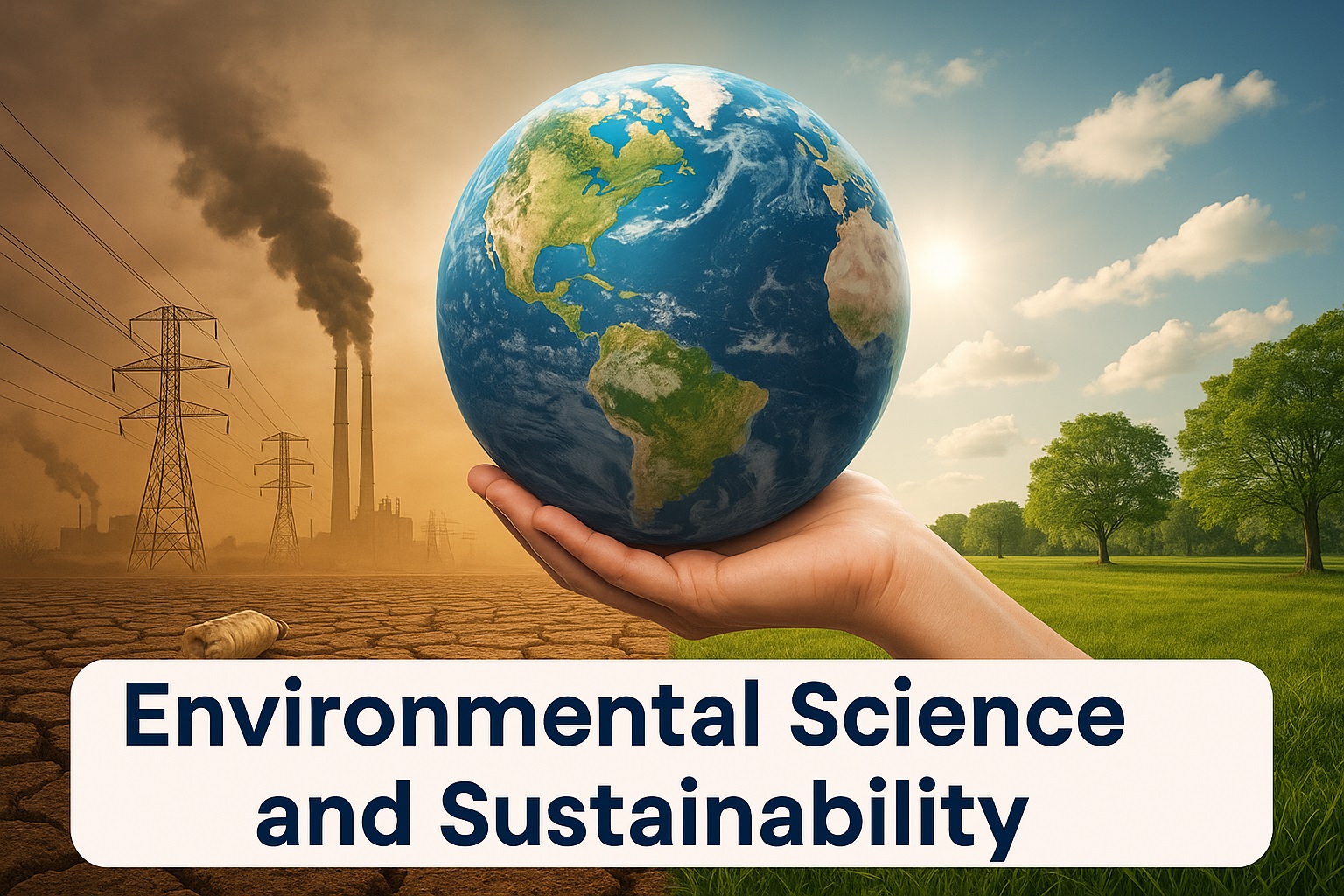
Growing Interest in Environmental Science, but Lack of Jobs Leaves Future Uncertain
In recent years, the number of students studying environmental science at Nepal’s universities has increased significantly, but a lack of employment opportunities has left their future uncertain. Interest in the subject has grown as issues such as climate change, pollution, biodiversity conservation, and sustainable development have gained greater attention. However, insufficient employment opportunities after graduation have created frustration among the new generation.
Every year, hundreds of students complete bachelor’s and master’s degrees in environmental science from educational institutions including Tribhuvan University and Kathmandu University. However, limited positions in government agencies, low priority in the private sector, and unstable opportunities in non-governmental organizations have left much of this workforce unemployed or underemployed.
Temporary Employment and Limited Fields
Environmental Impact Assessment (EIA) is one of the main professional fields for environmental science graduates in Nepal. Although environmental studies are mandatory for major projects such as hydropower development, road expansion, and urban infrastructure development, most of the work is available only for the duration of individual projects. Environmental assessment is often treated merely as a way to meet legal requirements and technical formalities.
Although the construction sector is expanding rapidly, construction companies tend to view environmental standards as an expense. In addition, Nepal’s corporate sector has not made environmental management a strategic priority, resulting in limited practices of employing environmental officers or adopting green technologies.
Syndicate in Consultancy Sector and Neglect at Local Levels
Nepal’s environmental consultancy sector is controlled by a limited number of individuals and institutions, and the lack of transparency in the distribution of work makes it very difficult for new graduates to enter the field.
Following the implementation of the federal system of governance, local levels have been assigned responsibilities for environmental protection, waste management, and resource conservation. If the provision for environmental officers or technical personnel at every local level were effectively implemented, there is potential to create thousands of jobs. However, because of budget constraints and weaknesses in human resource management, many local levels have still not created environmental positions.
Theoretical Education and Migration Abroad
Environmental science education in Nepal remains largely focused on theoretical aspects. Students lack practical skills demanded by the market, such as GIS mapping and remote sensing, data analysis, and field research. The lack of coordination between universities and industry has further intensified this problem.
Because of limited opportunities, unstable careers, and low income, many students are compelled to enter other professions such as banking, administration, or teaching, while a large number of trained professionals are migrating abroad.
Need for Policy Reform
To secure the future of environmental science graduates, opportunities need to be explored beyond traditional Environmental Impact Assessment, including areas such as climate change adaptation, carbon trading, renewable energy, green technology, and urban environmental management.
For this, the government, educational institutions, and the private sector need to work jointly. Mandatory appointment of environmental officers at local levels, strict regulation in the construction and industrial sectors, practical reforms in the education system, and transparency in the consultancy sector should be ensured.
If the state does not introduce such policy reforms in time, the future of environmental science graduates could become even more uncertain, while the country risks losing the environmental leadership it needs.







Comments 0
No comments yet. Be the first to start the conversation.