Biratnagar Nursing Campus is a constituent campus of Tribhuvan University’s Institute of Medicine at Devkota Chowk, Biratnagar-7, Morang, Koshi Province. Its institutional history began in 2023 BS with an Auxiliary Nurse Midwife (ANM) training school established in Biratnagar by the Government of Nepal, Ministry of Health. The institution was transferred to Tribhuvan University’s Institute of Medicine in 2029 BS and later developed certificate- and bachelor-level nursing education.
The campus now concentrates on university-level nursing education through Bachelor of Science in Nursing and Bachelor of Nursing Science programs. Both programs operate within the academic framework of the Institute of Medicine and Tribhuvan University, while bachelor-level entrance and matching follow the Medical Education Commission system.
Its academic structure combines classroom teaching with practical, clinical and community-based learning. Nursing skills development, internal assessment, university examinations, research-related activities and professional regulation form part of the wider educational framework.
The campus has separate academic and administrative facilities, hostel provision, library services and practical learning spaces for nursing and health-science education. Academic activities also include research, community-oriented work, student welfare and institutional quality-assurance processes.
| Field | Details |
|---|---|
| Institution | Biratnagar Nursing Campus |
| Institution Type | Constituent campus |
| Location | Devkota Chowk, Biratnagar-7, Morang, Koshi Province |
| Parent University | Tribhuvan University |
| Institute | Institute of Medicine (IOM) |
| Institutional Origin | ANM training school established in 2023 BS |
| Transfer to TU/IOM | 2029 BS |
| Bachelor Programs | BSc Nursing and Bachelor of Nursing Science (BNS) |
| Academic System | Annual system |
| Bachelor Admission Framework | Medical Education Commission common entrance and matching system |
| Professional Nursing Regulator | Nepal Nursing Council |
| Quality Milestone | UGC institutional quality-assurance accreditation received on 11 September 2022 |
The history of Biratnagar Nursing Campus predates its present bachelor-level structure. Nursing education at the institution began when the Ministry of Health established an ANM training school in Biratnagar in 2023 BS. The program was transferred to the Institute of Medicine under Tribhuvan University in 2029 BS.
Proficiency Certificate Level Nursing began in 2037 BS. This certificate-level phase formed an important part of the campus’s transition from nursing training to university-based nursing education.
Bachelor-level nursing education began in 2068/69 BS. The earlier post-basic bachelor program subsequently developed into the three-year Bachelor of Nursing Science structure. The campus also introduced the four-year BSc Nursing program, creating two different bachelor pathways within nursing education.
PCL Nursing forms part of the campus’s institutional and academic history, while the current academic profile centers on the two bachelor programs. These programs serve students entering nursing from different educational backgrounds and therefore differ in admission requirements, academic progression and professional context.
The institutional progression from ANM training to certificate nursing and then bachelor education also explains the continuing emphasis on practical nursing, health sciences, clinical learning and community-based education.
Biratnagar Nursing Campus operates under Tribhuvan University (TU) through the Institute of Medicine (IOM).
Tribhuvan University is the parent university, while the Institute of Medicine provides the broader academic and examination framework for health-profession education.
Campus-level activities include regular teaching, practical learning, student administration, academic coordination and local institutional management. Institute-level functions include wider academic administration and the examination system used for university nursing programs.
Students therefore study at Biratnagar Nursing Campus within the TU-IOM academic structure. This relationship places the campus within a wider health-science education system in which curriculum implementation, examinations, academic schedules and institutional procedures are connected with the university and institute framework.
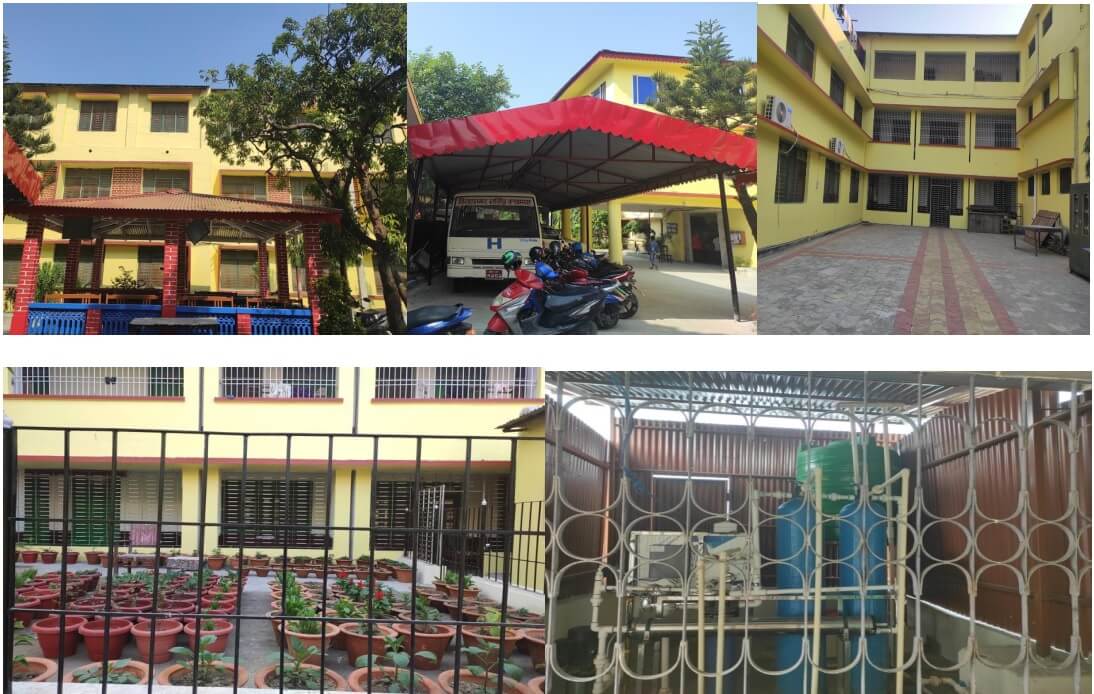
Biratnagar Nursing Campus runs two bachelor-level nursing programs:
| Program | Duration | Academic Route |
|---|---|---|
| BSc Nursing | 4 years | Undergraduate science-entry nursing program |
| Bachelor of Nursing Science | 3 years | Post-basic bachelor pathway for qualified and registered nurses |
Both programs follow an annual academic system. They share several nursing subject areas but differ substantially in entry route and academic purpose.
BSc Nursing is a four-year undergraduate nursing program. Its structure begins with health-science foundations and progresses through nursing theory, practical learning, community health and major clinical areas.
Academic coverage includes areas such as:
The program combines theoretical instruction with practical and clinical components. Students study general health sciences alongside major nursing practice areas rather than concentrating on a single clinical specialty.
Its four-year structure also distinguishes BSc Nursing from BNS at the point of entry. BSc Nursing follows the science-entry route prescribed for bachelor-level medical education under the applicable admission framework.
Bachelor of Nursing Science is a three-year post-basic nursing degree. It is intended for applicants who already have PCL or Diploma-level nursing education and hold Nepal Nursing Council registration under the applicable admission requirements.
The program covers areas such as:
BNS begins from a different academic and professional position than BSc Nursing. Students enter after previous nursing education and professional registration rather than entering nursing directly through a general science pathway.
The program includes several advanced nursing subject areas. Bachelor of Nursing Science is therefore the appropriate general program title for institutional-level presentation without treating one elective or major area as the permanent title of the entire degree.
Admission to bachelor-level nursing education falls under the Medical Education Commission’s common entrance and matching framework.
Applicants seeking admission to the nursing bachelor programs follow MECEE-BL, the bachelor-level common entrance examination used within Nepal’s medical education admission system.
The Medical Education Commission (MEC) administers the relevant entrance and matching process. Admission follows the prevailing MEC rules, guidelines, code of conduct, eligibility requirements, scholarship provisions, seat-allocation arrangements, fee framework and admission procedures applicable to the relevant intake.
The general admission process involves:
BSc Nursing and BNS have different entry routes. BSc Nursing follows the science-based bachelor eligibility route, including the prescribed science subjects under MEC rules. BNS requires prior PCL or Diploma-level nursing education together with Nepal Nursing Council registration under the applicable eligibility framework.
Seat numbers should not be treated as permanent campus figures. MEC determines institution-wise seats and category distribution for admission cycles, and the allocation may vary from one intake to another.
The same principle applies to paying seats, scholarship seats, reservation categories and related admission arrangements. Applicants need to follow the institution-wise seat-distribution provisions applicable to their entrance cycle.
Fees should likewise not be treated as permanently fixed within an evergreen institutional profile. Admission fees, tuition arrangements and related financial provisions remain subject to the prevailing regulatory and institutional framework.
Scholarship arrangements operate within the MEC admission and matching system. Scholarship categories, seat distribution and associated procedures therefore depend on the applicable admission cycle rather than figures from an earlier year.
The academic environment at Biratnagar Nursing Campus combines classroom study with laboratory, clinical and community learning. Nursing education requires students to connect theoretical knowledge with supervised practical experience across different areas of healthcare.
The campus follows an annual academic system and uses an academic calendar for regular teaching and related activities. Instruction covers nursing theory, applied health sciences, practical competencies and community-oriented learning.
Assessment includes internal and university-level components. The nursing evaluation structure includes written examinations together with practical and clinical forms of assessment such as:
Exact marks, percentages and assessment distributions depend on the applicable curriculum and examination arrangement and are therefore not treated as fixed institutional figures.
University examinations operate through the Institute of Medicine examination structure under Tribhuvan University.
This creates a clear distinction between entrance and academic examinations. MECEE-BL belongs to the MEC admission system, while examinations undertaken after enrollment are part of the TU-IOM academic system.
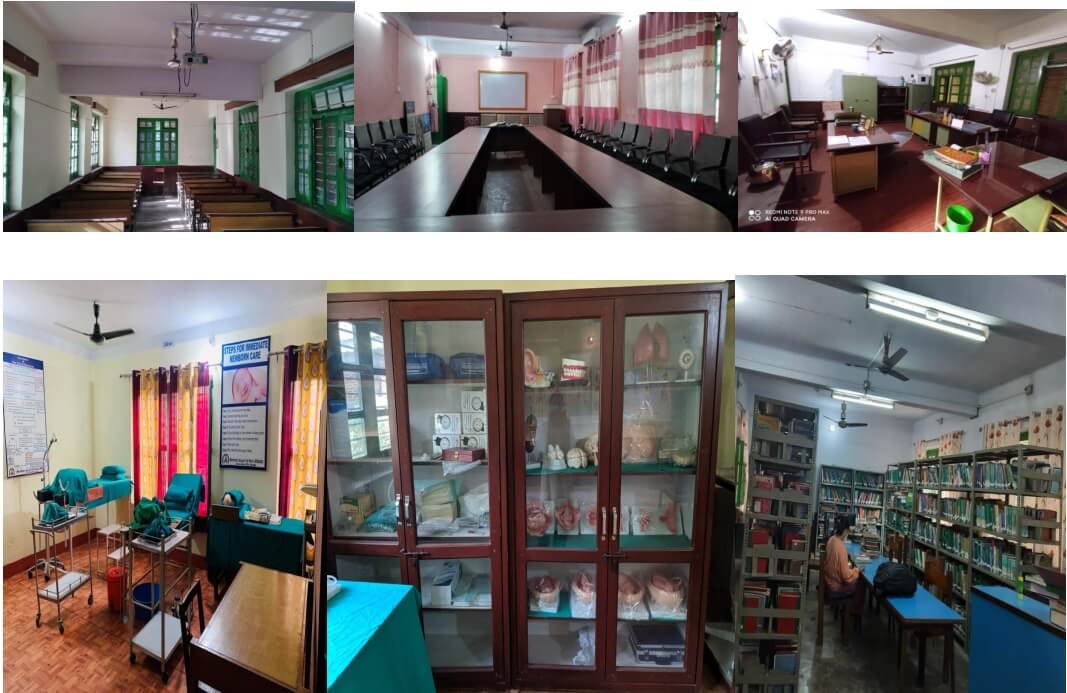
Clinical practice is an integral component of nursing education. The programs combine theoretical study with learning in practical, hospital and community settings.
Koshi Hospital has been used as a principal clinical practice setting under the institutional arrangement involving the Institute of Medicine and the Ministry of Health and Population. Clinical activities are connected with curriculum requirements and the academic planning of the respective nursing programs.
Community-based learning also forms part of nursing education. Students participate in community health activities that connect academic subjects with public-health and community settings.
This approach extends nursing education beyond classroom instruction. Students encounter areas such as adult health, community health, maternal and child health, psychiatric nursing and other nursing fields through the practical components incorporated into their studies.
Clinical assignments and practical learning are organized in accordance with curriculum requirements and institutional academic arrangements.
Biratnagar Nursing Campus has separate infrastructure for academic and administrative functions. Facilities include academic and administrative buildings, hostel provision, residential facilities, library services and practical learning areas.
Nursing education requires spaces where students can practice procedures and strengthen practical understanding before and alongside clinical placement. The campus therefore maintains nursing skills and health-science learning spaces supporting areas such as fundamental nursing, midwifery, community health and basic health sciences.
The significance of these facilities lies in their academic use rather than the number of rooms or laboratories alone. They support practical preparation within the nursing curriculum.
Library facilities form another part of the learning environment. Students have access to printed learning resources as well as computer and internet facilities. Digital academic resources used in teaching have also included platforms and services such as Google Classroom and HINARI.
Campus administration has incorporated information-management systems and biometric attendance. These support institutional records and attendance management alongside regular academic operations.
Facilities and support provisions include:
The campus also has residential buildings and employee quarters as part of its institutional infrastructure.
Student activities extend beyond formal classroom teaching. Nursing students participate in indoor and outdoor extracurricular activities and observe health-related days alongside the regular academic calendar.
Student support is connected with academic progress and wider campus welfare.
The institutional structure includes a student-welfare function. Academic support practices include remedial classes, parent-teacher interaction and student quality-circle activities. Hostel provision adds a residential support component for students.
Counseling space is also available within the campus facilities, providing a setting for students to seek assistance with academic, administrative and campus-related concerns.
Scholarship provision needs to be separated from ordinary campus welfare services. Scholarship categories for bachelor-level medical and nursing admission operate within MEC rules and seat-allocation procedures. A scholarship percentage or seat total from one intake should therefore not be treated as a permanent institutional entitlement.
This distinction is relevant for applicants. Academic welfare services are campus functions, while admission-category scholarships are tied to the regulatory admission system and the particular entrance cycle.
Biratnagar Nursing Campus received institutional quality-assurance accreditation from the University Grants Commission on 11 September 2022.
The campus has also undergone academic audit and evaluation covering institutional policy, curriculum, faculty, student profile, infrastructure, academic activities and information systems.
Internal quality processes include an Internal Quality Assurance Committee and research-related management structures. Institutional review has covered academic planning, stakeholder feedback, faculty development, infrastructure, teaching resources, information systems and student support.
Quality assurance in nursing education therefore extends beyond examination performance. It includes teaching procedures, academic resources, institutional systems, staff development, student services and mechanisms used to review academic delivery.
The campus’s academic direction also incorporates higher education, research, collaboration with stakeholders and community participation. These areas connect nursing education with teaching, research and community-based practice.
Research forms part of the academic environment at Biratnagar Nursing Campus. Faculty research and publication activity has included nursing education, community health, older-adult health and health-service themes.
The campus has also conducted research-focused academic activities, including a research conference. Faculty participation in research grants, publications and research training operates alongside regular teaching responsibilities.
Research is also incorporated into the academic programs. Both BSc Nursing and BNS contain research-related components, placing research alongside nursing practice, education, management and community health.
Community programs and health camps add an applied dimension to academic activities by connecting nursing education with community settings.
Research activity should be understood as part of the academic function of the campus rather than as a basis for ranking or promotional claims.
Nursing education and professional practice are linked to the Nepal Nursing Council.
The council regulates nursing education and professional registration in Nepal, including licensing and registration functions.
For BSc Nursing graduates, completion of the university degree is followed by the applicable Nepal Nursing Council licensing and registration process before professional practice.
BNS has a different entry and professional context because applicants already hold previous nursing qualifications and nursing council registration when entering the program. The degree therefore builds on an existing nursing education and professional-registration base.
The distinction can be summarized as follows:
Professional nursing practice remains subject to the prevailing rules of the Nepal Nursing Council. Completion of a university degree does not replace applicable council requirements.
Biratnagar Nursing Campus has developed through several stages of nursing education: ANM training, transfer to the Institute of Medicine, introduction of PCL Nursing, development of post-basic bachelor education and operation of BSc Nursing.
This history is relevant because the two bachelor programs serve different academic routes. A student entering nursing after higher secondary science study follows a different pathway from a registered nurse returning for post-basic bachelor education.
The difference affects admission, curriculum and professional context. BSc Nursing students enter through the science-based MEC eligibility framework. BNS candidates enter after prior nursing education and registration.
After enrollment, both groups study within the TU-IOM academic system, complete theoretical and practical components and undertake examinations administered through the university’s Institute of Medicine structure.
The campus therefore operates within four connected institutional frameworks: Tribhuvan University as the parent university, IOM for academic administration and examinations, MEC for bachelor-level entrance and matching, and the Nepal Nursing Council for professional nursing regulation.
Students considering Biratnagar Nursing Campus should distinguish stable academic information from admission details that may change by intake.
This distinction is important because seats, fees, scholarship distribution and category allocation may change under MEC decisions and the applicable admission calendar.
Biratnagar Nursing Campus is a constituent nursing campus of Tribhuvan University’s Institute of Medicine in Biratnagar-7, Morang. Its institutional roots date to an ANM training school established in 2023 BS, followed by transfer to the Institute of Medicine and gradual development into university-level nursing education.
Its bachelor programs are the four-year BSc Nursing and three-year Bachelor of Nursing Science. Teaching combines theory with practical, clinical, community and research components under the TU-IOM academic framework.
Bachelor admission follows the Medical Education Commission’s MECEE-BL and matching process. Professional nursing registration and licensing fall under the Nepal Nursing Council. The campus also maintains academic infrastructure, practical learning resources, library services, hostel provision, student-welfare functions, research activity and institutional quality-assurance processes.
Biratnagar Nursing Campus is located at Devkota Chowk, Biratnagar-7, Morang, Koshi Province.
Yes. Biratnagar Nursing Campus is a constituent campus of Tribhuvan University under the Institute of Medicine.
Its institutional history began in 2023 BS as an Auxiliary Nurse Midwife training school established by the Government of Nepal, Ministry of Health. It was transferred to Tribhuvan University’s Institute of Medicine in 2029 BS.
The campus runs two bachelor-level nursing programs:
BSc Nursing is a four-year undergraduate program, while BNS is a three-year post-basic nursing program.
The BSc Nursing program has a duration of four years. It combines theoretical, practical, clinical and community-based learning.
The Bachelor of Nursing Science is a three-year post-basic bachelor program for applicants with prior PCL or Diploma-level nursing education and the applicable Nepal Nursing Council registration.
Bachelor-level nursing admission follows the MECEE-BL entrance and matching framework administered through the Medical Education Commission. Applicants must meet the eligibility requirements applicable to their chosen nursing program.
The Medical Education Commission determines institution-wise seat allocation and related admission categories for the applicable admission cycle. Scholarship, paying and reservation distributions may change from one intake to another.
Fees follow the prevailing Medical Education Commission framework and applicable admission arrangements. They should not be treated as permanent figures because regulatory and institutional provisions may change between admission cycles.
BSc Nursing is a four-year undergraduate nursing program entered through the applicable science-based bachelor admission route. BNS is a three-year post-basic degree for applicants who already hold prior nursing education and professional registration.
Yes. Nursing education at the campus combines theoretical instruction with practical, clinical and community-based learning. Koshi Hospital has served as a principal clinical practice setting within the institutional arrangement connected with the Institute of Medicine and the Ministry of Health and Population.
The campus has academic and administrative buildings, hostel provision, library services, nursing and health-science practical learning spaces, classrooms, internet-enabled computer access, counseling space and student-welfare mechanisms.
Academic examinations are administered within the Institute of Medicine examination system under Tribhuvan University. This is separate from MECEE-BL, which belongs to the bachelor admission process.
Professional nursing practice is regulated by the Nepal Nursing Council. BSc Nursing graduates must complete the applicable council licensing and registration requirements before professional practice. BNS applicants already enter the program with prior nursing education and nursing council registration.