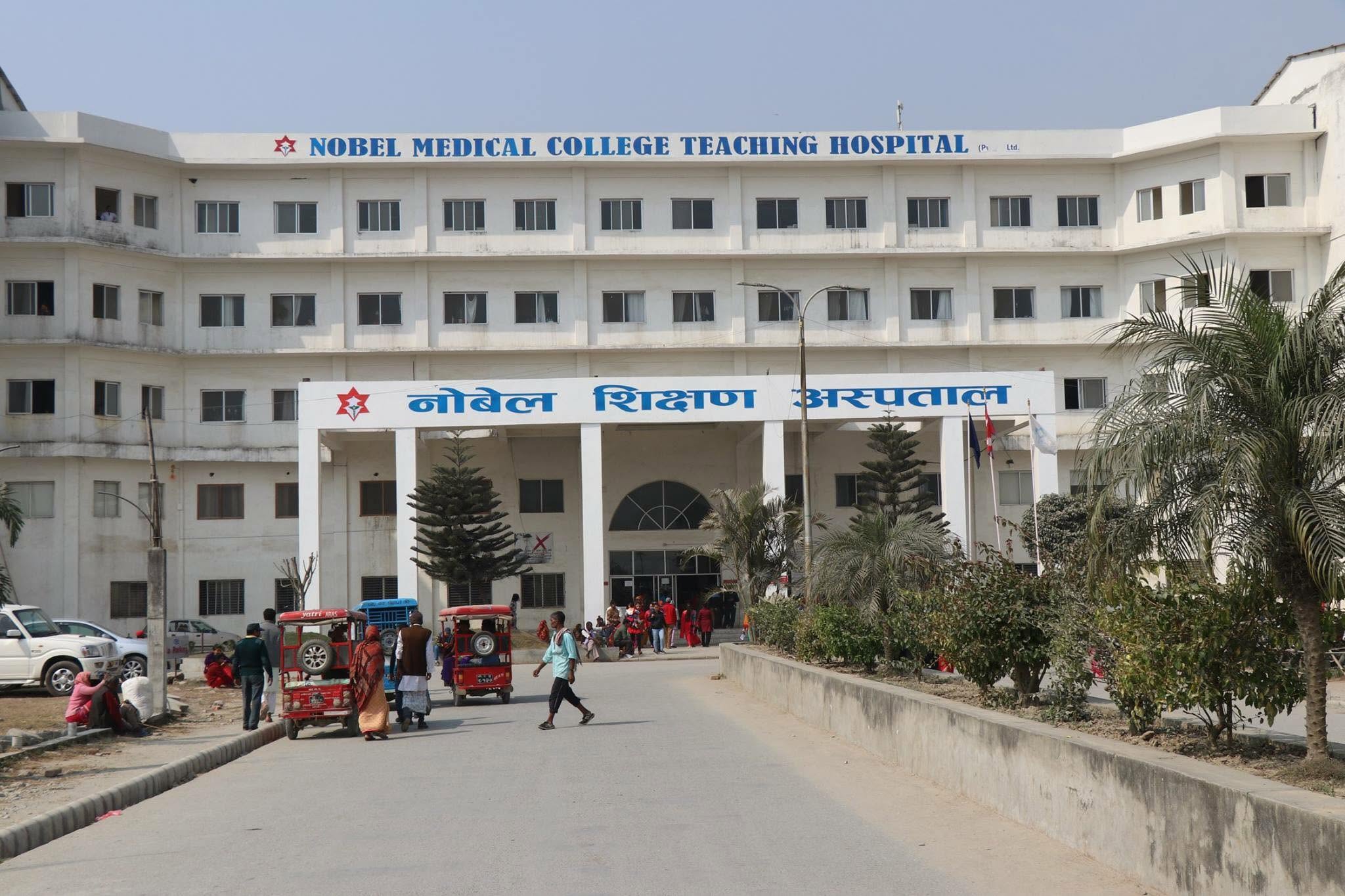
Nobel Medical College Teaching Hospital (NMCTH) is a private medical college and teaching hospital located at Kanchanbari, Biratnagar–4, Morang, Nepal. Established in 2004, the institution combines health-science education with hospital-based clinical training. Its academic portfolio includes CTEVT certificate and diploma programs, Kathmandu University undergraduate degrees, postgraduate MD/MS programs, and DM/MCh super-specialty education.
The institution is also listed on Collegenp as Nobel Medical College, Morang. Its Kathmandu University programs cover medicine, dentistry, nursing, physiotherapy, laboratory medicine, postgraduate medical specialties, and super-specialty study. Selected technical health programs operate under CTEVT affiliation.
NMCTH places medical knowledge, practical competence, communication, ethics, professionalism, and community-oriented learning within the same educational setting.
| Field | Details |
|---|---|
| Institution | Nobel Medical College Teaching Hospital (NMCTH) |
| Location | Kanchanbari, Biratnagar–4, Morang, Nepal |
| Established | 2004 |
| Institution Type | Private Medical College and Teaching Hospital |
| Main University Affiliation | Kathmandu University (KU) |
| Other Academic Affiliation | CTEVT for listed certificate and diploma programs |
| Academic Levels | Certificate, Diploma, Bachelor, MD/MS, DM/MCh |
| Postgraduate Training | Conducted since 2013 |
| Major Study Areas | Medicine, Dentistry, Nursing, Physiotherapy, Laboratory Medicine, Medical and Surgical Specialties |
| Contact | +977-21-460736, 461735 |
Nobel Medical College Teaching Hospital was established in 2004 in Biratnagar. Its academic structure developed around medical and paramedical education supported by a teaching hospital. This arrangement connects classroom teaching with laboratory study, clinical postings, bedside learning, internship, and postgraduate training.
The institution's educational goals include preparing medical and health professionals with sound academic knowledge, practical skills, communication ability, ethical awareness, and professional responsibility. Community-oriented medical education is also part of this direction.
Postgraduate medical training has been conducted at NMCTH since 2013. The postgraduate academic areas include internal medicine, general surgery, obstetrics and gynaecology, paediatrics, orthopaedics, ophthalmology, otorhinolaryngology, radiology, anaesthesiology, psychiatry, dermatology, pathology, physiology, microbiology, biochemistry, and community medicine.
The academic range also includes nursing, physiotherapy, laboratory medicine, technical health education, postgraduate specialties, and super-specialty programs.
NMCTH is situated at Kanchanbari, Biratnagar–4, Morang. The college and teaching hospital function within the same institutional setting, allowing students in clinically oriented programs to move from classroom and laboratory learning into supervised hospital-based study.
For medical students, clinical learning becomes more prominent as they progress beyond the basic medical-science stage. Academic areas connected with the clinical curriculum include medicine and allied subjects, surgery and allied subjects, obstetrics and gynaecology, paediatrics, community medicine, forensic medicine, ophthalmology, and otorhinolaryngology.
Postgraduate and super-specialty programs extend this structure into discipline-specific training within relevant clinical departments.
The principal university affiliation for degree-level medical and health-science programs at NMCTH is Kathmandu University (KU).
Kathmandu University governs the academic framework of its affiliated programs, including curriculum, examinations, progression requirements, internship provisions where applicable, and degree awards.
Medical and nursing programs governed by the Medical Education Commission follow the prevailing MEC framework for entrance examinations, scholarship provisions, seat allocation, fee regulation, and admission procedures.
The CTEVT certificate and diploma programs are academically separate from Kathmandu University degree programs. Their admission, curriculum, examination, and certification requirements follow the applicable CTEVT framework.
NMCTH offers programs at certificate, diploma, bachelor's, postgraduate, and super-specialty levels.
The seat figures below reflect the listed allocations. For MEC-regulated programs, seat numbers may change between admission cycles according to the determination of the Medical Education Commission.
| Program | Affiliation | Seats |
|---|---|---|
| Certificate in Dental Science (Dental Hygiene) | CTEVT | 40 |
| Certificate in Medical Laboratory Technology (CMLT) | CTEVT | 30 |
| Diploma in Pharmacy | CTEVT | 40 |
| Certificate in Diagnostic Radiography | CTEVT | 30 |
These programs provide technical education in dental hygiene, medical laboratory technology, pharmacy, and diagnostic radiography.
| Program | Affiliation | Seats |
|---|---|---|
| BSc Laboratory Medicine | Kathmandu University | 10 |
| Bachelor of Physiotherapy (BPT) | Kathmandu University | 15 |
| Bachelor in Nursing Science (BNS) | Kathmandu University | 20 |
| Bachelor of Dental Surgery (BDS) | Kathmandu University | 35 |
| MBBS | Kathmandu University | 130 |
| BSc Nursing | Kathmandu University | 60 |
| Program | Affiliation | Seats |
|---|---|---|
| MS in Orthopedics | Kathmandu University | 1 |
| MD in Psychiatry | Kathmandu University | 1 |
| MS Otorhinolaryngology | Kathmandu University | 3 |
| MS General Surgery | Kathmandu University | 5 |
| MD Microbiology | Kathmandu University | 2 |
| MD Physiology | Kathmandu University | 1 |
| MD Biochemistry | Kathmandu University | 2 |
| MD Paediatrics | Kathmandu University | 3 |
| MS Ophthalmology | Kathmandu University | 1 |
| MD Obstetrics and Gynaecology | Kathmandu University | 4 |
| MD Internal Medicine | Kathmandu University | 8 |
| MD Dermatology | Kathmandu University | 1 |
| MD Community Medicine | Kathmandu University | 1 |
| MD Pathology | Kathmandu University | 3 |
| MD Radio Diagnosis | Kathmandu University | 1 |
| MD Anaesthesiology | Kathmandu University | 2 |
| Program | Affiliation | Seats |
|---|---|---|
| DM Gastroenterology | Kathmandu University | 1 |
| DM Cardiology | Kathmandu University | 2 |
| DM Neurology | Kathmandu University | 1 |
| MCh Neurosurgery | Kathmandu University | 1 |
| MCh Urology | Kathmandu University | 1 |
| DM Neonatology | Kathmandu University | 1 |
| DM Pulmonology | Kathmandu University | 1 |
DM and MCh programs represent the super-specialty level of medical education and require the relevant postgraduate medical background.
The academic structure at NMCTH follows the curriculum of the relevant affiliating body.
The MBBS program follows a five-and-a-half-year structure that includes academic and clinical study followed by a compulsory rotating internship.
The earlier stages cover basic and system-based medical sciences, including:
Basic medical concepts
Genetics
Immunity
Musculoskeletal system
Respiratory system
Cardiovascular system
Gastrointestinal system
Hepatobiliary system
Renal and electrolyte system
Metabolism and endocrine system
Reproductive system
Growth and development
Central nervous system and special senses
Community medicine
Introduction to clinical medicine
Later semesters include medicine and allied subjects, surgery and allied subjects, obstetrics and gynaecology, paediatrics, ophthalmology, otorhinolaryngology, forensic medicine, and community medicine.
BDS follows a five-and-a-half-year structure including internship.
The curriculum includes anatomy, biochemistry, microbiology, pathology, pharmacology, physiology, oral biology, dental materials, and pre-clinical dental disciplines.
Clinical dental education includes:
General Medicine
General Surgery
Oral Pathology and Microbiology
Conservative Dentistry and Endodontics
Oral and Maxillofacial Surgery
Oral Medicine and Radiology
Orthodontics and Dentofacial Orthopaedics
Paediatric and Preventive Dentistry
Periodontology
Prosthodontics
Community Dentistry
BSc Nursing is a four-year program covering nursing practice, health sciences, community health, maternal and child health, medical-surgical nursing, mental health, leadership, and research-related study.
BNS is offered under Kathmandu University and has a listed intake of 20 seats.
Bachelor of Physiotherapy is a four-year academic program focused on physical movement, rehabilitation, clinical decision-making, patient care, and physiotherapy practice.
BSc Laboratory Medicine is a four-year Kathmandu University program centered on laboratory medicine, diagnostic investigation, and scientific procedures used in disease assessment.
MD and MS programs provide discipline-specific postgraduate medical education through advanced academic and supervised clinical or laboratory training.
DM and MCh programs extend this progression into super-specialty medical and surgical education.
Admission to Kathmandu University medical and health-science programs at NMCTH follows university requirements together with the national framework applicable to regulated medical education.
For bachelor-level medical and nursing programs governed by the Medical Education Commission, admission is based on MECEE-BL and the prevailing MEC system.
The Medical Education Commission (MEC) regulates areas including:
Common entrance examinations
Merit-based selection
Scholarship provisions
Seat allocation
Admission procedures
Applicable fee structure
Admission schedules and related instructions
Applicants must meet the eligibility criteria prescribed for the relevant program.
For MBBS and BDS, the academic framework includes recognized science-level study involving Physics, Chemistry, and Biology or other accepted health-science qualifications meeting the applicable requirements.
Postgraduate MD/MS admission follows MECEE-PG. Applicants must hold the relevant prior medical qualification and satisfy the professional registration conditions required for postgraduate medical education.
DM and MCh applicants must hold the appropriate postgraduate medical qualification and meet the applicable professional registration requirements.
Scholarships for MEC-regulated medical and nursing programs follow the prevailing national scholarship framework. Seat numbers for these programs are also determined under the applicable MEC process and may vary between admission cycles.
CTEVT certificate and diploma programs follow separate admission requirements under the CTEVT system.
Kathmandu University governs curriculum, academic assessment, examinations, progression, and degree awards for its affiliated programs at NMCTH.
Students enrolled in KU programs must complete the academic, practical, clinical, internship, and examination requirements prescribed for their respective courses.
MBBS and BDS include compulsory internship requirements. Nursing and physiotherapy combine theoretical instruction with practical and clinical study. Laboratory medicine includes laboratory-based professional training. MD/MS and DM/MCh programs involve discipline-specific postgraduate or super-specialty training.
For CTEVT-affiliated programs, curriculum, examinations, and certification follow the applicable CTEVT framework.
Completion of an academic program and authorization to enter a regulated health profession are separate stages.
Medical and dental graduates come under the professional framework of the Nepal Medical Council.
Nursing graduates are subject to the professional registration and licensing requirements of the Nepal Nursing Council.
Graduates from relevant allied health disciplines come under the Nepal Health Professional Council (NHPC).
Pharmacy graduates are connected with the Nepal Pharmacy Council.
Students entering a council-regulated profession must complete the applicable licensing and registration requirements after finishing their academic program.
The teaching hospital supports the clinical component of education at NMCTH.
Clinical and postgraduate teaching areas include:
Internal Medicine
General Surgery
Obstetrics and Gynaecology
Paediatrics
Orthopaedics
Ophthalmology
Otorhinolaryngology
Radiology
Anaesthesiology
Psychiatry
Dermatology
Pathology
Community Medicine
Undergraduate medical students progress from basic sciences into clinical departments and later complete internship requirements.
Postgraduate students train within the departments connected with their MD or MS specialty, while DM and MCh candidates undertake more focused super-specialty training.
The college and teaching hospital include academic, clinical, study, residential, and recreational facilities associated with medical and health-science education.
Facilities include:
Academic blocks and lecture spaces
Demonstration and tutorial areas
Central library and reading facilities
Teaching-hospital departments
Clinical training areas
Student hostel accommodation
Separate residential arrangements for male and female students
Cafeteria and mess facilities
Sports and recreational spaces
These facilities support formal teaching, independent study, clinical learning, and residential needs.
Community orientation forms part of NMCTH's educational direction. Communication, ethics, professional responsibility, and community medicine are represented within its medical education structure.
Students in health professions are expected to develop academic knowledge together with practical competence, patient communication, teamwork, and professional conduct.
NMCTH offers different academic routes under Kathmandu University and CTEVT, so applicants should first identify the affiliation and level of the program they intend to study.
For Kathmandu University programs:
MEC-regulated bachelor admissions follow MECEE-BL.
MD/MS admission follows MECEE-PG.
DM/MCh applicants require the relevant postgraduate background.
Curriculum and university examinations follow Kathmandu University requirements.
MEC governs regulated admission, scholarships, seats, and related conditions.
Professional practice requires compliance with the relevant council.
For CTEVT programs, admission, curriculum, examination, and certification follow the applicable CTEVT system.
Applicants should also distinguish between academic graduation and professional licensing. Completing the course provides the academic qualification, while professional practice requires the registration or licensing process of the relevant council.
Institution: Nobel Medical College Teaching Hospital (NMCTH)
Location: Kanchanbari, Biratnagar–4, Morang, Nepal
Affiliation: Kathmandu University; CTEVT for listed certificate and diploma programs
Contact: +977-21-460736, 461735
Nobel Medical College Teaching Hospital is located at Kanchanbari, Biratnagar–4, Morang, Nepal.
Nobel Medical College Teaching Hospital was established in 2004.
Its degree-level medical and health-science programs are affiliated with Kathmandu University (KU). Selected certificate and diploma programs are affiliated with CTEVT.
The academic portfolio includes MBBS, BDS, BSc Nursing, BNS, Bachelor of Physiotherapy, BSc Laboratory Medicine, MD/MS postgraduate programs, DM/MCh super-specialty programs, and selected CTEVT certificate and diploma programs.
Admission to programs governed by the Medical Education Commission follows the prevailing MEC admission framework. Relevant bachelor-level medical and nursing programs use MECEE-BL, while MD/MS admission follows MECEE-PG.
No. Seat numbers for MEC-regulated programs are determined through the applicable Medical Education Commission process and may vary between admission cycles.
Yes. Postgraduate medical training has been conducted at the institution since 2013. The college offers MD and MS programs in several medical, surgical, diagnostic, and basic medical-science disciplines.
Yes. The listed super-specialty programs include DM Cardiology, DM Gastroenterology, DM Neurology, DM Neonatology, DM Pulmonology, MCh Neurosurgery, and MCh Urology.
Yes. Nobel Medical College operates with a teaching hospital where students in clinically oriented programs undertake hospital-based learning, departmental training, clinical postings, and internship requirements according to their curriculum.
Kathmandu University governs the curriculum, examinations, academic progression, and degree awards for its affiliated programs at Nobel Medical College.
Students entering regulated health professions must meet the registration and licensing requirements of the relevant professional council. These may include the Nepal Medical Council, Nepal Nursing Council, Nepal Health Professional Council, or Nepal Pharmacy Council, depending on the profession.
Yes. The listed CTEVT programs are Certificate in Dental Science (Dental Hygiene), Certificate in Medical Laboratory Technology, Certificate in Diagnostic Radiography, and Diploma in Pharmacy.