Everest Engineering College (EEC) is an engineering college established in 2001 A.D. and located at Sanepa-2, Lalitpur. It is affiliated with Pokhara University and offers undergraduate engineering programs along with the Master of Computer Engineering program.
The college combines classroom study with laboratory work, projects, research activities, field exposure, pre-internship experience, internships, counseling, and academic interaction. Its current academic portfolio includes BE Software, BE Computer, BE IT, BE Civil, and Master of Computer Engineering.
| Particular | Details |
|---|---|
| College | Everest Engineering College (EEC) |
| Established | 2001 A.D. |
| Location: | Sanepa-2, Lalitpur, Nepal |
| Affiliation: | Pokhara University |
| Academic Level | Bachelor’s and Master’s |
| Academic Field | Engineering and technology |
| Bachelor’s Programs | BE Software, BE Computer, BE IT, BE Civil |
| Master’s Program | Master of Computer Engineering |
| Bachelor’s Admission | Entrance examination and merit-based selection |
| Academic Resources | Classrooms, seminar hall, library, laboratories, projects and research activities |
| Student Support | Scholarships, counseling, academic interaction and career-related guidance |
Everest Engineering College began its academic operation in 2001 A.D. in Sanepa, Lalitpur. The college works within the academic framework of Pokhara University and focuses on engineering and technical education.
Its academic approach brings together classroom instruction, laboratory work, engineering projects, field exposure, research activities, and interaction between students and faculty members. The intention is to connect theoretical study with practical engineering work throughout the academic process.
The college is managed by academicians involved in teaching, research, administration, and institutional management. Its academic environment includes regular classroom teaching as well as project supervision, counseling, seminars, workshops, professional interaction, and other activities connected with engineering study.
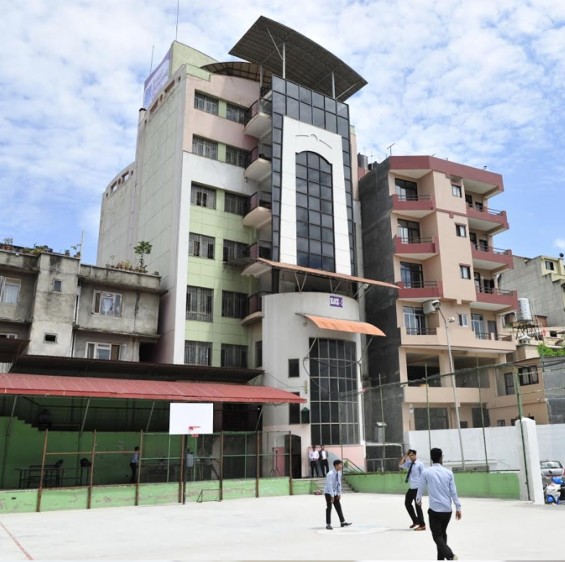
The Sanepa premises include classrooms, a seminar hall, library resources, laboratories, recreational space, and areas used for academic and extracurricular activities. The college serves both undergraduate and graduate-level students.
Everest Engineering College is affiliated with Pokhara University for its engineering programs. The college follows the university curriculum and academic framework applicable to its affiliated courses.
EEC identifies curriculum implementation, faculty development, student research, professional preparation, community engagement, and academic collaboration among its institutional objectives.
Its relationship with Pokhara University is relevant to the academic structure, curriculum, examinations, program requirements, and degree framework of the courses offered at the college.
Everest Engineering College offers four bachelor’s engineering programs and one master’s program.
| Program | Level | Seats |
|---|---|---|
| Bachelor of Software Engineering (BE Software) | Bachelor’s | 48 |
| Bachelor of Computer Engineering (BE Computer) | Bachelor’s | 96 |
| Bachelor of Engineering in Information Technology (BE IT) | Bachelor’s | 96 |
| Bachelor of Civil Engineering (BE Civil) | Bachelor’s | 96 |
| Master of Computer Engineering | Master’s | 30 |
The Bachelor of Software Engineering is an eight-semester undergraduate engineering program with 127 total credits. The curriculum progresses from engineering and computing foundations to software development, system design, programming, testing, databases, distributed systems, software project management, and professional practice.
Students begin with subjects such as basic engineering drawing, digital logic, discrete structures, programming, mathematics, communication techniques, microprocessor and computer architecture, and object-oriented programming.
Later semesters include software engineering, operating systems, computer networks, database systems, web technologies, distributed systems, enterprise computing, software testing, verification and quality assurance, and project work.
The program also includes a pre-internship component intended to introduce students to professional software-development workflows before the formal internship stage. Project work is included in the later part of the program.
The course is centered on the design, development, testing, operation, and management of software systems.
The Bachelor of Computer Engineering is an eight-semester program carrying 129 total credits. Its academic structure combines electrical and electronics foundations with programming, computer architecture, networking, embedded systems, software development, data-related study, and computer system design.
Early coursework includes basic electrical engineering, calculus, communication techniques, applied physics, computer workshop, programming, algebra and geometry, electronics devices and circuits, data structures and algorithms, numerical methods, software engineering, and object-oriented programming.
The middle and later semesters cover computer architecture, computer networks, microprocessor systems, operating systems, embedded systems, information security, cloud computing and virtualization, data science and analytics, image processing, pattern recognition, project work, internship, and professional practice.
Students also take part in a pre-internship component that introduces project-based tasks and collaborative work before the formal internship. Project work forms part of the academic structure.
The Bachelor of Engineering in Information Technology is an eight-semester program with 128 total credits. Its curriculum connects computing foundations with information systems, networking, databases, system administration, software development, security, multimedia, infrastructure, and IT project work.
The first part of the course includes applied physics, basic electrical engineering, calculus, electronics devices and circuits, problem-solving techniques, programming, algebra and geometry, communication techniques, digital logic, discrete structures, and object-oriented programming.
Later coursework includes advanced programming, data structures and algorithms, probability and statistics, software engineering, computer networks, data communication, data science and analytics, IT project management, information systems, intelligent systems, and IT system security.
The program also contains electives, project work, internship, and a pre-internship component related to IT operations, networking, cybersecurity, cloud-based projects, and workplace experience.
The Bachelor of Civil Engineering is a four-year, eight-semester undergraduate program with 129 total credits. Its curriculum covers engineering knowledge connected with the planning, design, construction, operation, and maintenance of infrastructure.
Students begin with subjects including applied chemistry, applied physics, calculus, computer programming, engineering drawing, algebra and geometry, applied mechanics, basic electrical and electronics engineering, civil engineering materials, fluid mechanics, and introductory civil engineering work.
Later semesters cover structural analysis, surveying, engineering hydrology, foundation engineering, transportation engineering, construction project management, design of reinforced concrete structures, estimating and valuation, highway engineering, professional practice, project work, and internship.
A pre-internship component gives students exposure to practical work, field practices, project activity, and professional working procedures before the formal internship.
The curriculum covers areas of civil engineering including structural engineering, construction, geotechnical engineering, transportation, water resources, environmental engineering, surveying, and urban planning-related study.
Everest Engineering College also offers the Master of Computer Engineering with an intake capacity of 30 seats.
The program extends the college’s academic offering to the graduate level within computer engineering and is offered under Pokhara University affiliation.
Applicants seeking admission to bachelor-level engineering programs must meet the stated academic requirements.
The eligibility criteria include:
Grade 12 in Science or a technical program with Physics, Chemistry, and Mathematics.
At least a C grade in all subjects, calculated as the combined grade of theory and practical components.
A three-year diploma with at least 45 percent is also accepted for eligibility.
Eligible applicants may submit an application physically or online.
The admission process involves:
Meeting the academic eligibility requirement.
Applying for the intended engineering program.
Appearing in the entrance examination conducted at the college.
Completing the entrance process according to the applicable Pokhara University and UGC Nepal standards.
Receiving admission consideration on merit after successful completion of the entrance examination.
Admission selection is therefore linked to both eligibility and entrance performance.
Everest Engineering College has scholarship provisions based on government rules, academic performance, local collaboration, admission merit, and financial need.
| Scholarship | Basis | Support |
|---|---|---|
| Nepal Government Scholarship | Pokhara University rules | Full scholarship for 10% of students, covering admission, tuition and semester fees |
| EEC-LMC Scholarship | Lalitpur Metropolitan City residents; competitive selection | Scholarship through collaboration with the LMC Education Department |
| Outstanding Scholarship | University topper with SGPA 4.0 | Full semester fee scholarship for the next semester |
| Class Topper Scholarship | Program topper | 100% tuition fee scholarship for the next semester |
| Admission Scholarship | Grade 12 GPA, entrance performance and interview | Merit-based admission scholarship |
| Bishnumaya Kadariya Pashupati Shivajee Scholarship | Civil Engineering student; academic potential and financial need | Scholarship for one deserving student |
The Admission Scholarship considers Grade 12 academic performance, entrance examination results, and an interview. Priority is also given to applicants from scheduled castes and remote areas and to female applicants.
The Bishnumaya Kadariya Pashupati Shivajee Scholarship is associated with Civil Engineering and is awarded to one student based on academic potential and financial need.
Academic study at EEC includes classroom instruction, laboratory work, engineering projects, field-related activities, pre-internship experience, internship, and professional practice.
These components appear throughout the undergraduate curricula and give students repeated exposure to practical assignments alongside theoretical coursework.
The college also uses counseling and regular student-faculty interaction as part of its academic environment. Faculty members are involved in classroom teaching, research activities, administration, project supervision, and institutional management.
Project work has a defined place within the academic structure. Students complete academic projects, while selected student activities may also receive project fellowships and research support.
Field visits and practical activities further connect classroom concepts with engineering tasks, laboratory procedures, field conditions, and project execution.
The college maintains a library with more than 22,000 books along with research journals and periodicals. These resources support coursework, project preparation, and research activities.
Academic resources and facilities include:
Standard classrooms.
Seminar facilities.
Laboratories for practical and project work.
Recreational space.
Library resources for study and research.
Project-based academic activities.
Workshops and conferences.
Guest lectures and professional interaction.
The facilities support engineering programs in which practical work forms part of the academic requirements.
Research forms part of EEC’s institutional direction. Faculty members participate in engineering research, while students have opportunities to engage with project work and research-related academic activities.
The college has a Research Management Cell connected with research publication and academic events. Its activities include biannual publication of peer-reviewed journals and the organization of international conferences.
Students can also participate in conferences, workshops, excursions, project activities, and interaction with academicians and professionals.
Undergraduate students therefore encounter research through project work, faculty interaction, academic events, and selected research opportunities.
Pre-internship experience is included in the academic structure of BE Civil, BE Computer, BE Software, and BE IT.
The purpose of the pre-internship component is to introduce students to work resembling professional or industry settings before the formal internship stage. Depending on the program, this may involve project tasks, field practices, development workflows, networking activities, system-related work, or collaborative engineering assignments.
Formal internship and project components appear in the later semesters of the undergraduate programs. Academic activity is also supported by guest lectures, workshops, field visits, industry interaction, and professional events.
These components provide several opportunities for students to relate university coursework to practical engineering activity during their studies.
EEC maintains a counseling and wellbeing function for students. Its student support approach includes interaction inside and outside the classroom, with counseling available for academic and personal concerns during the study period.
Academic support is also provided through faculty interaction, project supervision, seminars, guest sessions, and research activities.
Scholarships provide another form of student support. Available categories cover government provisions, academic merit, program performance, Lalitpur Metropolitan City collaboration, admission performance, and financial need under the Civil Engineering-specific scholarship.
EEC’s stated vision focuses on engineering education, research, IT-enabled pedagogy, employability, social responsibility, and contribution to the national economy.
Its mission connects academic study with practical experience and research addressing engineering problems. It also includes personal growth, lifelong learning, ethical responsibility, industry partnership, community engagement, and sustainability.
The college’s goals cover academic standards, teaching quality, engineering and technology research, academic resources, student success, and alumni engagement.
Its stated objectives include:
Applying the Pokhara University curriculum and responding to academic revisions.
Providing professional development opportunities for faculty members.
Supporting student research and entrepreneurial activities.
Establishing innovation hubs and an incubation center as institutional objectives.
Developing community outreach activities connected with engineering knowledge.
Expanding international academic collaboration and faculty/student exchange opportunities.
These objectives describe the college’s institutional direction and planned areas of development.
Location: Sanepa-2, Lalitpur, Nepal
Phone: 01-5420742, 9847339026
The administrative office handles inquiries related to programs, admission, scholarships, facilities, counseling, and other college matters.
Everest Engineering College was established in 2001 A.D.
The college is located at Sanepa-2, Lalitpur, Nepal.
Everest Engineering College is affiliated with Pokhara University.
EEC offers BE Software, BE Computer, BE IT, BE Civil, and Master of Computer Engineering.
BE Software has 48 seats. BE Computer, BE IT, and BE Civil each have 96 seats. Master of Computer Engineering has 30 seats.
Applicants need Grade 12 in Science or a technical program with Physics, Chemistry, and Mathematics, with at least a C grade in all subjects as a combined theory and practical grade. Applicants with a three-year diploma and at least 45 percent are also eligible.
Eligible applicants may apply physically or online and must appear in the entrance examination conducted at the college. Successful candidates are considered for admission on merit.
Yes. The scholarship categories include Nepal Government Scholarship, EEC-LMC Scholarship, Outstanding Scholarship, Class Topper Scholarship, Admission Scholarship, and Bishnumaya Kadariya Pashupati Shivajee Scholarship.
The college has classrooms, seminar facilities, laboratories, recreational space, and a library with more than 22,000 books along with research journals and periodicals. Academic activities also include projects, workshops, conferences, field exposure, internships, and research-related work.


.png)