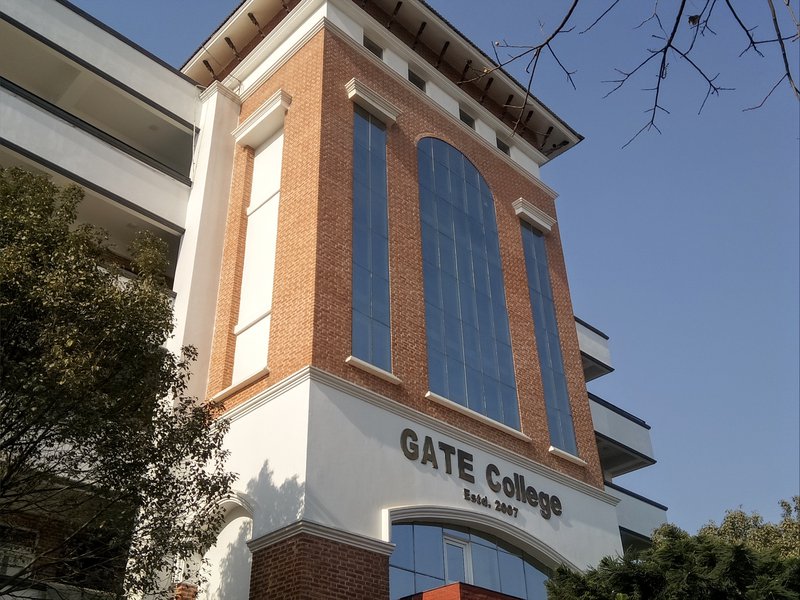
Global Academy of Tourism and Hospitality Education (GATE College) is a hospitality education institution established in 2007 AD. Located at Budhanilkantha-9, Mandikhatar, Kathmandu, Nepal, the college focuses on hospitality, tourism, culinary practice, service operations, and professional hospitality education.
GATE combines academic study with practical learning through kitchen studios, restaurant facilities, espresso bars and cafeterias, event simulation spaces, a seminar hall, internship exposure, outdoor catering activities, accommodation, wireless connectivity, and a virtual learning platform. Its Kathmandu University programs include certificate, diploma, and bachelor-level study in culinary and hospitality fields.
| College Information | Detail |
|---|---|
| Established | 2007 AD |
| Location | Budhanilkantha-9, Mandikhatar, Kathmandu, Nepal |
| Academic Area | Hospitality, tourism, culinary and service education |
| University | Kathmandu University, and Ecole hôtelière de Lausanne |
| Program Levels | Certificate, diploma and bachelor |
| Practical Learning | Kitchen, restaurant, events, catering and internships |
GATE College was established with hospitality education as its principal academic area. Its programs connect hospitality theory with operational practice in culinary work, food and beverage service, accommodation, events, customer service, and hospitality management.
The college has a long-standing association with hotelleriesuisse, the Swiss hospitality benchmark connected with its approach to hospitality education. Since January 2021, GATE has also been a member of the EHL Network of Certified Schools.
Its international connections include access to GATE and EHL alumni networks, international coaching, internship exposure, and credit-transfer opportunities with partner institutions and networks.
GATE also has historical recognition from the World Hospitality Awards in Paris. It received the “Most Innovative Training Program” award in 2011 and was a finalist for “The Best Professional Success” in 2015. These distinctions form part of the college's institutional history and are separate from academic rankings.
The college's mission centers on academic excellence, linking education and employment, and impactful research. Within hospitality education, these areas connect academic knowledge with professional preparation and practical industry experience.
Its vision is directed toward developing its standing as a hotel school within the South East Asian region.
GATE identifies four core values:
Wisdom Focus — developing knowledge and applying it to informed decisions.
Service Oriented — treating service as an important professional responsibility.
Potential Driven — supporting students in developing their abilities.
Respect Based — maintaining respectful conduct and recognizing differences among people.
These values correspond with hospitality study, where technical knowledge is combined with communication, service, teamwork, operational discipline, and professional conduct.
The following hospitality programs are offered under Kathmandu University (KU):
| Program | Level |
|---|---|
| Certificate III in Commercial Cookery | Certificate |
| Diploma in Bakery | Diploma |
| Diploma in Culinary Arts | Diploma |
| Bachelor in International Hospitality Management (BIHM) | Bachelor |
| Bachelor in Professional Hospitality (BPH) | Bachelor |
The academic range covers cookery, bakery, culinary arts, professional hospitality, and international hospitality management. Admission, entrance requirements, curriculum administration, eligibility, examinations, results, academic progression, and degree or qualification awards are governed by Kathmandu University rules and regulations for the relevant program.
The Bachelor in Professional Hospitality is a four-year program carrying 120 credits. Its curriculum progresses from hospitality foundations to service operations, business functions, research, entrepreneurship, professional internship, and specialization.
First-year study introduces students to the hospitality and tourism industry while developing operational foundations. The curriculum includes Introduction to Hospitality & Tourism Industry, Food & Beverage Production & Service Management, Accommodation and Facilities, Consumer Behaviour in Hospitality, Language & Life Skill for 21st Century Workplace, Social Business Concept in Hospitality, and The Service Experience.
The second year gives greater emphasis to professional internship and applied hospitality work. Academic components include Delivering the Service Experience and Operational Research, Analysis and Presentation.
Third-year study moves further into the management and business side of hospitality. Subjects cover Applied Behaviour Economics, planning and delivery of operational functions and events, Human Resources Management Performance Measurement, Accounting and Cost Control, Marketing the Service Experience, Global Trend in Hospitality, Facilities Management, ERP/Business Simulation in Hospitality, Designing New Service Experience, and Ethics and Social Responsibilities.
The final year includes the regulatory framework, startups and entrepreneurship, product experience, financial decision-making, operational research, professional internship, and specialization.
Specialization options identified within the curriculum include:
Indigenous Food and Culture
Revenue Management
New Technologies in Hospitality Industry
Future Trends in Hospitality Industry
The structure gives BPH students a combination of operational hospitality study, management subjects, professional practice, research, entrepreneurship, and specialized study.
The Bachelor in International Hospitality Management is a four-year program with a total of 132 credits across eight semesters. The curriculum combines hospitality operations, business and management study, internships, research, and a final business project or thesis.
The first two semesters establish the operational and business foundation of the degree. Subjects include Food Production and Operation and Management, Front Office Operation and Management, Food and Beverage Service Operation and Management, Housekeeping Operations and Management, Management Information System, Foreign Languages, Business Communication and Protocol, Financial Accounting, Human Behavior & Performance in the Workplace, Foundation of Hospitality Marketing, Microeconomics, and Sustainable Hospitality Strategy.
Semester III consists of Industry Operations Internships and an internship report, carrying 14 credits.
Semester IV returns to academic study through Hospitality Economics, Room & Revenue Management, F&B Concept Creation and Operations, Service Quality & Design, and Academic Writing.
The middle stage of the program includes Organizational Capital and Leadership, Managerial Accounting, Talent Management, Project Management, legal aspects of hospitality and business, Financial Analysis, International Service Marketing, MICE & Events Management, Macroeconomics, Corporate Strategy, Resort & Destination Management, Financial Management, Strategic Management, Research Methodology, Statistics, Digital Marketing, and Ethics and Social Awareness.
Semester VII includes Industry Management Internships and an internship report. The final semester consists of Entrepreneurship & Innovation, Current Issues and Trends in the Hospitality and Business World, and a Hospitality Business Project or Thesis.
BIHM therefore combines operational hospitality subjects with management, finance, marketing, leadership, research, events, destination management, entrepreneurship, and structured internship experience.
Admission to Kathmandu University programs at GATE College follows the applicable KU academic rules and regulations. Applicants must satisfy the eligibility requirements prescribed for their chosen program.
For bachelor-level admission, the process includes counseling and submission of the prescribed application for the entrance test.
Application documents include:
Certified records of examinations passed
Equivalency certificate, where applicable
Transfer and character certificates
Two recent passport-size photographs
Financial certificate
The selection process includes an entrance test. Candidates progressing through the entrance stage may also participate in a personal interview and group analysis.
These stages consider the candidate's readiness for the program along with communication, teamwork, problem-solving, and study intentions.
Successful candidates may receive their result and a conditional offer letter. Admission is confirmed after completion of the required acceptance process and payment of the applicable fees within the prescribed admission procedure.
Eligibility, entrance requirements, final selection, and academic conditions remain subject to Kathmandu University regulations for the respective program.
Academic administration for the Kathmandu University programs follows KU rules and regulations. The applicable academic framework governs course registration, progression, assessment, examinations, practical and internship requirements, research or project work where included, result administration, completion requirements, and the award of the relevant qualification or degree.
Students therefore complete their studies within the academic requirements prescribed for their specific Kathmandu University program.
The two bachelor's programs have different curriculum structures. BPH carries 120 credits across four years, while BIHM carries 132 credits across eight semesters. Both include substantial practical and internship components, although their subjects and credit distribution differ.
GATE College provides facilities that support both academic instruction and hospitality practice.
Its functional and industrial kitchen studios provide space for culinary training and professional kitchen practice. Restaurant facilities support food and beverage service learning, while two hot and cold espresso bars or cafeterias provide additional environments for service-related activities.
Event venues and restaurant spaces are also used for event simulation, connecting with subjects related to functions, events, food production, service delivery, and hospitality operations.
Facilities and learning resources include:
Functional and industrial kitchen studios
Restaurant facilities
Hot and cold espresso bars and cafeterias
Event simulation venues
Seminar hall
Wireless internet access
Micro-learning portal and virtual classroom
On-campus accommodation
These spaces support learning across culinary work, restaurant service, accommodation, events, hospitality operations, and professional practice.
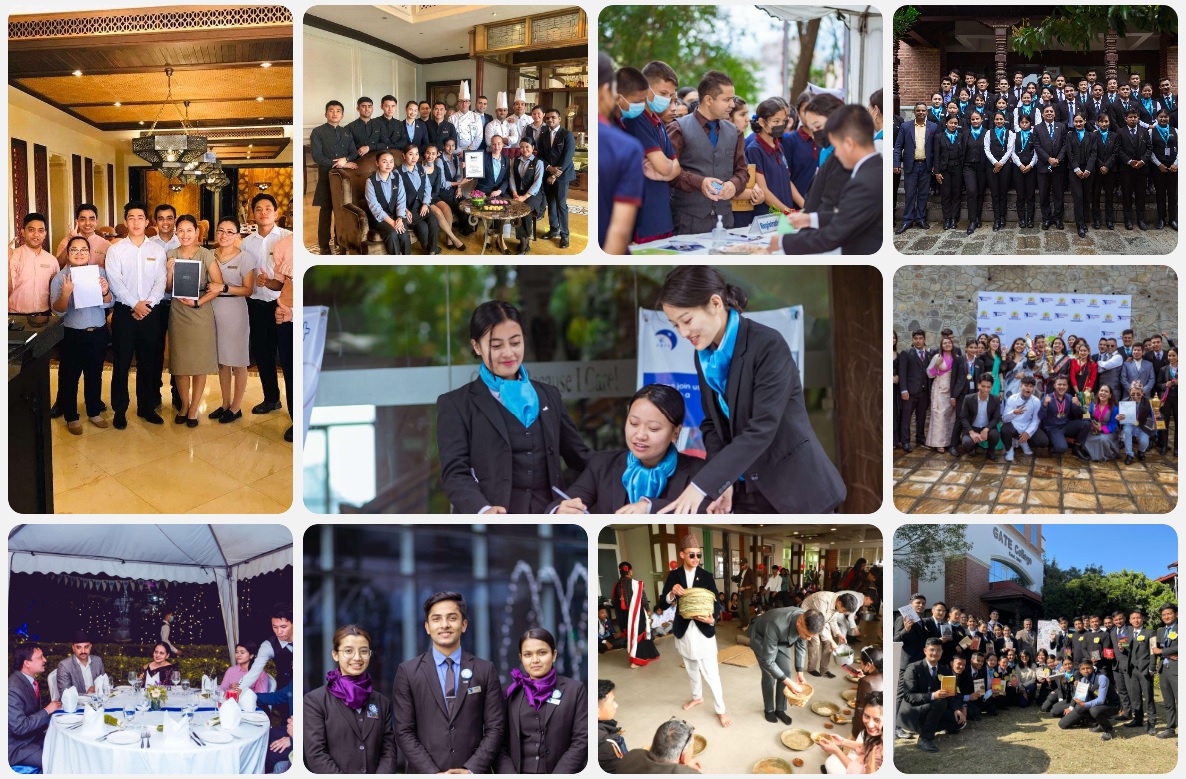
Internship is an important part of the academic and professional learning environment at GATE College. The college has arrangements for national and international internship exposure, while internship requirements are also built into the bachelor's curricula.
The BPH curriculum incorporates professional internship at several stages of study.
BIHM includes Industry Operations Internships in Semester III and Industry Management Internships in Semester VII. Both internship semesters also include an internship report.
Students may also participate in outdoor catering activities connected with events. These activities provide experience in preparation, service, coordination, and hospitality operations outside regular classroom settings.
GATE also provides placement support after graduation and access to alumni support. These services assist students and graduates with professional connections and employment processes without guaranteeing a specific job or career outcome.
Student participation at GATE includes clubs and activities that complement academic study.
The college has three named student groups:
Student Quality Circle (SQC), associated with quality improvement and student leadership
Creative Circle, focused on creativity and artistic participation
Toastmasters, supporting communication and public-speaking practice
These activities relate to skills used in hospitality settings, including communication, teamwork, presentation, coordination, and interaction with different groups of people.
The college also has an entrepreneurship focus connected with incubation activities and links with Idea Studio and the World Innovation Forum. Entrepreneurship is also represented in the bachelor's curricula through subjects covering startups, entrepreneurship, product development, business projects, and financial decision-making.
Kathmandu University maintains scholarship and financial-support schemes across its academic system. The categories include merit-based scholarships, need-based scholarships, UGC Formula Funding Scholarship, Local Scholarship, Staff/Faculty Family Scholarship, Loan Scholarship, and endowment-fund-based scholarships, together with schemes attached to particular KU schools.
Eligibility, selection, continuation conditions, and availability depend on the rules applicable to the particular scholarship and academic unit.
GATE's academic programs cover culinary work, food and beverage operations, accommodation, front office, service management, events, marketing, finance, revenue management, research, entrepreneurship, and hospitality business management.
These areas relate to professional roles and work settings such as:
Hotels, resorts, restaurants and leisure establishments
Culinary and food production operations
Food and beverage service
Front office and accommodation operations
Rooms division
Guest relations
Events and catering
Sales and marketing
Hospitality entrepreneurship
Public relations and diplomatic office environments
Service-oriented roles in banking, insurance and luxury-sector businesses
Career outcomes depend on the individual graduate, role requirements, experience, further training, and employer selection. Internship, alumni, and placement-support activities provide professional exposure and career support without assuring a particular employment result.
GATE College has a specialized academic identity centered on hospitality, tourism, culinary practice, service, and hospitality business management.
Its Kathmandu University portfolio ranges from Certificate III in Commercial Cookery, Diploma in Bakery, and Diploma in Culinary Arts to the four-year Bachelor in International Hospitality Management and Bachelor in Professional Hospitality.
The bachelor programs extend beyond operational training into management, finance, marketing, research, entrepreneurship, service design, events, and industry internship. Practical facilities, event-based activities, catering exposure, student clubs, and professional internships form part of the broader learning environment.
For students comparing hospitality programs, the main academic considerations at GATE include the level and focus of the chosen program, its KU curriculum, practical components, internship structure, learning facilities, and the admission and academic requirements attached to that program.
GATE College is located at Budhanilkantha-9, Mandikhatar, Kathmandu, Nepal.
The Global Academy of Tourism and Hospitality Education (GATE College) was established in 2007 AD with a focus on hospitality, tourism, culinary, and service education.
The listed certificate, diploma, and bachelor-level hospitality programs at GATE College are offered under Kathmandu University. Admission, eligibility, entrance requirements, curriculum administration, examinations, results, academic progression, and degree or qualification awards follow the applicable rules and regulations of Kathmandu University.
GATE College offers Certificate III in Commercial Cookery, Diploma in Bakery, Diploma in Culinary Arts, Bachelor in International Hospitality Management (BIHM), and Bachelor in Professional Hospitality (BPH) under Kathmandu University.
The Bachelor in Professional Hospitality is a four-year program carrying 120 credits. Its curriculum includes hospitality operations, service management, business subjects, research, entrepreneurship, professional internships, and specialization.
The Bachelor in International Hospitality Management is a four-year program organized across eight semesters. The curriculum carries a total of 132 credits and includes hospitality operations, management subjects, internships, research, entrepreneurship, and a Hospitality Business Project or Thesis.
Bachelor-level admission includes counseling, submission of the prescribed entrance application and required documents, an entrance test, and further selection stages that may include a personal interview and group analysis. Final eligibility and admission requirements remain subject to Kathmandu University regulations for the respective program.
Yes. Practical learning is supported through functional and industrial kitchen studios, restaurant facilities, espresso bars and cafeterias, event simulation spaces, outdoor catering activities, and internship components within the academic programs.
Yes. Internship is incorporated into the bachelor curricula. The BPH program includes professional internship components at different stages, while BIHM includes Industry Operations Internships in Semester III and Industry Management Internships in Semester VII, together with internship reports.
Yes. On-campus accommodation is among the facilities available at GATE College.
Student activities include the Student Quality Circle (SQC), Creative Circle, and Toastmasters. These activities support participation in areas such as leadership, creativity, communication, teamwork, and public speaking.
Kathmandu University maintains several scholarship and financial-support categories, including merit-based, need-based, UGC Formula Funding, Local Scholarship, Staff/Faculty Family Scholarship, Loan Scholarship, and endowment-fund-based schemes. Eligibility, selection, continuation requirements, and availability depend on the rules applicable to the relevant scholarship and academic unit.
GATE College provides placement support and alumni assistance for graduates. These services are intended to support professional connections and employment processes and do not guarantee a particular job or career outcome.