Himalayan WhiteHouse College of Law (HWCL) is a law college located in Putalisadak, Kathmandu. Established in 2024 as part of Himalayan WhiteHouse International College, the college offers legal education under the affiliation of Purbanchal University.
HWCL focuses on connecting legal theory with practical study. Its academic environment includes classroom instruction, legal research, moot court exercises, advocacy activities, debates, policy discussions, community outreach, and professional exposure. The college offers the five-year B.A. LL.B. program for students seeking an undergraduate pathway in law after completing 10+2 or an equivalent qualification.
College Name: Himalayan WhiteHouse College of Law
Short Name: HWCL
Established: 2024
Location: Putalisadak, Kathmandu
Affiliation: Purbanchal University
Program Offered: B.A. LL.B.
Program Duration: Five years
Institutional Association: Himalayan WhiteHouse International College
Academic Areas: Legal theory, clinical legal education, research, advocacy, writing, ethics, and community engagement
Facilities: Moot courtroom, legal research hub, library, study areas, Wi-Fi-enabled spaces, and cafeteria
Himalayan WhiteHouse College of Law was established to connect conventional legal study with the changing requirements of law, governance, public policy, and society. Its approach treats legal education as more than the study of statutes, rules, and procedures.
Students are encouraged to examine questions of justice, legal responsibility, public institutions, ethics, and social change. The college combines academic instruction with activities that require students to analyse legal issues, present arguments, write clearly, and engage with different viewpoints.
As part of Himalayan WhiteHouse International College, HWCL operates within a wider academic institution while maintaining its specific focus on legal education. Its location in Putalisadak places the college in Kathmandu, where students study law through classroom, research, clinical, and outreach-based activities.
HWCL aims to contribute to the development of legal education in Nepal and prepare future legal professionals and institutional leaders to participate in social change.
The college seeks to connect academic study with practical legal skills. Its mission includes preparing professionals who can work within national and international legal, administrative, and policy settings.
HWCL identifies integrity, inclusivity, and commitment to justice as central values in legal education and professional practice. These principles are reflected in its emphasis on ethics, responsibility, fairness, and reasoned legal decision-making.
HWCL is affiliated with Purbanchal University. The affiliation provides the academic framework for the B.A. LL.B. program offered by the college.
The program combines law with subjects from the humanities and social sciences. Students study the relationship between legal systems, political institutions, society, economics, public administration, human rights, governance, and professional legal practice.
The B.A. LL.B. program at Himalayan WhiteHouse College of Law is a five-year undergraduate law program. It integrates legal education with social science subjects and practical legal training.
During the early years, students build a foundation in areas such as political thought, economics, the history of Nepal, sociology, logic, legal reasoning, and general principles of law. The program later moves into procedural law, criminal law, human rights, constitutional law, public international law, legal research, professional ethics, contract law, company law, administrative law, and jurisprudence.
Clinical courses and practical assignments remain part of the academic structure. These include legal writing, community advocacy, institutional visits, trial preparation, courtroom advocacy, professional conduct, and dissertation work. Students may also study optional subjects within criminal law, business law, constitutional law, or environment and development law.
Applicants must have completed 10+2 or an equivalent qualification, including A-level or Intermediate education, from a recognized board. The stated minimum academic requirement is a 2.0 GPA.
Students from any academic stream may apply. Admission is based on an entrance and selection process that may include a written examination, group discussion, and personal interview. The program information does not set an age limit for applicants.
HWCL uses classroom teaching alongside discussion, research, presentation, and practice-based activities. Students are expected to understand legal principles and apply them to cases, social questions, public institutions, and professional situations.
Teaching methods include:
Lectures and seminars
Case analysis
Group discussions
Research assignments
Formal presentations
Legal drafting exercises
Moot court competitions
Mock trials and mock parliaments
Client counselling exercises
Community outreach
Policy writing and discussion
Public speaking and debate activities
This structure gives students repeated opportunities to read legal materials, form arguments, respond to questions, and communicate legal positions in written and spoken form.
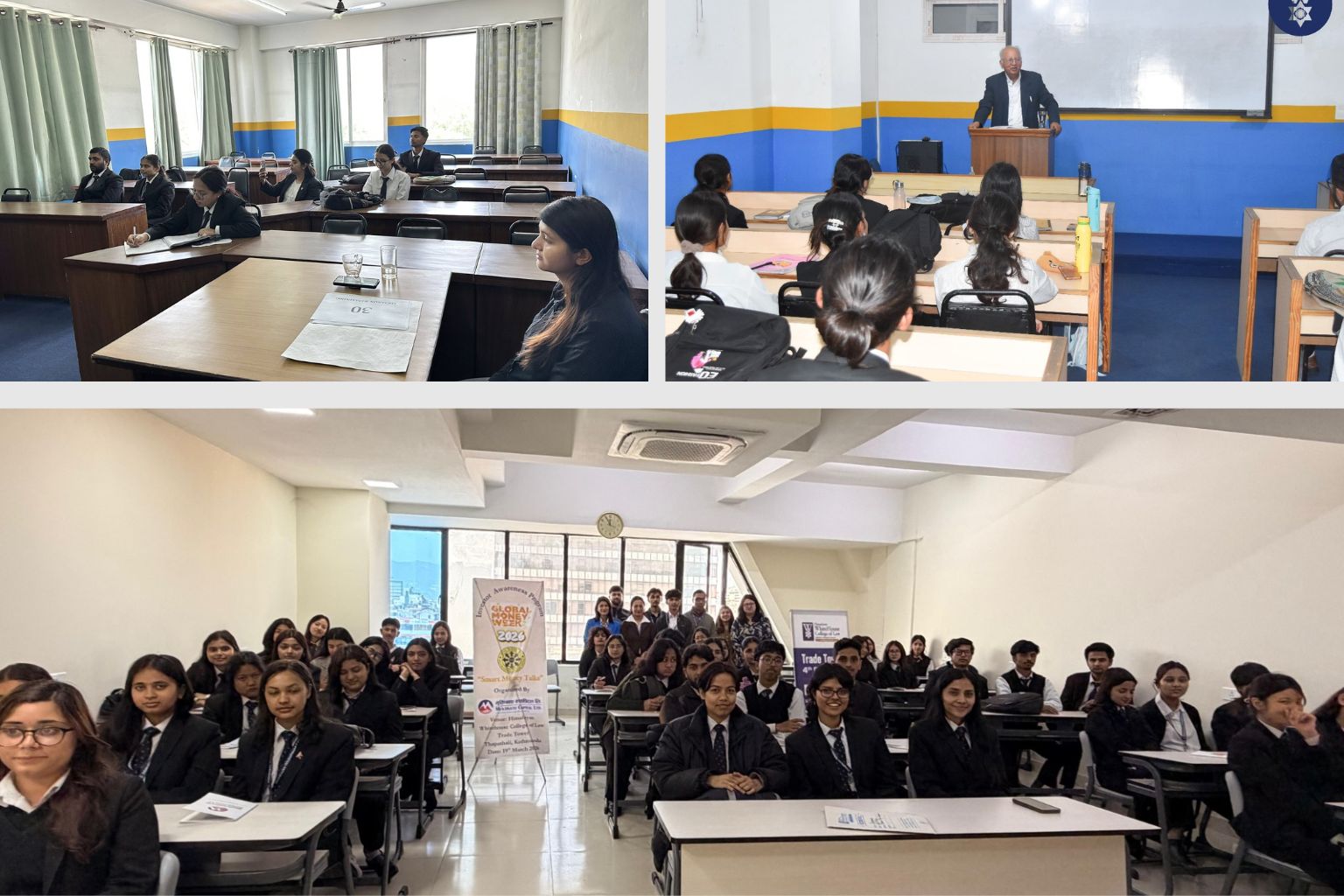
Clinical legal education is an important part of HWCL’s academic approach. It connects classroom instruction with tasks associated with legal practice and public legal service.
Students may take part in moot court exercises, pre-trial preparation, trial advocacy, client counselling, negotiation, legal drafting, and courtroom presentation. These activities help students understand how legal rules operate within disputes, institutional procedures, and professional relationships.
The Clinical Law Department works to connect academic learning with legal practice. Its student-centred approach supports the development of graduates who understand both legal doctrine and the responsibilities involved in applying the law.
Community outreach is also included within clinical learning. Through advocacy service and legal awareness activities, students can examine how law affects individuals and communities outside the classroom.
The college has an advanced moot courtroom for structured advocacy exercises. Moot court activities require students to research legal questions, prepare written submissions, organize arguments, and present a case before an academic or professional panel.
Mock trials and courtroom exercises provide further practice in legal procedure, oral presentation, questioning, professional conduct, and courtroom etiquette. Students also work on pre-trial preparation and appellate advocacy within the academic program.
These activities support the transition from reading law to presenting and applying legal arguments in a controlled educational setting.
Legal research and writing form part of the college’s academic and clinical work. Students undertake research assignments, policy writing, case analysis, legal drafting, and dissertation work during the program.
Writing instruction focuses on clarity, structure, citation practice, research ethics, and purposeful legal analysis. Students are expected to distinguish between legal authority, argument, evidence, and personal opinion when preparing academic or professional work.
The Legal Research Center provides a space for students and faculty members to work on legal research, scholarly writing, publications, and collaborative projects. Resources include access to journals, case studies, legal databases, and materials needed for research papers and articles.
The research environment also supports independent study. Students can examine legal questions in greater depth, contribute to academic writing, and build the research habits required for legal study and professional work.
The faculty includes experienced advocates, academicians, and members of the judiciary. This combination connects academic knowledge with perspectives drawn from legal practice and judicial work.
Faculty members guide students through lectures, discussion, mentorship, research, writing, and practical exercises. Their role extends beyond delivering subject content. Students also receive guidance in legal reasoning, professional ethics, advocacy, and responsible decision-making.
Guest lectures, seminars, workshops, and policy discussions bring students into contact with legal professionals and specialists working in different fields. These sessions address legal issues, professional experiences, public policy questions, and developments affecting law and governance.
HWCL includes internships and professional exposure within its approach to legal education. Students may undertake internships with:
Law firms
Courts
Government institutions
Non-governmental organizations
Corporate organizations
Other legal and public institutions
Internships allow students to observe legal procedures, workplace expectations, professional communication, case preparation, and institutional decision-making.
The college also organizes workshops, seminars, guest lectures, policy discussions, and engagement with practicing lawyers and mentors. Such activities connect academic subjects with the settings in which legal professionals work.
The campus includes facilities intended to support study, research, discussion, and daily student activities.
Available amenities include clean common areas, quiet study zones, Wi-Fi-enabled spaces, a cafeteria, and secure college infrastructure. These spaces allow students to study individually, work with classmates, access online learning resources, and take part in campus activities.
The library provides reading materials for legal and interdisciplinary study. It supports coursework, legal research, case analysis, writing assignments, and independent reading.
The legal research hub and moot courtroom serve specific academic purposes. The research hub supports inquiry and writing, while the moot courtroom provides a formal setting for advocacy and procedural exercises.
Debate training and public speaking workshops form part of student development at HWCL. These activities are relevant to legal education because students must learn to present ideas clearly, respond to opposing arguments, and speak with accuracy and discipline.
Classroom discussions provide space for students to question legal rules, compare interpretations, and examine different positions. Mock parliaments introduce students to legislative debate, public reasoning, and the process of discussing proposed laws and policies.
Participation in presentations, seminars, and outreach activities also helps students practise communication across academic, professional, and community settings.
Shiva Sharma Paudel serves as Chairperson of Himalayan WhiteHouse College of Law. He has more than 25 years of experience in engineering, project and contract management, public administration, institutional leadership, and infrastructure development.
His international experience includes more than a decade with the United Nations. His roles included work with the International Criminal Tribunal for Rwanda and the Mechanism for International Criminal Tribunals, where he handled legal and administrative operations and contract-related responsibilities.
He has also managed the technical and commercial execution of project contracts for the World Bank Group in Nepal. His academic qualifications include an M.Phil. in Public Administration, an MBA, and a bachelor’s degree in Civil Engineering. He received the Nepal Vidhya Bhushan-B.
Toya Narayan Paudel serves as Director of HWCL. His academic message centres on knowledge, moral responsibility, fairness, equality, and integrity in legal education.
He views legal professionals as participants in addressing social, political, moral, and environmental questions. His leadership approach also supports an inclusive academic environment for national and international students.
Anushka Bhattrai serves as Principal of HWCL. Her academic approach connects legal theory with practical exposure and places ethics at the centre of legal study.
She emphasizes active classrooms where students ask questions, discuss legal and social issues, examine different perspectives, and develop independent reasoning. Her approach treats law as a professional responsibility connected with justice and fairness rather than only as a body of rules.
HWCL’s academic environment combines structured legal study with research, discussion, advocacy, and professional conduct. Students work with legal concepts in the classroom and then apply them through writing, presentations, clinical assignments, and community activities.
The college also emphasizes ethical practice. Legal skills are taught alongside responsibility, integrity, client relations, professional conduct, and awareness of the effects legal decisions may have on individuals and society.
Students interested in legal practice, governance, public policy, research, advocacy, or community work may find the B.A. LL.B. program aligned with those academic interests. The program provides a broad undergraduate legal foundation without limiting students to a single area of law during the early years.
Himalayan WhiteHouse College of Law is located in Putalisadak, Kathmandu.
HWCL was established in 2024 as part of Himalayan WhiteHouse International College.
The college is affiliated with Purbanchal University.
HWCL offers the five-year B.A. LL.B. undergraduate program.
Students who have completed 10+2, A-level, Intermediate, or an equivalent qualification from a recognized board may apply. The stated minimum requirement is a 2.0 GPA.
Yes. The academic structure includes moot courts, legal writing, clinical courses, community advocacy, trial preparation, client counselling, legal drafting, professional ethics, and dissertation work.
The college has a moot courtroom, legal research hub, library, study zones, Wi-Fi-enabled spaces, common areas, and a cafeteria.
Students may undertake internships with law firms, courts, government bodies, NGOs, corporate organizations, and other legal institutions.
The curriculum includes optional groups in criminal law, business law, constitutional law, and environment and development law.