Kasthamandap College of Management is located in Kalanki, Kathmandu, around 100 meters from Kalanki Chowk along the Kalanki–Swoyambhu route. The college is affiliated with Purbanchal University and runs undergraduate and postgraduate programs in management and information technology.
Its academic offerings include the Bachelor of Business Administration (BBA), Bachelor in Information Technology (BIT), and Master of Business Administration (MBA). These three programs create separate study routes for students interested in business administration, computing and information technology, or postgraduate management education.
The college was developed by academics, bankers, entrepreneurs, and professionals connected with management education and professional practice. Alongside regular classes, academic activities include presentations, case studies, workshops, guest sessions, industrial visits, group discussions, report writing, internships, and leadership-oriented activities.
College Name: Kasthamandap College of Management
Location: Kalanki, Kathmandu, Nepal, around 100 meters from Kalanki Chowk along the Kalanki–Swoyambhu route
Affiliation: Purbanchal University
Programs Offered: Bachelor in Information Technology (BIT), Bachelor of Business Administration (BBA), and Master of Business Administration (MBA)
Academic Levels: Undergraduate and postgraduate
Approved Intake: BIT – 48 seats; BBA – 144 seats; MBA – 33 seats in Fall and 33 seats in Spring
Medium of Instruction: English
Academic Activities: Presentations, case studies, workshops, guest sessions, industrial visits, group discussions, report writing, projects, and internships
Assessment Practices: Monthly tests, internal examinations, and pre-board examinations
Campus Facilities: Classrooms with CCTV, laboratories and learning spaces, and futsal facilities
Program Focus: Management, business administration, and information technology
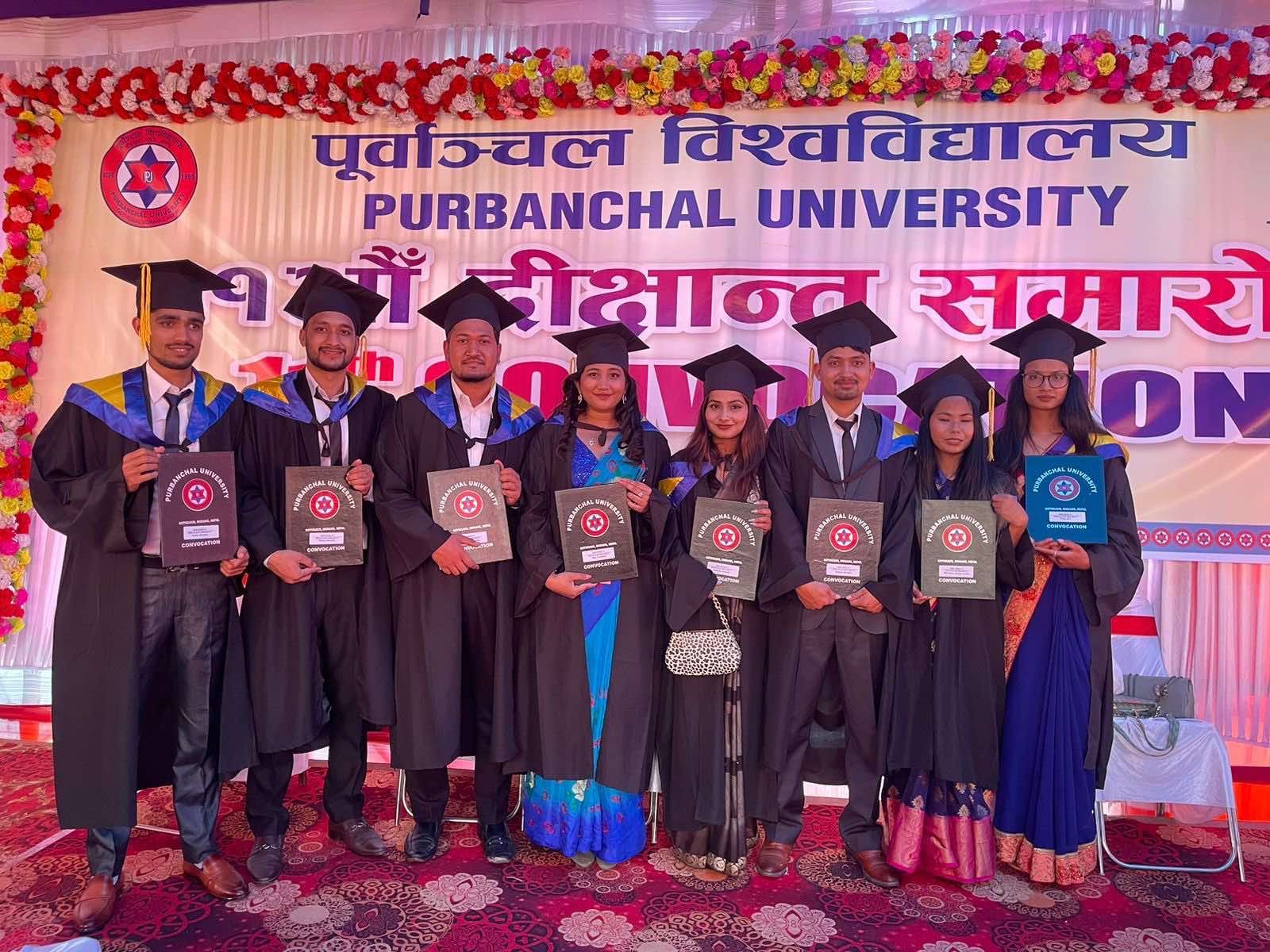
The college conducts its degree programs under Purbanchal University. The university affiliation provides the academic framework for curriculum structure, course requirements, subject sequencing, credit distribution, and university examinations.
The three programs differ clearly in their academic direction. BBA develops a broad base in business and management before moving into specialization and internship work. BIT begins with mathematics, computing, programming, technical communication, electrical systems, management, and project work. MBA is designed for postgraduate management study and includes core subjects, electives, specialization courses, seminars, research work, and a thesis.
This gives students three distinct academic paths within the same college rather than variations of a single subject area.
The Bachelor of Business Administration (BBA) is a four-year, eight-semester undergraduate program carrying 120 credit hours. The curriculum contains 40 course components, including a five-credit internship.
The early semesters establish a foundation in mathematics, communication, economics, accounting, and management. Subjects include Business Mathematics, English, Business Economics, Financial Accounting-I, Principles of Management, Business Communications, Macro Economic Analysis and Policy, Business Statistics, Principles of Marketing, and Financial Accounting-II.
As students move through the program, the curriculum becomes more focused on functional areas of business. Core subjects include:
Cost and Management Accounting
Business Finance
Database Management System
Marketing Management
Business Environment of Nepal
Business Law
Financial Management
Taxation and Auditing
Human Resource Management
Quantitative Techniques for Business
Research Methodology and Report Writing
Production and Operations Management
Banking and Insurance
Project Management
Organizational Behavior
Management Information System
Public Finance
Total Quality Management
Tourism Management
Entrepreneurship Development
Supply Chain Management
E-commerce
International Business and Strategic Management appear as capstone courses. They come after students have completed substantial work in accounting, finance, marketing, human resources, operations, law, research, and other areas of management.
BBA students select a specialization area from:
Finance
Marketing
Human Resource Management
Accounting
International Business
Each area contains several advanced subjects.
Marketing covers topics such as Consumer Behavior, Advertising and Sales Promotion, Sales and Distribution Management, Marketing of Services, Brand Management, and Retail Management.
Finance includes Capital Structures, Working Capital Management, Financial Institutions and Market, Financial Derivatives and Risk Management, Capital Investment and Financing Decisions, and Security Analysis and Portfolio Management.
Human Resource Management covers areas such as designing and managing HR systems, training and development, organization development, leadership and team building, industrial relations, conflict management, and negotiation.
Accounting and International Business have their own sets of specialization subjects, allowing students to concentrate on a defined area during the later stage of the program.
The BBA experience at Kasthamandap College of Management is not limited to lectures. Students also take part in presentations, case-study workshops, report and paper writing, group discussions, industrial visits, leadership activities, and internship work.
These activities are closely related to the demands of the curriculum. Presentation work requires students to organize and communicate ideas clearly. Case studies involve interpreting business situations, while reports and papers require structured academic writing. Industrial visits add workplace exposure, and the internship provides a formal connection between academic study and organizational practice.
The internship is also part of the university curriculum and carries five credit hours.
The Bachelor in Information Technology (BIT) gives students a technology-focused undergraduate option alongside the management programs.
The first semester carries 19 credits and contains seven courses:
Mathematics-I
Fundamentals of Information Technology
Technical Communication (English)
Basic Electrical System & Circuit
Principles of Management
Computer Programming-I
Project-I
The structure combines mathematics, computing, communication, programming, technical subjects, management, and project work from the beginning.
Fundamentals of Information Technology introduces students to computer systems and architecture, software, databases, telecommunications, networks, internet technologies, multimedia, information security, and applications of information technology.
Mathematics-I develops the quantitative base required for later technical work. The syllabus covers coordinate systems, geometry, vectors, differentiation, definite integrals, functions of several variables, multiple integrals, and matrix algebra.
Computer Programming-I establishes programming study, while Basic Electrical System & Circuit introduces an electrical and systems component. Technical Communication adds formal English communication to the semester.
Project-I is included from the first semester, giving project work an early place in the program rather than limiting it to the final stage of study.
Several subjects also contain tutorial or practical hours. Fundamentals of Information Technology, Basic Electrical System & Circuit, and Computer Programming-I include practical components, while Mathematics-I has tutorial hours alongside theory.
For students deciding between BIT and BBA, the difference begins immediately. BIT requires regular engagement with mathematics, computing systems, programming, technical concepts, practical work, and projects. BBA places greater emphasis on accounting, economics, finance, marketing, human resource management, operations, law, and organizational subjects.
The Master of Business Administration (MBA) is the postgraduate management program at Kasthamandap College of Management.
The Purbanchal University MBA structure carries 69 credit hours over four semesters. Semester I carries 16 credits, Semester II 19 credits, Semester III 16 credits, and Semester IV 18 credits.
Semester I includes:
Marketing for Managers
Communication for Managers
Accounting for Managers-I
Legal Framework of Business
Decision Sciences
Elective-I
Semester II includes Accounting for Managers-II, Human Resource Management & Organizational Behavior, Economics for Managers, Financial Management, Operations Management, Seminar I, and Elective-II.
Semester III moves into Entrepreneurship and Social Enterprises, Research Methodology and Thesis Proposal, Information Technology Management, Elective-III, Seminar II, and two specialization courses.
The final semester contains International Business, Strategic Management, Corporate Governance and Corporate Social Responsibility, Seminar III, two additional specialization courses, and a five-credit thesis.
Electives are available across the first three semesters. Options include:
Principles and Contemporary Practices of Management
Introduction to Computing
E-commerce and Digital Marketing
Introduction to Public Relations
Organization Design and Change
Project Management
MBA students select one specialization area from Marketing, Finance, Human Resource Management, or Operations and Supply Chain.
Marketing specialization subjects include Marketing Research, Product and Brand Management, Sales Management and Retailing, Service Marketing and CRM, and Advertising Management.
Finance includes Corporate Financial Reporting and Analysis, Capital Structure, Security Analysis and Investment Management, Management of Financial Institutions, and Financial Derivatives and Engineering.
Human Resource Management covers Team Building and Conflict Management, Industrial Relations and Labor Legislation, Training and Development, Talent Management, and Performance Management: Systems and Strategies.
Operations and Supply Chain includes Inventory and Warehouse Management, Designing and Managing Supply Chain, Procurement and Materials Management, Network Design, and Facility Location Management.
The MBA differs from the undergraduate BBA in both level and structure. Seminars, specialization subjects, research methodology, a thesis proposal, and the final thesis give research and advanced management study a more substantial place in the program.
Regular classroom instruction is supported by academic activities that require students to speak, write, discuss, analyze, and work with practical situations.
Presentations form a recurring part of student activity, including presentation competitions. Case-study workshops provide opportunities to examine business situations through discussion and analysis.
Guest sessions connect students with people from academic and professional backgrounds. Industrial and field visits allow particular subjects to be considered in workplace settings, while group discussions add another format for presenting and responding to ideas.
Writing is also part of the academic routine. Students work with reports, papers, research-oriented assignments, and presentations. This becomes especially relevant for BBA students approaching research methodology and internship work and for MBA students completing research methodology, a thesis proposal, and the final thesis.
Internship activity has an established place in the college's academic environment. Students may gain workplace exposure in banks, hotels, corporate organizations, and other institutions as part of their practical learning.
Kasthamandap College of Management follows an academic routine that includes regular tests and evaluations. Monthly tests, internal examinations, and pre-board examinations form part of the assessment environment.
These sit alongside assignments, reports, presentations, group work, projects, practical sessions, internships, and university examinations.
The form of academic work differs by program. BIT includes theory, tutorial, practical, and project components. BBA combines business study with research-oriented work, specialization, and internship. MBA places greater weight on seminars, advanced management subjects, specialization, research preparation, and thesis work.
English is used as the medium of instruction. Additional language support classes are also part of the academic environment.
The college is situated in Kalanki, around 100 meters from Kalanki Chowk along the Kalanki–Swoyambhu route.
The campus operates from a truss building structure described as earthquake-resistant. Classrooms have CCTV, and the academic environment includes laboratories and other learning spaces used for teaching and practical activities.
Sports and co-curricular activities include futsal. Students also participate in workshops, seminars, tours, academic competitions, field visits, personality development activities, team-based sessions, and other organized programs alongside their regular coursework.
Admission requirements vary according to the academic level and program.
For BBA, applicants must have completed twelve years of schooling or an equivalent qualification from a university, board, or institution recognized by Purbanchal University. Applicants are required to have secured at least 40 percent in 10+2, PCL, or an equivalent program.
MBA is a postgraduate program for students entering after bachelor's-level study.
Students comparing the available programs should therefore consider the nature of the curriculum as much as the degree title. BBA is structured around business foundations, functional management subjects, specialization, and internship. BIT begins with mathematics, computing, programming, practical study, and projects. MBA moves into postgraduate management through core subjects, electives, seminars, specialization, research, and thesis work.
The academic life of the college combines university coursework with regular activities outside conventional lectures. Presentations, group assignments, report writing, project work, industrial exposure, workshops, and professional interaction create different forms of academic participation across the three programs.

BBA students spend much of their degree moving from foundational business subjects toward functional management and specialization. BIT students work with technical subjects, programming, practical sessions, and projects. MBA students deal with advanced management subjects, elective choices, specialization, seminars, and research.
The three programs therefore serve different academic stages and interests while sharing the same institutional setting in Kalanki.
Kasthamandap College of Management is located in Kalanki, Kathmandu, around 100 meters from Kalanki Chowk along the Kalanki–Swoyambhu route.
The college is affiliated with Purbanchal University. Its academic programs follow the relevant university curriculum and academic framework.
The college offers three programs:
Bachelor in Information Technology (BIT)
Bachelor of Business Administration (BBA)
Master of Business Administration (MBA)
The approved intake is 48 seats for BIT, 144 seats for BBA, and 33 seats each for the Fall and Spring MBA intakes.
The BBA is a four-year, eight-semester undergraduate program with 120 credit hours. Its curriculum includes foundation courses, core management subjects, specialization courses, capstone courses, and a five-credit internship.
BBA students can select a specialization in Finance, Marketing, Human Resource Management, Accounting, or International Business.
BIT focuses on information technology and computing, with study areas that include mathematics, programming, computer systems, technical communication, practical work, and projects. Project work begins from the first semester.
The MBA is a postgraduate management program structured across four semesters and 69 credit hours. It includes core management subjects, electives, seminars, specialization courses, research methodology, a thesis proposal, and a final thesis.
MBA students can choose from Marketing, Finance, Human Resource Management, or Operations and Supply Chain.
Students take part in presentations, case studies, workshops, guest sessions, industrial and field visits, group discussions, report writing, projects, research-oriented assignments, and internships.
Applicants must have completed twelve years of schooling or an equivalent qualification from a university, board, or institution recognized by Purbanchal University. They must have secured at least 40 percent in 10+2, PCL, or an equivalent program.
The college has classrooms with CCTV, laboratories and learning spaces, and futsal facilities. Its academic routine includes monthly tests, internal examinations, and pre-board examinations.