PAHS School of Nursing & Midwifery, commonly known as Lalitpur Nursing Campus (LNC), is a public nursing education institution based in Sanepa, Lalitpur, Nepal. It functions under Patan Academy of Health Sciences (PAHS) and is closely linked with Patan Hospital for clinical learning. The campus is known for structured hospital practice, community learning, and academic pathways from Bachelor's level (BSc Nursing, BNS, BMS) to master’s level (MN) nursing education.
For many applicants, the campus stands out because of its long history in nursing education and its close connection with a major teaching hospital. The learning environment combines classroom study, supervised hospital practice, and community postings that connect nursing study with real health needs in Nepali communities.
Established: 1959
Location: Milap Road, Sanepa, Lalitpur, Nepal
Institutional home: Patan Academy of Health Sciences (PAHS), PAHS School of Nursing & Midwifery (Lalitpur Nursing Campus)
Clinical learning partner: Patan Hospital
Major academic pathways: B.Sc. Nursing, Bachelor of Nursing Science (BNS), and Master of Nursing (MN)
Key learning approaches: Problem Based Learning (PBL) and Community Based Learning and Education (CBLE)
National admission route: Medical Education Commission (MEC) entrance and matching system
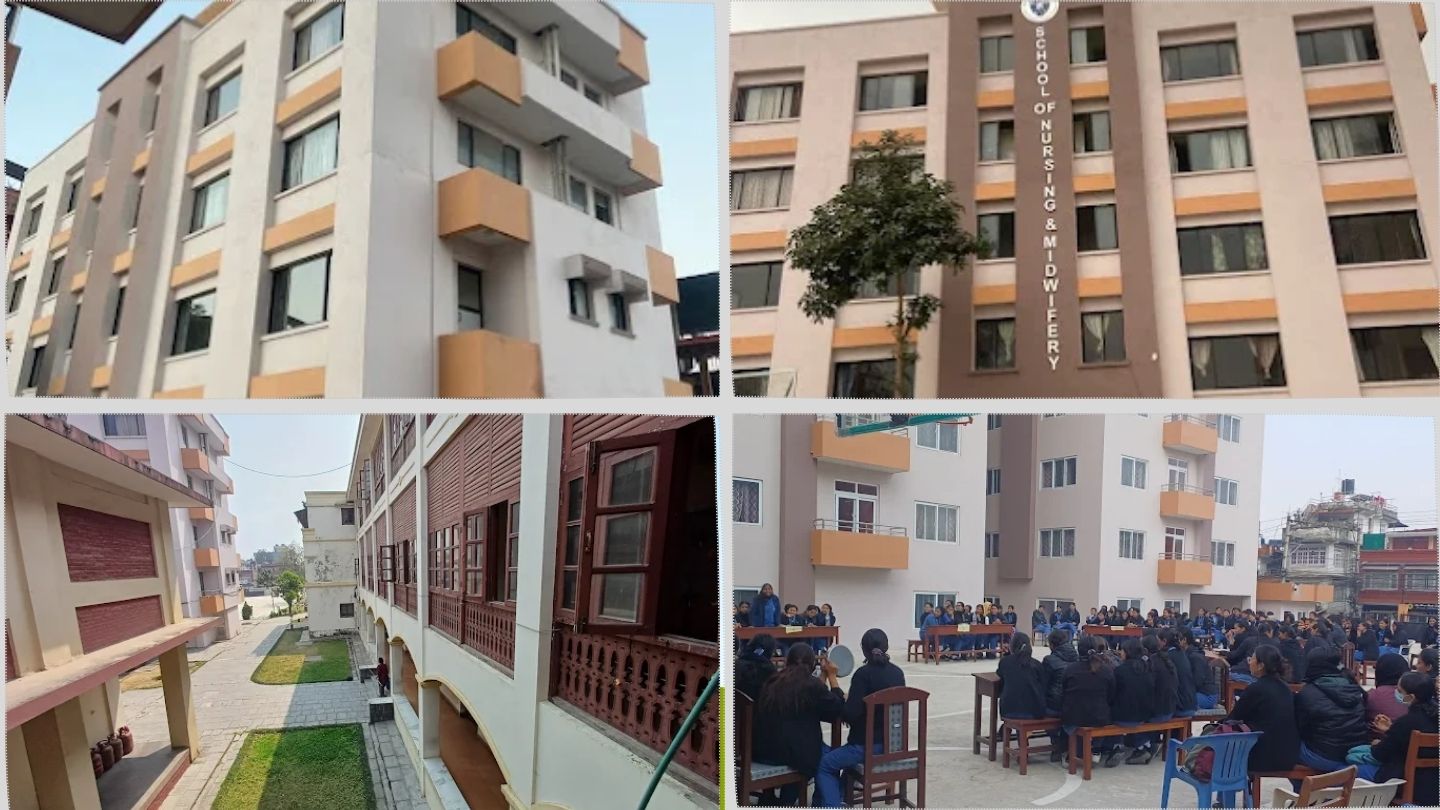
The nursing institution began in 1959 as Shanta Bhawan Nursing School. It was started with support from the United Mission to Nepal (UMN) to educate Nepali citizens in nursing and was linked with Shanta Bhawan Hospital, later known as Patan Hospital. This early link with a hospital shaped the campus identity as a place where nursing education stays close to patient care and real service delivery.
In 1972, the institution came under Tribhuvan University, Institute of Medicine (TU-IOM) as a constituent campus. This move placed the nursing school within Nepal’s public higher education framework and supported structured academic growth, standardized evaluation practices, and recognition within national education pathways.
A later shift occurred in 2003 when the institution moved away from UMN management and began operating independently under a Board of Directors. This institutional step is part of the campus transition from mission-led administration to a Nepali public governance setting.
Another important transition followed through a tripartite agreement among TU, PAHS, and the campus in August 2015. From the academic year 2016/017, student intake shifted under PAHS. This created a closer academic and clinical link between nursing education and PAHS teaching and service systems.
The campus offers nursing education across different levels. Applicants should confirm the current year’s seat numbers, fees, and program status through official admission notices because these details change by year.
| Program | Level | Seats | Fee (NPR) |
|---|---|---|---|
| Bachelors in Midwifery Science (BMS) | Bachelor | 15 | — |
| Master in Nursing | Master | 28 | 888,250 |
| Bachelor of Nursing Science (BNS) | Bachelor | 40 | 518,000 |
| BSc Nursing | Bachelor | 50 | 1,036,000 |
B.Sc. Nursing is a four-year bachelor program that builds nursing knowledge for hospital and community practice, including patient assessment, care planning, nursing procedures, communication, documentation, and teamwork in clinical settings. The program is suitable for students coming from a science background at +2 level who want a full bachelor route in nursing education.
BNS is a three-year bachelor pathway that is commonly linked with “bachelor upgrading” for nurses who have completed PCL Nursing and hold registration with the Nepal Nursing Council. This program supports professional growth by strengthening academic nursing knowledge and linking practice experience with structured study in areas such as adult nursing, community health nursing, psychiatric nursing, and pediatric nursing.
Master of Nursing is a two-year postgraduate program that supports advanced nursing practice, leadership, specialized nursing knowledge, and higher-level academic preparation. Specialization areas include Women’s Health Development, Adult Health Nursing, Child Health Nursing, Community Health Nursing, and Psychiatric Nursing. Postgraduate nursing study is often relevant for nurses aiming for senior clinical responsibility, teaching roles, or program-level leadership in health services.
The campus is also associated with midwifery education through a Bachelor in Midwifery Science (BMS) program focus on safe motherhood and newborn care. Applicants should confirm the current intake and program status through the admission year notice and official updates.
Nursing admissions in Nepal are structured around national systems, academic eligibility, and seat allocation processes. For PAHS-linked nursing programs, the key route is through MEC entrance and matching.
The Medical Education Commission (MEC) manages national entrance examinations for medical and health science programs in Nepal. Nursing applicants generally sit for the relevant MECEE examination and participate in matching. Matching places students based on entrance score rank, seat availability, and priority choices submitted by applicants.
This system matters for applicants because the admission outcome depends on preparation for the national exam and careful choice-setting during the matching stage. Students who plan early tend to handle deadlines, documentation, and choice selection more smoothly.
For B.Sc. Nursing, academic eligibility is linked with completion of 10+2 science (or equivalent) including Physics, Chemistry, and Biology, with a minimum academic standard and age requirement. Applicants also need to meet rules set by MEC and the relevant program notice for that year.
For BNS, applicants usually require completion of PCL Nursing and registration with the Nepal Nursing Council. Work experience requirements are set by the admission year notice and must be checked before applying.
For MN programs, applicants generally need a recognized bachelor-level nursing qualification with requirements stated in the admission notice, along with professional registration conditions where applicable.
The entrance exam format is MCQ-based and follows a national guideline that outlines marks, time, pass requirement, and scoring rules. Applicants prepare mainly from Grade 11 and Grade 12 science content relevant to the exam syllabus, along with practice for reasoning and mental agility components where included by the guideline.
Good preparation usually includes consistent revision of concepts, regular MCQ practice, timed mock exams, and focus on accuracy. Applicants also benefit from reading the latest entrance guideline carefully so that preparation matches the actual structure of the test.
Nursing education depends on both academic instruction and practice-based supervision. At PAHS School of Nursing (Lalitpur Nursing Campus), learning is structured around classroom study, small-group learning, supervised hospital practice, and field-based community postings.
Problem Based Learning is used as a core learning method. PBL commonly begins with a patient scenario. Students work in small groups, discuss what is known from the case, identify what must be learned, and then study independently before returning for discussion and clarification.
This approach encourages careful thinking, reading habits, teamwork, and clear communication. It also supports clinical reasoning because students practice linking patient signs, history, and nursing priorities instead of memorizing disconnected facts.
Community Based Learning and Education includes residential postings in remote communities and structured work with local health posts. Students participate in community contact activities, door-to-door programs, and preparation of community health profiles. This connects nursing education with real community contexts such as poverty-linked barriers, local beliefs that affect health behaviors, and limited access to health services.
CBLE is also important for students who plan to work beyond urban hospitals. It develops communication skills, respect for local contexts, and the ability to plan practical health education and basic public health activities.
Clinical learning is a major feature of the campus. Patan Hospital serves as a central practice setting, with patient flow that includes local and referral cases. Students gain exposure to hospital services such as emergency care, intensive care, maternity services, and pediatric care areas.
Clinical learning is supervised. Students practice nursing procedures under guidance from senior nurses and doctors, and they learn through direct observation, skill practice, patient communication, documentation, and teamwork. This environment also helps students understand professional discipline, shift duty patterns, and ethical responsibilities in real care settings.
Nursing education involves continuous evaluation through theory exams, practical demonstration, clinical performance reviews, and field posting outputs. Students develop practical readiness through repeated skills practice, observation, supervised procedures, and structured reflection on patient safety and professional conduct.
The campus is located at Milap Road, Sanepa, Lalitpur, which supports access to city services and daily travel options. For many students, access to the teaching hospital is equally important because clinical posting schedules and shift duties shape daily life during the program.
Hospital-linked learning offers practical facilities through ward postings and unit-based exposure. Nursing students learn through patient interactions, nursing stations, unit routines, equipment handling under supervision, and case-based learning sessions tied with hospital care priorities.
Hostel facilities are available for students from distant districts. Hostel living supports students who have early morning duties, evening duties, and night shifts during clinical postings. It also helps reduce daily travel pressure and supports time management for study and duty routines.

Student life in a nursing campus is structured. The routine includes classes, group learning sessions, clinical postings, and self-study. For many students, the shift from general school learning to nursing learning is significant because nursing study includes patient responsibility, hospital discipline, and consistent practice.
Small-group learning supports peer learning. Students often prepare together, share notes, discuss cases, and practice explaining nursing priorities clearly. Community postings add another layer because residential field learning requires planning, teamwork, and respectful communication with families and community leaders.
Time management is central. Students balance clinical duties, class schedules, assignments, and rest. Support from classmates, mentors, and supervisors often shapes how smoothly students adjust to clinical duty cycles.
The campus learning model includes structured community engagement through CBLE. Students participate in community contact activities such as door-to-door programs and community profiling work linked with local health posts. These activities are not treated as casual volunteering; they are learning tasks tied with academic goals and nursing practice standards.
Community work supports practical nursing skills such as health education delivery, respectful communication, observation of community health patterns, and preparation of written community profiles. This also supports public health awareness and strengthens student understanding of health inequality and service gaps.
Fees and scholarship rules are set by official notices and change by year. Applicants should verify the admission year fee notice and scholarship criteria through MEC and institutional notices before enrollment.
For a referenced year, the fee range for B.Sc. Nursing is presented around NPR 10–11 lakh for the full course, and BNS around NPR 5–6 lakh for the full course. Hostel and food costs are separate and depend on student living choices and hostel arrangements.
Scholarship seats in public teaching institutions are linked with national scholarship systems. Scholarship eligibility can include categories such as government-school background and reserved groups under national rules. Scholarship recipients may also have compulsory service requirements after graduation under the relevant scholarship policy.
Key institutional milestones include:
1959: Establishment as Shanta Bhawan Nursing School
1972: Integration as a constituent campus under TU-IOM
2003: Independent operation through a Board of Directors after separation from UMN management
August 2015: Tripartite agreement among TU, PAHS, and the campus
Academic year 2016/017: Student intake under PAHS
Students and families often compare nursing institutions using practical factors rather than slogans. Key reasons applicants consider this campus include:
A long track record in nursing education since 1959
A close academic and clinical link with PAHS and Patan Hospital
Regular supervised hospital practice across major clinical units
Learning methods that include PBL for case-based learning and CBLE for community and rural exposure
Multiple academic pathways from certificate to master’s level nursing education
Hostel availability that supports students from outside the valley during duty-based learning
PAHS School of Nursing (Lalitpur Nursing Campus) is a public nursing institution in Sanepa, Lalitpur with roots going back to 1959. Its learning system connects classroom study with supervised hospital practice and community postings. Admissions follow the national MEC entrance and matching route, and students develop skills through structured clinical duties, small-group learning, and community-based education.
Yes. The campus is commonly known as Lalitpur Nursing Campus and functions under PAHS as the School of Nursing.
Academic pathways include B.Sc. Nursing, Bachelor of Nursing Science (BNS), and Master of Nursing (MN). Midwifery education is also associated with Bachelor in Midwifery Science (BMS) focus areas.
Admissions follow the Medical Education Commission entrance exam and matching process. Students sit for the relevant entrance, set priority choices, and placements are made based on rank and seat availability.
Learning includes Problem Based Learning (case-based small-group learning) and Community Based Learning and Education (residential community postings and health post-linked learning), along with supervised hospital practice.
Clinical learning is carried out at Patan Hospital with supervised exposure across major hospital services, including emergency care, intensive care, maternity services, and pediatric care areas.
Hostel facilities are available for students from distant districts and support shift-based clinical duty routines.
Applicants should verify the admission year notice for program status, seat numbers, eligibility rules, entrance schedule, fee notice, scholarship categories, and service conditions linked with scholarships.
Graduates commonly work in hospitals and community health programs in Nepal. Some graduates also pursue international licensing routes based on the rules of destination countries and required exams or language tests.
Contact Lalitpur Nursing Campus's administrative office for detailed information on the course, admissions, location, fees, scholarships, facilities, counseling, or eligibility.
PAHS School of Nursing (Lalitpur Nursing Campus)
Email Address: lnc@pahs.edu.np
Website: https://web.pahs.edu.np/school-of-nursing-and-midwifery
Phone Number: +977-1-5521634, +977-1-5526490, +977-1-5905729
Location: Milap Road, Sanepa, Lalitpur