



Bachelor of Midwifery Science (BMS) at PAHS School of Nursing & Midwifery, Lalitpur Nursing Campus is a three-year bachelor-level program focused on midwifery practice across pregnancy, childbirth, postpartum, and early newborn life. The campus operates as a constituent nursing and midwifery school under Patan Academy of Health Sciences , and its nursing education history in Lalitpur goes back to 1959, linked to Shanta Bhawan Hospital (now Patan Hospital).
PAHS reports that BMS began in 2022 with an annual intake of 20 students. Admissions are commonly opened around Shrawan/Bhadra (August), and the academic session commonly begins in Mangsir (November), based on PAHS’s published program information.
This page is written for you as a student (and for families and educators) who wants course-specific, verifiable information for academic and career planning.
Program level: Bachelor (BMS)
Duration: 3 years
Annual intake (published by PAHS): 20 students
Program start at PAHS (published by PAHS): 2022
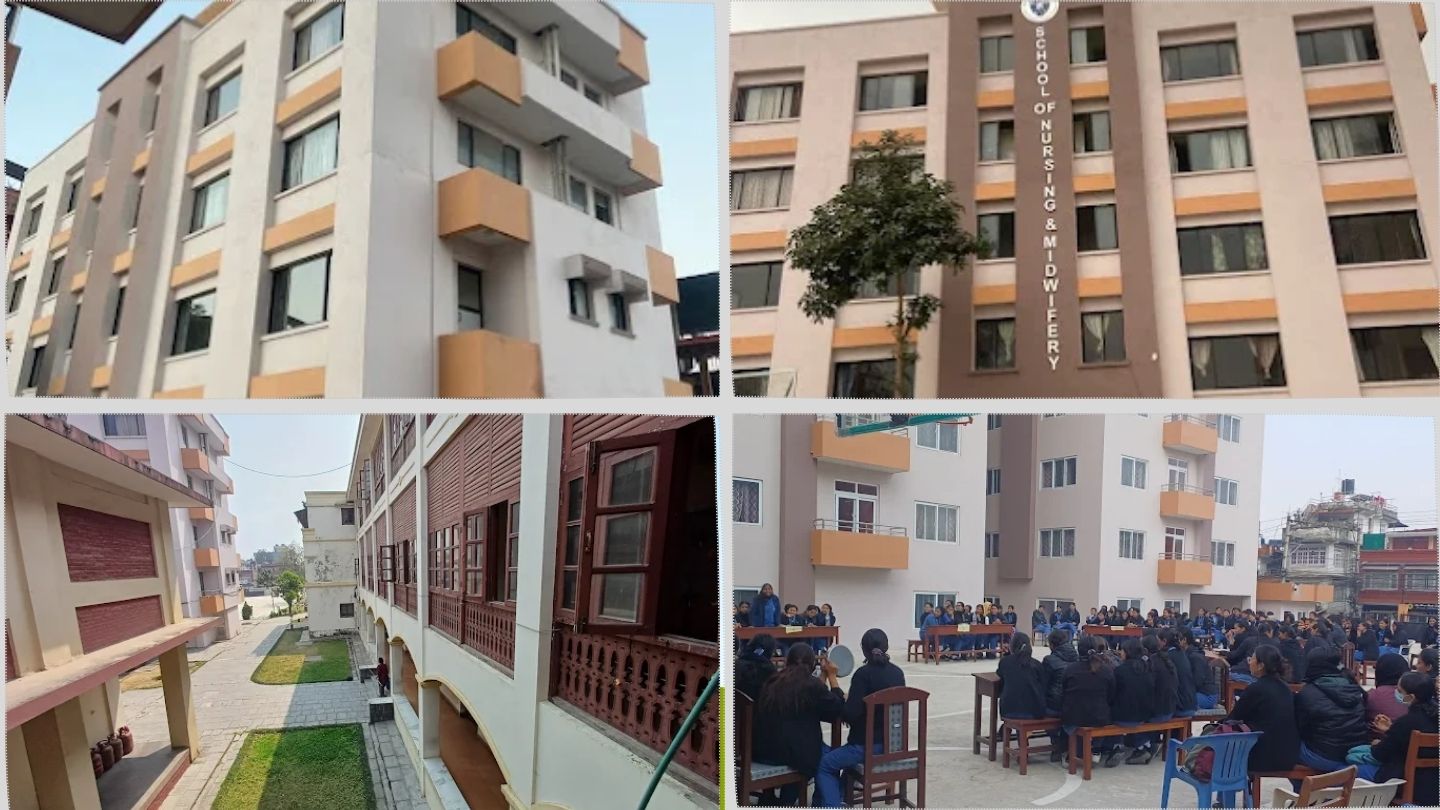
Campus: Lalitpur Nursing Campus (PAHS School of Nursing and Midwifery), Lagankhel, Lalitpur (contact location shown on PAHS site)
Recent intake snapshot (PAHS annual report 2080/81): 12 enrolled out of 20 intake for that year
PAHS publicly confirms the program length and intake. The detailed course-by-course syllabus is normally shared through official academic documents and year-specific admissions materials. Publicly available PAHS reporting still gives useful academic signals: PAHS describes BMS as a three-year course, and the annual report lists year-based continuity (first year, second year) and scheduled yearly examinations for enrolled batches.
Midwifery education, by definition, covers care across pre-pregnancy, pregnancy, birth, postpartum, and the early weeks of life. WHO describes midwifery as skilled care for childbearing women, newborns, and families across that continuum.
ICM also links midwifery education to a defined scope of practice and competence-based preparation for legal licensing.
For a student planning your study, it helps to think of BMS learning in three connected strands:
Midwifery theory and clinical reasoning (assessment, decision-making, safety, referral)
Practical midwifery skills across the maternity and newborn care timeline
Professional practice (ethics, respectful care, communication, documentation, teamwork)
BMS at PAHS is presented as a midwifery training pathway that prepares graduates for maternal and newborn care roles within Nepal’s health system needs, while remaining consistent with regulated professional practice. PAHS also states a broader institutional focus on improving health outcomes for underserved and rural populations in Nepal through health science education.
A student-friendly way to read the objective is:
You learn midwifery care that supports safe pregnancy, safe birth, and safe postnatal/newborn care.
You learn professional responsibility tied to regulation and licensing expectations for the “midwife” title in a national system.
BMS graduates commonly work in settings where maternity and newborn services run daily:
Hospitals and maternity units
Birthing centres and basic emergency maternity services
Community and outreach maternal–newborn services
Referral-linked services that require triage, early risk detection, and timely transfer
Your scope later depends on Nepal’s job structure, placement system, and the legal scope defined by regulators and employers. The global definition and scope framing from ICM is relevant here because it ties education to competent practice and legal licensing.
Students typically look for learning outcomes they can “feel” during clinical postings and exams. Based on the accepted definition of midwifery care across the full continuum, you should expect outcomes that connect to real service delivery.
Examples of outcome areas you can map to your future work:
You communicate respectfully with women and families during antenatal, birth, and postnatal periods.
You record findings clearly and follow referral steps when higher-level care is needed (your future workplace protocols guide this).
You support normal pregnancy and birth while keeping safety checks strong and consistent with your scope of practice.
Students often ask, “What skills will I leave with?” BMS skill development is closely tied to the midwifery care timeline and to supervised practice.
Skill areas that connect directly to WHO’s midwifery continuum description and ICM scope framing include:
Antenatal assessment skills (history taking, basic screening, counselling, birth preparedness discussions)
Labour and birth support skills (monitoring, safe assistance within scope, communication during urgent moments)
Postnatal and early newborn care support (care in the early weeks, feeding support, danger sign recognition, follow-up planning)
Sexual and reproductive health education and counselling within workplace scope
Documentation, respectful care, teamwork, and handover communication
PAHS runs its programs within a teaching-hospital ecosystem and a learning culture that includes health-profession education support. PAHS maintains a Health Profession Education Unit that supports educational practice and faculty development inside the academy.
Clinical learning is a central part of midwifery preparation. PAHS’s service listings show relevant clinical departments such as Obstetrics and Gynaecology and Paediatrics within its hospital services environment, which helps explain why midwifery training at PAHS is closely connected to clinical settings.
PAHS annual reporting also shows that BMS batches follow structured academic timelines with session starts and scheduled year examinations, which matters for your planning and pacing.
Admissions and entrance procedures for health programs in Nepal commonly run through the Medical Education Commission (MEC) process for the relevant year. MEC’s official registration instructions tell applicants to check eligibility in the year’s notice and list the required uploads during registration.
Common MEC application uploads include:
Bank voucher/deposit slip
Recent passport-size photo
Academic transcript
Related professional council registration certificate (when required)
Citizenship (or passport/other document for foreign applicants)
Signature scan and reservation-category documents (if applicable)
A practical note for BMS applicants: Nepal Nursing Council’s official portal includes a BMS category and lists document requirements for BMS applicants, including PCL Nursing transcripts and an active Nepal Nursing Council registration certificate. This strongly suggests BMS is treated as a post-basic pathway tied to prior nursing qualification and active council registration in Nepal.
BMS can lead you toward roles connected to maternal and newborn care delivery and supervision, depending on employer structure and licensing status:
Midwifery-related service roles in hospitals and maternity units
Birthing centre and maternity service roles in local health systems
Maternal–newborn community service roles that support pregnancy, postpartum follow-up, counselling, and referral coordination
Teaching-support roles later in your career after experience and further study (role varies by institution policy)
Licensing and council processes matter for real employment. Nepal Nursing Council’s portal explicitly includes a BMS track and related guidelines, which signals that council processes are part of the post-graduation pathway.
PAHS has published goals that include expanding access for students from disadvantaged backgrounds in health science education. This creates a policy basis for scholarship and support systems, even though the exact BMS scholarship rules depend on the year and category.
You should check the latest PAHS notice and MEC notice for your admission year for the exact scholarship types, seat categories, and financial rules.
Students usually choose a midwifery program by checking five practical points, not slogans:
Program stability: PAHS lists BMS as a three-year program with published annual intake and start year.
Clinical learning environment: PAHS hospital services include departments directly connected to maternity and newborn care contexts.
Academic track record: PAHS annual reporting shows multiple BMS batches with defined session starts and exam schedules.
Licensing pathway visibility: Nepal Nursing Council includes a BMS pathway in its official portal and guidance links.
Location and access: PAHS lists the nursing campus contact location at Lagankhel, Lalitpur, which helps students plan daily commuting and living arrangements.
Bachelor of Midwifery Science at PAHS School of Nursing and Midwifery (Lalitpur Nursing Campus) is a three-year program started in 2022 with an annual intake of 20, based on PAHS’s published information.
Your best next step is to match your eligibility, documents, and timeline to the current MEC notice and PAHS notice for the admission year, then plan your preparation around the entrance and matching process.
PAHS publishes BMS as a three-year program.
PAHS publishes an annual intake of 20 for BMS, and PAHS annual reporting also shows intake and enrollment figures by year.
PAHS publishes that BMS started in 2022.
PAHS lists the School of Nursing and Midwifery contact location as Lagankhel, Lalitpur (Lalitpur Nursing Campus).
MEC’s registration instruction lists bank voucher, photo, academic transcript, council registration certificate (when required), citizenship/passport, signature, and category documents.
Nepal Nursing Council’s official portal includes a BMS category and lists BMS-related guideline links and document requirements.






