Bachelor of Science in Nursing (B.Sc Nursing) at PAHS School of Nursing and Midwifery, Lalitpur Nursing Campus (LNC), is a four-year undergraduate nursing course for students from the science stream.
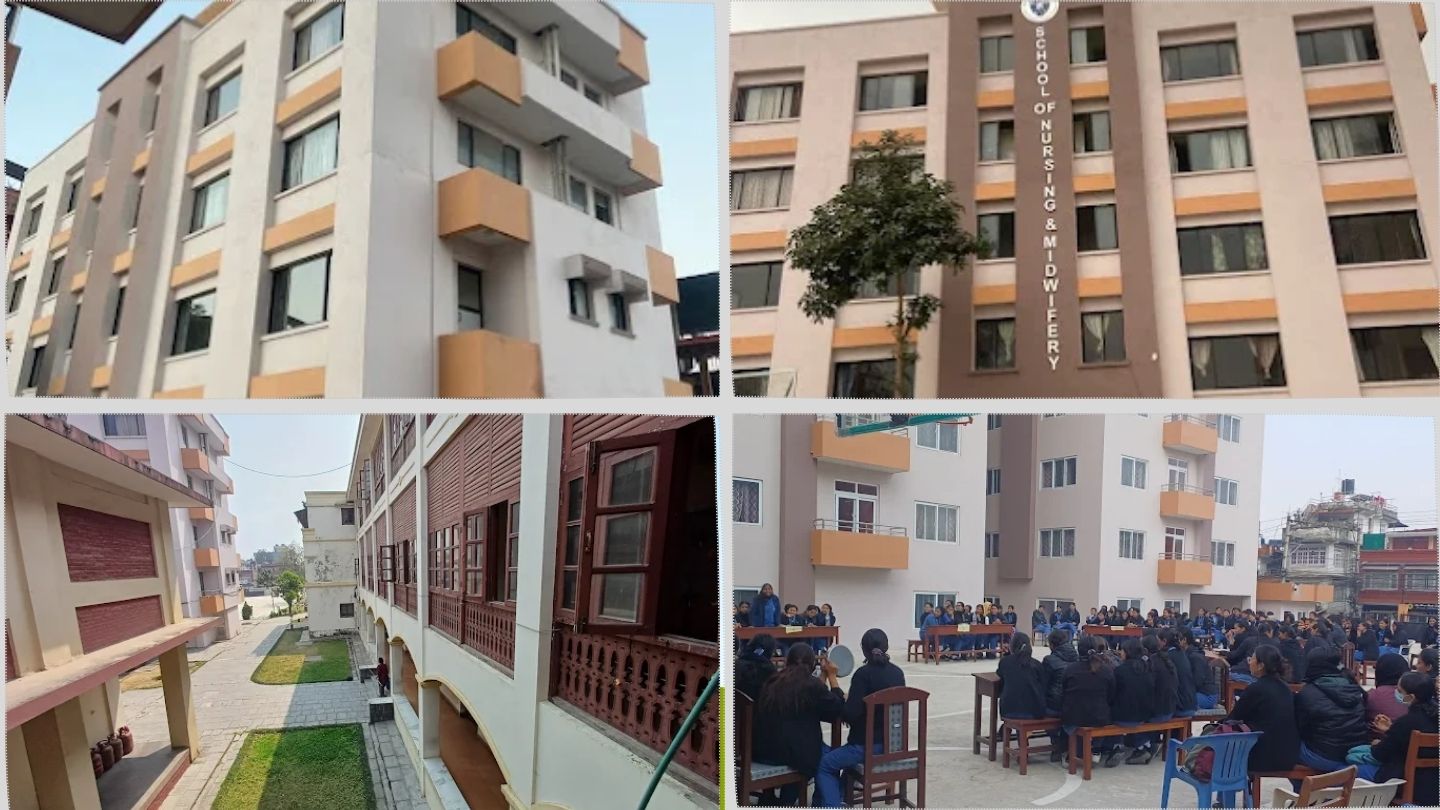
PAHS School of Nursing and Midwifery operates through Lalitpur Nursing Campus in Sanepa, Lalitpur. The campus history links back to 1959, later coming under Tribhuvan University’s Institute of Medicine in 1972, becoming independent from UMN management in 2003, and joining PAHS through a tripartite agreement in August 2015. Student enrollment under PAHS started from academic year 2016/017.
Students usually want one clear picture: what you will study, how the learning happens, what the admission route looks like, and what your degree supports after graduation. This page explains those points in a student-friendly way.
Course name: Bachelor of Science in Nursing (B.Sc Nursing)
Duration: 4 years
Campus: PAHS School of Nursing and Midwifery, Lalitpur Nursing Campus (Sanepa, Lalitpur)
Seat count: MEC determines the seat number each admission year; figures are shown around 40, and may extend up to 40–50 depending on the admission year.
Early learning focus: community- and hospital-based learning from the first year.
B.Sc Nursing at PAHS School of Nursing and Midwifery builds your nursing foundation, then moves you toward safe clinical responsibility. The course length gives time to develop steady habits in patient assessment, nursing procedures, communication, documentation, and teamwork.
Students often feel pressure about clinical learning. Your confidence grows when theory and practice stay connected. The course structure supports that connection by linking nursing concepts with repeated supervised practice.
B.Sc Nursing commonly grows in three stages.
First stage focuses on nursing basics. Students build clear understanding of the human body, basic health needs, communication, ethics, and infection prevention. Those basics protect patients and protect you during clinical postings.
Second stage expands into nursing care across settings. Students learn adult health nursing, maternal and newborn care, child health nursing, community health nursing, and mental health nursing. The purpose is simple: you learn to read the patient situation, set priorities, and plan safe nursing actions.
Third stage strengthens leadership and research literacy. Students learn how to document care clearly, coordinate nursing work, teach health messages to patients and families, and read evidence in a careful way. Research learning matters because nursing practice changes when evidence is strong and care is reviewed honestly.
B.Sc Nursing is a practical subject. Classroom learning alone cannot prepare you for real ward responsibility. The PAHS learning environment gives importance to clinical learning and community exposure as part of nursing education.
B.Sc Nursing at PAHS School of Nursing and Midwifery supports students who want bachelor-level nursing knowledge and the ability to handle complex health needs. The program description in the campus material links B.Sc Nursing with leadership roles in nursing, research ability, and response to complex health problems.
Students can read the objectives in practical terms.
You gain the ability to assess patients carefully.
You learn to plan and provide safe nursing care across common hospital and community situations.
You develop documentation habits and professional discipline that matter in real services.
B.Sc Nursing supports entry into professional nursing roles and creates a base for later specialization through experience and higher study.
Scope depends on your performance and your practice setting. A nurse in a busy hospital needs strong time management and communication. A nurse in a community setting needs patient education skills, family communication, and referral awareness.
Students also think about scope as mobility. B.Sc Nursing gives you a bachelor-level academic base, which many institutions consider when selecting for postgraduate nursing study or advanced roles.
Students completing B.Sc Nursing are expected to show clear outcomes that can be seen during clinical postings and exams.
You can assess patients systematically and report findings clearly.
You can plan nursing care using safe priorities and standard precautions.
You can communicate respectfully with patients, families, and health teams.
You can document care clearly and follow institutional procedures.
You can respond to urgent situations by following protocols and escalating care on time.
Students often ask, “Which skills will help me in real wards?” B.Sc Nursing strengthens both technical skills and professional skills.
Vital signs and focused assessment skills
Infection prevention and standard precautions
Basic nursing procedures linked with patient comfort and safety
Medication safety habits under supervision and institutional rules
Wound care support, hygiene care, and monitoring skills
Patient counselling basics and respectful communication
Teamwork communication and shift handover skills
Documentation skills as a clinical and legal record
Ethical practice habits, privacy awareness, and patient dignity
Health education in simple language
Family-centred communication
Community observation and basic referral awareness during field learning
PAHS uses Problem Based Learning (PBL) and Community Based Learning and Education (CBLE) as key teaching approaches.
Problem Based Learning uses real patient scenarios as the starting point. Students work in small groups, discuss what they know, identify what they need to learn, then study and return for discussion.
This method matters for nursing because ward work demands quick thinking, careful observation, and clear reasoning.
Community Based Learning and Education includes residential postings in remote villages, work with local health posts, door-to-door programs, and preparation of community health profiles.
Students learn how health problems look outside city hospitals. Students also learn how poverty and harmful beliefs can shape health behaviour.
Admissions for nursing colleges in Nepal are conducted through the Medical Education Commission (MEC) entrance system (MECEE). Students must pass the MEC entrance exam and then go through MEC “matching” for placement.
Academic qualification: 10+2 Science (or equivalent) with Physics, Chemistry, and Biology, with at least 50% or 2.4 GPA
Age: minimum 17 years
MECEE-BL is described as MCQ-based, 200 marks, 3 hours, with 50% as a pass mark in the campus material. The same material advises students to check the latest MEC guideline for negative marking rules because these rules can change.
Matching means your rank and your priority choices decide placement. Students who keep PAHS as a top priority need a competitive rank because seats are limited.
B.Sc Nursing graduates commonly work in areas where bachelor-level nursing is required or preferred.
Hospital nursing services (wards, OPD support, emergency support roles)
Maternal and newborn services
Child health services
Community health programs and outreach services
Mental health support services (role depends on facility scope)
NGO/INGO health programs (roles vary by project standards and recruitment rules)
Students who want long-term growth usually focus on two early goals: safe practice and strong documentation. Supervisors notice reliability first.
Scholarship and fee rules depend on the admission year and the official notice. The campus material notes that MEC determines medical education fees and scholarship categories, and that students should confirm the latest figures at the time of admission.
Students should read the latest MEC notice and PAHS admission notice for:
scholarship seat categories
required documents for categories
service obligations linked to scholarship rules (when applicable)
B.Sc Nursing fits students who want a broad nursing degree that supports hospital practice and community practice. The course length gives time to grow into professional responsibility without rushing.
B.Sc Nursing at PAHS School of Nursing and Midwifery also fits students who prefer a learning system that includes PBL and CBLE. Those methods support real-world thinking and community exposure, which many students value when they plan service in Nepal.
Bachelor of Science in Nursing at PAHS School of Nursing and Midwifery (Lalitpur Nursing Campus) is a four-year nursing degree with seat numbers set through MEC each admission year.
Your decision becomes easier when you check eligibility, prepare for MECEE-BL, understand matching, and accept the reality of clinical workload. Nursing rewards students who build steady habits and respect patient dignity from the first day.
B.Sc Nursing is listed as a four-year course.
Seat numbers are set through MEC and shown around 40, with figures also presented as 40–50 depending on the admission year. Students should confirm the final seat count through the latest MEC notice.
Admission follows MEC entrance (MECEE) and MEC matching.
Students need 10+2 Science with PCB and at least 50% or 2.4 GPA, plus minimum age 17 years.
PAHS uses Problem Based Learning (PBL) and Community Based Learning and Education (CBLE), including small-group case learning and residential community postings.
You should verify the current admission year MEC notice, seat number, fee category, scholarship category rules, reporting dates, and document checklist.