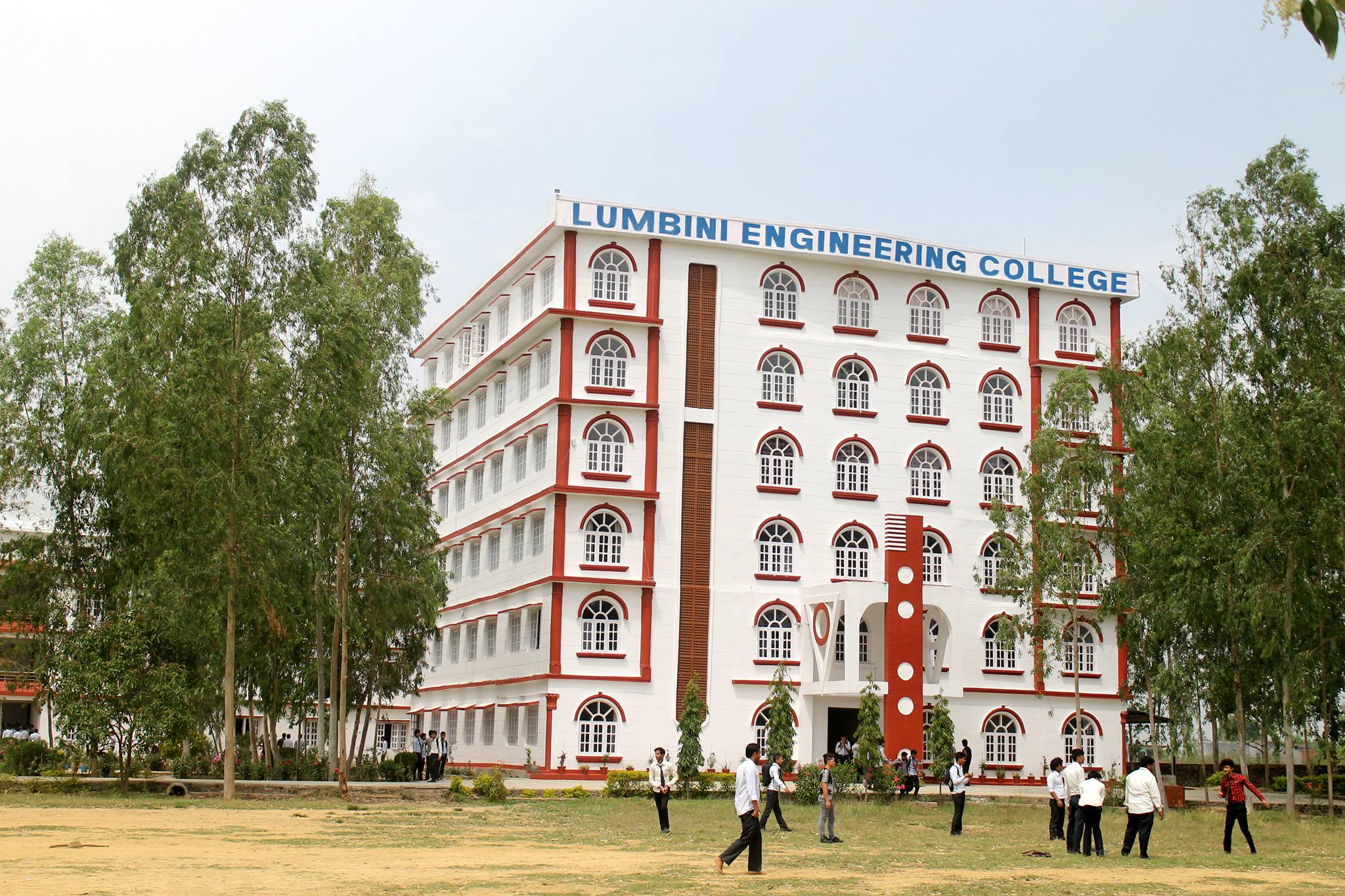
Lumbini Engineering College (LEC) was established in 2000 A.D. at Bhalwari, Rupandehi. Its academic structure later expanded through Lumbini Engineering, Management and Science College (LEMSC). Diploma-level technical programs operate under the Council for Technical Education and Vocational Training (CTEVT), while bachelor’s and master’s programs are affiliated with Pokhara University.
Located at Tilottama-7, Bhalwari, the college provides engineering and technology education across diploma, bachelor’s, and master’s levels. Its academic areas include civil engineering, computer engineering, electrical and electronics engineering, information technology, and construction management. The campus has engineering and IT laboratories, an e-library, classroom technology, semester book support, technical skill training, and field-based academic exposure.
| Area | Details |
|---|---|
| Institution | Lumbini Engineering College / Lumbini Engineering, Management and Science College |
| Established | 2000 A.D. |
| Location | Tilottama-7, Bhalwari, Rupandehi, Lumbini Province, Nepal |
| Academic levels | Diploma, Bachelor’s, Master’s |
| Diploma affiliation | CTEVT |
| Bachelor’s and Master’s affiliation | Pokhara University |
| Main academic areas | Civil, Computer, Electrical and Electronics, IT, Construction Management |
| Campus land | 2.5 Bigha |
| Distance from Butwal | About 12 km |
| Distance from Bhairahawa | About 11 km |
| Certification | ISO 9001:2015 |
| Learning resources | Engineering and IT labs, e-library, semester book support, classrooms with projectors |
| Academic exposure | Field visits, software and technical skill training, research and development activities |
Lumbini Engineering College began in 2000 A.D. with a focus on engineering and technical education. The institution was established by a team with experience in science and engineering education, with an objective of expanding access to technical study and developing engineering human resources within Nepal.
As its academic activities expanded, Lumbini Engineering, Management and Science College was established under the same institutional umbrella for bachelor’s and master’s programs. The two academic streams operate under different affiliations according to study level.
Lumbini Engineering College is affiliated with CTEVT for diploma-level programs. Lumbini Engineering, Management and Science College is affiliated with Pokhara University for bachelor’s and master’s programs.
This arrangement separates diploma education from university-level engineering education while keeping the programs within the same institutional structure.
The college has developed academic departments in civil engineering, computer engineering, electrical engineering, electronics and communication, and science and humanities. Administrative and research functions operate alongside these academic departments.
Lumbini Engineering College is located at Tilottama-7, Bhalwari, Rupandehi, in Lumbini Province. The campus lies west of the Siddhartha Highway between Butwal and Bhairahawa.
It is approximately 12 km from Butwal and 11 km from Bhairahawa. The institution has acquired 2.5 Bigha of land for its physical and academic infrastructure.
The Bhalwari location places the campus between two major urban areas of Rupandehi while maintaining a separate academic site for its diploma, bachelor’s, and master’s programs.
The college’s stated objectives focus on engineering education, technical training, research, and human-resource development.
Its objectives include:
Developing competent and skilled human resources in engineering.
Conducting short-term and long-term training in different technical sectors.
Maintaining an academic setting focused on study and achievement.
Providing technical assistance and consultancy in engineering and socio-economic development.
Conducting research and training activities related to development.
Developing an education and research center in the western region of Nepal.
Connecting technical education with practical engineering requirements.
The academic structure reflects this engineering-focused direction through programs ranging from CTEVT diplomas to Pokhara University bachelor’s and master’s degrees.
The institution offers diploma programs under CTEVT and bachelor’s and master’s programs under Pokhara University.
| Program | Affiliation | Seats |
|---|---|---|
| Diploma in Civil Engineering | CTEVT | 48 |
| Diploma in Computer Engineering | CTEVT | 48 |
| Diploma in Electrical Engineering | CTEVT | 48 |
| Bachelor of Engineering in Information Technology (BE IT) | Pokhara University | 48 |
| Bachelor of Computer Engineering (BE Computer) | Pokhara University | 48 |
| Bachelor of Civil Engineering (BE Civil) | Pokhara University | 144 |
| Bachelor of Electrical and Electronics Engineering | Pokhara University | 48 |
| Master of Science in Construction Management | Pokhara University | 30 |
Bachelor of Computer Application (BCA). Pokhara University 48 Seats
Diploma-level engineering study at Lumbini Engineering College operates under CTEVT. The offered diploma programs cover Civil Engineering, Computer Engineering, and Electrical Engineering, with 48 seats allocated to each program.
Diploma in Civil Engineering is part of the college’s civil engineering stream.
Civil engineering study at the institution covers areas connected with surveying, design and drawing, estimation, construction supervision, infrastructure development, water-supply systems, roads, bridges, irrigation works, and structural maintenance.
The diploma program provides a CTEVT-level technical route in the same civil engineering area in which the institution also conducts bachelor’s and postgraduate study.
Diploma in Computer Engineering carries 48 seats under CTEVT.
The program is part of the college’s computer-focused academic structure. The wider computer engineering environment covers computer systems, hardware, software, networks, and related technical applications.
Computer and IT laboratory facilities form part of the practical learning resources available within the institution.
Diploma in Electrical Engineering is a 48-seat CTEVT program.
Electrical education is supported by the college’s Electrical Department and engineering laboratory facilities. The institution also conducts Electrical and Electronics Engineering at bachelor’s level under Pokhara University.
The presence of both diploma and bachelor’s study creates separate academic pathways within the electrical engineering area.
Bachelor’s engineering programs operate through Lumbini Engineering, Management and Science College under Pokhara University.
The main bachelor’s engineering areas include Civil Engineering, Computer Engineering, Electrical and Electronics Engineering, and Information Technology.
Bachelor of Civil Engineering has 144 seats, the largest seat allocation among the listed bachelor’s engineering programs.
Civil engineering study covers infrastructure development from feasibility and surveying through design, estimation, construction supervision, monitoring, operation, and maintenance.
The field areas identified within the college’s civil engineering academic description include:
Buildings and structural works
Roads and highways
Bridges
Drinking-water supply systems
Irrigation works
River-training works
Dams and barrages
Surveying
Design and estimation
Construction supervision
The college has a separate Civil Department supporting study in this field. Civil engineering is represented at diploma, bachelor’s, and postgraduate construction-management levels within the institution.
Bachelor of Computer Engineering carries 48 seats and is affiliated with Pokhara University.
Computer Engineering combines elements of computer science, electrical engineering, and electronics required for the development and operation of computer systems. Its academic scope extends across hardware and software rather than concentrating on only one side of computing.
Areas associated with the program include:
Computer systems
Computer software
Networking
Hardware and software integration
VLSI and design automation
Machine intelligence
Information security
Computer system analysis
The college maintains a Computer Department and computer-related laboratory facilities for its technical programs.
Bachelor of Electrical and Electronics Engineering has 48 seats under Pokhara University.
The program sits within the college’s electrical and electronics academic structure. Electrical engineering study is associated with electricity, electronics, electromagnetism, circuits, systems, and their engineering applications.
The institution maintains departmental arrangements in electrical and electronics-related fields together with practical laboratory resources.
Bachelor of Engineering in Information Technology has 48 seats and is affiliated with Pokhara University.
BE IT forms part of the institution’s computer and technology study area. The wider learning environment includes computer and IT laboratories, software-oriented training, an e-library, and classroom presentation technology.
The Master of Science in Construction Management is a two-year Pokhara University program with 30 seats.
The program focuses on construction management and the preparation of professionals capable of working with the managerial, analytical, organizational, and decision-making aspects of construction projects.
Its academic objectives include developing knowledge of integrated construction-management principles and building competence in project leadership, analysis, decision-making, implementation, and communication.
The program runs across four semesters. Students complete 45 credit hours of coursework and 15 credit hours of research work, giving a total of 60 credit hours.
Its curricular structure contains five main components:
Foundation and analytical courses
Core and functional courses
Capstone courses
Elective courses
Thesis and research work
Students are required to take two elective courses of three credit hours each. The thesis and research project carry 15 credit hours and involve fieldwork, empirical analysis, and preparation of research in the prescribed format.
Learning activities include classroom discussions, presentations, group work, case analysis, guest lectures, and research project work.
The program requires a minimum of 80 percent attendance in classes conducted for a course.
Academic performance is assessed through internal and external evaluation. Internal evaluation carries 60 percent of the assessment weight, while external semester-end evaluation carries 40 percent.
Admission selection considers previous engineering study, professional experience, and entrance-test performance. The selection structure allocates:
20 marks for BE/BTech academic performance
20 marks for experience
60 marks for the entrance test
The total selection score is 100 marks.
Lumbini Engineering College has separate academic and administrative areas supporting its engineering programs.
Its principal departments and academic functions include:
Civil Engineering
Computer Engineering
Electrical Engineering
Electronics and Communication
Science and Humanities
Research and Development
Administrative functions
The Civil Department supports civil engineering education and technical work. The Computer Department handles computer-focused academic activities, while electrical and electronics areas support study in their respective disciplines.
Science and Humanities provides supporting academic subjects used within engineering education.
Administrative functions cover areas such as admissions, student records, finance, facilities, and general institutional management.
Engineering education at the college is supported by practical and classroom facilities.
The institution has engineering and IT laboratories for technical learning. It also maintains an e-library and other academic resources.
One part of its student resource arrangement is the issue of required books for the full semester at the time of admission. Students receiving these books do not need to purchase the same required books separately for that semester.
Classroom facilities include:
Projectors
CCTV cameras
Air conditioning
Classroom teaching equipment
The campus also provides learning, practical, and recreational materials as part of its academic setting.
The college conducts supplementary technical training alongside regular academic study.
Training areas identified within its activities include:
E-tabs
SAP
AutoCAD
Python
Arduino
Software development
These activities are separate from the formal description of the university or CTEVT curriculum and function as additional technical learning opportunities for students.
Field visits form part of the college’s practical academic activities.
Students may receive exposure to working environments such as:
Offices
Industries
Hydropower plants
Power-supply environments
Other engineering-related work settings
These visits are intended to connect academic subjects with operating engineering environments and technical workplaces.
The college also identifies individual support for students facing learning difficulties as part of its academic practices.
Research is included within both the institutional objectives and the academic administrative structure.
The college identifies research and training activities connected with development work among its institutional objectives. It also maintains a Research and Development coordination function.
Research has a more formal role at postgraduate level through the MSc in Construction Management. Students in the program complete a 15-credit research project and thesis involving fieldwork and empirical analysis.
This research component forms a required part of the master’s curriculum.
The college identifies a regular 10 percent scholarship arrangement along with additional incentives connected with academic achievement.
Academic incentives recognize students securing first, second, and third positions in each class and semester.
An incentive of Rs. 65,000 is also identified for a student achieving a 4.0 score.
These arrangements connect financial incentives with academic performance within the institution.
Lumbini Engineering College has received recognition related to its engineering education activities.
Pokhara University awarded appreciation to the institution in 2073 for its contribution to engineering education under university rules and regulations.
The Ministry of Education, Government of Nepal, also honored the institution in connection with technical education under CTEVT.
The college is identified as ISO 9001:2015 certified.
These are specific institutional recognitions and certifications rather than comparative rankings against other colleges.
Admission requirements depend on the program level and affiliation.
Diploma programs follow the applicable CTEVT academic structure, while bachelor’s and master’s programs operate under Pokhara University requirements and the college’s admission procedures.
For Bachelor of Computer Engineering, the listed academic backgrounds include +2 Science, I.Sc., and Diploma. The eligibility information also includes grade requirements.
Admission documents identified for bachelor-level entry include:
I.Sc./10+2 academic transcript
SLC/SEE transcript
Migration certificate
Provisional certificate
School character certificate
Citizenship photocopy
Equivalence certificate photocopy for study completed abroad, where applicable
For MSc in Construction Management, the admission procedure includes an entrance test along with assessment of previous academic performance and professional experience.
Applicants to different programs follow the requirements attached to the exact diploma, bachelor’s, or master’s course for which they seek admission.
The college operates through an academic and administrative team that includes leadership, departmental heads, administrative personnel, library staff, and research coordination.
The structure includes positions connected with:
Institutional leadership
Academic administration
Civil Engineering
Computer Engineering
Electrical and Electronics Engineering
Research and Development
Administration
Accounts
Library services
This arrangement separates departmental academic responsibilities from the administrative functions required for regular institutional operation.
Lumbini Engineering College has a concentrated academic structure centered on engineering and technology.
At diploma level, students can study Civil Engineering, Computer Engineering, and Electrical Engineering under CTEVT.
At bachelor’s level, the institution offers engineering programs in Civil Engineering, Computer Engineering, Electrical and Electronics Engineering, and Information Technology under Pokhara University. Its academic portfolio has also included BCA.
At postgraduate level, the MSc in Construction Management extends the institution’s civil and construction-related academic area into management and research.
Across these levels, the college combines classroom teaching with laboratories, technical training, field visits, library resources, and research activity.
Lumbini Engineering College was established in 2000 A.D. Its academic structure later expanded through Lumbini Engineering, Management and Science College for bachelor’s and master’s programs.
The college is located at Tilottama-7, Bhalwari, Rupandehi, Lumbini Province. It is approximately 12 km from Butwal and 11 km from Bhairahawa.
Diploma engineering programs are affiliated with CTEVT. Bachelor’s and master’s programs under Lumbini Engineering, Management and Science College are affiliated with Pokhara University.
The offered diploma programs are Diploma in Civil Engineering, Diploma in Computer Engineering, and Diploma in Electrical Engineering. Each has 48 seats.
The listed bachelor’s engineering programs are Bachelor of Civil Engineering, Bachelor of Computer Engineering, Bachelor of Electrical and Electronics Engineering, and Bachelor of Engineering in Information Technology.
Bachelor of Civil Engineering has 144 seats. The other listed bachelor’s engineering programs each have 48 seats.
Yes. The institution offers the Master of Science in Construction Management under Pokhara University. The program has 30 seats and runs for two years across four semesters.
Academic resources include engineering and IT laboratories, an e-library, semester book support, classroom projectors, CCTV cameras, and additional technical training facilities.
The college identifies a regular 10 percent scholarship arrangement and additional academic incentives connected with semester performance. An incentive of Rs. 65,000 is identified for achieving a 4.0 score.