Marsyangdi Multiple Campus is a community-based academic institution in BeshiShahar, Lamjung, established in 1990 AD (2047 B.S.). It was founded through the collective effort of local educationists, social workers, political figures, and community members who wanted to make higher education available within the district. The campus was created to serve students from Lamjung and nearby areas, including Manang, Tanahun, and Gorkha, with particular attention to students from underprivileged, marginalized, and middle-income backgrounds.
The institution runs academic programs from the +2 level to the master’s level. Its higher education programs are affiliated with Tribhuvan University, while its +2 programs follow the framework of the National Examinations Board (NEB). The campus also received the UGC QAA Certificate on July 13, 2022, linking its academic development to the quality assurance framework of the University Grants Commission (UGC).
Established in 1990 AD (2047 B.S.)
Located in BeshiShahar, Lamjung, Gandaki Province, Nepal
Community campus with programs from +2 to master’s level
Affiliated with Tribhuvan University for higher education programs
+2 programs operate under the NEB framework
Received UGC QAA Certificate on July 13, 2022
Motto: Quality Education is our Destination
Current physical holdings include 79 ropani of land
Current enrollment recorded in the source totals 1,160 students
Library inventory is recorded at 9,683 books
Academic offerings include +2, bachelor’s, and master’s programs
Website: mmc.edu.np
Email: info@mmc.edu.np / mmcampus2020@gmail.com
Phone: +977-66-520213, +977-66-520214
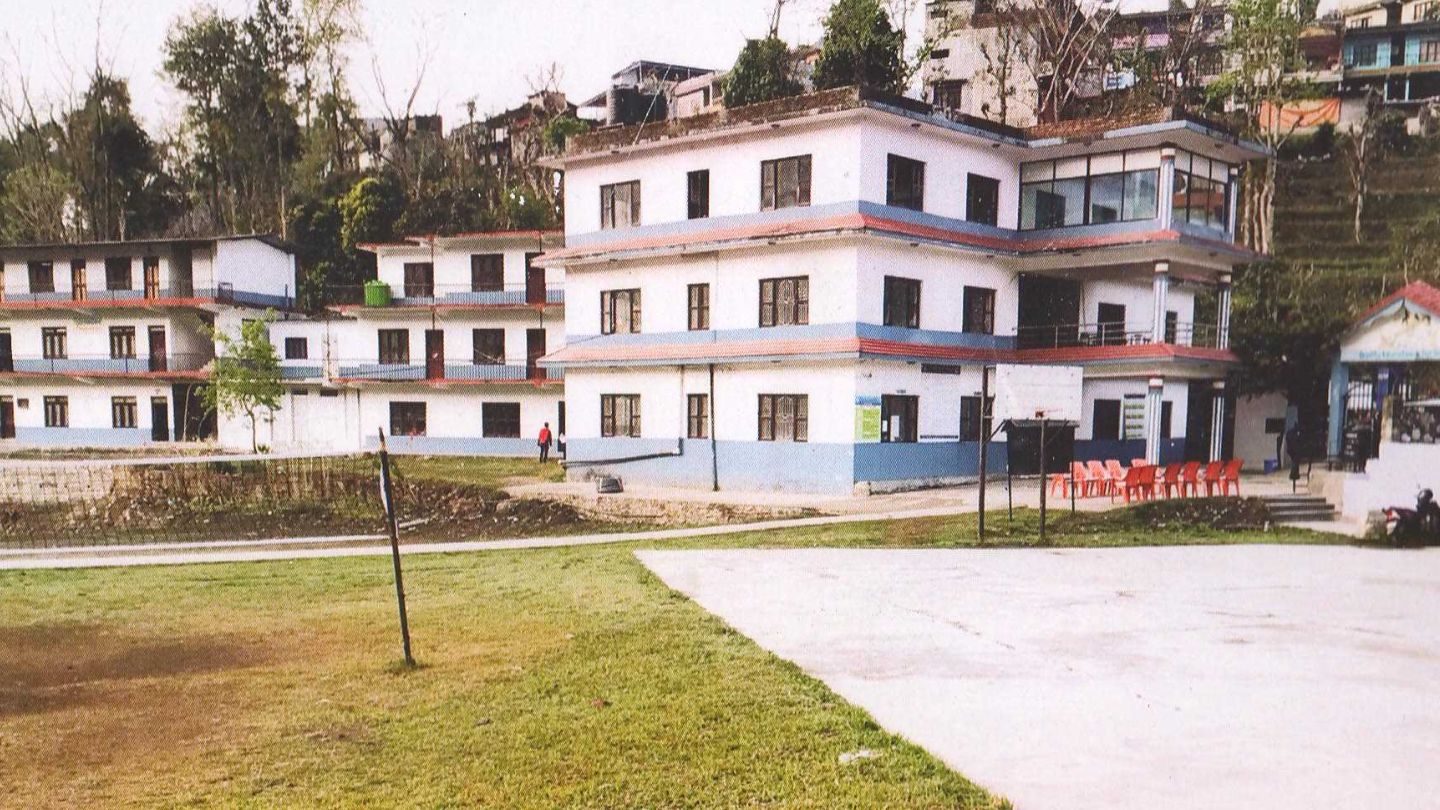
Marsyangdi Multiple Campus was established at a time when students in Besisahar and nearby areas had to leave Lamjung for higher studies. The campus first operated at Jan Bikash Secondary School as a Proficiency Certificate Level institution. Over time, it developed its own physical infrastructure and expanded its academic scope to include postgraduate programs. That development reflects a long community investment in local access to education.
The institution’s stated purpose has remained closely tied to access, affordability, and social inclusion. Its mission gives emphasis to Janajati, Dalit, women, and other marginalized groups while also focusing on the production of skilled human resources. Alongside formal academic study, the institution frames its role around moral education, cultural preservation, leadership development, teamwork, and problem-solving skills.
The campus vision presents it as a sustainable higher educational institution with sound academic programs and a growing research culture. Its values connect education with long-term social development. The stated goals and priorities include program expansion, infrastructure growth, use of modern information technology, internal efficiency, student support, accountability, and stronger community participation. The institution has also expressed interest in expanding into new academic and technical areas in response to educational demand.
Institutional development has been supported by several agencies and stakeholders. The source records support from the University Grants Commission, local and provincial bodies, the Indian Embassy, the Middle Marsyangdi Neighborhood Program, and other community and organizational partners. The campus also reports participation in the Second Higher Education Project (SHEP) for infrastructure and educational development, and later involvement in the Higher Education Reform Project (HERP) supported by the World Bank.
A significant institutional milestone came with the UGC QAA Certificate on July 13, 2022. The campus links this recognition to its commitment to academic quality, accountability, and structured development. It also reports the publication of Marsyangdi Journal Vol. II, described in the source as a peer-reviewed research journal, showing a move toward a stronger research-based academic environment.
The academic structure at Marsyangdi Multiple Campus spans +2, bachelor’s, and master’s levels. The +2 level follows the NEB annual system, while TU-affiliated higher education programs follow the relevant annual or semester system of the university and concerned faculties.
These programs are conducted under the NEB framework as two-year full-time study at Class 11 and Class 12 level. Admission to Class 11 generally begins after SEE results, while Class 12 concludes with the final national board examination process under NEB.
The TU bachelor’s programs available in the source are primarily four-year full-time programs. The BA structure is described as a four-year course under the Faculty of Humanities and Social Sciences, with compulsory subjects, major subjects, elective subjects, written examinations, and internal assessment. The four-year B.Ed. is identified as an annual-system professional and academic program designed to prepare teachers with major and minor specialization areas. The BBS is also a four-year annual-system management degree with compulsory, core, concentration, research, and project components.
The source confirms that the campus operates master’s-level programs and has physical capacity for postgraduate classes. The MA in Sociology standards material identifies the program as a two-year, four-semester course with semester-end university examinations and a compulsory thesis in the fourth semester. The uploaded MBS syllabus also confirms that MBS follows a semester system. For M.Ed. in Curriculum, the campus source confirms program availability.
Admission procedures at the campus vary by academic level and follow either NEB or TU rules.
Admission to Class 11 generally begins after the publication of SEE results.
Applicants submit the prescribed application form and required academic documents.
Depending on the institution and stream, the process may include an entrance examination, interview, or merit-based selection.
After selection and fee payment, the student is enrolled in Class 11.
Subject registration is completed through the institution under the NEB framework.
Class 12 ends with the NEB final board examination process.
Admission notices are published by the campus following the relevant faculty and TU framework.
Eligible applicants submit the prescribed application form with academic documents.
Depending on the program or campus policy, admission may include an entrance examination, merit-based selection, or both.
Selected applicants complete admission by submitting the required documents and paying the prescribed fees.
Academic registration, examinations, and results follow TU rules, faculty procedures, and the academic calendar.
Admission notice is published by the concerned campus, faculty, or related authority.
Eligible applicants submit the prescribed form.
Admission may include an entrance examination depending on the program.
A merit list or selection result may be published.
Selected students complete admission by submitting required documents and fees.
Final enrollment proceeds according to TU rules and the schedule of the concerned faculty or campus.
SEE marksheet or grade sheet
SEE character certificate or school leaving certificate
Transfer Certificate (TC) from the previous school
Migration certificate, if applicable
Citizenship certificate or birth certificate copy
Passport-size photographs
NEB Class 11 registration or subject registration form
Class 12 or +2 transcript or equivalent grade sheet
Character certificate from the previous institution
Migration certificate, if the previous board or university is different
Transfer Certificate (TC)
Citizenship certificate or birth certificate copy
Passport-size photographs
Entrance scorecard, if required
Completed campus admission form
Admission fee payment receipt
Equivalence certificate, if the qualification is from a foreign board or university
Bachelor’s degree transcript or marksheet
Bachelor’s degree certificate or provisional certificate
Character certificate from the bachelor-level institution
Migration certificate, if the bachelor’s degree is from another university
Transfer Certificate (TC)
Citizenship certificate or birth certificate copy
Passport-size photographs
Entrance scorecard, if required
Completed admission form
Admission fee payment receipt
Equivalence certificate, if the bachelor’s degree is from a foreign university
The campus records a mixed academic and administrative workforce operating across permanent, temporary, contract, and part-time categories. The current staff structure in the source includes one professor, one associate professor, six lecturers, and seventeen assistants, along with administrative and library personnel. This gives the institution a working academic base across multiple faculties and levels.
The source presents the teaching process as classroom-based, discussion-oriented, and increasingly supported by instructional technology. The campus refers to engaged pedagogy, lecture and tutorial methods, discussion and interactive lectures, multimedia-based classroom instruction, case studies, project work, and field visits. Assessment is linked to half-yearly and yearly progress monitoring.
This teaching pattern aligns with the institution’s broader academic priorities. The source also mentions seminars, orientations, workshops, classroom observation, computer training, and support for teachers and staff for further study. In the management stream, the BBS standards material also points to lecture, group discussion, problem-solving exercises, guest lectures, practical work, project work, and case-based instruction.
The campus reports a substantial physical base and an academic setting built over time through institutional and community support.
Total land recorded in the current physical status: 79 ropani
17 ropani premises in Besisahar-7
Four concrete three-storey buildings
One separate three-storey library building
Library inventory recorded at 9,683 books
Computer lab
Hotel management lab
Assembly hall
Playground
Canteen
Toilets and changing room
First aid room
Safe drinking water
Alternative solar system
Internet facility
Complaint box at the entrance of the administrative building
Website and software-supported record management for library and accounts
The infrastructure profile shows that the campus has invested in both physical and administrative systems. The library building, library furniture, and record-management software point to an effort to maintain academic resources in an organized way. The mention of electronic management, software use, and gradual movement toward technology-based administration also suggests a structured internal development plan.
Student life at Marsyangdi Multiple Campus is shaped by its community origin, multi-level academic environment, and location in the district headquarters. The institution has long served students who might otherwise have had to leave Lamjung for further study. That role gives the campus a local and regional character, with students coming not only from Lamjung but also from nearby districts.
The source reflects a campus environment that combines classroom study with organized student activities, sports, research, and support systems. An Independent Students’ Union is noted among the available student facilities. The presence of scholarship programs, library access, internet service, and a canteen contributes to the daily academic environment. The campus also records extracurricular programs, excursions, and field-based activities, which support participation beyond the classroom.
Administrative structure is another part of campus life. The institution describes itself as administratively autonomous and academically semi-autonomous under TU affiliation. It refers to committees, departments, subcommittees, rules, and guidelines designed to keep academic and administrative work systematic. The complaint box and public relation process mentioned in the source indicate a channel for student and stakeholder concerns.
The campus also presents itself as moving toward a research-oriented learning culture. Since 2076, the source notes continued effort through the RMC to make study and teaching more research-based. The publication of the peer-reviewed Marsyangdi Journal adds to that academic atmosphere and gives students a setting where research is part of institutional practice.
Quiz contests
Football
Volleyball
Basketball
Badminton
Debate and oratory competitions
Essay writing competitions
Cultural programs
Educational excursions
Field visits linked to study activities
These activities support participation, communication, teamwork, and campus engagement across academic levels.
The campus records multiple scholarship channels intended to support access and retention.
Merit scholarship
Scholarship for poor and deserving students
Scholarship for female students
Dalit scholarship
Scholarship from campus internal sources
Tilak Bahadur Paudel Endowment Fund Scholarship
Late Girija Prasad Koirala Memorial Endowment Fund Scholarship
Late Mohan Bahadur Thapa Memorial Endowment Fund Scholarship
The source also notes that scholarship funds are distributed through a formal process and that interest earned from the endowment funds is directed to eligible students. This scholarship structure reflects the campus mission of widening educational access for disadvantaged groups.
Established in 1990 AD (2047 B.S.)
Began as a local response to the absence of higher education facilities in Besisahar
Expanded from Proficiency Certificate Level to postgraduate study
Received the UGC QAA Certificate on July 13, 2022
Participated in the Second Higher Education Project (SHEP)
Working under the Higher Education Reform Project (HERP)
Published Marsyangdi Journal Vol. II as a peer-reviewed research journal
Recorded 3,207 passed students across certificate, bachelor’s, and postgraduate levels
Developed dedicated buildings, a library block, software-based records, and laboratory facilities
Community-based institution with a long local history
Academic path from +2 to master’s level within one campus
TU affiliation for higher education and NEB framework for +2
UGC QAA recognition
Inclusive mission focused on wider access to education
Library, internet, labs, sports, and student activity facilities
Classroom teaching supported by discussion, multimedia, project work, and field visits
Scholarship support from institutional and endowment sources
Research activity reflected in journal publication and academic reform priorities
Established presence in the district headquarters of Lamjung
The source includes messages from the Campus Chief and Campus President. Both messages place emphasis on practical, value-based, and goal-oriented education, along with the campus role in addressing the need for skilled and competent human resources. They also frame the institution as a shared community project whose growth depends on continued support from students, parents, staff, and stakeholders.
The leadership messages also repeat the institution’s social focus. They connect the campus mission to access for Janajati, Dalit, women, and other marginalized groups, while also linking education with discipline, leadership, teamwork, and community development. The overall tone of the leadership statements is one of institutional responsibility rather than promotion.
Marsyangdi Multiple Campus represents a long-running community effort to build higher education access in Lamjung. From its start in 2047 B.S. to its current operation of +2, bachelor’s, and master’s programs, the campus has developed into a broad academic institution with a local base and a regional role. Its affiliations, scholarship structure, facilities, and research activity show a campus that has grown through both community commitment and institutional support.
For students seeking study options in BeshiShahar, the institution offers multiple academic pathways under TU and NEB, supported by library resources, labs, sports, student activities, and structured academic administration. Its social mission and quality assurance milestones remain central to its identity.
Contact Marsyangdi Multiple Campus's administrative office for detailed information on the course, admissions, location, fees, scholarships, facilities, counseling, or eligibility.
Marsyangdi Multiple Campus
Email Address: info@mmc.edu.np
Phone Number: +977-66-520213, +977-66-520214, +977-9856045380, +977-9856045602, +977-9846099334
Website: https://mmc.edu.np
Location: BeshiShahar, Lamjung, Nepal
The campus is affiliated with Tribhuvan University for higher education programs. Its +2 programs follow the NEB framework.
It is located in BeshiShahar, Lamjung, Gandaki Province, Nepal.
The campus was established in 1990 AD (2047 B.S.).
The campus offers +2 Science, +2 Humanities, and +2 Management.
The source confirms One Year B.Ed, B.Ed, BA subjects including Economics, English, Nepali, and Sociology, BBS, MA in Sociology, MBS, and M.Ed. in Curriculum.
Yes. The campus received the UGC QAA Certificate on July 13, 2022.
The campus reports library facilities, internet, a computer lab, a hotel management lab, a playground, canteen, assembly hall, safe drinking water, first aid room, and sports facilities.
The source records merit scholarship, support for poor and deserving students, scholarship for female students, Dalit scholarship, and endowment-based scholarship support from several named funds.