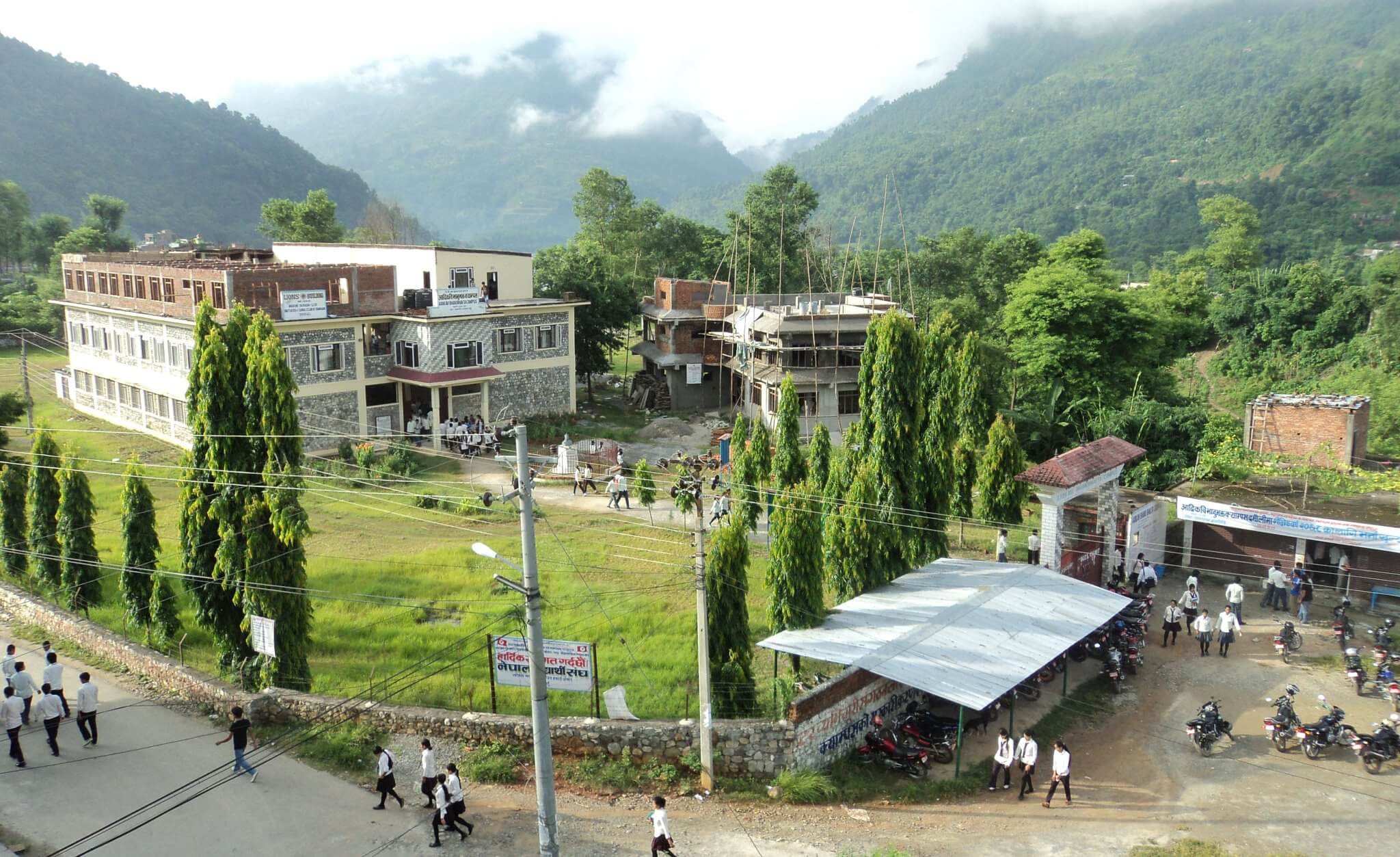
The Bachelor of Arts (BA) at Aadikavi Bhanubhakta Campus is a TU-affiliated undergraduate program offered within the campus’s humanities and social sciences setting in Damauli, Tanahun. The campus is a publicly owned, community-based institution in Vyas Municipality-1 and offers education from +2 to master’s level.
For BA students, the college context matters. Aadikavi Bhanubhakta Campus combines humanities study with a broader academic environment that includes library access, computer support, free internet on campus, extra classes, and faculty-student involvement in research. The humanities and social sciences department is identified as one of the older departments on campus, which places the BA program within a long-running academic stream rather than as a newly added offering.
Course: Bachelor of Arts (BA)
College: Aadikavi Bhanubhakta Campus
Location: Vyas Municipality-1, Bigyanchaur, Bhadgaun, Damauli, Tanahun, Gandaki, Nepal
Affiliation: Tribhuvan University
Duration: 4 years
Academic System: Annual
Academic Area: Humanities and Social Sciences
Campus Context: Publicly owned, community-based campus
Student Support: More than 400 scholarship quotas and tuition support schemes
Learning Support: Library facility, computer center, research involvement, extra classes, and free internet access on campus premises
The available course outline presents the BA program as a four-year annual program under Tribhuvan University. The course structure shown in the campus material follows an English group pattern with compulsory papers, sociology papers, specialization papers, and selected electives.
Program Structure: 4 years, annual system
Compulsory and core areas shown in the outline: Compulsory English, Compulsory Nepali, and sociology papers
Year I subjects shown: Compulsory English, Introduction to Sociology, Dynamics of Nepali Society, Reading, Writing and Thinking, History of English Literature and Criticism, and Nepali literature papers
Year II subjects shown: Compulsory Nepali, Sociological Theories, Research Methods in Sociology, prose and poetry papers, and Nepali literature papers
Year III subjects shown: Reading and Writing Across the Disciplines, Social Diversity and Inequality, Professional and Technical Communication, Nepali Patrakarita, and Introduction to Mass Communication
Year IV subjects shown: Alternative English, Sociology of Development, Academic Research and Writing, Drama and Writing, and Research and Writing
Academic Orientation: Language, literature, sociology, communication, and academic writing
Build undergraduate-level understanding in humanities and social sciences
Develop reading, writing, and interpretive ability
Strengthen communication in English and Nepali
Introduce students to society, culture, and social analysis
Support academic progression through research and writing work
The BA program at Aadikavi Bhanubhakta Campus brings together language study, literature, sociology, communication, and academic writing. This gives the course a broad academic base while keeping it connected to subjects that are visible in the campus course outline.
Its scope also fits the role of the campus itself. Aadikavi Bhanubhakta Campus serves students from Tanahun and nearby districts, so the BA program functions as a local route into humanities study within a community-based higher education institution. The presence of sociology, communication, writing, and literature papers also makes the program relevant for students planning further study or work linked to education, media, research, social sectors, and public communication.
Read and interpret literary and social science texts
Understand selected aspects of Nepali society and social diversity
Develop academic writing and basic research ability
Improve written and oral communication
Build subject familiarity in English, Nepali, sociology, and communication studies
Reading and writing skills
Academic research and writing
Professional and technical communication
Social analysis
Basic media and communication understanding
Literary interpretation
Classroom discussion and written presentation skills
The available campus context points to a teaching setting that goes beyond routine lectures. For BA students, this is reflected in the campus’s use of problem-based learning, research involvement, extra classes, and access to learning facilities tied to humanities study.
Problem-based learning is used in the teaching-learning process
Extra classes are available
Classes are run in different shifts
Separate classes are available for English medium students
Faculty members and students are involved in research
Excursions and field trips are part of the wider academic environment
Students have access to the library, computer center, and free internet on campus premises
Teaching and training roles
Journalism and media work
Social work and community-based programs
Research support roles
Writing and editing
Public relations work
NGO and development-sector roles
Cultural and communication-related work
The campus provides more than 400 scholarship quotas
Scholarships are available through tuition fee waiver and financial aid
Special consideration is available for talented students, students with weak financial backgrounds, disabled students, and members of deprived communities
Students scoring 80 percent and above receive a 100 percent tuition fee discount
Students scoring 70 to 80 percent receive a 50 percent tuition fee discount
Students scoring 60 to 70 percent receive a 25 percent tuition fee discount
First position holders receive a 50 percent tuition fee discount
Second position holders receive a 25 percent tuition fee discount
Disabled students receive a 50 percent tuition fee discount
Admission is opened through a campus admission notice
Eligible applicants submit the prescribed application form with required academic documents
Admission to TU bachelor-level programs may include entrance examination, merit-based selection, or both, depending on campus or program procedure
Selected applicants complete admission through document submission and fee payment
Academic registration follows TU rules, guidelines, and the applicable academic calendar
Academic transcript or grade sheet of Class 12 / +2 or equivalent
Character certificate from the previous institution
Migration certificate, if the previous board or university is different
Transfer certificate from the previous school or college
Citizenship certificate or birth certificate copy
Passport-size photographs
Entrance examination scorecard, if required
Completed admission or application form
Admission fee payment receipt
Equivalence certificate, if applicable
The BA program follows the annual examination system of Tribhuvan University. Final examinations under the annual system are conducted by TU through the Office of the Controller of Examinations.
Academic registration, examinations, and result publication follow TU rules, guidelines, and the applicable academic calendar.
BA at Aadikavi Bhanubhakta Campus is a humanities and social sciences program offered within a long-established community campus in Damauli. Its academic setting is shaped by library access, research activity, extra classes, and campus-level scholarship support rather than by a narrow single-department model.
For students who want a TU-affiliated BA in Tanahun, the program offers a four-year annual route grounded in language, literature, sociology, communication, and writing.
The BA program runs for four years under the annual system.
The program is affiliated with Tribhuvan University.
The available outline includes compulsory English and Nepali, sociology papers, English papers, Nepali literature papers, professional and technical communication, Nepali Patrakarita, and Introduction to Mass Communication.
The campus reports extra classes, problem-based learning, research involvement, library access, a computer center, and free internet on campus premises.
Yes. The campus provides more than 400 scholarship quotas along with tuition fee waivers and financial aid based on merit and need.
The campus is located in Vyas Municipality-1, Bigyanchaur, Bhadgaun, Damauli, Tanahun, Gandaki, Nepal.