



The M.Ed. in Education Planning and Management at Aadikavi Bhanubhakta Campus is a two-year postgraduate program affiliated with Tribhuvan University. It is offered within the campus’s Education stream at a publicly owned, community-based institution in Vyas Municipality-1, Bigyanchaur, Bhadgaun, Damauli, Tanahun.
The program is part of a wider academic setting that includes bachelor’s and master’s study, library services, computer access, free internet on campus premises, extra classes, and research participation. Within the M.Ed. structure, the Education Planning and Management specialization brings together educational planning, leadership, administration, financing, monitoring, evaluation, and thesis-based academic work.
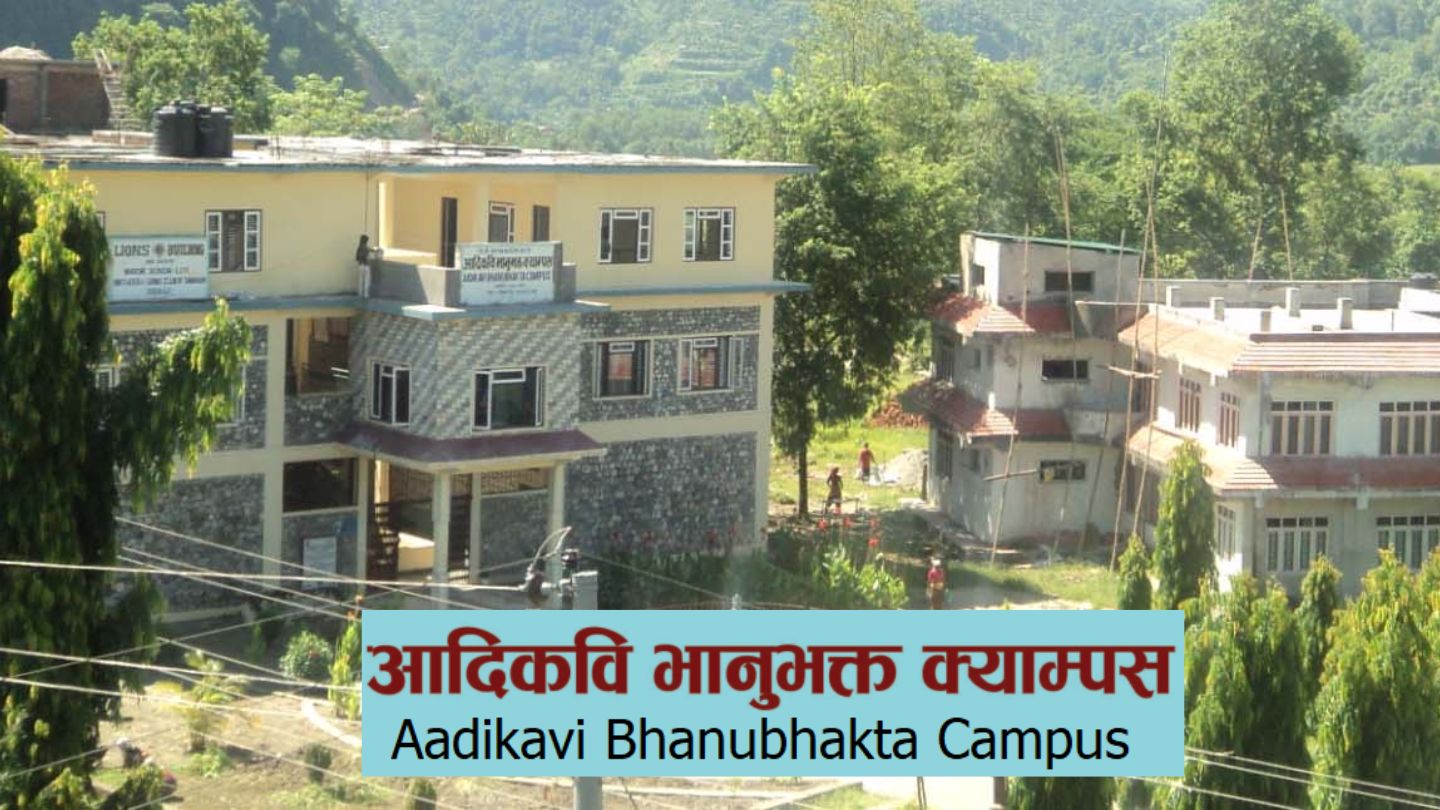
Course: M.Ed. in Education Planning and Management
College: Aadikavi Bhanubhakta Campus
Affiliation: Tribhuvan University
Duration: 2 years
Academic System: 4 semesters
Study Level: Master’s
Location: Vyas Municipality-1, Bigyanchaur, Bhadgaun, Damauli, Tanahun, Gandaki, Nepal
Academic Area: Education
Specialization: Education Planning and Management (EPM)
Completion Components: Thesis Writing and Practicum in Educational Planning and Management
Campus Support: Library facility, computer center, extra classes, research involvement, and free internet on campus premises
The program follows the TU semester structure and combines core education papers with specialization courses in planning, leadership, administration, financing, management systems, diversity, school management, and monitoring.
Semester I: Foundation of Education, Advanced Educational Psychology, Planning Education for Change, Theories of Educational Management and Leadership, Educational Administration and Supervision, and Organizational Behaviour in Education
Semester II: Curriculum Practices, Education and Development, Recent Trends in Educational Planning and Management, Educational Management Information System (EMIS), Educational Resource Management, and Theory and Practices of Non Formal Education
Semester III: Research Methodology in Education, Measurement and Evaluation in Education, Financing of Education, Managing Diversities in Education, School Management, and Social Justice Education
Semester IV: Contemporary Educational Issues, Thesis Writing (PR), Practicum in Educational Planning and Management, and Monitoring, Evaluation and Research in Planning and Management
Build advanced understanding of educational planning and institutional management
Develop academic grounding in educational leadership, administration, and supervision
Strengthen research ability in education-related planning and evaluation
Connect policy, resource management, and school management within one specialization
Prepare students for professional work linked to educational systems and administration
The M.Ed. in Education Planning and Management at Aadikavi Bhanubhakta Campus covers the academic and administrative sides of education together. Its course structure moves from educational foundations and management theory to practical areas such as EMIS, resource management, school management, financing, monitoring, and evaluation.
Its scope is also shaped by the campus setting. The program is offered within an Education department that includes major study areas in English, Nepali, Mathematics, Education Science, and BICTE, alongside master’s-level study in English, Nepali, and EPM. This places the course within an established education stream in Damauli rather than as a stand-alone option.
Understand major concepts in educational planning, management, and leadership
Apply administration, supervision, and resource management ideas in education settings
Use research, monitoring, and evaluation tools in educational work
Develop postgraduate-level understanding of school management and education finance
Complete thesis-based study with a practicum component in the final semester
Educational planning
Institutional management
Academic administration and supervision
EMIS-related understanding
Educational resource management
Monitoring and evaluation
Research methodology and thesis writing
School management and leadership
The program is delivered within a campus environment that supports structured academic planning, departmental teaching records, student feedback, research participation, and extra classes. These features give the EPM specialization a campus-specific academic setting beyond the semester syllabus.
Teachers use daily lesson plan books through the concerned departments
Lesson plan records are maintained through the departmental system and IQAC-linked process
Annual work plans are prepared for departments, committees, staff, and units
Student survey forms are used to collect academic feedback, with QR-based access arranged through the EMIS section
Faculty members and students are involved in research
Extra classes are available
Students can use the library, computer center, and free internet on campus premises
Education administrator
Program coordinator
Educational researcher
Policy advisor
School management roles
Training and mentoring roles
Higher education lecturer
Roles linked to educational planning and institutional management
The campus provides more than 400 scholarship quotas
Scholarships are available through tuition fee waivers and financial aid
Special consideration is available for talented students, students with weak financial backgrounds, disabled students, and members of deprived communities
Students scoring 80 percent and above receive a 100 percent tuition fee discount
Students scoring 70 to 80 percent receive a 50 percent tuition fee discount
Students scoring 60 to 70 percent receive a 25 percent tuition fee discount
First position holders receive a 50 percent tuition fee discount
Second position holders receive a 25 percent tuition fee discount
Disabled students receive a 50 percent tuition fee discount
Admission notice is published by the concerned campus, department, institute, or Dean’s Office
Eligible applicants submit the prescribed application form
Admission may include an entrance examination depending on program procedure
A merit list or selection result may be published by the concerned authority
Selected students submit the required documents and pay the prescribed admission fee
Final enrollment is completed according to TU rules and the campus schedule
Bachelor’s degree transcript or marksheet
Bachelor’s degree certificate or provisional certificate
Character certificate from the bachelor-level institution
Migration certificate, if the bachelor’s degree is from another university
Transfer certificate from the previous campus or college
Citizenship certificate or birth certificate copy
Passport-size photographs
Entrance examination scorecard, if required
Completed admission or application form
Admission fee payment receipt
Equivalence certificate, if applicable
The M.Ed. in Education Planning and Management follows the TU semester structure. Course curriculum, examinations, and results follow TU rules, guidelines, and the applicable academic calendar.
Semester-end examinations are conducted by the relevant Dean’s Office. Result publication follows the corresponding TU process for semester-based programs.
The M.Ed. in Education Planning and Management at Aadikavi Bhanubhakta Campus is a TU-affiliated postgraduate program built around educational planning, leadership, administration, EMIS, school management, monitoring, evaluation, and thesis work. Its academic setting is shaped by the Education department, campus learning support, and an institutional system that uses lesson planning, annual work plans, and student feedback processes.
For students seeking a master’s-level program in education planning and management in Damauli, it offers a defined two-year route within an established community-based campus.
The program runs for 2 years across 4 semesters.
The program is affiliated with Tribhuvan University.
Yes. Thesis Writing (PR) is included in the fourth semester.
Yes. Practicum in Educational Planning and Management is part of the final semester structure.
The course includes educational planning, management and leadership, administration and supervision, EMIS, educational resource management, financing of education, school management, social justice education, and monitoring and evaluation.
Students can use the library, computer center, free internet on campus premises, extra classes, and the wider research environment of the campus.






