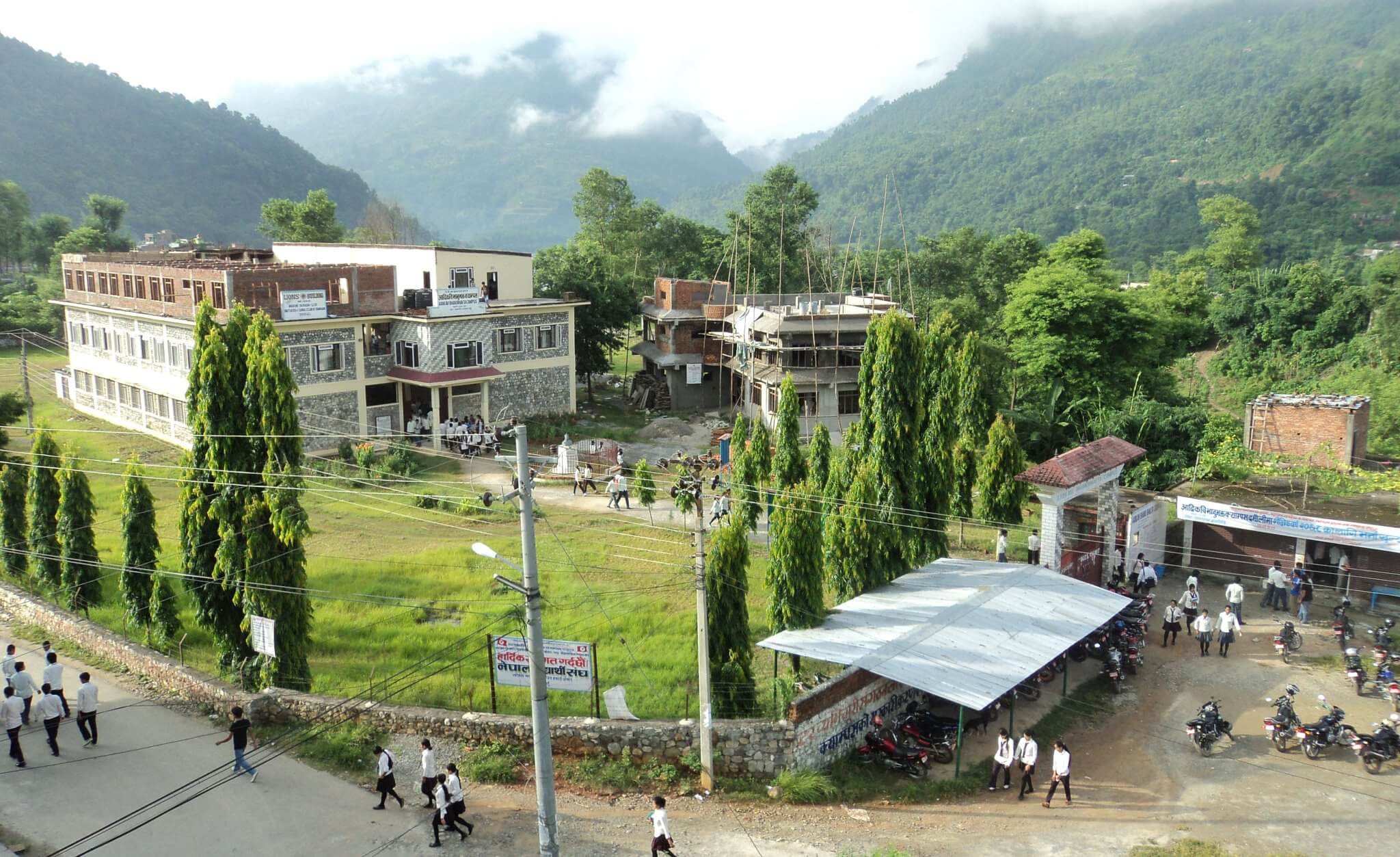
The Bachelor of Education (B.Ed.) at Aadikavi Bhanubhakta Campus is a four-year undergraduate program affiliated with Tribhuvan University. It is offered within the campus’s Education department at a publicly owned, community-based institution in Vyas Municipality-1, Bigyanchaur, Bhadgaun, Damauli, Tanahun. The campus offers education from +2 to master’s level and serves students from Tanahun and nearby districts.
At this campus, B.Ed. is part of a broader education stream that includes subject-based study, teaching practice, classroom instruction, research-oriented work, and campus-level academic support.
The available education context also shows that the department runs bachelor-level majors in Mathematics, English, Nepali, and Education Science, alongside BICTE and master’s study in selected education fields.
Course: Bachelor of Education (B.Ed.)
College: Aadikavi Bhanubhakta Campus
Affiliation: Tribhuvan University
Duration: 4 years
Academic System: Annual
Location: Vyas Municipality-1, Bigyanchaur, Bhadgaun, Damauli, Tanahun, Gandaki, Nepal
Academic Area: Education
Campus Context: Publicly owned, community-based campus
Subject Areas Mentioned in the Education Stream: Mathematics, English, Nepali, Science, and Education Science
Learning Support: Library facility, computer center, research involvement, extra classes, and free internet on campus premises
Scholarship Context: More than 400 scholarship quotas and tuition support schemes
The B.Ed. program follows a four-year annual structure under Tribhuvan University. The available course material shows a combination of foundation papers in education, specialization subjects, minor subjects, curriculum-related study, classroom instruction, and teaching practice.
Program Structure: 4 years, annual system
Common education-related papers shown in the available outline: General English, Compulsory Nepali, Philosophical and Sociological Foundation of Education, Educational Psychology, Curriculum and Evaluation, Teaching Practice, and Classroom Instruction
Specialization areas shown in the available B.Ed. stream material: Nepali, Science, and Mathematics
Minor or related subject areas shown in the available outlines: Population Education, Plant Science, and Animal Science
Academic Orientation: subject knowledge, educational foundations, teaching methods, classroom work, and research-related study
Build undergraduate-level understanding in education and teaching
Develop subject-based study through major and minor areas
Strengthen classroom teaching skills through practice-based components
Introduce curriculum, evaluation, and educational psychology
Support progression into teaching and further study in education
The B.Ed. program at Aadikavi Bhanubhakta Campus brings together subject study and teacher education within the campus’s Education department. Its scope is visible in the available course structure, where students move from foundation papers toward methods, classroom instruction, and teaching practice in later years.
The program also fits the role of the campus itself. As a community-based institution serving Tanahun and neighboring districts, the campus provides a local route for students who want undergraduate education study in Damauli. The presence of multiple education-related majors and a continuing master’s-level education stream places B.Ed. within a broader academic setting rather than as a standalone course.
Understand core educational foundations and classroom processes
Build subject knowledge within selected B.Ed. groups
Develop familiarity with curriculum and evaluation
Improve teaching practice and classroom instruction skills
Strengthen academic writing, discussion, and research-oriented study
Classroom teaching skills
Lesson delivery and instructional planning
Educational psychology and learner understanding
Curriculum and evaluation awareness
Teaching practice and classroom management
Subject-based study in selected education groups
Academic participation through seminars, workshops, and presentations
The Education department context at Aadikavi Bhanubhakta Campus points to a teaching setting that includes learner-centered pedagogy, updated curriculum use, ICT-based education support, and departmental academic activities. For B.Ed. students, this is supported by both course structure and campus-level academic practices.
Problem-based learning is used in the teaching-learning process
Seminars, workshops, and training activities are part of the education department environment
Teaching Practice and Classroom Instruction are included in the B.Ed. structure
Extra classes are available
Classes are run in different shifts
Separate classes are available for English medium students
Faculty members and students are involved in research
Students can use the library, computer center, and free internet on campus premises
School teaching
Education-related training work
Curriculum support roles
Academic content preparation
Educational project and community education work
Further study in education
The campus provides more than 400 scholarship quotas
Scholarships are available through tuition fee waivers and financial aid
Special consideration is available for talented students, students with weak financial backgrounds, disabled students, and members of deprived communities
Students scoring 80 percent and above receive a 100 percent tuition fee discount
Students scoring 70 to 80 percent receive a 50 percent tuition fee discount
Students scoring 60 to 70 percent receive a 25 percent tuition fee discount
First position holders receive a 50 percent tuition fee discount
Second position holders receive a 25 percent tuition fee discount
Disabled students receive a 50 percent tuition fee discount
Admission follows the notice and procedure of the concerned campus and TU Faculty of Education
Eligible applicants submit the prescribed application form with required academic documents after the publication of the admission notice
Depending on program or campus procedure, admission may include an entrance examination, merit-based selection, or both
Selected applicants complete admission through document submission and fee payment
Academic registration follows TU rules, guidelines, and the applicable academic calendar
Academic transcript or grade sheet of Class 12 / +2 or equivalent
Character certificate from the previous institution
Migration certificate, if the previous board or university is different
Transfer certificate from the previous school or college
Citizenship certificate or birth certificate copy
Passport-size photographs
Entrance examination scorecard, if required
Completed admission or application form
Admission fee payment receipt
Equivalence certificate, if applicable
The B.Ed. program follows the annual examination system of Tribhuvan University. Final examinations under the annual system are conducted by TU through the Office of the Controller of Examinations.
Academic registration, examinations, and result publication follow TU rules, guidelines, and the applicable academic calendar.
B.Ed. at Aadikavi Bhanubhakta Campus is a TU-affiliated four-year undergraduate program offered within a long-running education stream in Damauli. Its academic setting is shaped by teaching practice, classroom instruction, subject-based study, seminars, workshops, research participation, and campus-level learning support.
For students seeking a bachelor-level education program in Tanahun, it offers a structured route within a community-based campus that already runs multiple education-related programs.
The B.Ed. program runs for four years under the annual system.
The program is affiliated with Tribhuvan University.
The available education stream material mentions Mathematics, English, Nepali, Science, and Education Science within the department context.
Yes. The available course structure includes Teaching Practice and Classroom Instruction in the later stage of the program.
The campus provides extra classes, seminars, workshops, research involvement, library access, a computer center, and free internet on campus premises.
Yes. The campus provides scholarship quotas, tuition fee waivers, and financial aid for meritorious, financially weak, disabled, and deprived-category students.