The B.A. LL.B. at Asian College of Law is a five-year undergraduate program that combines legal education with humanities and social science subjects. Offered by Asian College of Law (ACoL) in Sanobharyang, Nagarjun-2, Kathmandu, the program is affiliated with Purbanchal University.
Students begin with political thought, economics, history, sociology, legal concepts, and reasoning before progressing to constitutional law, criminal law, evidence, international law, professional ethics, legal research, jurisprudence, contract law, company law, and other legal areas. Clinical courses, advocacy exercises, legal writing, community work, and a dissertation connect academic study with applied legal learning.
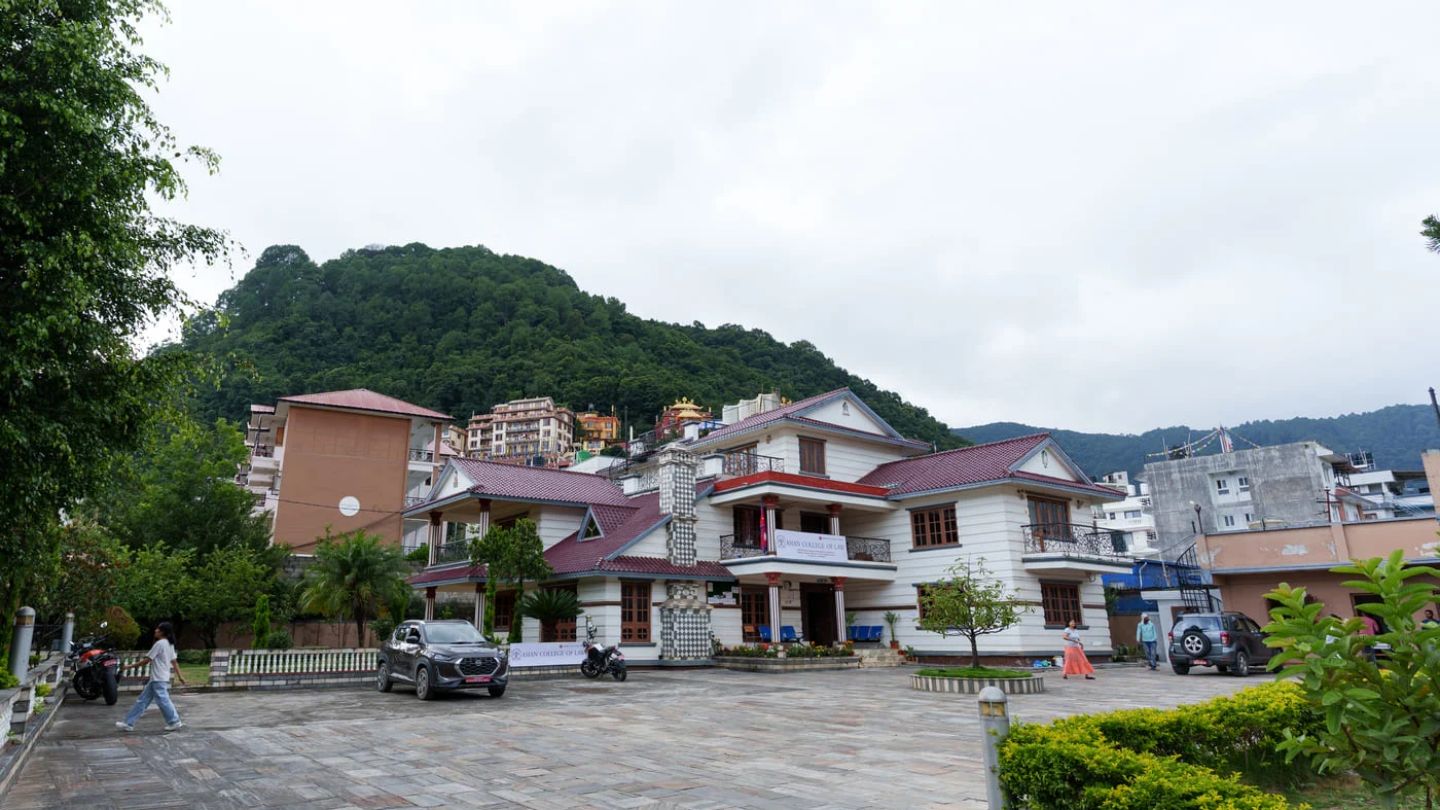
| Particular | Details |
|---|---|
| Course | B.A. LL.B. |
| Full Form | Bachelor of Arts, Bachelor of Law |
| College | Asian College of Law |
| Affiliation | Purbanchal University |
| Level | Undergraduate |
| Duration | Five years |
| Location | Sanobharyang, Nagarjun-2, Kathmandu, Nepal |
| Eligibility | +2 or equivalent in any stream |
| Minimum Requirement | GPA 2.0 or minimum C grade in all subjects |
| Admission | Purbanchal University entrance examination |
| Attendance | At least 80% in each theory and practical subject |
The B.A. LL.B. program brings legal studies and interdisciplinary education into one undergraduate course. Its arts component introduces students to the political, economic, historical, social, linguistic, and diplomatic settings in which laws and legal institutions operate.
The legal component begins with general legal concepts, principles, logic, and reasoning. It later covers constitutional law, criminal law, evidence, procedural law, international law, legal research, professional ethics, contract law, company law, administrative law, jurisprudence, labour law, private international law, advocacy, and legal professionalism.
Students also complete clinical and community-based courses. These include legal writing, institutional visits, outreach activities, trial and appellate advocacy, and a dissertation.
Applicants must have completed the +2 level or an equivalent qualification in any stream from a recognized board.
Minimum academic requirement: GPA 2.0 or a minimum C grade in all subjects.
Applicants must appear in the entrance examination conducted by Purbanchal University. Selection is based on previous academic performance and entrance examination scores. Selected students also participate in an orientation class.
Students must maintain at least 80 percent attendance in the theory and practical classes of each subject.
The first year introduces the social context of law together with foundational legal concepts and reasoning.
Political Theory Thoughts
Economics
History of Nepal
Sociology
General Principles of Law
General Concept of Law
Theories of Logic and Legal Reasoning
Clinical Works
The second year develops legal communication, legislative understanding, procedural knowledge, and familiarity with criminal law.
Legal English
Legal Nepali
International Relations and Diplomacy
Legislative Principles and Law Making Process
Principles and Rules of Procedural Law
Sociology of Law
Criminal Law
Clinical Course: Visits of Jails and Preparation of the Report on Sentencing System and Reforms
The third year focuses on public law, evidence, research, ethics, legal writing, and community advocacy.
International Human Rights Law
Principles of Interpretation (Interpretation of Statutes)
Law of Evidence
Public International Law
Constitutional Law and Constitutionalism
Legal Research
Professional Ethics
Clinical Legal Education: Effective Legal Writing Civil Case
Clinical Work: Advocacy Service to Community (Outreach Program)
The fourth year covers jurisprudence, private and public law subjects, legal writing, dispute settlement, and an optional study group.
Clinical Education: Community Outreach and Rural Law Advocacy Service
Advanced Jurisprudence
Contract Law
Company Law
Administrative Law
Clinical Legal Education: Effective Legal Writing Criminal Case
Settlement of International Disputes
Optional subjects from one selected group
The final year includes legal philosophy, sector-specific laws, advocacy, professionalism, a dissertation, and an optional study group.
Legal Philosophy
Agrarian Law
Labor Law
International Humanitarian Law and Conflict Resolution
Conservation Law
Private International Law
Pre-Trial Presentation, Trial Advocacy and Appellate Advocacy
Clinical Education Course: Legal Professionalism Development
Dissertation
Optional subjects from one selected group
Students select one optional group during the fourth and fifth years.
| Group | Fourth-Year Subjects | Fifth-Year Subjects |
|---|---|---|
| Criminal Law | Forensic Science and Medical Jurisprudence; Criminology and Penology | Law against Organized Crime; Fiscal Crime Law |
| Business Law | Banking and Insurance Law; International Trade Law | Intellectual Property; Taxation Law |
| Constitutional Law | Law on Good Governance; Electoral Law | Law of Equity, Torts and Consumer Protection; Law on Gender and Disadvantaged Sections of Population |
| Environment and Development Law | Environment Law; Water and River Law | Energy Law; Civil Aviation and Tourism Law |
The optional groups allow students to study a defined area while continuing the common legal courses assigned to each year.
The course uses lectures, seminars, presentations, case studies, group discussions, and role-playing exercises. Students prepare term papers and present their work for academic evaluation.
Practical learning includes:
Moot court and mock trial exercises
Legal research and writing
Client interviewing and counselling
Civil and criminal legal writing
Trial and appellate advocacy
Legal aid and community outreach
Visits to courts, prisons, and other institutions
Seminars and workshops
Internships and professional interaction
Dissertation work
Asian College of Law has classrooms with smart boards, a library with legal databases and research materials, a moot court hall, and seminar and conference spaces. These facilities support case preparation, research, presentations, advocacy practice, and academic discussion.
The academic and clinical components support the development of:
Legal reading and case analysis
Logical and legal reasoning
Research and academic writing
Civil and criminal legal writing
Oral argument and public speaking
Client interviewing and counselling
Advocacy and case presentation
Understanding of legal institutions
Interdisciplinary analysis
Professional ethics
Community engagement
Independent dissertation research
The extent to which students develop these abilities depends on their academic participation, practical work, preparation, and performance throughout the five-year course.
Asian College of Law provides scholarships under entrance examination, Grade 11 and 12 results, and need-based categories.
| Position | Scholarship |
|---|---|
| First | 50% |
| Second | 30% |
| Third | 20% |
The scholarship rate is determined from the aggregate GPA of Grades 11 and 12.
| Aggregate GPA | Scholarship |
|---|---|
| 2.80–3.20 | 10% |
| 3.21–3.60 | 15% |
| 3.61–3.80 | 20% |
| 3.81–3.99 | 25% |
| 4.00 | 30% |
A 20 percent need-based scholarship is available for up to 12 students from the following groups:
Madhesi
Janajati
Dalit
Backward communities
Tharu
Muslim
Women
Others
Applicants under this category must have studied Grades 8, 9, 10, 11, and 12 at a government school.
Students securing first, second, and third positions in yearly board examinations receive admission fee waivers of 30 percent, 20 percent, and 10 percent, respectively, on the annual admission fee.
The course may suit students interested in law together with politics, society, economics, history, public institutions, and questions of justice.
Students should be prepared for sustained reading, legal writing, case analysis, classroom presentations, public speaking, group work, institutional visits, clinical assignments, and independent research. The five-year duration also requires consistent attendance and long-term academic commitment.
College: Asian College of Law
Address: ACoL, Sanobharyang, Nagarjun-2, Kathmandu, Nepal
Phone: +977-1-5929055, +977-9764789533, +977-9748300150
Email: info@acol.edu.np
Website: https://acol.edu.np
B.A. LL.B. stands for Bachelor of Arts, Bachelor of Law.
The program is completed over five years.
The B.A. LL.B. program at Asian College of Law is affiliated with Purbanchal University.
Applicants must have completed +2 or an equivalent qualification in any stream with a minimum GPA of 2.0 or a minimum C grade in all subjects.
Yes. Applicants must sit for the entrance examination conducted by Purbanchal University. Selection considers academic performance and entrance examination scores.
The curriculum includes optional groups in Criminal Law, Business Law, Constitutional Law, and Environment and Development Law.
Yes. The curriculum includes clinical courses, legal writing, community outreach, institutional visits, advocacy exercises, legal professionalism, and dissertation work.
Students must attend at least 80 percent of the theory and practical classes in each subject.
Yes. The college has entrance result-based, Grade 11 and 12 result-based, and need-based scholarship schemes. Annual admission fee waivers are also available for students securing positions in yearly board examinations.