The Bachelor of Business Studies (BBS) at Bhanu Multiple Campus is a four-year bachelor’s degree program affiliated with Tribhuvan University (TU). The program is administered under the Faculty of Management and follows the annual examination system.
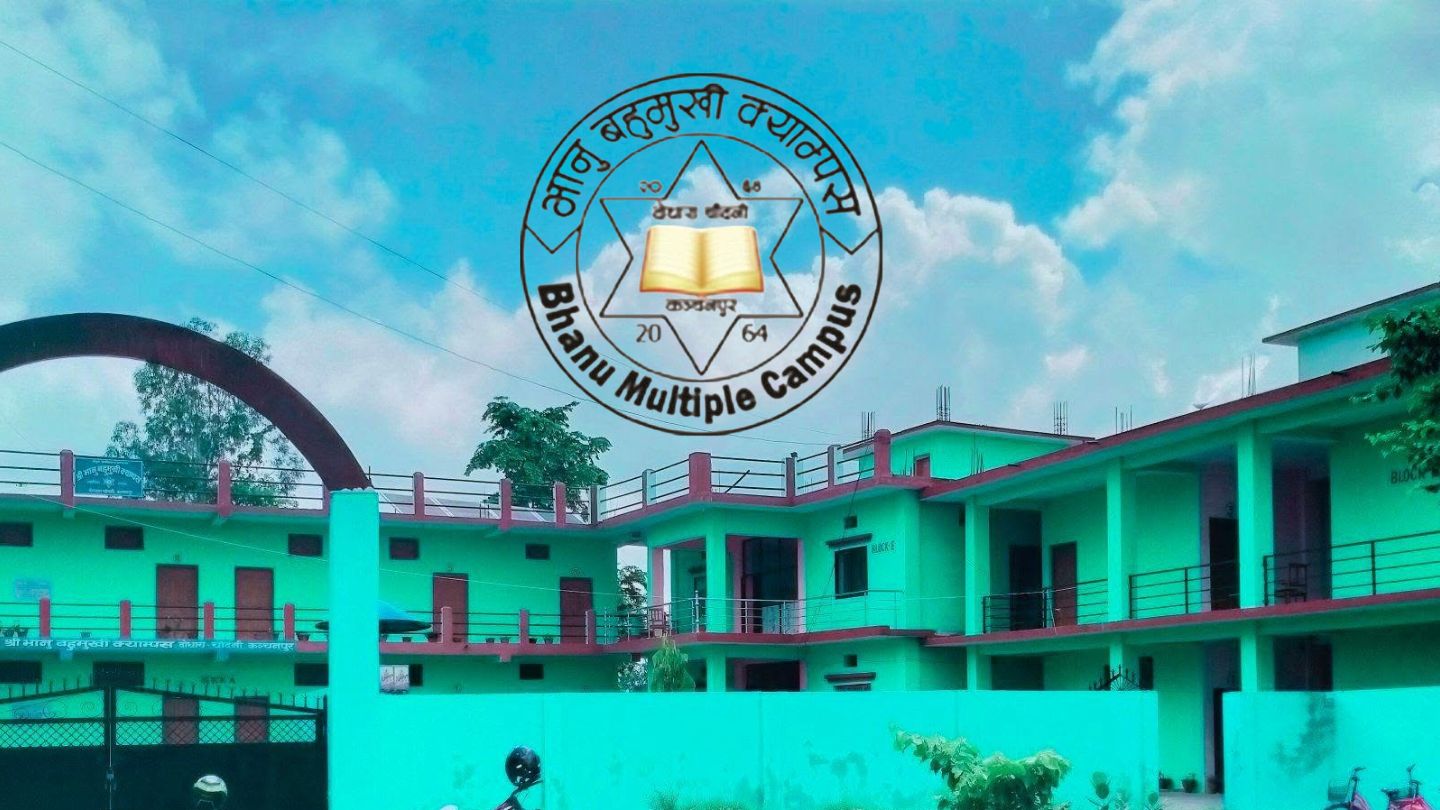
Bhanu Multiple Campus is a community-owned campus in Dodhara Chandani, Kanchanpur district. The BBS program covers business communication, economics, accounting, management, finance, law, taxation, marketing, entrepreneurship, research, and concentration-based study. Students complete compulsory and core courses during the first three years before selecting a functional concentration and completing research and project work in the fourth year.
| Category | Details |
|---|---|
| Course | Bachelor of Business Studies (BBS) |
| Institution | Bhanu Multiple Campus |
| Academic Level | Bachelor’s degree |
| Faculty | Faculty of Management |
| Affiliation | Tribhuvan University |
| Duration | Four academic years |
| Academic System | Annual system |
| Location | Dodhara Chandani, Kanchanpur |
| Final Evaluation | TU annual examinations |
| Fourth-Year Component | Concentration courses, research, and final project |
The BBS program is structured to develop an understanding of business, administration, and organizational management. It combines foundation subjects with core management courses, functional concentration, and project-based academic work.
The curriculum aims to:
Develop conceptual knowledge of business and administration
Build a general management perspective
Develop practical abilities and responsible management attitudes
Encourage entrepreneurial capabilities
Prepare a foundation for advanced study in management
Support academic pathways connected with teaching, research, and consultancy
The program prepares students to understand how organizations operate within changing business, economic, legal, and social conditions.
The course is relevant to students interested in studying business operations, accounting, finance, management, marketing, organizational behaviour, economics, entrepreneurship, and research.
Its annual structure requires students to study several interconnected management subjects. Students should be prepared for numerical work in accounting, statistics, economics, finance, and taxation, along with written and analytical work in communication, management, law, marketing, and research.
Eligibility: Applicants must have successfully completed 10+2 in business or commerce, or an equivalent course from a Higher Secondary School Board, Tribhuvan University, or another university or board recognized by Tribhuvan University.
Applicants must also meet any additional entry requirements or criteria prescribed by the Faculty Board or Bhanu Multiple Campus.
Students can contact the campus administrative office for the current application schedule, admission form, required certificates, fee structure, and enrolment procedure.
The BBS program extends over four academic years and follows the annual system. Each year carries 500 marks.
The first year establishes a foundation in business language, statistics, economics, accounting, and management. The second and third years cover core areas of communication, economics, accounting, finance, organizational behaviour, law, financial systems, strategy, taxation, and marketing.
During the fourth year, students study entrepreneurship, select three courses from one concentration area, complete Business Research Methods, and prepare a final project.
The first year introduces the concepts, tools, and academic foundations required for the later stages of business study.
| Course Code | Course Title | Marks |
|---|---|---|
| MGT 201 | Business English | 100 |
| MGT 202 | Business Statistics | 100 |
| MGT 207 | Microeconomics for Business | 100 |
| MGT 211 | Financial Accounting and Analysis | 100 |
| MGT 213 | Principles of Management | 100 |
Total: 500 marks
Business English develops language competence, critical reading, business writing, and communication skills. Business Statistics introduces statistical and mathematical techniques used in business analysis and decision-making.
Microeconomics for Business examines markets, demand and supply, consumer behaviour, production, cost, revenue, pricing, and factor markets. Financial Accounting and Analysis develops an understanding of accounting records and financial information, while Principles of Management introduces the functions and practices of organizational management.
The second year develops students’ understanding of communication, the wider economy, accounting, organizational behaviour, human resources, and financial management.
| Course Code | Course Title | Marks |
|---|---|---|
| MGT 205 | Business Communication | 100 |
| MGT 209 | Macroeconomics for Business | 100 |
| MGT 212 | Cost and Management Accounting | 100 |
| MGT 223 | Organizational Behavior and Human Resource Management | 100 |
| MGT 215 | Fundamentals of Financial Management | 100 |
Total: 500 marks
This stage connects business communication and economic conditions with internal management functions. Cost and Management Accounting focuses on the use of cost information, while Organizational Behavior and Human Resource Management examines people and workplace practices.
Fundamentals of Financial Management introduces financial decisions and the management of organizational funds.
The third year covers legal, financial, strategic, taxation, and marketing areas of business.
| Course Code | Course Title | Marks |
|---|---|---|
| MGT 204 | Business Law | 100 |
| MGT 226 | Foundation of Financial Systems | 100 |
| MGT 217 | Business Environment and Strategy | 100 |
| MGT 224 | Taxation in Nepal | 100 |
| MGT 214 | Fundamentals of Marketing | 100 |
Total: 500 marks
Business Law introduces legal issues relevant to commercial activity. Foundation of Financial Systems examines financial institutions, markets, and related structures.
Business Environment and Strategy covers the conditions affecting organizations and their strategic responses. Taxation in Nepal introduces taxation concepts and practices, while Fundamentals of Marketing examines products, markets, customers, pricing, distribution, and promotion.
The fourth year combines entrepreneurship, functional concentration, research, and project work.
| Course | Marks |
|---|---|
| MGT 225: Entrepreneurship | 100 |
| Concentration I | 100 |
| Concentration II | 100 |
| Concentration III | 100 |
| MGT 221: Business Research Methods | 50 |
| MGT 401: Final Project | 50 |
Total: 500 marks
Students select three concentration courses from one functional area. The fourth year also requires students to study research methods and prepare a final project related to their concentration.
Tribhuvan University’s BBS structure includes four concentration areas:
Accounting
Finance
Management
Marketing
Accounting concentration options include:
ACC 250: Accounting for Banking
ACC 251: Accounting for Business
ACC 252: Advanced Financial Accounting
ACC 255: Auditing
ACC 256: Advance Cost and Management Accounting
Finance concentration options include:
FIN 250: Fundamentals of Corporate Finance
FIN 251: Commercial Bank Management
FIN 255: Management of Financial Institutions
FIN 253: Fundamentals of Investment
FIN 254: Insurance and Risk Management
Management concentration options include:
MGT 251: International Business
MGT 256: Small and Medium Enterprises
MGT 257: Event Management
MGT 258: Project Management
MGT 259: Technology and Information Management
Marketing concentration options include:
MKT 250: Fundamentals of Selling
MKT 251: Customer Relationship Management
MKT 252: Foreign Trade and Export Management in Nepal
MKT 253: Fundamentals of Advertising
MKT 254: Fundamentals of Services Marketing
The courses available to a student are determined by the concentration selected and the academic arrangements of the campus.
Final project work is an academic requirement for fourth-year students across the concentration areas. Students undertake four weeks of fieldwork in an organization during the period fixed by the campus.
After completing the fieldwork, each student prepares a project report in the format prescribed by the Faculty of Management and submits it to the campus. Students may also be asked to present their work before classmates or faculty members.
The project is evaluated by internal and external examiners appointed by the campus research committee. The concerned research committee conducts the final viva voce, after which the report proceeds to the Office of the Controller of Examinations for final scrutiny.
Students must pass theoretical, practical, and project components separately where a course contains these components.
The BBS curriculum supports a combination of teaching and learning methods, including:
Classroom lectures
Group discussions
Problem-solving exercises
Guest lectures
Practical work
Project work
Case-based instruction where appropriate
These methods connect academic concepts with organizational and business situations.
At Bhanu Multiple Campus, learning support includes classrooms, a library, computer lab, multimedia resources, counselling, and related academic facilities. The campus has also begun using digital systems in its academic and administrative work.
The general academic requirements for the four-year program include:
A minimum of 150 teaching days in each academic year, excluding admission and annual examination periods
A total of 615 instructional hours in an academic year
At least five class periods on each teaching day
Additional class hours for practical work when prescribed
A minimum of 70 percent attendance in classes actually held
A student cannot appear in the second-year final examination without first appearing in the first-year final examination.
Final evaluation is conducted through annual examinations administered by the Office of the Controller of Examinations, Tribhuvan University.
| Division | Required Percentage |
|---|---|
| Third Division | 35 percent |
| Second Division | 45 percent |
| First Division | 60 percent |
| Distinction | 75 percent |
Students must obtain passing marks in applicable theoretical, practical, and project components. Completion of the program must take place within the time limit prescribed by Tribhuvan University.
Through its subjects, the BBS program supports the development of knowledge and academic abilities in:
Business writing and communication
Statistical analysis
Economic analysis
Financial accounting
Cost and management accounting
Organizational behaviour
Human resource management
Financial management
Business law
Taxation
Marketing
Entrepreneurship
Business research
Project planning and reporting
The exact level of competence developed depends on academic participation, subject understanding, independent study, project work, and performance across the four years.
The program is designed to prepare graduates for organizational activity across business, industry, and government. Graduates may consider work related to accounting, finance, office administration, management, marketing, human resources, financial services, entrepreneurship, and business research.
The academic foundation may also support further study in management. Teaching, research, and consultancy are identified among the longer-term academic and professional directions connected with advanced management study. Career outcomes depend on individual skills, experience, further qualifications, available positions, and organizational requirements.
BBS students at Bhanu Multiple Campus have access to campus resources that include:
Library
Laboratory
Computer lab
Multimedia facilities
Classrooms and furniture
Sports facilities
Counselling
Conference facilities
Journal-related activities
The campus provides scholarships for students from economically disadvantaged sections of society. Students can obtain current scholarship conditions, fee details, and application procedures from the administrative office.
Before completing admission, applicants should obtain the current campus arrangements concerning:
Application dates
Admission forms
Academic certificates
Additional eligibility criteria
Fee structure
Scholarship conditions
Class schedule
Concentration availability
The administrative office of Bhanu Multiple Campus handles detailed enquiries concerning the BBS program, admission, fees, eligibility, scholarships, counselling, and campus facilities.
The BBS program runs for four academic years under the annual system of Tribhuvan University.
The program is administered under the Faculty of Management, Tribhuvan University.
Applicants must have completed 10+2 in business or commerce, or an equivalent qualification recognized by Tribhuvan University. Additional criteria may be prescribed by the Faculty Board or the campus.
The program covers business communication, statistics, economics, accounting, management, finance, organizational behaviour, business law, taxation, marketing, entrepreneurship, research methods, concentration courses, and project work.
The BBS curriculum includes Accounting, Finance, Management, and Marketing concentration areas.
Yes. Fourth-year students complete four weeks of organizational fieldwork as part of the final project requirement.
Students must maintain at least 70 percent attendance in the classes actually held to qualify for the annual examination.
The Office of the Controller of Examinations, Tribhuvan University, conducts the annual final examinations.
The campus provides scholarships for students from economically disadvantaged sections of society.