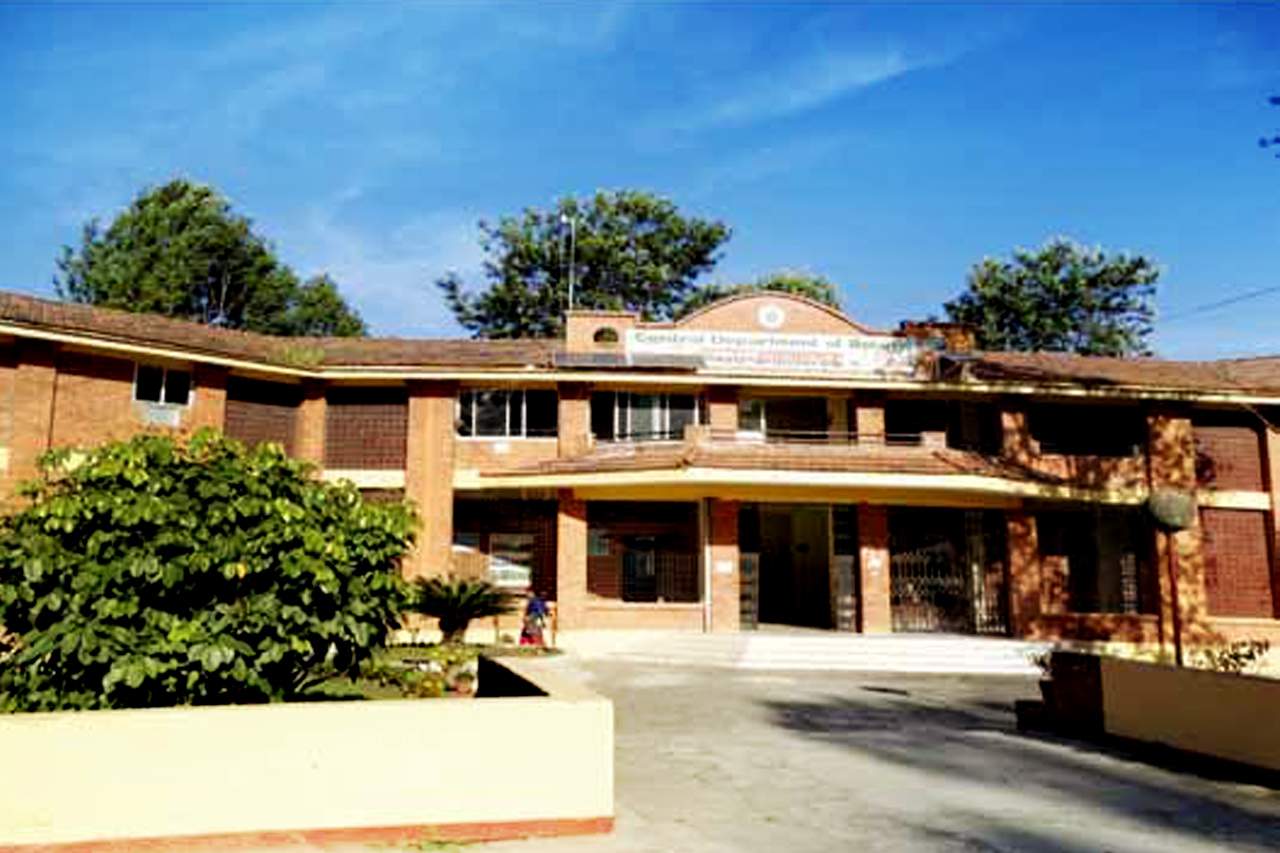
PhD in Botany at the Central Department of Botany, Tribhuvan University (CDBTU), is a research-based doctoral programme that focuses on Nepal’s plant diversity, ecosystems, and plant–people relationships. The department is based at Kirtipur Campus under the Institute of Science and Technology , Tribhuvan University, and has run postgraduate teaching and research in plant science for several decades.
The doctoral programme builds on this background. Research topics range from classical plant taxonomy to newer areas of evolutionary developmental genetics, phylogenetics, floristics, vegetation ecology, microbial ecology, invasion ecology, agroforestry, ecophysiology, ethnobotany, ethnoecology, resource conservation, tissue culture, cytogenetics, mycology, and phytochemistry.
If you already hold an advanced degree in botany or a closely related field and wish to move into independent research, university teaching, or advanced technical work in plant science, this programme gives a structured way to develop that capacity under recognised national regulations.
Level: Doctor of Philosophy (PhD) in Botany
Institution: Central Department of Botany, Tribhuvan University, Kirtipur
Nature of study: Full-time research with some coursework under IOST PhD regulations
Governance: Central Department Research Committee (CDRC) at CDBTU and Research Committee of IOST
Supervisory structure: Main supervisor from the department; co-supervisor from other institutions in Nepal or abroad when needed
Track record: 43 PhD degrees already awarded; more than 20 scholars currently engaged in research
Research environment: Access to laboratories, TU Central Herbarium (TUCH), departmental botanical garden, and a specialised departmental library
PhD in Botany under CDBTU follows the IOST PhD regulations. The programme combines a small block of common coursework prescribed by IOST and a larger period of supervised research that leads to a doctoral thesis.
According to the IOST PhD booklet, PhD scholars follow centrally defined guidelines for thesis format, ethics, and evaluation. A first-semester curriculum approved by IOST includes seminar-based study in areas such as philosophy of science and research methods, which supports scholars from different science disciplines.
At the departmental level, the main components are:
Approval of a research proposal through CDRC and IOST channels
Limited coursework and seminars, as per IOST rules and departmental plan
Field and laboratory research under supervision
Periodic progress reports and seminars
Submission and defence of a doctoral thesis in the format prescribed by IOST
The exact research path depends on your topic, methods, and data needs, but every scholar works within this regulated structure.
PhD in Botany at the Central Department of Botany aims to:
Prepare scholars who can plan and complete original research in plant science
Build national expertise in taxonomy, ecology, conservation, and applied plant science
Strengthen the scientific basis for biodiversity management and environmental planning in Nepal
Support academic careers in teaching and research within Tribhuvan University and other institutions
If you want to contribute scientific evidence on Nepal’s plant resources and ecosystems, these objectives match that aspiration.
The scope of PhD in Botany extends across higher education, government, and the wider environment sector. Graduates often work as:
University or campus faculty in botany, ecology, or related disciplines
Senior researchers or project leaders in national and international research organisations
Technical experts in ministries, departments, and commissions dealing with forests, environment, agriculture, and climate-related issues
Advisors or senior staff in NGOs and INGOs that work on biodiversity, protected areas, community forestry, restoration, or food security
CDBTU reports that past PhD graduates have moved into lectureships and research positions in their home institutions, while newer graduates have joined a range of academic and technical posts.
By the end of the PhD in Botany, students are expected to:
Formulate research questions that address gaps in plant science and related fields
Conduct field surveys, controlled experiments, or herbarium-based investigations at an advanced level
Handle laboratory procedures relevant to their topic (for example, molecular systematics, phytochemical analysis, or tissue culture)
Analyse and interpret biological data in line with accepted scientific standards
Write and defend a thesis that meets IOST and Tribhuvan University regulations
Communicate research findings through seminars, reports, and peer-reviewed publications
These outcomes support long-term careers in academic and applied plant science.
The doctoral programme builds both subject-specific and transferable skills. Depending on your topic, you may work in one or more of the following areas:
Classical taxonomy and floristics: collection, identification, and description of plant species; use of TUCH herbarium and related collections
Vegetation and ecosystem ecology: sampling design, vegetation analysis, and long-term monitoring
Microbial ecology and mycology: culture techniques, microscopic work, and plant–microbe interaction studies
Molecular and cytogenetic methods: DNA-based analysis, karyotype studies, and related techniques
Ethnobotany and ethnoecology: documentation of traditional plant use, community-level surveys, and socio-ecological interpretation
Resource conservation and agroforestry: assessment of species and habitats, tree–crop interactions, and management options
Throughout the programme you refine skills in academic writing, scientific presentation, and critical reading, which are essential for independent work after graduation.
PhD work at CDBTU is supervised by departmental faculty members, almost all of whom hold PhD degrees themselves.
Key features of the supervision system include:
Main supervisor from the Central Department of Botany
Co-supervisor from another department or external institution when the topic requires additional expertise
Oversight of the PhD process by the Central Department Research Committee (CDRC)
Seminar-based interactions, where you present your proposal and progress to faculty and peers
This structure helps you receive both focused subject guidance and broader feedback from the departmental research community.
PhD admission in Botany follows IOST PhD regulations and departmental procedures.
Key points include:
Admission notice: The Dean’s Office, Institute of Science and Technology, publishes the call for PhD applications.
Application: Applicants fill the official IOST PhD application form, attach academic certificates, citizenship, research proposal, curriculum vitae, and consent letter from their employer where relevant.
Entrance and evaluation: Candidates must pass the IOST PhD entrance examination and meet the academic requirements specified in the regulations.
Proposal approval: The research proposal is evaluated by the department and IOST; after approval, the scholar is registered under CDBTU with a supervisor (and co-supervisor if needed).
Prospective students should always refer to the latest IOST and CDBTU notices for detailed eligibility criteria, minimum grades, and timelines, since these may change over time.
PhD in Botany from CDBTU supports several career paths, such as:
Academic positions as lecturer, assistant professor, or higher posts in universities and colleges
Senior research roles in national research councils, botanical institutions, and environmental research centres
Policy and technical advisory roles in ministries and line agencies responsible for forests, biodiversity, land use, and climate adaptation
Leadership positions in conservation organisations, botanical gardens, and herbarium-based institutions
IOST reports that PhD training in science contributes directly to Nepal’s pool of scientific human resources, which are needed in both academic and applied sectors.
Financial support for PhD scholars in Botany may come from:
IOST PhD Scholarship Programme, which supports selected PhD candidates across central departments based on competitive evaluation
Research grants and collaborative projects run by CDBTU with national and international partners
External funding agencies that support specific themes, such as biodiversity, climate change, or conservation
You should consult the Dean’s Office, IOST, and the Central Department of Botany for current scholarship calls, eligibility, and application steps.
PhD in Botany at CDBTU offers:
A long-standing research environment built around Nepal’s plant wealth and ecosystems
Wide research choice, from taxonomy and ecology to biotechnology and ethnobotany
Access to herbarium collections, botanical garden, laboratories, and a specialised plant science library
Connection to IOST rules and support structures for PhD programmes across science disciplines
PhD in Botany at the Central Department of Botany, Tribhuvan University, is a doctoral programme rooted in field-based and laboratory-based plant science. It sits within the IOST PhD framework and draws on the department’s long experience in teaching, research, and supervision.
For students, academics, and professionals who want to work at an advanced level on taxonomy, ecology, conservation, or other branches of botany, this programme offers a structured path from proposal to thesis within Nepal’s oldest university system.
What is the main focus of the PhD in Botany at CDBTU?
The focus lies on original research in plant science, covering areas such as taxonomy, phylogenetics, vegetation ecology, microbial ecology, ethnobotany, resource conservation, tissue culture, cytogenetics, mycology, and phytochemistry.
Who manages the PhD programme in Botany?
The programme is managed jointly by the Central Department of Botany and IOST. Within the department, the Central Department Research Committee (CDRC) oversees PhD-related activities. At the institute level, the IOST Research Committee governs common regulations.
How many PhD scholars has the department produced?
CDBTU has awarded 43 PhD degrees in Botany, and more than 20 scholars are currently engaged in doctoral research.
How do I apply for PhD in Botany at CDBTU?
You apply through the PhD call announced by the Dean’s Office, IOST. The process includes submitting the IOST PhD application form, academic documents, citizenship, research proposal, curriculum vitae, and other required documents, followed by an entrance examination and proposal evaluation.
Is financial support available for PhD scholars?
Financial support may be available through IOST PhD scholarships and research projects run by CDBTU with national and international partners. Interested applicants should follow official notices from IOST and the department for current opportunities.