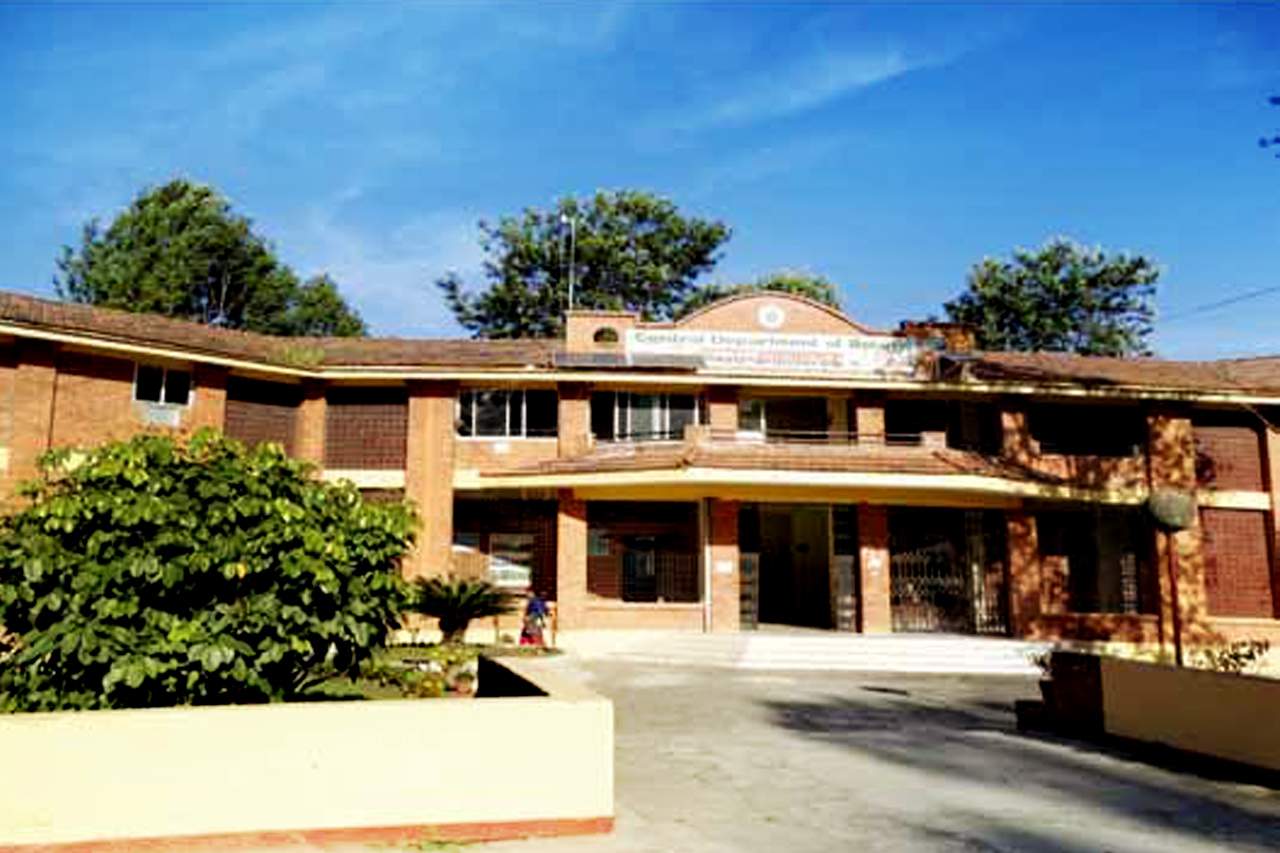
MSc in Botany at the Central Department of Botany, Tribhuvan University (CDBTU), Kirtipur, is a two-year postgraduate course that focuses on plant science in the context of Nepal and the wider region. The course operates within the Institute of Science and Technology and runs inside the main Kirtipur campus of Tribhuvan University.
Students who join this course step into a department that has taught postgraduate botany since the 1960s and has already produced thousands of graduates. The course links classroom learning, laboratory work, field excursions, and a research dissertation so that you learn both plant theory and practical skills. For many Nepali students, this course acts as a bridge toward teaching, research, conservation, and environmental work.
Duration: 2 years, divided into 4 semesters (each semester of 6 months)
Intake: Around 35 students in the first semester
Total credits and marks: 62 credit hours and 1550 aggregate marks
Structure: Course work, practical classes, field work, research methodology, and dissertation
Specialisation: Ecology, Plant Systematics, Plant Biotechnology and Genetic Engineering, or Applied Mycology and Plant Pathology
Applied focus: Options in Natural Resources Management, Plant Conservation Biology, Molecular Biology in Plant Science, and Food Security and Food Safety
Field exposure: Botanical excursions in different regions of Nepal during the first and second semesters
The MSc in Botany course at the Central Department of Botany follows a semester and credit system. Each semester mixes theory, practical work, and field activities.
Semester I builds the foundation of plant diversity and evolution:
Diversity and Evolution of Microbes and Fungi
Non-vascular Plants (Algae and Bryophytes)
Vascular Plants I (Pteridophytes and Gymnosperms)
Vascular Plants II (Angiosperms)
Field Work and Seminar (specimen collection, preservation, and curation techniques)
You learn how different plant groups evolved, how to handle specimens in the field, and how to prepare them for herbarium work.
Semester II focuses on plant function and ecological context:
Ecology
Cytology and Genetics
Plant Physiology
Plant Systematics
Field Work (ecological sampling, vegetation and floristic study, seminar presentation)
Students practice ecological data collection, vegetation survey methods, and basic analysis. You begin to see how plant structure, genes, and environment connect.
Semester III combines compulsory research skills with special and applied papers.
Compulsory courses:
Research Methodology and Biological Data Analysis (theory and lab)
Dissertation Proposal and Seminar
Special papers (choose one group):
Ecology
Functional Plant Ecology
Landscape and Global Change Ecology
Plant Systematics
Applied Systematics
Biodiversity and Biogeography
Plant Biotechnology and Genetic Engineering
Plant Biotechnology
Genetic Engineering
Applied Mycology and Plant Pathology
Applied Mycology
Advanced Plant Pathology
Applied paper (choose one):
Natural Resources Management
Plant Conservation Biology
Molecular Biology in Plant Science
Food Security and Food Safety
By the end of Semester III, you complete your proposal and are ready to move into full dissertation work.
Semester IV focuses on independent research:
Case Study / Seminar
Dissertation Work
Students conduct a research project under supervision, write the dissertation, and present findings. Many topics link to Nepal’s flora, forest ecosystems, invasive species, conservation issues, or applied plant science.
At least one botanical excursion is organised in Semester I and Semester II. These visits cover different botanical regions of Nepal. You learn how to observe vegetation in natural habitats, recognise plant communities, and prepare field reports, which are evaluated during practical examinations.
MSc in Botany at the Central Department of Botany aims to:
Develop sound knowledge of plant diversity, evolution, ecology, and systematics
Build capacity in botanical research, including fieldwork, laboratory work, and data analysis
Support understanding of biodiversity and environmental issues in Nepal
Prepare students for academic, research, and applied roles in plant science and related sectors
If you plan a future in teaching, research, conservation, or environmental management, these objectives speak directly to your study needs.
The scope of MSc in Botany extends across education, research, and applied plant science. Graduates work in:
Universities and colleges as lecturers or teaching staff
Government departments dealing with forests, biodiversity, agriculture, and environment
Research organisations, herbaria, botanical gardens, and environmental consultancies
NGOs and INGOs that focus on conservation, climate change, livelihoods, or natural resources
You gain a background that fits both academic careers and field-based roles linked to Nepal’s ecosystems.
After completing MSc in Botany from the Central Department of Botany, students are expected to:
Understand major plant groups, their evolution, and their ecological roles
Conduct plant identification and herbarium work with confidence
Plan and carry out ecological and botanical field surveys
Apply basic and advanced lab methods in physiology, genetics, microbiology, and biotechnology
Prepare research proposals, handle biological data, and write scientific reports and dissertations
Discuss plant-related issues in conservation, resource management, and food security in the context of Nepal
These outcomes help you move from general interest in plants to specialised professional skills.
Across the four semesters, the course builds several key skills:
Field skills: specimen collection, preservation, ecological sampling, vegetation mapping, report writing
Laboratory skills: microscopy, cytology and genetics techniques, plant physiology experiments, tissue and microbial work
Data skills: research design, quantitative and qualitative analysis, use of statistical tools for biological data
Communication skills: seminar presentation, proposal defence, dissertation writing, poster or oral presentation in academic settings
Many Nepali students worry about research writing and data analysis. The compulsory research methodology and data analysis course directly addresses that gap and guides you step by step through the research process.
Central Department of Botany combines several teaching approaches:
Classroom lectures for core theory
Practical classes in laboratories linked to each subject
Field work and botanical excursions in different regions of Nepal
Seminars where students present term papers, proposals, and research progress
Supervision meetings between students and teachers for dissertation guidance
This mix helps you connect textbook knowledge with real plants, real sites, and real datasets.
Admission to MSc in Botany at the Central Department of Botany follows the rules of the Institute of Science and Technology, Tribhuvan University.
Key points include:
Academic qualification: BSc in Botany or an equivalent degree in plant science from a recognised university
Entrance examination: compulsory departmental entrance test; selection based on entrance scores
Intake: around 35 students in the first semester each year
Prospective students should follow official Tribhuvan University and departmental notices for updated admission dates, forms, and fee details.
Graduates of MSc in Botany from Tribhuvan University move into a range of roles, such as:
Lecturer or teaching staff in colleges and universities
Botanist, plant taxonomist, or ecologist in research projects
Officer or technical staff in government agencies related to forests, biodiversity, agriculture, and environment
Conservation officer or project staff in NGOs and INGOs
Consultant or researcher in environmental and social impact assessment work
Specialist in areas like plant pathology, plant biotechnology, or natural resource management
If you plan to continue to a PhD, the MSc in Botany from the Central Department of Botany gives a natural pathway into the department’s own PhD programme or related doctoral studies elsewhere.
Financial support for MSc in Botany students may come through:
Scholarships and support schemes under Tribhuvan University rules
Research projects run by the Central Department of Botany that may include field allowances, assistantships, or thesis grants
External funding agencies that collaborate with the department on specific research themes
Students should regularly check official notices and consult the department office for current information on available schemes and application procedures.
MSc in Botany, Central Department of Botany, Tribhuvan University, gives you:
A long-established academic setting focused on plant science in Nepal
A curriculum that links plant diversity, ecology, systematics, biotechnology, and applied topics such as food security and conservation
Strong orientation to field-based learning through botanical excursions and field courses
Exposure to herbarium work, botanical garden resources, and specialised laboratories
A pathway to further research, including PhD studies and collaborative projects
If you care about plants, ecosystems, and environmental change in Nepal, this course provides a structured route to turn that interest into a professional skill set.
MSc in Botany at the Central Department of Botany, Tribhuvan University, Kirtipur, stands as a focused postgraduate course in plant science rooted in Nepal’s landscapes and academic tradition. The four-semester structure covers plant diversity, ecology, systematics, biotechnology, and research practice, while the dissertation builds your capacity as an independent researcher.
For Nepali students and international learners who seek a master’s course that links classroom learning with field and lab work in a Himalayan country, MSc in Botany at Tribhuvan University offers clear academic structure, strong research exposure, and relevance to real environmental and development issues.
How long is the MSc in Botany course at the Central Department of Botany?
MSc in Botany runs for two years and is divided into four semesters, each of six months.
What is the intake capacity for MSc in Botany?
The department usually enrolls around 35 students in the first semester each year.
Is a dissertation compulsory in this course?
Yes. Every student must conduct research and submit a dissertation in the fourth semester.
Can students choose specialisation areas during the course?
Yes. In the third semester, students choose one special paper (Ecology, Plant Systematics, Plant Biotechnology and Genetic Engineering, or Applied Mycology and Plant Pathology) and one applied paper.
Are field excursions part of the curriculum?
Yes. At least one botanical excursion is organised during the first and second semesters in different botanical regions of Nepal, and students submit reports as part of their practical assessment.
Who is eligible to apply for MSc in Botany?
Applicants need a BSc in Botany or an equivalent plant science degree from a recognised university and must pass the departmental entrance examination conducted under the Institute of Science and Technology, Tribhuvan University.