



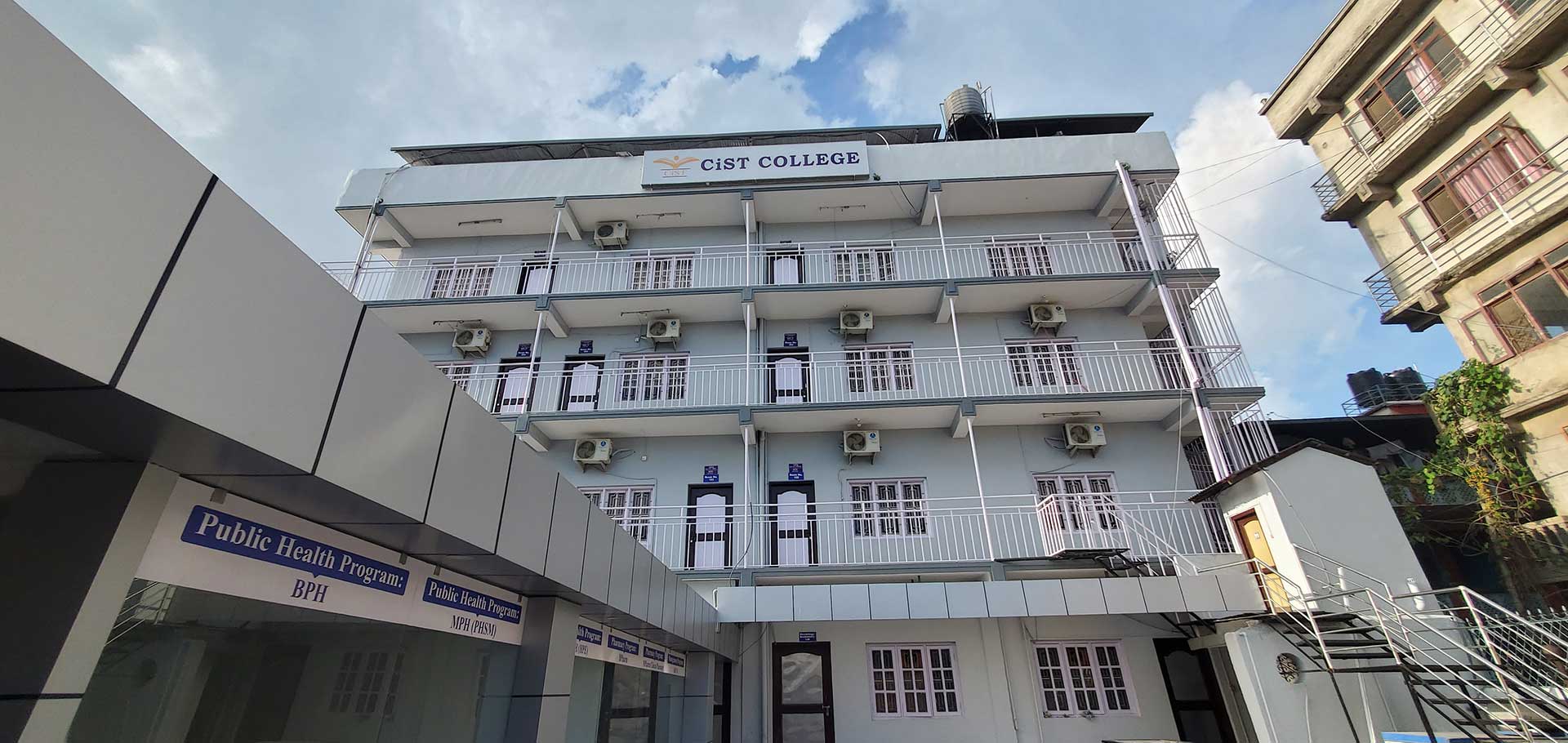
M. Pharm in Clinical Pharmacy, formally identified as Master of Pharmaceutical Sciences (Clinical Pharmacy), is a two-year postgraduate pharmacy program offered at Central Institute of Science and Technology College (CIST College), Sangam Chowk, New Baneshwor, Kathmandu. The program is affiliated with Pokhara University.
The course is intended for pharmacy graduates seeking advanced study in clinical pharmacy. Its academic structure moves through therapeutics, pharmacokinetics, hospital and community pharmacy, pharmacovigilance, clinical research, clerkship, community field practice, pharmaceutical research, and thesis work.
| Particular | Details |
|---|---|
| Course | M. Pharm in Clinical Pharmacy |
| Formal Program Name | Master of Pharmaceutical Sciences (Clinical Pharmacy) |
| Level | Master's |
| Institution | CIST College |
| Location | Sangam Chowk, New Baneshwor, Kathmandu |
| Affiliation | Pokhara University |
| Duration | 2 years / 4 semesters |
| Total Credit Hours | 60 |
| Final Semester | 9-credit thesis |
| Seats | 6 |
The four semesters carry 19, 17, 15, and 9 credit hours respectively, giving a total of 60 credit hours. The program includes theory courses, laboratory work, pharmaceutical research, clinical clerkships, community field practice, seminar work, case study activity, and thesis research.
Clinical pharmacy places particular attention on the use of medicines within patient care and health service settings. The M. Pharm curriculum at CIST develops this direction through advanced therapeutics, clinical pharmacokinetics, pharmacy practice, drug information, pharmacovigilance, pharmacoepidemiology, and clinical research.
The course also retains a strong pharmaceutical science and research component. Students study instrumental analysis, regulatory affairs and quality assurance, research methodology, applied statistics, pharmacokinetics, and health-system pharmacy alongside clinical subjects.
Program objectives include preparing pharmacists for specialized pharmaceutical services in hospital and clinical environments, strengthening communication and research abilities, developing understanding of clinical trials and drug development, and supporting work with other health professionals.
Eligibility: Applicants for M. Pharm in Clinical Pharmacy must hold a B.Pharm degree.
For master's programs under Pokhara University's Faculty of Health Sciences, the stated general academic requirement is a relevant bachelor's degree with:
Minimum CGPA of 2.5 on a 4.0 scale; or
Second division / 50% marks.
Clinical Pharmacy specifically requires a B.Pharm degree.
Admission to applicable master's-level health education programs follows the prevailing requirements of the Medical Education Commission (MEC), Nepal.
Applicants are required to qualify through the applicable MEC-administered postgraduate entrance process, including MECEE-PG, and follow the rules in force for the relevant admission cycle.
The admission framework may cover:
Academic eligibility
MECEE-PG qualification
Merit and matching
Seat allocation
Scholarship provisions
Fee structure
Admission procedures
Code of conduct
Examination guidelines
Official MEC calendar
CIST College has 6 seats for M. Pharm in Clinical Pharmacy. Seats for regulated medical education programs are subject to MEC determination and may vary between admission years.
The first semester carries 19 credit hours and establishes the analytical, regulatory, therapeutic, and research base for later clinical study.
| Course | Credit |
|---|---|
| Instrumental Analysis | 3 |
| Regulatory Affairs and Quality Assurance | 3 |
| Research Methodology and Applied Statistics | 3 |
| Pharmacokinetics and Pharmacokinetics | 3 |
| Applied Therapeutics-I | 3 |
| Pharmaceutical Laboratory-1 (Instrumental Analysis) | 1 |
| Pharmaceutical Laboratory-2 (Biopharmaceutics and Pharmacokinetics) | 1 |
| Pharmaceutical Seminar | 1 |
| Pharmaceutical Research I | 1 |
Total: 19 credit hours.
The semester combines general and major courses with laboratory, seminar, and research work rather than relying only on classroom theory.
The second semester carries 17 credit hours and shifts further toward clinical application.
| Course | Credit |
|---|---|
| Applied Therapeutics II | 3 |
| Clinical Pharmacokinetics | 3 |
| Clinical Skills for Pharmacists | 3 |
| Hospital and Community Pharmacy | 3 |
| Clinical Clerkship I | 2 |
| Pharmaceutical Laboratory-3 (Clinical Pharmacokinetics) | 1 |
| Pharmaceutical Laboratory-4 (Clinical Skills) | 1 |
| Pharmaceutical Research II | 1 |
Total: 17 credit hours.
Clinical Clerkship I introduces a formal clerkship component alongside therapeutics, clinical skills, pharmacy services, practical laboratory activity, and continuing pharmaceutical research.
The third semester has 15 credit hours and brings together clinical research, medicine safety, health-system pharmacy, clerkship, and community practice.
| Course | Credit |
|---|---|
| Pharmacoeconomics and Health System Pharmacy | 3 |
| Pharmacoepidemiology and Clinical Research | 3 |
| Drug Information and Pharmacovigilance | 2 |
| Clinical Clerkship II | 3 |
| Community Field Practice | 2 |
| Pharmaceutical Laboratory-5 (Case Study) | 1 |
| Pharmaceutical Research III | 1 |
Total: 15 credit hours.
This semester is notable for combining three different practice environments: clinical clerkship, community field practice, and case-based laboratory work. Research also continues through Pharmaceutical Research III.
The fourth semester is devoted to research.
| Course | Credit |
|---|---|
| Thesis | 9 |
Total: 9 credit hours.
The thesis gives the final semester a research-centered structure. This follows three earlier semesters in which pharmaceutical research is introduced progressively through Pharmaceutical Research I, II, and III.
M. Pharm in Clinical Pharmacy contains several forms of practical learning rather than one isolated practical course.
These include:
Instrumental analysis laboratory
Biopharmaceutics and pharmacokinetics laboratory
Clinical pharmacokinetics laboratory
Clinical skills laboratory
Clinical Clerkship I
Clinical Clerkship II
Community Field Practice
Case Study laboratory
Pharmaceutical Research I, II, and III
Thesis research
The combination allows students to encounter laboratory analysis, clinical pharmacy activities, community exposure, case-based study, and structured research within the same degree.
Across the four semesters, the program covers several connected areas of pharmaceutical and clinical study:
Applied therapeutics
Clinical pharmacokinetics
Clinical skills for pharmacists
Hospital and community pharmacy
Pharmacoeconomics
Health system pharmacy
Pharmacoepidemiology
Clinical research
Drug information
Pharmacovigilance
Regulatory affairs
Quality assurance
Instrumental analysis
Research methodology
Applied statistics
Pharmaceutical research
These subjects place medicine use, patient-related pharmacy services, medication safety, research, and health-system issues alongside advanced pharmaceutical science.
CIST College also runs undergraduate pharmacy and public health programs, giving M. Pharm students an institutional setting centered substantially on health and pharmaceutical education.
Facilities relevant to pharmacy study include laboratories in areas such as Pharmaceutics, Pharmacology, Pharmacognosy, Microbiology, Biochemistry, General Chemistry, Industrial Pharmacy, and Instrumental Analysis. The college also has a library with books, journals, reports and electronic resources, computer facilities, and classrooms with audio-visual teaching aids.
These facilities support the laboratory, academic, research, and seminar components built into the M. Pharm curriculum.
The curriculum may help students strengthen skills related to:
Clinical assessment of medicine use
Applied therapeutics
Clinical pharmacokinetics
Drug information
Pharmacovigilance
Hospital and community pharmacy practice
Clinical research
Case analysis
Pharmaceutical analysis
Research design and data interpretation
Academic presentation
Scientific research and thesis preparation
The extent to which these skills can be applied professionally depends on the graduate's prior pharmacy training, academic performance, practical experience, professional registration, and workplace responsibilities.
The stated career areas for M. Pharm graduates include:
Community pharmacy
Hospital and clinical pharmacy
Adverse drug reaction monitoring services
Pharmaceutical industry
Health research
Government drug administration
University education and research
These should be understood as possible professional areas rather than guaranteed employment outcomes. Actual opportunities depend on professional qualifications, experience, licensing requirements, employer criteria, and available positions.
Pharmacy professional practice in Nepal comes under the regulatory framework of the Nepal Pharmacy Council.
Academic completion and professional licensing are separate requirements. Students entering regulated pharmacy practice must satisfy the prevailing professional council requirements, including the applicable licensing and registration process.
CIST College has 6 seats for M. Pharm in Clinical Pharmacy.
For programs regulated under the medical education framework, seat allocation, fees, scholarship provisions, and admission procedures follow applicable MEC decisions for the relevant academic intake.
Because these arrangements can be revised through MEC decisions and the official admission calendar, the conditions applying to one admission year should not be treated as permanent for later intakes.
The course is specifically structured for B.Pharm graduates who want postgraduate study centered on clinical pharmacy.
Its curriculum is particularly aligned with students interested in areas such as therapeutics, hospital and community pharmacy, clinical pharmacokinetics, medication safety, drug information, pharmacovigilance, clinical research, clerkship, and pharmaceutical research.
Students considering the program should also account for the two-year academic commitment, practical and clerkship requirements, research progression across the first three semesters, and the nine-credit thesis in the final semester.
M. Pharm in Clinical Pharmacy is a postgraduate pharmacy program formally identified as Master of Pharmaceutical Sciences (Clinical Pharmacy). It focuses on advanced pharmacy study involving therapeutics, clinical pharmacy, pharmacokinetics, hospital and community pharmacy, pharmacovigilance, research, and clinical practice.
Duration: Two years divided into four semesters.
The four semesters carry 19, 17, 15, and 9 credits respectively, totaling 60 credit hours.
Applicants must hold a B.Pharm degree. The stated Faculty of Health Sciences requirement also specifies a minimum CGPA of 2.5 or second division / 50% marks for relevant master's-level admission.
Admission to applicable master's-level health education programs follows the MEC-administered postgraduate entrance framework, including MECEE-PG and the prevailing rules for the relevant admission cycle.
CIST College has 6 seats for M. Pharm in Clinical Pharmacy. Seat determination may vary according to applicable MEC decisions for the admission year.
Yes. Clinical Clerkship I carries 2 credits in the second semester, while Clinical Clerkship II carries 3 credits in the third semester.
Yes. Community Field Practice carries 2 credit hours in the third semester.
Yes. The entire fourth semester consists of a 9-credit thesis.
M. Pharm in Clinical Pharmacy at CIST College is affiliated with Pokhara University.







