Master of Public Health (Public Health Service Management) is a two-year postgraduate public health program offered at Central Institute of Science and Technology College (CIST College), Sangam Chowk, New Baneshwor, Kathmandu. The program is affiliated with Pokhara University and follows the academic framework of the Faculty of Health Science.
The specialization combines advanced public health study with health service management, project management, health financing and economics, human resource management, organizational analysis, research, and field-based practice. Students complete common public health courses during the first two semesters before concentrating on Public Health Service Management in the third and fourth semesters.
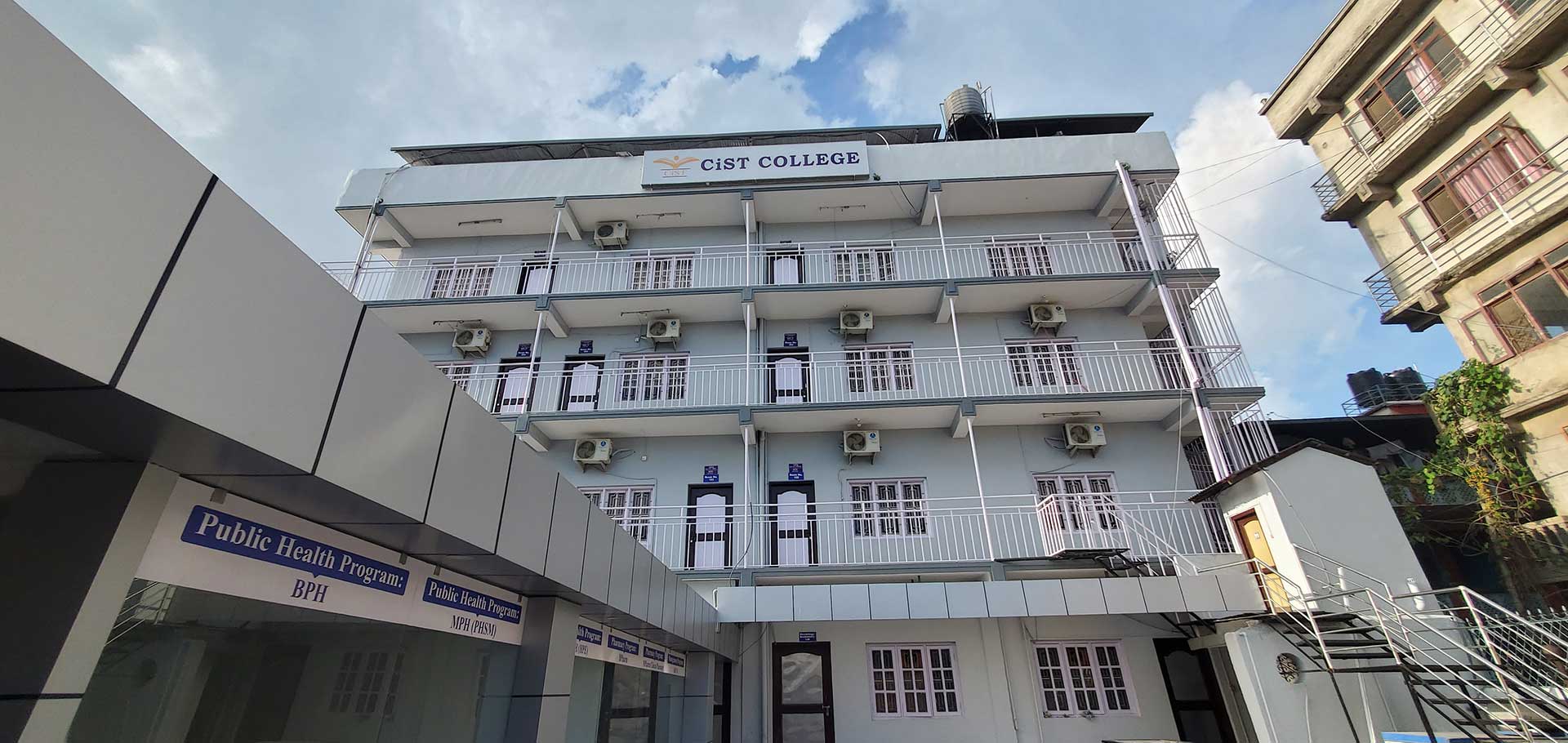
| Particular | Details |
|---|---|
| Course | Master of Public Health (Public Health Service Management) |
| Level | Master's |
| Institution | CIST College |
| Location | Sangam Chowk, New Baneshwor, Kathmandu |
| Affiliation | Pokhara University |
| Faculty | Faculty of Health Science |
| Duration | 2 years / 4 semesters |
| Total Credit Hours | 75 |
| Core Public Health Credits | 40 |
| Specialization Credits | 35 |
| Thesis | 9 credit hours |
| Stated MPH Intake at CIST College | 10 seats |
The MPH program requires 75 credit hours consisting of 40 credits of common public health study and 35 credits in the selected specialization. It is structured over four semesters, with each semester lasting six months.
Public Health Service Management deals with the organization, planning, financing, operation, monitoring, and improvement of public health services.
The specialization examines management within health systems rather than treating public health only as an epidemiological or community-health discipline. Students study how health services are organized, how programs and projects are managed, how resources are allocated, how staff are developed and managed, and how health service performance can be assessed.
The curriculum also places management within Nepal's health service context. Students examine organizational structures, health programs, policy issues, quality of services, financing, workforce management, project implementation, and public health service management practices.
The broader MPH program develops advanced understanding of public health while preparing students for public health planning, management, research, and evidence-informed decision-making.
Within the Public Health Service Management specialization, the academic direction includes:
Understanding health service management concepts and systems.
Examining contemporary management and policy issues in health services.
Developing knowledge of public health program planning and management.
Studying project planning, implementation, monitoring, and evaluation.
Understanding health financing and economic issues.
Developing knowledge of human resource management in health services.
Examining quality and performance within health systems.
Studying health service management within Nepal.
Developing research skills related to health systems and health services.
Applying management concepts through practical and organizational assignments.
The curriculum connects management theory with health service settings, field activities, seminars, research, and organizational analysis.
Eligibility: Applicants for the Public Health Service Management specialization must hold a bachelor's degree in one of the following health science fields:
Public Health
Nursing
Medicine
Laboratory Technology
Pharmacy
The qualifying bachelor's degree must be from a recognized university or institution.
Applicants must also have:
A minimum CGPA of 2.0 at bachelor's level; or
At least 45% marks at bachelor's level.
The curriculum further requires at least one year of work experience after completion of the bachelor's degree in an applicable health-related setting. Relevant settings include health-related government organizations, research organizations, NGOs/INGOs, recognized health service organizations, health science teaching institutions, or teaching positions within CTEVT or university constituent or affiliated colleges in relevant health fields.
Admission to applicable master's-level medical and health education programs follows the prevailing rules and procedures of the Medical Education Commission (MEC), Nepal.
For the relevant admission cycle, applicants need to follow the MECEE-PG framework and applicable MEC provisions concerning:
Academic eligibility
Entrance examination
Merit
Matching and seat allocation
Scholarship provisions
Fee structure
Admission procedures
Code of conduct
Examination requirements
Official admission calendar
Seats, scholarship arrangements, fees, and admission procedures may be revised according to MEC decisions for a particular academic year.
CIST College has a stated overall MPH intake of 10 seats. Actual seat allocation for the admission year remains subject to the applicable MEC determination.
Applicants are required to submit the prescribed admission documents, which include:
Completed and signed application form indicating the intended specialization
Academic transcript or mark sheet
Transfer certificate
Character certificate
Citizenship certificate or passport
Experience letter
Attested copies of academic degree certificates
Admission is completed after the applicant satisfies the applicable academic and enrollment requirements.
The MPH curriculum is divided into common public health courses and specialization courses.
Students complete 40 credits during the first two semesters. The remaining 35 credits are completed within Public Health Service Management during the third and fourth semesters.
| Course | Credit Hours |
|---|---|
| Advanced Concept of Public Health | 3 |
| Advanced Concept of Epidemiology | 3 |
| Advanced Public Health Statistics | 3 |
| Environmental and Occupational Health | 3 |
| Demography, Reproductive Health and Nutrition | 3 |
| Five corresponding practical courses | 5 |
| Total | 20 |
The first semester establishes an advanced foundation in public health, epidemiology, statistics, environmental and occupational health, demography, reproductive health, and nutrition.
Practical for Skill Development courses run alongside the theory courses.
| Course | Credit Hours |
|---|---|
| Epidemiology of Diseases and Health Problems | 3 |
| Public Health and Behavioral Sciences | 3 |
| Health Promotion and Education | 3 |
| Advanced Public Health Research | 3 |
| Public Health Service Management | 3 |
| Five corresponding practical courses | 5 |
| Total | 20 |
Public Health Service Management becomes a common core subject in the second semester before students enter the full specialization in the third semester.
The course addresses management concepts and functions such as planning, organizing, directing, leading, and controlling within health services, with particular attention to the Nepalese setting.
The third semester consists of five specialization theory courses and their corresponding practical components.
| Course | Credit Hours |
|---|---|
| Theories of Public Health Service Management | 3 |
| Health Project Management | 3 |
| Health Financing and Economics | 3 |
| Development and Management of Human Resource in Health | 3 |
| Analysis of Health Service Management in Nepal | 3 |
| Five corresponding practical courses | 5 |
| Total | 20 |
This course examines management and policy issues in contemporary health systems. It addresses health service performance, quality, disparities, public policy, strategic management, organizational issues, and professional responsibility.
Students study areas such as:
Health disparities and diversity
Public health interventions
Process evaluation
Service utilization
Quality in public health services
Quality assurance
Health system performance
Strategic management
Organizational analysis
Health policy and service management
The course also considers the management of health services within Nepal's policy and organizational context.
Health Project Management examines the complete project cycle from conception through completion.
Major areas include:
Project concepts and characteristics
Project formulation
Project planning
Project implementation
Project termination
Project scope management
Work breakdown structures
Project scheduling
PERT and CPM
Risk management
Resource scheduling
Project team management
Monitoring and control
Project evaluation
Quality assurance
Project closure and reporting
The course gives students a structured framework for understanding health projects and their management requirements.
Health Financing and Economics introduces economic and financial issues connected with health services.
The course includes the application of economic concepts to health and health care and considers financing and investment decisions within health service organizations. It also introduces health economics as an area for examining how resources and economic methods relate to health services.
Human resources are a central part of health service operation. This specialization course addresses the development and management of people working within health organizations.
Its position within the specialization connects workforce issues with public health management, organizational planning, and service delivery.
This course brings the specialization into the national context. Students examine public health service management practices, systems, programs, organizational arrangements, and management issues within Nepal.
The corresponding practical work supports analysis rather than limiting learning to theoretical management concepts.
The fourth semester moves from specialization coursework into applied management, research, and thesis work.
| Course | Credit Hours |
|---|---|
| Seminar and Practicum | 3 (1+2) |
| Health Management Research Methods | 3 |
| Thesis on Health Service Management | 9 |
| Total | 15 |
HSM 621 Seminar and Practicum combines critical discussion with practical work in health service organizations.
The seminar component examines issues in health service management through papers, presentations, discussion, and analysis. Topics can involve public health governance, health service management models, professional development, health policy, management research, and broader health system issues.
The practicum places students in settings such as:
Government organizations
Academic institutions
INGOs
NGOs
Community-based organizations
Students may work with an assigned organization on an integrated health service management project.
The practicum includes activities such as:
Identifying an organization or program setting
Examining management needs and ongoing activities
Defining a project
Designing the implementation process
Carrying out the project
Reviewing the implementation experience
Preparing an experience report
Sharing findings with the organization and academic supervisors
This component links the classroom study of health service management with organizational and community-level practice.
HSM 622 Health Service Management Research Methods develops research skills specifically for health systems and health service management.
The course covers:
Health system management research concepts
Research problems and researchable issues
Review of health system and health service research
Quantitative research methods
Qualitative research methods
Operations research
Cross-sectional and intervention designs
Population and sampling
Measurement and research instruments
Surveys and interviews
Observation
Focus group discussions
Content analysis
Data processing and analysis
Research report preparation
Research proposal development
Students also examine research topics involving health service users, health managers, policymakers, staff, stakeholders, service delivery systems, organizational processes, and health management practices.
HSM 691 Thesis on Health Service Management carries 9 credit hours.
Students undertake supervised research on a selected issue within public health service management. The research project is intended to develop the ability to investigate a health management problem systematically and prepare an academic thesis under faculty supervision.
The broader MPH thesis framework allows research involving primary field data or authorized national-level secondary data. The thesis must follow the prescribed academic format.
The MPH program uses both classroom and practical teaching methods.
Academic activities include:
Classroom discussions
Presentations
Group work
Case-based activities
Guest lectures
Practical for Skill Development
Organizational and field assignments
Seminars
Research activities
Thesis work
One credit hour of theory is equivalent to 16 teaching hours, while one practical or PSD credit corresponds to 48 hours of clinical, laboratory, or field activity.
At CIST College, MPH students study within an institution that also runs undergraduate public health, pharmacy, clinical pharmacy, and health care management programs.
Students are required to maintain at least 80% attendance in lectures, tutorials, and practical classes.
A student who does not meet the minimum attendance requirement in a course receives NOT QUALIFIED (NQ) attendance status for that course.
Academic performance is evaluated through internal and external assessment.
| Evaluation Component | Weight |
|---|---|
| Internal Evaluation | 60% |
| External Semester-End Examination | 40% |
Students must obtain the required pass standard separately in both components.
Internal evaluation may include:
Project work
Quizzes
Presentations
Written examinations
Reflection notes
Assignments
Other course-related academic work
A student who fails to meet the required internal evaluation standard receives NQ status and cannot appear in the semester-end examination for that course.
The thesis is assessed through both internal and external evaluation.
| Component | Weight |
|---|---|
| Internal Evaluation | 60% |
| External Evaluation | 40% |
Internal evaluation covers proposal preparation and defense, thesis report, and thesis defense. External evaluation includes the thesis report and presentation/viva.
Pokhara University uses a 4.0 grading system for the MPH program.
To earn the master's degree, a student must:
Obtain a grade of C or better in every required course.
Complete all required course work.
Complete practical work.
Complete the thesis.
Finish the degree requirements within the permitted study period.
Obtain a final CGPA of at least 3.0.
Clear outstanding financial obligations to the university.
A CGPA of 3.75 or higher qualifies for the degree with distinction.
The curriculum is structured around management and research tasks that may help students develop abilities in areas such as:
Public health service planning
Health program management
Project planning and evaluation
Organizational analysis
Health service quality assessment
Health financing analysis
Human resource management
Research design
Data collection and analysis
Seminar presentation
Report writing
Management-related field practice
Thesis research
The level at which a graduate can apply these abilities depends on academic performance, practical experience, professional responsibilities, and the requirements of the organization in which they work.
The specialization is designed around public health service positions and management responsibilities within health and public health organizations. Its coursework is relevant to organizational settings that deal with health programs, projects, service management, research, planning, financing, human resources, and monitoring.
The practicum itself includes potential engagement with government organizations, academic institutions, NGOs, INGOs, and community-based organizations.
Career outcomes are not automatic and depend on prior professional background, experience, skills, organizational requirements, licensing or registration provisions, and available positions.
Graduates entering a regulated public health profession must satisfy the professional registration and licensing requirements applicable to their field.
For professions within its jurisdiction, the relevant body is the Nepal Health Professional Council (NHPC).
Completion of the MPH degree and eligibility for regulated professional practice are separate requirements. Graduates must complete the applicable professional council licensing or registration process before entering professional practice where such licensing is required.
It is a postgraduate public health specialization that combines advanced public health study with health service management, project management, health financing, human resource management, organizational analysis, practical work, and research.
Duration: The program runs for two years over four semesters and carries 75 credit hours.
Applicants must hold a bachelor's degree in Public Health, Nursing, Medicine, Laboratory Technology, or Pharmacy from a recognized university or institution. They must also meet the minimum academic and work-experience requirements.
Yes. The curriculum requires at least one year of applicable work experience after completion of the bachelor's degree.
Yes. Practical for Skill Development courses are included in the first three semesters. The fourth semester includes a Seminar and Practicum that involves organizational and project-based work.
Yes. Thesis on Health Service Management carries 9 credit hours in the fourth semester.
The third-semester specialization courses are Theories of Public Health Service Management, Health Project Management, Health Financing and Economics, Development and Management of Human Resource in Health, and Analysis of Health Service Management in Nepal.
The stated overall intake for MPH at CIST College is 10 seats. Seat determination and allocation for the relevant admission cycle remain subject to prevailing MEC provisions.
Admission to applicable master's-level medical and health education programs follows the prevailing MECEE-PG and Medical Education Commission admission framework.



.png)