Kathmandu Multiple College (KMC) is a health sciences college in Gaushala, Kathmandu. Established in 2007 AD, it was formerly known as Karnali College of Health Sciences (KCHeS). The college is affiliated with Purbanchal University and focuses on education in public health and pharmacy.
Its academic programs include Bachelor of Public Health (BPH), Bachelor of Pharmacy (B. Pharm), and Master of Public Health (MPH). These programs cover undergraduate preparation in public health and pharmacy alongside postgraduate study in public health.
| Particular | Details |
|---|---|
| College | Kathmandu Multiple College |
| Former Name | Karnali College of Health Sciences (KCHeS) |
| Established | 2007 AD |
| Location | Gaushala, Kathmandu |
| Affiliation | Purbanchal University |
| Academic Area | Health Sciences |
| Programs | BPH, B. Pharm, MPH |
Kathmandu Multiple College has operated in health sciences education since 2007 AD. A change in management took place in April 2012.
The college's stated academic objectives include developing health professionals with theoretical knowledge and practical exposure, strengthening students' theoretical and practical skills, supporting health sciences education, and involving students in research-oriented and creative activities.
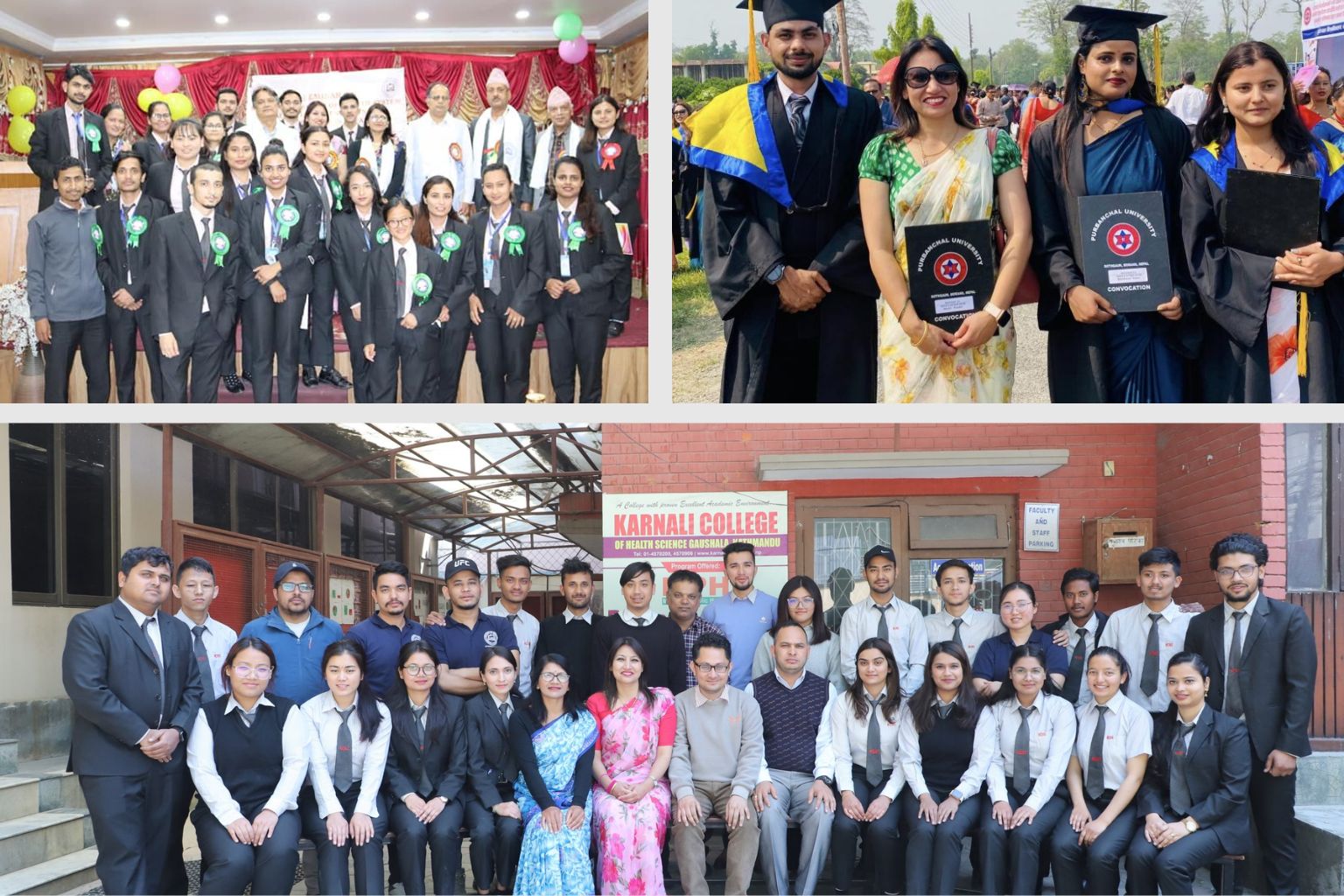
Kathmandu Multiple College is affiliated with Purbanchal University for its BPH, B. Pharm, and MPH programs. These programs follow academic frameworks under the university's Faculty of Medical and Allied Sciences.
The Bachelor of Public Health is organized across eight semesters and combines public health theory with laboratory, field, research, epidemiology, health management, environmental health, family health, nutrition, statistics, and related areas.
The Bachelor of Pharmacy is a four-year, eight-semester program. Its curriculum contains 168 credits distributed across theory, practical work, seminars, project work, and professional internship.
The Master of Public Health is structured across two academic years and four semesters. It combines core public health study, specialization courses, and thesis work.
The Bachelor of Public Health is a four-year program divided into eight semesters. It introduces students to biological, social, environmental, epidemiological, managerial, and research aspects of public health.
The curriculum covers areas such as public health, anatomy and physiology, pathophysiology, microbiology, biochemistry, public health pharmacy and pharmacology, first aid, nutrition, environmental health, communicable and non-communicable diseases, family health, epidemiology, reproductive health, statistics, community organization, health education, health service management, research, and field practice.
Laboratory and field-based activities are integrated into different stages of the course, connecting theoretical study with community health, public health programs, research, and practical work.
Course-specific information is available on the Bachelor of Public Health (BPH) at Kathmandu Multiple College page.
The Bachelor of Pharmacy is a four-year program consisting of eight semesters and 168 credits.
The curriculum begins with basic sciences and basic medical sciences before progressing into pharmaceutical sciences. Major areas include pharmaceutical chemistry, instrumental analysis, pharmacognosy, natural products, pharmacology, pharmacotherapeutics, hospital and clinical pharmacy, community pharmacy, physical pharmacy, pharmaceutics, and dosage-form design.
The program also includes practical study, seminars, project work, and professional internship. Its academic scope covers pharmaceutical care, medicine distribution, pharmacy management, drug information, manufacturing-related study, and professional pharmacy practice.
Further details are available on the Bachelor of Pharmacy (B. Pharm) at Kathmandu Multiple College page.
Kathmandu Multiple College offers the Master of Public Health with Public Health Service Management as its stated specialization. The program runs for two academic years across four semesters.
The MPH curriculum combines core public health courses, specialized study, and thesis work. Academic areas include epidemiology, statistics, research, environmental and occupational health, demography, reproductive and family health, behavioral sciences, health promotion, health education, public health management, and specialized public health practice.
KMC conducts MPH classes in the evening shift. The college also uses a blended teaching and learning arrangement combining classroom instruction, online activities, independent study, collaborative learning, and a Moodle-based Learning Management System.
Moodle supports access to lecture materials, assignments, evaluation activities, discussions, academic interaction, and continuing learning support.
Program details are available on the MPH at Kathmandu Multiple College page.
Admission to medical education programs covered by Nepal's national medical education framework follows the prevailing requirements of the Medical Education Commission (MEC), Nepal.
Where MECEE-BL applies, bachelor-level admission is based on the Medical Education Common Entrance Examination for Bachelor Level and the rules applicable to the relevant admission cycle.
MEC provisions may govern entrance procedures, scholarship arrangements, seat allocation, fee structures, admission procedures, and the official admission calendar. Seat numbers may change from one year to another according to MEC determination. Fees, scholarships, and admission procedures may also be revised under prevailing MEC decisions.
Applicants therefore need to follow the rules, seat distribution, fee structure, and admission schedule applicable to their own admission year.
Graduation from a health sciences program and entry into regulated professional practice are separate stages where professional council requirements apply.
Public health graduates entering regulated professional practice are subject to the applicable registration and licensing requirements of the Nepal Health Professional Council (NHPC).
Pharmacy graduates are subject to the professional registration and licensing requirements of the Nepal Pharmacy Council.
The Nepal Nursing Council is the professional council associated with nursing education and practice.
Where a professional council licensing examination is required, completion of the academic course does not by itself complete the professional entry process.
Research forms part of KMC's academic environment. The college maintains a research and international relations function connected with health sciences research, epidemiological training, and work related to social and health-system research.
Research and practical study also appear within the university curricula. B. Pharm includes project work and professional internship, while BPH incorporates laboratory and field-based learning. MPH students undertake postgraduate research and thesis work.
These components give students different forms of applied academic experience according to their program: pharmacy students work through laboratory, project, and professional practice components; BPH students undertake laboratory and community or field-based study; and MPH students complete advanced public health study and research.
Kathmandu Multiple College identifies facilities connected with health sciences education, including:
Library facilities
Computer facilities
Clinical resources
Industrial practice facilities
Learning facilities for health sciences and professional practice
Moodle-based Learning Management System for MPH
Research-related academic support
These resources support the different classroom, laboratory, research, field, and professional learning requirements of the college's programs.
Kathmandu Multiple College provides limited merit-based and need-based scholarship opportunities for MPH students.
Scholarship consideration may take account of academic performance, professional experience in the health sector, and categories covered under Government of Nepal provisions.
The college also operates an Earn While Learn Scheme for selected MPH students. Activities may include admission and professional counselling, academic and research assistance, Learning Management System support, community outreach, project work, and institutional academic activities.
These arrangements relate specifically to the MPH student support information at KMC and do not automatically apply to every program or student.
The three programs at Kathmandu Multiple College address distinct areas of health sciences.
BPH centers on population and community health, disease prevention, epidemiology, environmental health, health education, health systems, research, and public health management.
B. Pharm focuses on medicines and pharmaceutical sciences, including formulation, pharmaceutical chemistry, pharmacology, dispensing, hospital and community pharmacy, pharmaceutical manufacturing, drug information, and professional pharmacy practice.
MPH in Public Health Service Management advances into postgraduate public health study, service management, research, health programs, education, and related public health responsibilities.
Graduate pathways depend on the student's program, professional registration requirements where applicable, recruitment criteria, experience, and the requirements of the employing organization.
Kathmandu Multiple College has focused on public health and pharmacy education since 2007 AD. Its academic structure connects undergraduate study through BPH and B. Pharm with postgraduate public health education through the MPH program.
Purbanchal University provides the academic affiliation for these programs, while admission and regulated professional practice remain subject to the applicable requirements of national commissions and professional councils.
For students comparing the three courses, the academic distinction is straightforward: BPH concentrates on population and community health, B. Pharm concentrates on pharmaceutical science and pharmacy practice, and MPH provides advanced public health study with Public Health Service Management as the stated specialization at KMC.