



The Bachelor of Pharmacy (B. Pharm) at Kathmandu Multiple College is a four-year undergraduate pharmacy program affiliated with Purbanchal University. The program follows an eight-semester structure under the Faculty of Medical and Allied Sciences and carries 168 credit hours.
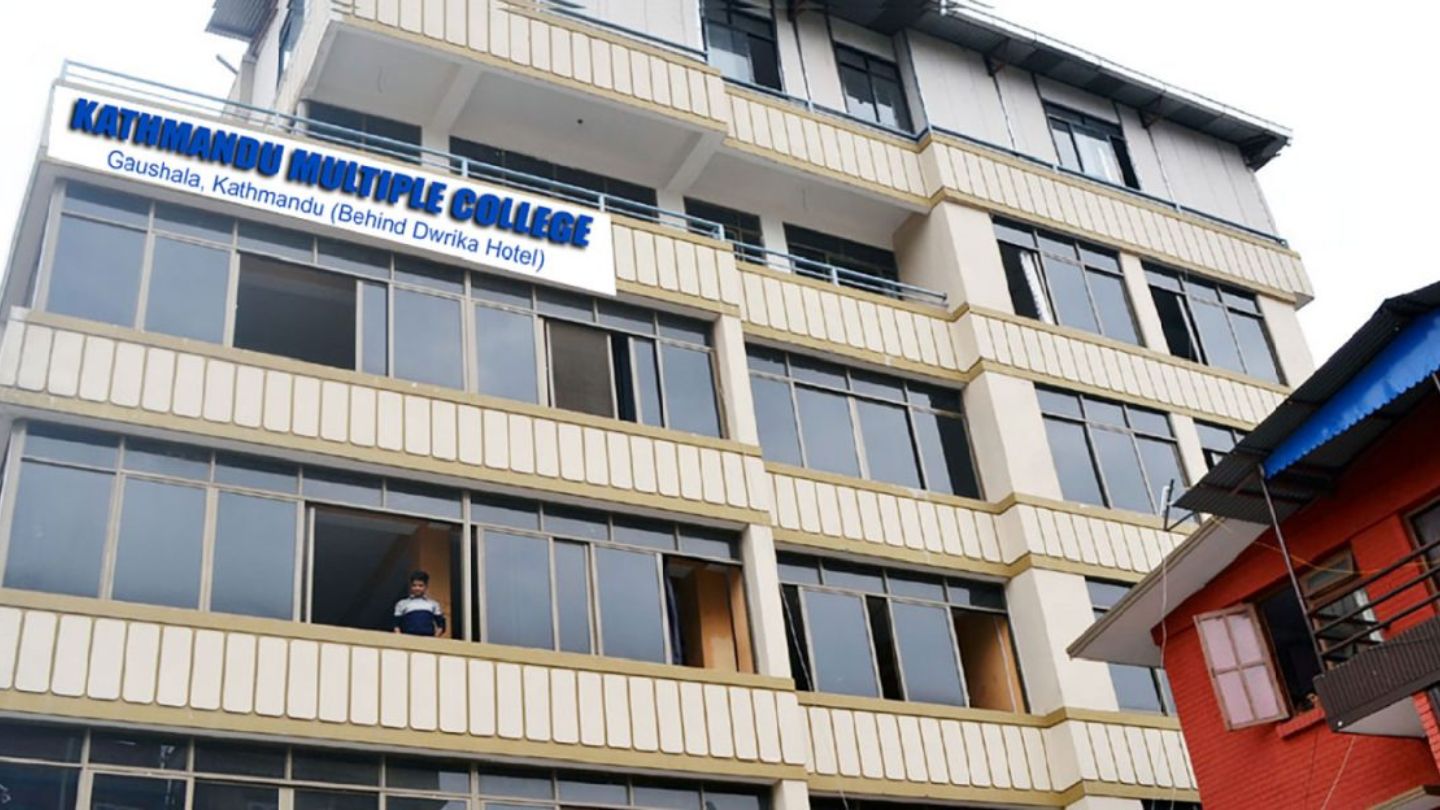
Kathmandu Multiple College, formerly Karnali College of Health Sciences, has been involved in public health and pharmacy education since 2007 AD. The college is located in Gaushala, Battisputali, Kathmandu. Its B. Pharm program combines pharmaceutical sciences with laboratory work, research, field observation, project work, and professional internship.
| Particular | Details |
|---|---|
| Course | Bachelor of Pharmacy (B. Pharm) |
| College | Kathmandu Multiple College |
| Affiliation | Purbanchal University |
| Level | Bachelor's Degree |
| Duration | 4 Years |
| Academic Structure | 8 Semesters |
| Total Credits | 168 |
The 168-credit curriculum consists of 122 theory credits, 32 practical credits, 2 seminar credits, 6 project-work credits, and 6 professional-internship credits. Each semester normally includes at least 16 weeks of academic instruction.
The curriculum begins with basic sciences and develops progressively into pharmaceutical and clinical subjects. Students study pharmaceutical inorganic and organic chemistry, physical chemistry, mathematics, pharmacognosy, physical pharmacy, pharmaceutical analysis, anatomy and physiology, biochemistry, microbiology, and pharmaceutical engineering.
As the course advances, the focus moves toward medicinal chemistry, pharmaceutical technology, biotechnology, pharmacology, pathophysiology, public health pharmacy, biopharmaceutics and pharmacokinetics, and biostatistics.
The final year covers subjects directly connected with professional pharmacy practice and research. Seventh-semester study includes Dosage Form Design, Pharmaceutical Management, Pharmacotherapeutics, Research Methodology, Forensic Pharmacy, and Dispensing and Community Pharmacy.
The eighth semester includes Hospital Pharmacy, Drug Delivery System, Instrumental Analysis, Clinical Pharmacy, Project Work, and Professional Internship.
This progression brings together medicine formulation, pharmaceutical manufacturing, quality assessment, drug action, dispensing, patient-oriented pharmacy practice, research, and medicine-use issues within one academic program.
Kathmandu Multiple College identifies the following academic routes for B. Pharm applicants:
10+2 with Physics, Chemistry, and Biology, with a GPA of 2.4.
Diploma in Pharmacy with at least 50% marks and registration with the Nepal Pharmacy Council.
Other paramedical backgrounds such as Health Assistant, Dental, Optometry, Physiotherapy, and Laboratory studies, with +2 equivalence from the Nepal Education Board.
Admission to medical education programs at bachelor level is governed by the prevailing system of the Medical Education Commission (MEC), Nepal. Admission is based on MECEE-BL and follows the applicable MEC rules on entrance, matching or admission procedures, seat allocation, scholarships, fees, and the admission calendar.
Seat numbers are determined through the MEC process and may differ from one admission year to another. Fees, scholarship provisions, and other admission conditions are also subject to the decisions applicable to the relevant admission cycle.
Practical study is included throughout the program. Laboratory courses accompany pharmaceutical chemistry, pharmacognosy, physical pharmacy, pharmaceutical analysis, anatomy and physiology, biochemistry, pharmaceutical microbiology, pharmacology, medicinal chemistry, pharmaceutical technology, biopharmaceutics, instrumental analysis, hospital pharmacy, and other subjects.
The curriculum also provides for observation visits to hospitals, pharmaceutical industries, drug regulatory bodies, research laboratories, community pharmacies, and drug-distribution settings. Pharmacy students undertake medicinal-plant observation activities and may participate in pharmaceutical-industry visits connected with manufacturing processes and quality-control practices.
Research becomes a substantial part of the final stages of B. Pharm. Students study Research Methodology in the seventh semester and undertake a six-credit project in the eighth semester.
The project is completed under academic supervision and involves literature work, research activity, preparation of a project report, and defence of the completed work. Project research may relate to hospital, community, industrial, or other relevant study settings.
Seminar work is also included during the fifth and sixth semesters, with topics connected to scientific publications, review articles, case studies, and related pharmacy subjects.
Professional internship is compulsory for completion of Purbanchal University's B. Pharm degree. It carries 6 credits and is placed in the eighth semester. The curriculum specifies six weeks and two days of internship in areas such as pharmaceutical industry, quality assurance or quality-control laboratories, hospitals, or community pharmacy.
Internship assessment includes logbook records, report submission, presentation, and viva. This component connects academic preparation with supervised exposure to pharmacy-related work settings.
Purbanchal University's B. Pharm evaluation system combines internal assessment with end-semester examinations. Theory, practical work, seminars, research methodology, project work, and professional internship have their own assessment components.
Students are required to maintain at least 80% attendance in theory and practical classes. The curriculum requires a minimum of 50% in theory and 60% in practical subjects separately to pass the respective courses.
The maximum period allowed for completing the B. Pharm degree is seven years from the date of admission.
The program prepares students for areas such as pharmaceutical manufacturing, hospital pharmacy, community pharmacy, medication distribution, pharmaceutical care, drug information, quality-related work, and pharmacy research.
After completing the academic program, graduates entering professional pharmacy practice must meet the applicable licensing and registration requirements of the Nepal Pharmacy Council. Academic graduation and professional licensing are separate requirements for entry into regulated pharmacy practice.
Students can find institutional information through the Kathmandu Multiple College page.





.png)





