



MA in Anthropology at Ghodaghodi Multiple Campus is a master’s-level course under Tribhuvan University’s Faculty of Humanities and Social Sciences. The campus is located on the East-West Highway at Sukhad, Ghodaghodi, Kailali, Nepal, and its MA offering is connected with Sociology and Anthropology at the master’s level.
Master of Arts in Anthropology is a two-year, four-semester program. The course covers anthropological theory, research methods, kinship, caste and ethnicity, Nepal and Himalayan studies, religion, natural resource management, development, climate change, globalization and thesis-based research.
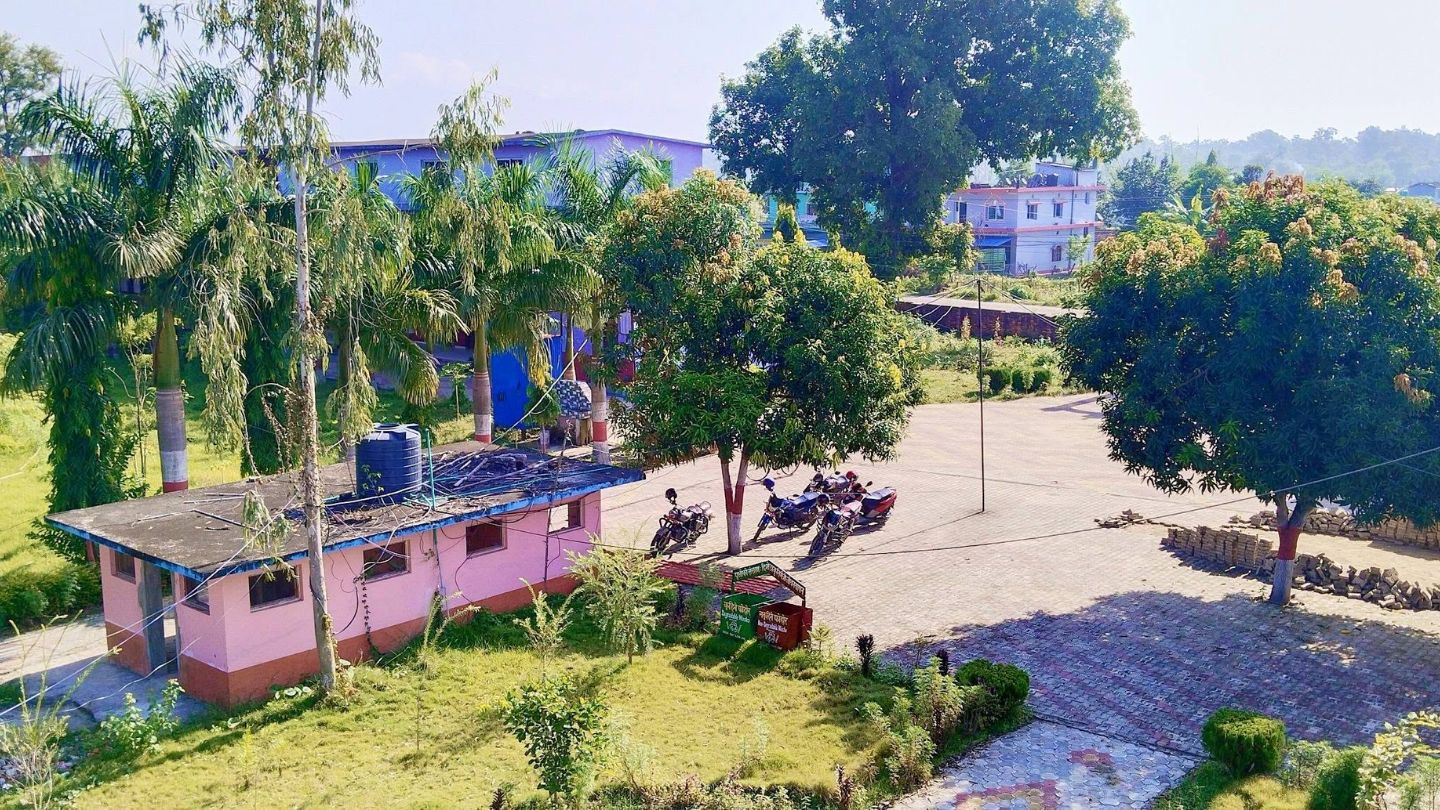
| Field | Details |
|---|---|
| Course Name | Master of Arts in Anthropology |
| Short Name | MA Anthropology |
| Campus | Ghodaghodi Multiple Campus |
| Location | Sukhad, Ghodaghodi, Kailali, Nepal |
| Affiliation | Tribhuvan University |
| Faculty | Faculty of Humanities and Social Sciences |
| Duration | 2 years |
| Academic System | Semester system |
| Total Semesters | 4 semesters |
| Course Structure | 18 papers and compulsory thesis |
| Attendance Requirement | 80 percent |
| Evaluation | 40 percent internal and 60 percent external |
MA Anthropology is designed for students who want advanced knowledge of human society, culture, social organization, kinship, identity, economy, religion, environment and development. The program gives students theoretical grounding in anthropology along with training in fieldwork and research methods.
The course includes 18 papers and a compulsory thesis in the fourth semester. Optional courses are offered according to the decision of the department or campus, allowing students to study selected areas within anthropology.
At Ghodaghodi Multiple Campus, the program is relevant for students from Sukhad, Ghodaghodi, Kailali and nearby areas who want to continue master’s-level study in anthropology under Tribhuvan University.
The MA Anthropology program aims to provide updated knowledge of anthropological theories and methods. It also gives students training in fieldwork, which is central to anthropological study.
The course also aims to prepare skilled human resources for Nepal’s development needs and develop awareness of human rights and social justice. Its broader academic purpose is to build professional skill in anthropology through theory, research and applied understanding.
MA Anthropology is a two-year course divided into four semesters. University examinations are held every six months at the end of each semester.
Students must maintain 80 percent attendance in class.
Students holding a bachelor’s degree recognized by Tribhuvan University are eligible to apply if their degree is in any of the following areas:
Anthropology
Sociology
Social Work
Nepalese History, Culture and Archaeology
Psychology
History
Home Science
Geography
Economics
Political Science
Any discipline from the faculty of education, management and law
Any discipline from the institute of medicine, engineering, forestry, agriculture and animal science
Applicants seeking admission to MA Anthropology must appear in a one-hour entrance examination conducted by the Office of the Dean, Faculty of Humanities and Social Sciences, Tribhuvan University.
Admission is based on the merit list and enrollment capacity of the Central Department of Sociology or the concerned campus. Applicants who do not appear in the entrance examination or do not secure the minimum qualifying score are not admitted.
The MA Anthropology curriculum is organized across four semesters. It includes required papers, optional papers and thesis work.
| Code | Course Title | Credit Hours | Remarks |
|---|---|---|---|
| An 561 | Introduction to Anthropology | 3 | Required |
| An 562 | Classical Theories in Anthropology | 3 | Required |
| An 563 | Kinship Studies | 3 | Required |
| An 564 | Research Methods in Anthropology | 3 | Required |
| An 565 | Anthropology of Nepal and the Himalaya | 3 | Required |
| Code | Course Title | Credit Hours | Remarks |
|---|---|---|---|
| An 571 | Contemporary Theories in Anthropology | 3 | Required |
| An 572 | Recent Trends in Kinship Studies | 3 | Required |
| An 573 | Caste, Ethnicity & Nationalism | 3 | Required |
| An 574 | Advanced Research Methods in Anthropology | 3 | Required |
| An 575 | Economic Anthropology | 3 | Required |
| Code | Course Title | Credit Hours | Remarks |
|---|---|---|---|
| An 581 | Linguistic Anthropology | 3 | Required |
| An 582 | Anthropology of Religion and Ritual | 3 | Required |
| An 583 | Anthropology of Natural Resource Management | 3 | Optional |
| An 584 | Medical Anthropology | 3 | Optional |
| An 585 | Anthropology of Development | 3 | Optional |
| An 586 | Social Inequality, Inclusion and Affirmative Action | 3 | Optional |
| An 587 | Society, Culture and Climate Change | 3 | Optional |
| An 588 | Political Anthropology | 3 | Optional |
| An 589 | Culture and Economy | 3 | Optional |
Students choose any three optional courses in the third semester.
| Code | Course Title | Credit Hours | Remarks |
|---|---|---|---|
| An 591 | Historical Anthropology | 3 | Required |
| An 592 | Research Design and Writing: A Practicum | 3 | Required |
| An 593 | Thesis | 6 | Required |
| An 594 | Culture and Environment in Nepal | 3 | Optional |
| An 595 | Marxist Anthropology | 3 | Optional |
| An 596 | Food, Culture and Symbol | 3 | Optional |
| An 597 | Anthropology and Globalization | 3 | Optional |
| An 598 | Ecological Anthropology | 3 | Optional |
| An 599 | Feminist Anthropology | 3 | Optional |
| An 600 | Indigenous Peoples in Asia | 3 | Optional |
Students choose any one optional course in the fourth semester.
The fourth semester includes Thesis Writing of 6 credits. Students also study Research Design and Writing: A Practicum, which focuses on selecting a research topic, developing research objectives, reviewing literature, preparing theoretical and conceptual frameworks, designing research methods, preparing fieldwork tools, analyzing data and writing a thesis or report.
This research structure is important because anthropology depends strongly on fieldwork, ethnographic method, qualitative analysis and careful academic writing.
Evaluation in MA Anthropology is based on 40 percent internal evaluation and 60 percent external evaluation.
Internal evaluation carries 40 marks and includes:
| Internal Evaluation Area | Marks |
|---|---|
| Class attendance | 10 |
| Class participation, discussion and presentation with précis | 10 |
| Term paper writing | 10 |
| Class test writing | 10 |
| Total | 40 |
External evaluation carries 60 percent and is conducted by the Dean’s Office through final written examination.
MA Anthropology requires regular reading, discussion, presentation, seminar-style participation, fieldwork preparation, research writing and thesis development. The curriculum includes both theory-focused courses and research-focused courses.
At Ghodaghodi Multiple Campus, teaching is supported by lectures, fieldwork, project-based assignments, PowerPoint presentations, report writing, research activities and collaborative learning. The campus also has ICT-supported academic resources, computer facilities, internet access and an e-library system connected with Tribhuvan University Central Library.
Students may develop skills in anthropological theory, fieldwork, ethnographic research, qualitative analysis, research design, academic writing, presentation, cultural analysis and social interpretation.
The course can also help students understand topics such as kinship, caste, ethnicity, religion, natural resource management, development, inequality, climate change, globalization and indigenous communities. Skill development depends on academic participation, fieldwork, research practice and thesis quality.
MA Anthropology can support academic and professional pathways in social research, education, development work, community studies, cultural research, public policy, social inclusion, human rights, natural resource studies and related fields.
Graduates may explore roles connected with research, teaching, development organizations, community-based programs and social analysis. Career outcomes depend on skills, experience, location, further study and available opportunities.
The program can also support further research in anthropology, sociology, social sciences, development studies and related academic areas.
MA Anthropology may suit students interested in culture, society, human behavior, identity, kinship, religion, ethnicity, development, environment, migration, inequality and field-based research.
It is especially relevant for students who want to study human communities and social processes through anthropological theory and research methods.
Campus: Ghodaghodi Multiple Campus
Location: East-West Highway, Sukhad, Ghodaghodi, Kailali, Nepal
Internal Link: Ghodaghodi Multiple Campus Kailali
Email: ghodaghodimultiplecampus@gmail.com
Website: https://ghodaghodicampus.edu.np/
MA Anthropology is a master’s-level course under Tribhuvan University’s Faculty of Humanities and Social Sciences. At Ghodaghodi Multiple Campus, it is connected with the campus’s MA offering in Sociology and Anthropology.
The duration of MA Anthropology is two years.
The program has four semesters.
Yes. The fourth semester includes Thesis Writing carrying 6 credits.
Students holding a bachelor’s degree recognized by Tribhuvan University in the stated subjects or disciplines are eligible to apply.
Yes. Applicants must appear in a one-hour entrance examination conducted by the Office of the Dean, Faculty of Humanities and Social Sciences, Tribhuvan University.
Students must maintain 80 percent class attendance.
Evaluation is based on 40 percent internal evaluation and 60 percent external evaluation.
Students study anthropological theories, kinship, research methods, anthropology of Nepal and the Himalaya, caste and ethnicity, economic anthropology, religion, natural resource management, development, climate change, globalization and thesis work.






