M.Ed. Health Education at Ghodaghodi Multiple Campus is a master’s-level education program connected with Tribhuvan University’s Master of Education structure. Ghodaghodi Multiple Campus is located on the East-West Highway at Sukhad, Ghodaghodi, Kailali, Nepal, and M.Ed. is included among its listed master’s-level academic programs under TU.
Health Education is one of the specialization areas under the Master of Education program of Tribhuvan University’s Faculty of Education. The M.Ed. program follows a semester system and is designed for advanced study in education, teaching, educational planning, management, supervision and research.
| Field | Details |
|---|---|
| Course Name | Master of Education in Health Education |
| Short Name | M.Ed. Health Education |
| Campus | Ghodaghodi Multiple Campus |
| Location | Sukhad, Ghodaghodi, Kailali, Nepal |
| Affiliation | Tribhuvan University |
| Faculty | Faculty of Education |
| Duration | 2 years |
| Academic System | Semester system |
| Total Semesters | 4 semesters |
| Total Credit Hours | 69 credit hours |
| Program Level | Master’s degree |
| Specialization Area | Health Education |
| Teaching Practice | 3 credit hours |
| Thesis Writing | 6 credit hours |
| Normal Duration | 24 months |
| Maximum Duration | 5 years |
The Master of Education program under Tribhuvan University is designed to prepare high-level academic and professional human resources in education. The program supports students who want to work as high school teachers, educators and professional practitioners in education.
The M.Ed. structure includes core professional courses, specialization courses, teaching practice and thesis writing. Students select one specialization area based on the subject studied in Bachelor of Education. Health Education is included among the specialization areas offered under the Faculty of Education.
At Ghodaghodi Multiple Campus, the M.Ed. program is relevant for students from Sukhad, Ghodaghodi, Kailali and nearby areas who want to pursue master’s-level education study under Tribhuvan University.
The overall aim of the M.Ed. program is to produce advanced academics and professionals in education with knowledge of national and international education systems, education policy, pedagogy and educational research.
The program aims to prepare qualified teachers for upper high schools, educational planners, administrators, managers, supervisors and other education professionals. It also supports educational leadership, advanced specialization knowledge, research-based practice and innovative approaches in education.
For Health Education students, the specialization provides a route for advanced study connected with health education, school health, educational practice and research within the broader Faculty of Education framework.
The M.Ed. program is a two-year course divided into four semesters. It carries 69 credit hours in total.
The structure includes:
| Course Component | Credit Hours |
|---|---|
| Core Professional Courses | 21 |
| Specialization Courses | 39 |
| Teaching Practice | 3 |
| Thesis Writing | 6 |
| Total | 69 |
The normal duration of the program is 24 months, or 4 semesters. The maximum duration for completing the program is 5 years, or 60 months.
| Semester | Core Courses | Specialization Courses | Teaching Practice | Thesis Writing | Total Credits |
|---|---|---|---|---|---|
| First Semester | 6 | 12 | - | - | 18 |
| Second Semester | 6 | 12 | - | - | 18 |
| Third Semester | 6 | 12 | - | - | 18 |
| Fourth Semester | 3 | 3 | 3 | 6 | 15 |
| Total | 21 | 39 | 3 | 6 | 69 |
The first, second and third semesters include core and specialization courses. The fourth semester includes Contemporary Educational Issues, one specialization/elective course, teaching practice and thesis writing.
All M.Ed. students from different specialization areas study core education courses. These courses provide the professional and research foundation of the program.
| Course Code | Course Title | Semester | Credit Hours |
|---|---|---|---|
| Ed. 511 | Foundations of Education | First | 3 |
| Ed. 513 | Advanced Educational Psychology | First | 3 |
| Ed. 521 | Curriculum Practices | Second | 3 |
| Ed. 522 | Education and Development | Second | 3 |
| Ed. 532 | Research Methodology in Education | Third | 3 |
| Ed. 533 | Measurement and Evaluation in Education | Third | 3 |
| Ed. 545 | Contemporary Educational Issues | Fourth | 3 |
| Ed. 542 | Teaching Practice | Fourth | 3 |
| Ed. 544 | Thesis Writing | Fourth | 6 |
Health Education is one of the specialization subject areas under the M.Ed. program. Students in this specialization study core education courses along with specialization courses related to Health Education.
The specialization component carries 39 credit hours. It is designed to help students deepen their subject knowledge and connect theory, research and professional practice in their specialization area.
Students with B.Ed. or Post-Graduate Diploma in Education from Tribhuvan University or a recognized university are eligible to apply for the M.Ed. program.
For Health Education specialization, the subject-specific eligibility includes:
B.Ed. with major Health and Education
B.Ed. with minor Health Education
B.Ed. with minor Physical Education
B.Ed. with Population Education
Bachelor of Public Health (BPH)
Master of Nursing
B.Sc. with one-year B.Ed.
Students applying for the M.Ed. program must fill in the application form with personal information and past academic records.
Student selection is based on marks obtained in the entrance examination. The entrance exam is based on educational aptitudes and knowledge specific to the specialization subject area.
M.Ed. students complete a six-week teaching practice in schools or campuses toward the end of the fourth semester. Teaching practice is organized by the concerned department at the campus or central department under the rules and regulations of the Faculty of Education.
Teaching practice allows students to apply and demonstrate their academic, pedagogical and subject-related knowledge in an actual classroom or institutional setting. It carries 3 credit hours.
Thesis Writing is a 6-credit-hour course placed in the fourth semester. It includes proposal development, academic writing, research assignment, data collection preparation and final thesis writing.
The thesis course has two parts. Part A supports students in improving academic writing, developing a research proposal and preparing for data collection. Part B requires students to write a master’s thesis under the supervision of a thesis supervisor.
Students present and defend their thesis findings before the Department Research Committee in the presence of a subject expert. Thesis evaluation includes internal and external evaluation as prescribed by the Faculty of Education.
The M.Ed. program uses internal and external evaluation. Internal evaluation carries 40 percent, and external evaluation carries 60 percent of the total weightage unless a course specifies otherwise. Students must pass both internal and external evaluation separately.
| Criteria | Marks |
|---|---|
| Attendance | 5 |
| Participation in learning activities | 5 |
| First assignment | 10 |
| Second assignment/assessment | 10 |
| Final assessment/exam | 10 |
| Total | 40 |
The attendance requirement for internal evaluation is 80 percent.
External evaluation is conducted by the Examination Section, Office of the Dean, Faculty of Education, through final written examination at the end of the semester.
| Item Type | Number of Items | Marks |
|---|---|---|
| Objective questions | 10 | 10 |
| Short-answer questions | 6 | 30 |
| Long-answer questions | 2 | 20 |
| Total | - | 60 |
The M.Ed. grading system is based on a four-point scale from 0 to 4. The passing grade for an individual paper in the semester-end examination is B minus or GPA 2.7, equivalent to 55 percent.
To pass the semester examination, students must secure at least Grade B or CGPA 3.0, equivalent to 60 percent.
| Grade | CGPA | Percentage Equivalent | Performance Remarks |
|---|---|---|---|
| A | 4.0 | 90 and above | Distinction |
| A- | 3.7 | 80–89.9 | Very good |
| B+ | 3.4 | 70–79.9 | First division |
| B | 3.0 | 60–69.9 | Second division |
| B- | 2.7 | 55–59.9 | Pass in individual course |
| F | 0 | Below 55 | Fail |
Students willing to transfer credits from an accredited university or college recognized by Tribhuvan University must apply to the Faculty of Education and pay the required amount for each credit to be transferred.
The concerned faculty or institute reviews previous university or college-level grade sheets to determine eligible transfer credits. A student must complete the first semester in the master’s program to become eligible for credit transfer.
The M.Ed. program uses lectures, project work, assignments, seminars, case studies and field studies. These teaching methods support theoretical understanding, research development and practical application.
At Ghodaghodi Multiple Campus, teaching is supported by traditional and ICT-based methods. The campus uses lectures, fieldwork, project-based assignments, PowerPoint presentations, report writing, research activities and collaborative learning. Guidance and counseling are also part of the academic support environment.
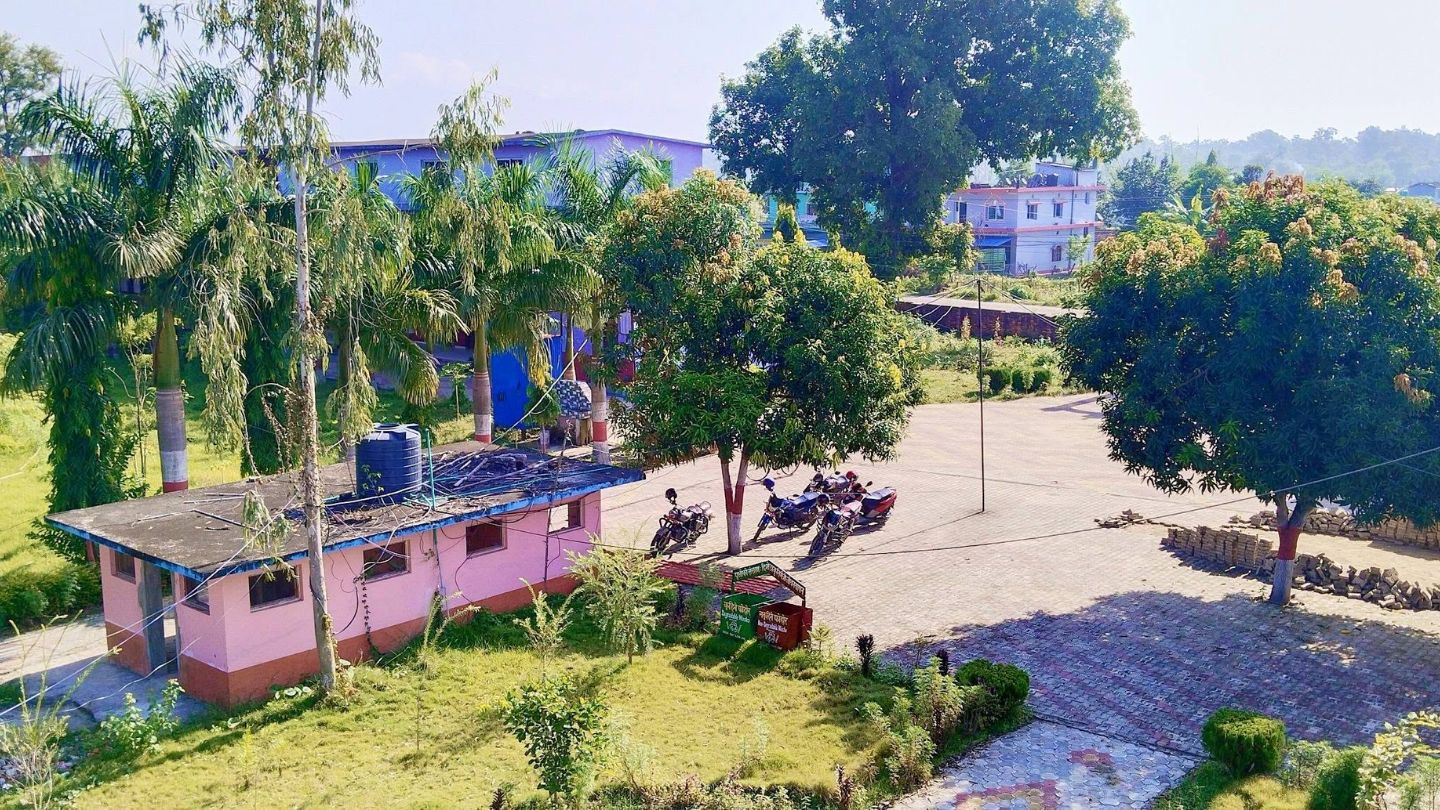
Ghodaghodi Multiple Campus has classrooms, lab and library rooms, exam halls, administration rooms, a canteen, a health desk and ICT-supported academic resources. The campus also has computer facilities, internet access, projectors, smart boards and an e-library system in collaboration with Tribhuvan University Central Library.
These resources support M.Ed. students in coursework, presentations, research assignments, thesis writing and academic reading.
M.Ed. Health Education students may develop advanced skills in education, health education specialization, teaching, academic writing, educational research, curriculum understanding, evaluation, classroom practice and thesis-based inquiry.
The program also supports professional growth in pedagogy, research methods, educational development, measurement and evaluation, and contemporary educational issues. Skill development depends on academic participation, teaching practice, research work and thesis quality.
M.Ed. Health Education can support academic and professional pathways related to teaching, teacher education, school-level health education, educational research, curriculum-related work, educational administration and further study in education.
Career direction depends on the student’s prior qualification, specialization, teaching eligibility, experience, location, institutional requirements and available opportunities.
M.Ed. Health Education may suit students with an education or health-related academic background who want master’s-level study in education with a Health Education specialization. It is relevant for students interested in teaching, school health education, educational research, curriculum, pedagogy and academic leadership in education.
At Ghodaghodi Multiple Campus, the program serves students from Sukhad, Ghodaghodi, Kailali and surrounding areas who want to pursue master’s-level education under Tribhuvan University.
Campus: Ghodaghodi Multiple Campus
Location: East-West Highway, Sukhad, Ghodaghodi, Kailali, Nepal
Internal Link: Ghodaghodi Multiple Campus Kailali
Email: ghodaghodimultiplecampus@gmail.com
Website: https://ghodaghodicampus.edu.np/
M.Ed. Health Education is a master’s-level education program connected with Tribhuvan University’s Master of Education structure. Health Education is one of the M.Ed. specialization areas under TU’s Faculty of Education.
The normal duration is 2 years, divided into 4 semesters.
The M.Ed. program carries 69 credit hours.
The program runs under the Faculty of Education, Tribhuvan University.
Eligible backgrounds include B.Ed. with Health Education, Physical Education or Population Education, BPH, Master of Nursing, and B.Sc. with one-year B.Ed., as specified for the Health Education specialization.
Yes. M.Ed. includes a 3-credit-hour teaching practice component in the fourth semester.
Yes. M.Ed. includes a 6-credit-hour thesis writing course in the fourth semester.
Evaluation is based on 40 percent internal evaluation and 60 percent external evaluation. Students must pass both separately.
The internal evaluation scheme requires 80 percent attendance.