Lamki Multiple Campus (लम्की बहुमुखी क्याम्पस) is a community-based higher education institution located in Lamki, Kailali district, Sudurpashchim Province. Established in 2007 AD, or 2064 BS, the campus was developed to expand access to higher education for students from Lamki Chuha Municipality and nearby communities.
The campus operates as a non-profit public institution. Its academic areas include humanities and social sciences, management, and education. It offers the Bachelor of Arts, Bachelor of Business Studies, Bachelor of Education, and Master of Education programs.
Lamki Multiple Campus is affiliated with Tribhuvan University and approved by the University Grants Commission of Nepal. It is also identified as a newly constituent campus of Far-western University.
| Field | Details |
|---|---|
| Campus Name | Lamki Multiple Campus |
| Nepali Name | लम्की बहुमुखी क्याम्पस |
| Institution Type | Community-based, non-profit public higher education institution |
| Established | 2007 AD / 2064 BS |
| Location | Lamki, Kailali, Sudurpashchim Province, Nepal |
| Academic Areas | Humanities and social sciences, management, and education |
| Programs | BA, BBS, B.Ed., and M.Ed. |
| Affiliation | Tribhuvan University |
| Approval | University Grants Commission of Nepal |
| University Status | Identified as a newly constituent campus of Far-western University |
| Phone | +977-91-540462, +977-91-540380 |
| lmckailali2064@gmail.com |
The development of Lamki Multiple Campus began through a community initiative to establish an organized higher education centre in Lamki. During its early period, two community campuses affiliated with Tribhuvan University were operating in the same area: Lamki Multiple Campus and Karnali Multiple Campus.
Operating two institutions of a similar academic level within one locality created administrative and practical challenges. Local social workers, intellectuals, businesspeople, professionals, political representatives, and community members became involved in finding a workable institutional arrangement.
The two campuses were unified under the name Lamki Multiple Campus on 30 Kartik 2064 BS. The unification supported the broader local objective of developing Lamki Chuha Municipality as an educational centre.
The unified campus began with a limited number of students and part-time lecturers. Its initial physical arrangements were modest. One room served several functions, including administration, staff work, accounting, and library services.
Despite these limitations, the campus continued its academic activities and worked with community members, government bodies, donors, and education authorities to develop permanent infrastructure.
The campus later developed a 16-room concrete building with financial assistance from the University Grants Commission, the District Development Committee, the municipality, donors, and other supporters. A separate 10-room tin-roofed building was constructed with assistance from the former Baliya Village Development Committee and Kailali District Development Committee.
These developments provided a more stable setting for teaching, administration, library services, student activities, and institutional management.
Lamki Multiple Campus has also participated in the Higher Education Reform Project. It prepared a five-year Strategic Development Plan for submission to the University Grants Commission. Its institutional priorities have included:
Academic management
Faculty development
Research activities
Physical infrastructure
Administrative improvement
Community engagement
Student-support services
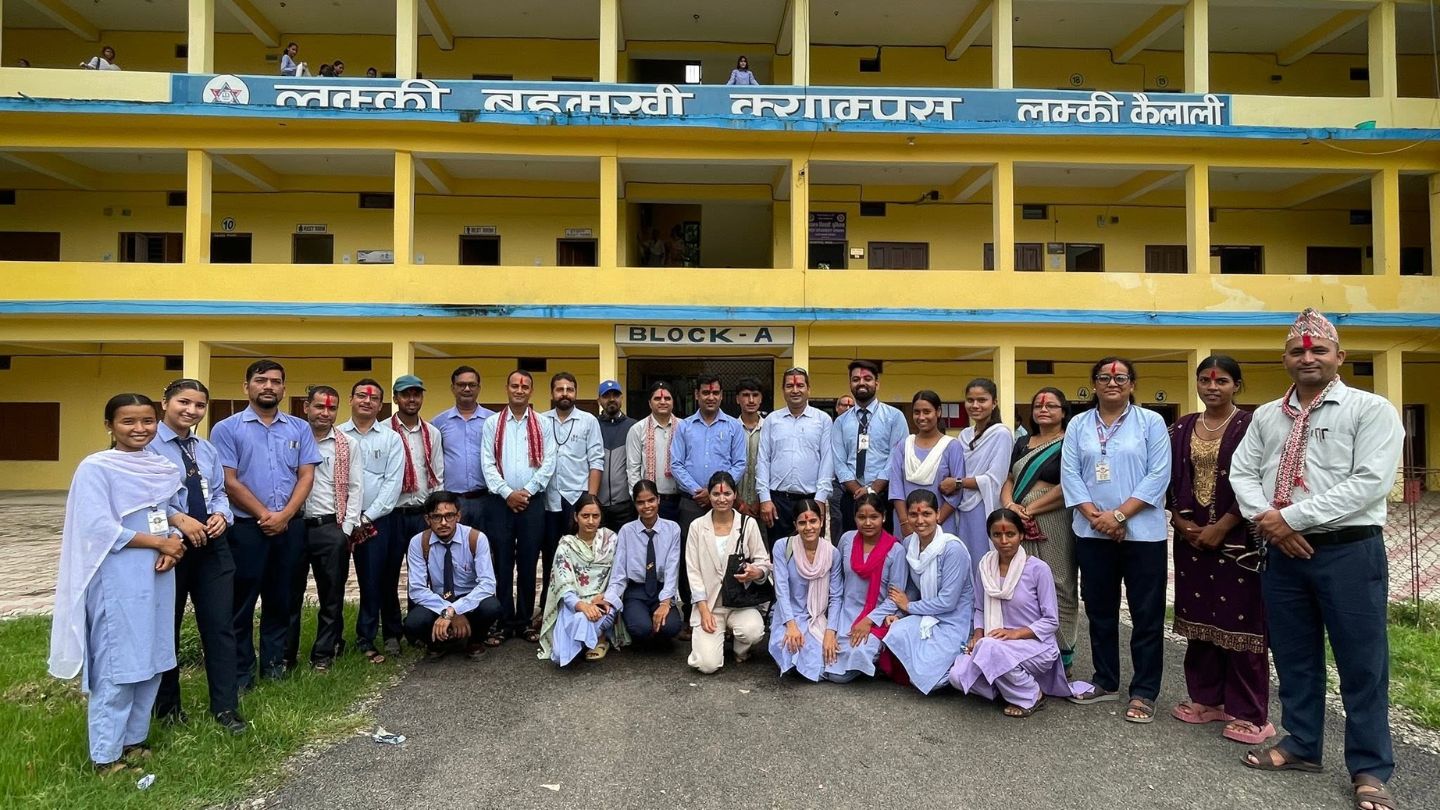
Lamki Multiple Campus has developed its academic identity through three main areas of study:
Humanities and social sciences
Management
Education
These academic areas correspond with the undergraduate and postgraduate programs available at the campus.
The campus’s academic relationship with Tribhuvan University is reflected in the structures of its BA, BBS, B.Ed., and M.Ed. programs. The relevant university curriculum determines course structure, academic requirements, examination systems, and degree completion standards.
The campus is responsible for organizing teaching, supporting students, managing internal administration, coordinating academic departments, and maintaining regular educational activities.
Its programs serve students interested in teaching, educational administration, business, public service, research, social-sector work, community development, and further academic study.
| Program | Level | Main Academic Focus |
|---|---|---|
| Bachelor of Arts | Bachelor’s | Humanities and social sciences |
| Bachelor of Business Studies | Bachelor’s | Business, management, finance, accounting, and marketing |
| Bachelor of Education | Bachelor’s | Teacher education and subject specialization |
| Master of Education | Master’s | Advanced education, teaching, planning, administration, and research |
The Bachelor of Arts program at Lamki Multiple Campus covers humanities and social-science disciplines. Subject areas associated with the campus include:
English Literature
Sociology
Rural Development
The four-year BA program of Tribhuvan University provides a broad academic foundation while allowing students to study selected subjects in greater depth. The program carries a total of 2,000 marks, with 500 marks allocated to each academic year.
Students study two major subjects together with elective and compulsory components. The compulsory area includes English, Nepali, and Nepal Studies. This combination supports language development, academic writing, analytical reading, subject knowledge, and an understanding of Nepal’s society and development context.
English Literature introduces students to literary texts, traditions, genres, interpretation, and criticism. Students develop the ability to read closely, examine ideas, understand cultural settings, and express arguments through structured writing.
The subject can also strengthen language competence, reading comprehension, communication, and academic analysis.
Sociology focuses on social structures, institutions, relationships, communities, culture, and processes of social change. It helps students examine how individuals and groups interact within families, communities, organizations, and wider society.
The subject is relevant to students interested in social research, community work, public administration, development organizations, and further academic study.
Rural Development examines issues affecting rural communities, including local institutions, livelihoods, participation, planning, social change, and development practice.
The subject has practical academic relevance in a district where rural and semi-urban communities remain closely connected. It allows students to examine development concerns through social, economic, institutional, and community perspectives.
Assessment in the BA structure includes internal evaluation and written examinations. The program requires regular reading, classroom participation, assignments, presentations, teamwork, and examination preparation.
The Bachelor of Business Studies program is offered through the management stream. Lamki Multiple Campus identifies the following concentration areas:
Accountancy
Finance
Marketing
The four-year BBS program is designed to prepare students for managerial, administrative, entrepreneurial, and organizational responsibilities. It combines conceptual study with practical knowledge related to business operations and management.
Students study subjects connected with:
Business communication
Economics
Accounting
Finance
Marketing
Management
Business law
Taxation
Entrepreneurship
Research methods
Project work
The program moves from introductory business subjects to more advanced core and concentration courses.
Accountancy develops knowledge of financial records, reporting, costing, auditing-related concepts, and the use of accounting information in organizational decision-making.
Students examine how financial activities are recorded, interpreted, and communicated within business and administrative settings.
Finance focuses on the management of funds, financial institutions, investment considerations, risk, and business financial planning.
The concentration helps students understand how organizations obtain, allocate, and manage financial resources.
Marketing examines markets, products, customers, promotion, distribution, services, and relationships between organizations and consumers.
Students explore how organizations identify customer needs, communicate value, manage products, and operate within competitive markets.
The BBS program includes 19 courses carrying 1,950 marks, together with a final project worth 50 marks. The project component allows students to relate classroom learning to a selected organizational or business issue.
Teaching and learning may involve:
Classroom lectures
Group discussions
Problem-solving exercises
Case analysis
Practical assignments
Research activities
Project work
Presentations
For students from Lamki and nearby communities, the BBS program provides access to undergraduate management education within Kailali district. It can also provide an academic foundation for postgraduate study in management and related disciplines.
The Bachelor of Education program is a major academic offering of Lamki Multiple Campus. Subject areas connected with the campus include:
English Education
Nepali Education
Mathematics Education
Health and Physical Education
Population Education
The four-year B.Ed. program is both an academic and professional teacher-education program. It is designed to prepare teachers who can teach selected subjects at the secondary level while understanding educational psychology, curriculum, evaluation, classroom practice, and the social foundations of education.
The program contains 22 courses carrying a total of 2,200 marks. Its main academic components include:
Communication skills
Professional education courses
Major specialization
Minor specialization
Teaching internship or practicum
Communication courses support academic ability in Nepali and English. Professional courses introduce students to educational foundations, educational psychology, curriculum, evaluation, instructional technology, and information and communication technology in education.
Students select one major specialization and a separate minor specialization. The major area provides deeper subject knowledge and teaching-method preparation. The minor area gives students academic preparation in an additional teaching field.
Teaching practice is an important part of the B.Ed. program. It allows students to connect educational theory with classroom responsibilities such as:
Lesson planning
Classroom instruction
Teaching-method selection
Student assessment
Classroom management
School-based professional practice
The Department of Practice Teaching manages teaching-practice activities within the education faculty. This creates an institutional link between coursework and the professional experience required in teacher education.
The B.Ed. program is relevant to students preparing for teaching, educational administration, training, curriculum-related work, and further study in education.
Lamki Multiple Campus also offers the Master of Education program. The program is intended for students seeking advanced academic and professional study in teaching, educational planning, administration, research, curriculum, assessment, and related areas.
The Tribhuvan University M.Ed. program follows a semester system. It is completed over two years and divided into four semesters. The program carries 69 credit hours.
Its academic structure includes:
Core education courses
Specialization courses
Teaching practice
Thesis writing
Core study covers areas such as educational foundations, advanced educational psychology, measurement and evaluation, education and development, research methodology, and contemporary educational issues.
The specialization component enables students to develop advanced knowledge in a selected field of education. Teaching practice connects postgraduate study with professional instruction.
The thesis develops the student’s ability to identify a research problem, review academic literature, collect and interpret information, and present a structured academic study.
The semester evaluation system gives 40 percent weight to internal assessment. The remaining component is assessed through semester-end examinations. Teaching practice and the thesis are practical academic requirements rather than conventional written examination courses.
The program is designed for people seeking preparation in areas such as:
School teaching
Teacher education
Educational planning
Educational administration
Academic supervision
Curriculum work
Educational research
Institutional management
The availability of the M.Ed. program enables education graduates in the region to continue postgraduate study in Lamki.
Academic activities at Lamki Multiple Campus follow the requirements of the relevant university programs. Teaching and learning methods vary according to subject and academic level.
Students may participate in:
Lectures
Classroom discussions
Written assignments
Presentations
Problem-solving exercises
Research activities
Project work
Teaching practice
Educational visits
Field-based activities
The education programs place particular importance on classroom practice and professional preparation. The management program includes applied exercises, research methods, project work, and organizational study.
Humanities and social-science programs require reading, interpretation, writing, discussion, and examination of social and cultural issues.
The campus has also developed an institutional interest in research and faculty development. Its Research and Coordination Sub-Committee forms part of the organizational structure, while research methodology, project work, and thesis requirements appear within several academic programs.
Participation in strategic development activities under the University Grants Commission has linked academic improvement with institutional planning, faculty capacity, internal coordination, and student services.
Lamki Multiple Campus operates under its constitution, laws, and bylaws. These provisions regulate academic, administrative, financial, and institutional activities.
The governance structure includes a 16-member Management Committee approved by the Campus Assembly. The Campus Assembly consists of life and ordinary members and serves as a central institutional body.
A 10-member advisory group supports strategic management. Academic and administrative operations are also supported by several committees, departments, and responsible units.
The institutional structure includes:
Campus Assembly
Management Committee
Advisory group
Research and Coordination Sub-Committee
Examination Sub-Committee
Academic departments
Department of Practice Teaching
Education Management Information System focal person
Administrative and financial subcommittees
Three department heads represent the main academic faculties. Different subcommittees distribute academic, administrative, financial, and organizational responsibilities.
This governance arrangement reflects the community-campus model, in which local members, institutional representatives, academic departments, committees, and administrative units participate in campus operation.
Lamki Multiple Campus has developed its physical facilities gradually. Its early one-room arrangement was later replaced by more permanent infrastructure.
The campus now includes:
A 16-room concrete building
A separate 10-room tin-roofed building
Library facilities
Laboratory facilities
Multimedia resources
Conference space
Counselling services
Cafeteria services
Sports facilities
Publication activities
Educational-tour arrangements
Scholarship support
The library assists students with reading, course preparation, assignments, and examination study. Laboratory facilities support practical and subject-related work.
Multimedia resources can be used for classroom instruction and presentations. Conference facilities provide space for academic discussions, institutional meetings, student programs, and other organized activities.
Counselling services form part of the campus’s student-support arrangements. The cafeteria supports the daily needs of students and staff.
Educational tours allow students to connect selected areas of study with communities, schools, institutions, organizations, and field settings. Such activities are particularly relevant to education, sociology, rural development, and management study.
Scholarship support is also included among the campus’s student services. This is significant for a community institution serving learners from different social and economic backgrounds.
Student life at Lamki Multiple Campus includes academic work, sports, publications, and co-curricular participation.
The campus has organized weekend sports activities and other student programs. The first LMC Football Cup was organized by the Free Students’ Union with financial support from the campus.
Sports and co-curricular activities provide opportunities for students from different programs to interact outside regular classes. They can also support teamwork, communication, organization, and student participation.
The campus publishes an annual magazine named Sagun. The publication had reached its seventh volume during the campus’s first decade. It provides space for student writing, academic reflections, institutional records, and information about campus activities.
The campus serves students from varied geographical, cultural, social, and economic backgrounds. Its location in Lamki Chuha Municipality places it within a diverse community and supports regular interaction among students, teachers, local representatives, and institutional supporters.
Community participation has been central to the establishment and development of Lamki Multiple Campus.
The unification of the two early campuses, development of permanent buildings, formation of the Campus Assembly, and creation of the Management Committee reflect collective local involvement.
Support has come from:
University Grants Commission of Nepal
Local government bodies
Former District Development Committee
Former Baliya Village Development Committee
Donors
Community members
Institutional supporters
The campus was established to make higher education more accessible to students who faced geographical, economic, or other barriers to studying outside the area.
Its combination of humanities, management, and education programs responds to several areas of higher education demand within the region.
Students can begin undergraduate study in Lamki, while education graduates can continue to the M.Ed. level. This academic range allows the campus to serve recent secondary-school graduates, working teachers, aspiring educators, management students, and students interested in social-science disciplines.
| Contact Field | Details |
|---|---|
| Campus | Lamki Multiple Campus |
| Address | Lamki, Kailali, Sudurpashchim Province, Nepal |
| Phone | +977-91-540462, +977-91-540380 |
| lmckailali2064@gmail.com | |
| Campus Code | 683 |
Lamki Multiple Campus is located in Lamki, within Lamki Chuha Municipality of Kailali district, Sudurpashchim Province, Nepal.
The campus was established in 2007 AD, corresponding to 2064 BS. Lamki Multiple Campus and Karnali Multiple Campus were unified under the current institutional name on 30 Kartik 2064 BS.
It is a community-based, non-profit public higher education institution. Community members participate in institutional governance through the Campus Assembly and Management Committee.
Lamki Multiple Campus is affiliated with Tribhuvan University, approved by the University Grants Commission of Nepal, and identified as a newly constituent campus of Far-western University.
The campus offers:
Bachelor of Arts
Bachelor of Business Studies
Bachelor of Education
Master of Education
BA subject areas include English Literature, Sociology, and Rural Development.
B.Ed. subject areas include English Education, Nepali Education, Mathematics Education, Health and Physical Education, and Population Education.
BBS concentration areas include Accountancy, Finance, and Marketing.
The BA, BBS, and B.Ed. programs follow four-year academic structures. The M.Ed. program is completed over two years and four semesters.
Yes. B.Ed. includes teaching practice, BBS includes research and project work, and M.Ed. includes teaching practice and thesis writing. Educational tours also form part of campus activities.
The campus has library, laboratory, multimedia, conference, counselling, cafeteria, sports, publication, educational-tour, and scholarship facilities.
The governance structure includes the Campus Assembly, Management Committee, advisory group, academic departments, an Education Management Information System focal person, and several committees and subcommittees.