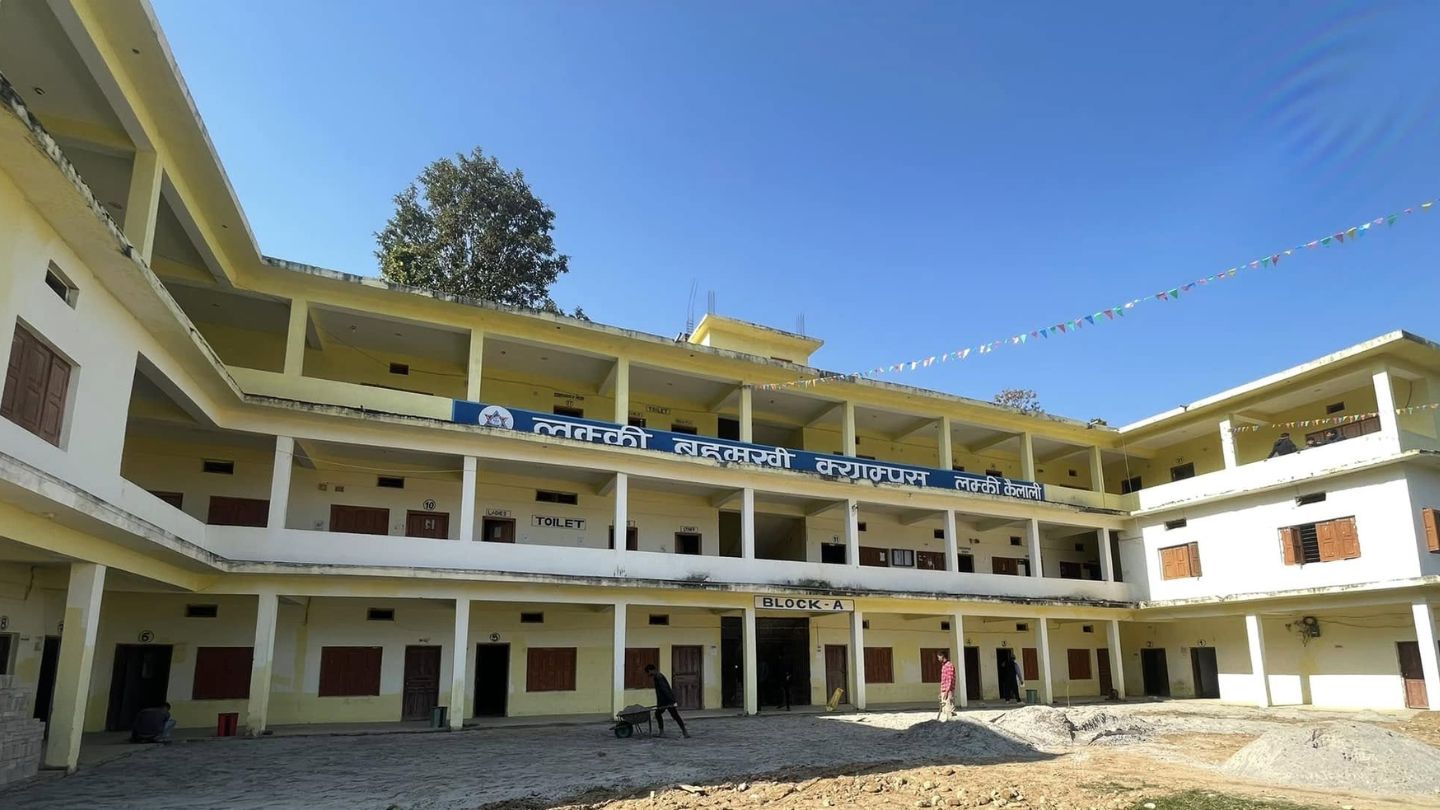
The Master of Education is a postgraduate program offered at Lamki Multiple Campus in Lamki, Kailali. The campus conducts the program through its Faculty of Education under Tribhuvan University.
The M.Ed. follows a two-year semester structure and combines professional education courses, specialization study, practical teaching or practicum, and thesis writing. It is intended for graduates seeking advanced academic preparation in teaching, educational planning, administration, supervision, research, curriculum, and related areas of education.
| Field | Details |
|---|---|
| Course Name | Master of Education |
| Abbreviation | M.Ed. |
| Level | Master’s |
| Duration | Two years |
| Academic System | Semester |
| Number of Semesters | Four |
| Total Credit Hours | 69 |
| University | Tribhuvan University |
| Faculty | Faculty of Education |
| Campus | Lamki Multiple Campus |
| Location | Lamki, Kailali |
| Major Components | Core courses, specialization courses, teaching practice or practicum, and thesis writing |
The M.Ed. program is structured to prepare academics and education professionals with advanced knowledge of educational systems, policy, pedagogy, research, and subject-based teaching.
Its principal objectives are to:
Prepare qualified teachers for upper secondary education
Develop educational planners, administrators, managers, and supervisors
Strengthen educational leadership and institutional management
Build advanced knowledge in a selected specialization
Connect educational theory and research with professional practice
Develop competence in educational research
Support creative and context-responsive practices in education
Lamki Multiple Campus presents the program as preparation for teachers, educators, educational planners, administrators, managers, supervisors, and other professionals working in education.
Applicants with a Bachelor of Education or a Post-Graduate Diploma in Education from Tribhuvan University or another recognized university are eligible for admission to the M.Ed. program.
Students must also meet the subject-specific academic requirements connected with their chosen specialization. For example, entry into English Education, Nepali Education, or Mathematics Education depends on the applicant’s previous study in the corresponding subject area.
The program carries 69 credit hours distributed across four semesters.
| Academic Component | Credit Hours |
|---|---|
| Core Professional Courses | 21 |
| Specialization Courses | 39 |
| Teaching Practice or Practicum | 3 |
| Thesis Writing | 6 |
| Total | 69 |
The first, second, and third semesters each carry 18 credit hours. The fourth semester carries 15 credit hours and includes professional coursework, teaching practice or practicum, and thesis writing.
The complete structure contains seven core courses and seventeen specialization courses. Each core course carries three credit hours. Specialization and elective study together account for 39 credit hours.
Core courses are compulsory for students across the different specialization areas. They cover central areas of educational theory, practice, assessment, and research.
The core areas include:
Foundations of Education
Advanced Educational Psychology
Measurement and Evaluation
Education and Development
Research Methodology
Contemporary Issues in Education
These courses help students examine learning, educational institutions, assessment systems, research processes, development concerns, and current issues affecting education.
Students select one specialization connected with their previous Bachelor of Education study and the applicable entry requirements.
The Tribhuvan University M.Ed. framework includes specialization areas such as:
Curriculum and Evaluation
Educational Planning and Management
English Education
Nepali Education
Science Education
Mathematics Education
Health Education
Physical Education
Economics Education
Geography Education
History Education
Political Science Education
Special Needs or Inclusive Education
Information and Communication Technology Education
The specialization component provides advanced subject knowledge, teaching approaches, research preparation, and professional study within the selected field. The availability of an individual specialization at the campus depends on the academic arrangements for the program.
Teaching practice is a three-credit component completed during the fourth semester. It requires students to apply their subject knowledge and pedagogical skills in an actual workplace or classroom setting.
Students in Educational Planning and Management complete a practicum connected with their field. The practical component links postgraduate coursework with professional responsibilities in teaching, administration, planning, or institutional work.
Teaching practice and practicum are assessed as fully practical courses through the Faculty of Education framework.
The thesis carries six credit hours and is completed in the fourth semester. It includes preparation in research writing, proposal development, data collection, analysis, and supervised thesis completion.
The initial stage develops the student’s proposal and academic writing skills. The later stage requires the student to conduct the study and prepare the master’s thesis under the guidance of a supervisor.
This component allows students to investigate an educational issue within their specialization and present the findings through a structured academic study.
The program uses lectures alongside:
Project work
Assignments
Seminars
Case studies
Field studies
Teaching practice or practicum
Thesis research
Internal evaluation conducted during the semester carries 40 percent of the total assessment for each subject. Students also appear in semester-end examinations conducted by the Office of the Dean, Faculty of Education.
Teaching practice or practicum and thesis writing are practical courses, with their final assessment managed through the Dean’s Office.
The M.Ed. program supports advanced preparation for education-related responsibilities. Graduates may consider work connected with:
Upper secondary teaching
Teacher education and training
Educational planning and administration
Academic supervision
Curriculum and assessment
Institutional management
Educational research
Education policy and program work
Professional options depend on the graduate’s specialization, academic performance, experience, and the requirements of the concerned institution or position.
The program is completed over two years and four semesters.
The complete program carries 69 credit hours.
The program includes core professional courses, specialization courses, teaching practice or practicum, and thesis writing.
Applicants with a B.Ed. or Post-Graduate Diploma in Education from Tribhuvan University or another recognized university may apply, subject to specialization-specific requirements.
Yes. Thesis writing is a compulsory six-credit component completed during the fourth semester.
Evaluation includes 40 percent internal assessment and semester-end examinations. Teaching practice or practicum and thesis writing are evaluated as practical courses.