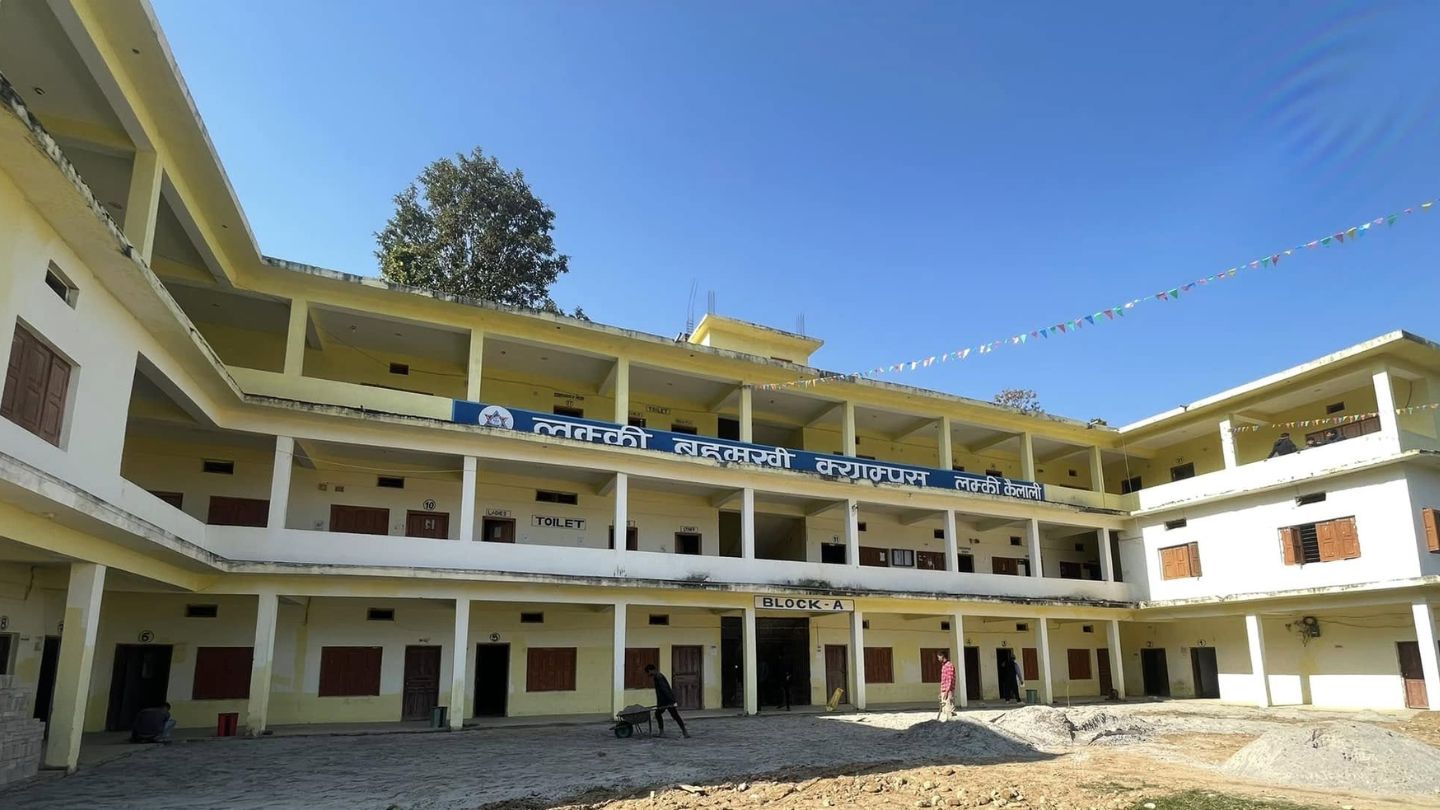
The Bachelor of Business Studies is a four-year undergraduate management program offered at Lamki Multiple Campus in Lamki, Kailali. The campus is a community higher education institution affiliated with Tribhuvan University, and the BBS program is conducted through its Faculty of Management.
The program follows the annual examination system of Tribhuvan University. It combines business foundations, management subjects, quantitative study, communication, specialization courses, research methods, and project work. Its purpose is to develop conceptual knowledge and practical abilities related to the management of business, public, and other organized activities.
| Field | Details |
|---|---|
| Course Name | Bachelor of Business Studies |
| Abbreviation | BBS |
| Level | Bachelor’s |
| Duration | Four academic years |
| System | Annual |
| University | Tribhuvan University |
| Faculty | Faculty of Management |
| Campus | Lamki Multiple Campus |
| Location | Lamki, Kailali |
| Total Requirement | 19 courses carrying 1,950 marks and a 50-mark final project |
| Campus Concentration Areas | Accountancy, Finance, and Marketing |
The BBS curriculum aims to prepare students with a general management perspective and an understanding of how organizations operate. It combines business theories with applied skills so that students can examine financial, managerial, legal, economic, marketing, and organizational issues.
The program particularly aims to:
Develop knowledge of business and administration
Build practical and analytical management skills
Encourage entrepreneurial capability
Prepare students for responsibilities in organized activities
Establish a foundation for advanced study in management
Support academic preparation for teaching, research, and consultancy
The curriculum recognizes that managers work in changing economic, social, technological, and organizational conditions. Students therefore study both broad business foundations and specialized functional areas.
Applicants must have completed 10+2 in business or commerce, or an equivalent qualification from a board or university recognized by Tribhuvan University. They must also meet any additional entry conditions prescribed by the Faculty Board or the campus.
The program carries 500 marks in each academic year, making a total of 2,000 marks.
| Year | Courses | Marks |
|---|---|---|
| First Year | Business English, Business Statistics, Microeconomics for Business, Financial Accounting and Analysis, Principles of Management | 500 |
| Second Year | Business Communication, Macroeconomics for Business, Cost and Management Accounting, Organizational Behavior and Human Resource Management, Fundamentals of Financial Management | 500 |
| Third Year | Business Law, Foundation of Financial Systems, Business Environment and Strategy, Taxation in Nepal, Fundamentals of Marketing | 500 |
| Fourth Year | Entrepreneurship, three concentration courses, Business Research Methods, Final Project | 500 |
The first year develops foundations in communication, statistics, economics, accounting, and management. The second year moves into business communication, macroeconomics, costing, human resource management, organizational behavior, and finance.
Third-year study covers the legal, financial, strategic, taxation, and marketing environments of business. In the fourth year, students complete entrepreneurship, research methods, three courses from a selected concentration, and a final project.
Lamki Multiple Campus identifies the following BBS concentration areas:
Accountancy
Finance
Marketing
Accountancy focuses on financial records, reporting, analysis, auditing-related study, and cost and management accounting. Finance covers corporate finance, banking, investment, financial institutions, insurance, and risk-related subjects. Marketing examines customer relationships, advertising, services marketing, sales, trade, and market-oriented business decisions.
Students complete three concentration courses in the fourth year. This allows them to develop deeper knowledge in one functional area while retaining the wider management foundation studied during the first three years.
The final project is a compulsory fourth-year requirement carrying 50 marks. Students undertake field-based study connected with an organization and prepare a report in the format prescribed by the Faculty of Management.
The fieldwork period covers four weeks. The project may include a classroom or faculty presentation, and its evaluation involves internal and external examiners. A viva-voce examination is conducted through the concerned campus or college research committee. Students must pass theoretical, practical, and project components separately where applicable.
BBS teaching is intended to connect academic study with business, industry, and government settings. Learning methods may include:
Classroom lectures
Group discussions
Problem-solving exercises
Guest lectures
Case-based study
Practical work
Research activities
Project work
These methods support the study of accounting problems, economic analysis, financial decisions, management situations, organizational behaviour, marketing issues, and business strategy.
Final evaluation is conducted through annual examinations administered by the Office of the Controller of Examinations, Tribhuvan University. Students must maintain at least 70 percent attendance in the classes held to qualify for the annual examination.
The annual grading divisions are:
Third Division: 35 percent
Second Division: 45 percent
First Division: 60 percent
Distinction: 75 percent
Graduation requires successful completion of all 19 courses, the 50-mark final project, and the separate theory and practical requirements attached to individual subjects.
The BBS program provides preparation for managerial and administrative responsibilities in business, industry, government, and other organizations. It also develops a foundation for entrepreneurship and advanced management education.
Graduates may use the program as academic preparation for areas connected with accounting, finance, marketing, administration, banking, organizational management, research, teaching, or consultancy. These are areas of further study and professional preparation rather than guaranteed employment outcomes.