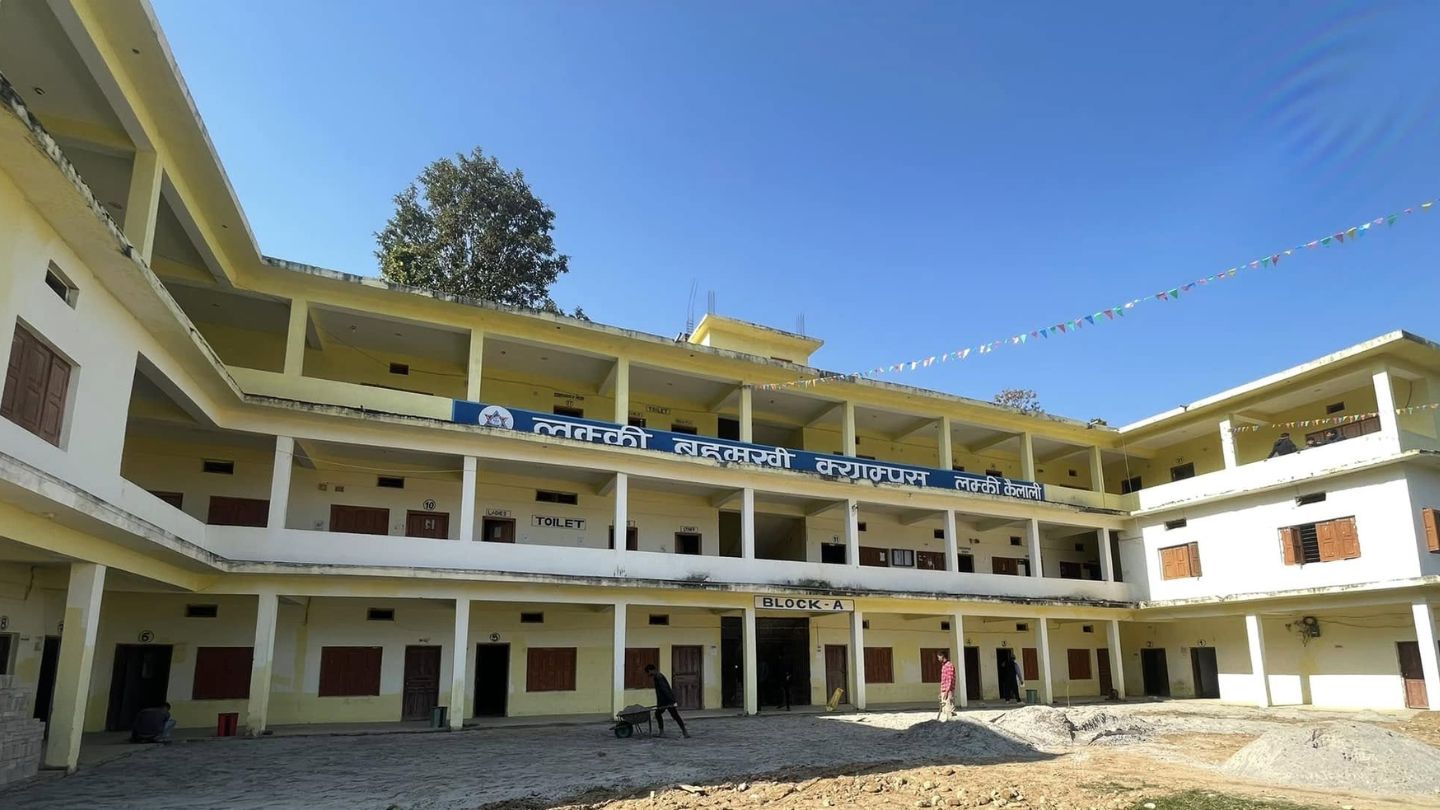
The Bachelor of Education is a four-year undergraduate teacher-education program offered at Lamki Multiple Campus in Lamki, Kailali. The campus conducts the program under Tribhuvan University through its education faculty.
The B.Ed. program combines academic study, professional education, subject specialization, teaching methods, and classroom practice. It is designed to prepare students to teach selected subjects at the secondary level while developing an understanding of educational psychology, curriculum, assessment, and the social foundations of education.
| Field | Details |
|---|---|
| Course Name | Bachelor of Education |
| Abbreviation | B.Ed. |
| Level | Bachelor’s |
| Duration | Four academic years |
| System | Annual |
| University | Tribhuvan University |
| Campus | Lamki Multiple Campus |
| Location | Lamki, Kailali |
| Total Courses | 22 |
| Total Marks | 2,200 |
| Academic Focus | Teacher preparation, subject specialization, professional education, and teaching practice |
The B.Ed. program provides professional and academic preparation for students planning to work in education. It combines knowledge of teaching subjects with the principles and practices required for classroom instruction.
The program aims to:
Develop knowledge of education and teaching
Prepare students to teach selected subjects at the secondary level
Build an understanding of learners and learning processes
Develop lesson-planning and instructional skills
Introduce curriculum design and student evaluation
Strengthen classroom communication and management
Connect educational theory with school-based teaching practice
Provide a foundation for advanced study in education
Students study two teaching areas through major and minor specialization. The major subject receives greater academic emphasis, while the minor subject provides preparation in an additional instructional field.
The four-year B.Ed. program consists of 22 courses carrying a total of 2,200 marks.
| Course Group | Number of Courses | Marks |
|---|---|---|
| Communication Skills | 2 | 200 |
| Professional Core Courses | 4 | 400 |
| Major Specialization | 10 | 1,000 |
| Minor Specialization | 5 | 500 |
| Teaching Internship or Practicum | 1 | 100 |
| Total | 22 | 2,200 |
Communication courses support academic ability in Nepali and English. These courses help students develop the reading, writing, presentation, and communication skills required for university study and classroom teaching.
Professional core courses introduce students to major educational concepts. These areas include the philosophical and sociological foundations of education, educational psychology, curriculum and evaluation, and instructional technology or information and communication technology in education.
The specialization courses combine subject knowledge with teaching methods. Students learn both what to teach and how to organize instruction in the selected subject areas.
Lamki Multiple Campus offers B.Ed. study in the following subject areas:
English Education
Nepali Education
Mathematics Education
Health and Physical Education
Population Education
English Education develops knowledge of the English language together with methods of teaching reading, writing, grammar, literature, and communication. It prepares students to organize English lessons and evaluate language learning.
Nepali Education focuses on the Nepali language, literature, communication, and instructional methods. Students study approaches to teaching language skills and literary content in school settings.
Mathematics Education combines mathematical knowledge with teaching strategies. It supports the development of problem-solving, logical reasoning, lesson planning, and methods for explaining mathematical concepts.
Health and Physical Education covers health-related knowledge, physical activity, personal and community well-being, and approaches to teaching these areas in schools.
Population Education examines population issues, social change, health, environment, family life, and development. It prepares students to teach population-related concepts through educational and social perspectives.
Teaching practice is a compulsory component of the B.Ed. program. It allows students to apply professional knowledge in a school or classroom setting.
The practicum may involve:
Preparing lesson plans
Teaching assigned lessons
Selecting appropriate instructional methods
Using teaching materials
Managing classroom activities
Assessing student learning
Observing school practices
Reflecting on teaching performance
Lamki Multiple Campus has a Department of Practice Teaching to coordinate activities related to school-based professional preparation. Teaching practice connects university coursework with the responsibilities students may later undertake as teachers.
B.Ed. students participate in academic and practical learning activities according to the nature of each course. These may include:
Classroom lectures
Group discussions
Written assignments
Presentations
Demonstration lessons
Lesson-plan preparation
Educational technology activities
Classroom observation
Teaching practice
Educational visits
Professional education courses require students to examine how learners develop, how curricula are organized, and how teaching and assessment can be adapted to classroom needs.
Subject-specialization courses develop deeper knowledge in the selected teaching fields. The practicum then provides an opportunity to apply this knowledge in an instructional environment.
The B.Ed. program provides academic preparation for secondary-level teaching and other education-related responsibilities. It can also support further study in teacher education, curriculum, educational planning, administration, supervision, research, and training.
Lamki Multiple Campus also offers the Master of Education program, allowing B.Ed. graduates to continue postgraduate education at the same campus, subject to the applicable university requirements.
Professional directions connected with the B.Ed. program may include:
School teaching
Educational administration
Training and facilitation
Curriculum-related work
Academic support services
Educational research
Further study in education
These areas represent educational and professional pathways rather than guaranteed employment outcomes.
The B.Ed. program is completed over four academic years under the annual system.
The program includes 22 courses carrying a total of 2,200 marks.
The available subject areas are English Education, Nepali Education, Mathematics Education, Health and Physical Education, and Population Education.
Yes. Teaching internship or practicum is a compulsory 100-mark component of the program.
B.Ed. graduates may continue to the M.Ed. level after meeting the applicable university requirements. Lamki Multiple Campus also offers the Master of Education program.