



The PCL in General Medicine (Health Assistant) at Nagarik College of Health Sciences is a three-year technical health program conducted under the yearly system of the Council for Technical Education and Vocational Training (CTEVT). The curriculum was revised for the third time in 2024.
The program prepares middle-level technical personnel in General Medicine. Its academic and practical areas cover patient assessment, provisional diagnosis, treatment within the intended level of practice, referral, basic investigations, emergency care, maternal and child health, family health, health education, community health, and health-service administration.
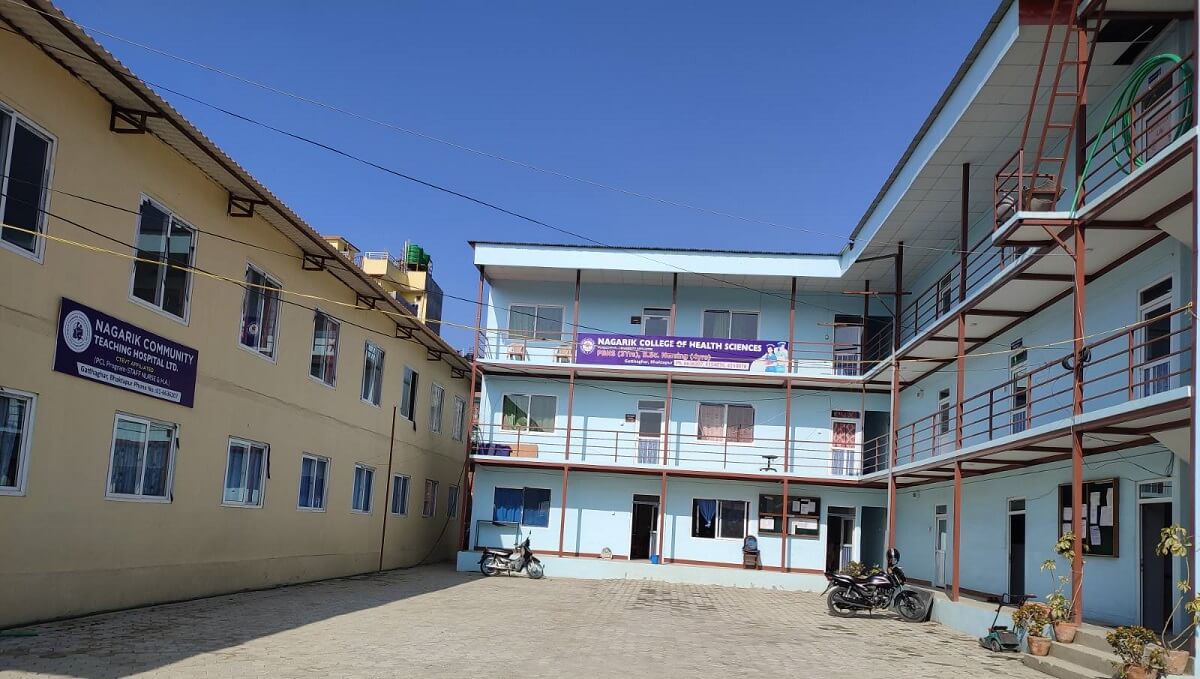
| Area | Details |
|---|---|
| Course | Proficiency Certificate Level in General Medicine |
| Common Course Reference | Health Assistant (HA) |
| College | Nagarik College of Health Sciences |
| Academic Body | CTEVT |
| Duration | 3 academic years |
| Academic System | Yearly |
| Entrance | CTEVT entrance examination |
| Minimum Attendance | 90% in each subject |
| Professional Council | Nepal Health Professional Council |
Eligibility: Applicants entering through SLC, SEE, or an equivalent qualification require a minimum GPA of 2.0 with grades in compulsory Mathematics, English, and Science. The curriculum also includes a CMA-equivalent entry route requiring a minimum of 68.33 percent.
Applicants must pass the entrance examination administered by CTEVT.
The curriculum allows a maximum group size of 40 students. Students are required to maintain at least 90 percent attendance in each subject to appear in the respective final examination.
Duration: Three academic years under the yearly system.
The course combines classroom study with demonstrations, guided practice, practical experience, fieldwork, simulation, case analysis, project work, assignments, group discussion, and hospital or community practice. Theory teaching may include lectures, seminars, discussions, interaction, assignments, and group work, while practical learning uses demonstration, observation, guided practice, and self-practice.
The General Medicine subject coding is identified within CTEVT health science as G.M., referring to General Medicine (H.A.).
The General Medicine-specific curriculum covers a wide range of clinical and community health areas, including:
Medicine and Gynecology
General Surgery, Orthopedics, and Physiotherapy
Basic Medical Procedures and First Aid
Clinical Pathology
Clinical Pharmacology and Pharmacy
Environmental Health
Health Education
Primary Health Care and Family Health
Maternal and Child Health
Family Planning and Nutrition
Pediatrics and Neonatology
Psychiatry and Dermatology
ENT, Dentistry, and Ophthalmology
Health Management
Epidemiology and Community Diagnosis
Second-year study includes Medicine-I, Surgery-I, Basic Medical Procedures and First Aid, Clinical Pathology, Pharmacology and Pharmacy, Environmental Health, Health Education, and Primary Health Care and Family Health.
Third-year study includes Medicine-II, Surgery-II, Health Management, Epidemiology and Community Diagnosis, comprehensive clinical and primary health care practicum, and comprehensive community field practicum.
Practical training becomes a substantial part of the later stage of the program. The comprehensive clinical practicum runs for 16 weeks, covering 96 working days excluding Saturdays.
Clinical placement areas include emergency care, medicine, general surgery, ENT, eye care, dental care, clinical pathology observation, pharmacy and dispensing, obstetrics and gynecology, maternity care, family health, basic medical procedures, and physiotherapy.
The curriculum also includes an eight-week comprehensive community field practicum as part of the third-year structure.
These placements connect classroom learning with patient history taking, physical examination, identification of abnormal findings, appropriate investigations, provisional or differential diagnosis, management of conditions within the intended level of practice, and referral of cases requiring higher-level care.
The course develops practical learning around responsibilities such as:
Assessing patients and making provisional diagnoses
Administering medication and treatment within the intended level of practice
Identifying cases requiring referral
Conducting routine and special medical investigations
Managing common emergency cases
Performing minor medical and surgical procedures
Supporting maternal and child health services
Providing nutrition and family-planning services
Maintaining medical records
Participating in community health programs
Handling health-service administrative tasks
These areas are incorporated into the stated objectives of the General Medicine program.
Assessment includes internal and final evaluation according to the examination structure of individual subjects. Practical subjects and practicum components also carry assessment requirements within the yearly curriculum.
The overall grading system is:
Distinction: 80% and above
First Division: 65% to below 80%
Second Division: 50% to below 65%
Pass Division: Pass marks to below 50%
Students must pass all components of all subjects across the three years to complete the course and receive the Proficiency Certificate Level in General Medicine qualification.
Graduates are academically eligible for positions equivalent to Non-Gazetted First Class/Level 5 (Technical), as prescribed by the Public Service Commission of Nepal and other related agencies.
Completion of the academic course does not by itself complete professional entry requirements. Graduates must pass the applicable professional licensing examination of the Nepal Health Professional Council (NHPC) before entering the profession.
The PCL in General Medicine program runs for three academic years under the CTEVT yearly system.
Students who successfully pass all course components across the three years are awarded the Proficiency Certificate Level in General Medicine.
Yes. Applicants must pass the entrance examination administered by CTEVT.
Students need at least 90 percent attendance in each subject to appear in the respective final examination.
Yes. The course includes practical study, a 16-week comprehensive clinical practicum, and community field practicum.
The curriculum includes Medicine, Surgery, Basic Medical Procedures and First Aid, Clinical Pathology, Pharmacology and Pharmacy, Primary Health Care and Family Health, Health Management, Epidemiology and Community Diagnosis, and other clinical and community health areas.
Yes. Graduates must meet the applicable Nepal Health Professional Council licensing requirement before entering professional practice.

.png)





