The +2 Humanities program at Jubilant College (Kalimati, Kathmandu) follows Nepal’s NEB Grade 11–12 framework and runs in the morning shift. Students study core languages and select Humanities-focused optionals such as Sociology, Population Studies, Major English, and Health & Physical Education.
The college administers an entrance test and interview before admission and conducts weekly tests, two term exams, and a pre-board to track progress. Facilities include an enriched library, a computer lab with internet, a hygienic cafeteria, and hostel services.
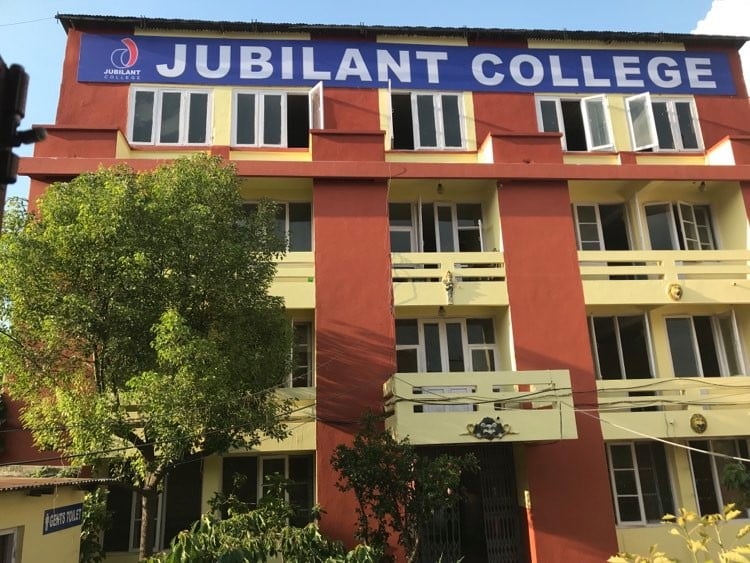
Jubilant College offers Humanities at the higher secondary level under NEB. English and Nepali are studied across Grades 11–12, and students choose optionals relevant to social sciences and language studies. The program operates in the morning shift, making it accessible for students who need daytime flexibility.
NEB publishes official exam calendars and notices through its site; students should check NEB’s “News & Notices” for updates each session.
Morning shift for Grade 11–12 (+2).
Entrance exam and interview compulsory; final selection uses a weighted average of entrance, interview, and SEE marks.
Weekly tests, two term exams, and a pre-board before NEB finals.
Library, computer lab with internet, hygienic cafeteria; hostel available.
Active ECA/CCA and student club activities (debate, speech, quizzes, sports).
Compulsory Subjects (Grades XI–XII):
English; Nepali.
Humanities Optional Subjects (selections offered at the college):
Sociology, Population Studies, Major English, Health & Physical Education.
Illustrative structure shown in the college prospectus: English and Nepali as core, plus optionals from the list above across Grades XI and XII. The Humanities block sits alongside Science, Management, and Law in the +2 section.
For subject competencies and NEB curricular expectations (e.g., language learning outcomes), refer to CDC’s subject curricula (e.g., English).
Build a strong base in social science thinking through subjects such as Sociology and Population Studies.
Strengthen language skills for study and work through English and Nepali.
Encourage analytical reading, clear writing, and informed discussion suited to Nepal’s social context and global discourse (supported by CDC competencies for English).
Graduates can move into BA programs (e.g., Sociology, English, Population Studies, Social Work, Journalism) or sit for competitive pathways later. Students planning for law may consider BA LL.B after +2, subject to Faculty of Law entrance criteria.
By the end of Grade 12, students generally develop:
Confident written and spoken communication in English and Nepali.
Ability to interpret social issues using basic tools from sociology and population studies.
Practical study habits: regular testing, exam preparation, and reflective improvement supported by weekly/term/pre-board assessments.
Teamwork and presentation skills through class activities and ECA/CCA.
The college integrates activities that strengthen study and real-life skills:
Lectures and Tutorials: cover the course systematically within time.
Group Discussions and Presentations: build confidence and clarity.
Workshops/Seminars with research orientation: introductory research exposure for future academic work.
Regular Assessments: weekly tests, term exams, and pre-board to reduce last-minute pressure and map progress.
Teaching combines classroom lectures, tutorials, participatory work, and research-oriented sessions. The approach focuses on clarity and steady progress rather than one-off exams. Assessment is continuous through the weekly/term/pre-board cycle, and attendance in internal tests is required.
Eligibility: SEE (or equivalent) with minimum B-CGPA as stated in the college’s +2 admission section.
Entrance Test: measures Mathematics, English, and General Knowledge.
Interview: for candidates who pass the entrance test.
Final Selection: weighted average of entrance, interview, and SEE marks.
Class Hours: Morning 6:30–11:00; Day 11:30–3:45 (Humanities runs in the morning shift per college note).
NEB notices (e.g., registration, exam schedules) are posted at the board’s official site. Students should verify deadlines each year.
After +2 Humanities, students commonly pursue BA programs or professional training in areas such as journalism, social work, education, development studies, or public administration. BA LL.B is an option for those targeting legal studies, subject to TU Faculty of Law entrance.
The prospectus lists merit-based scholarships in Science and Management with clear GPA-and-entrance brackets and explains continuation conditions (academic standing, discipline, attendance). Humanities-specific figures are not shown in the same chart; applicants should request the latest Humanities scholarship policy during admission.
Key rules include: no scholarship above 100% when combined, discontinuation if standards are not maintained, and mandatory re-exams for internal failures.
Humanities option set offered explicitly by the college (Sociology, Population, Major English, Health & Physical Education).
Structured internal evaluation that builds confidence for NEB finals.
Access to learning resources: library, computer lab, and guided classroom practice.
Active campus life through clubs, sports, and co-curricular activities.
The +2 Humanities program at Jubilant College provides a clear pathway for students who want strong language skills and a grounded start in social sciences. The college’s processes—entrance, interview, steady internal tests, and structured classroom work—help students prepare for NEB assessments and future undergraduate study. Facilities and campus activities support steady growth across two years.
1) Which optionals are available under Humanities at Jubilant College?
Sociology, Population Studies, Major English, and Health & Physical Education.
2) Is the entrance exam mandatory? What does it include?
Yes. The test covers Mathematics, English, and General Knowledge, followed by an interview.
3) How often are internal assessments held?
Weekly tests throughout the year, two term exams, and one pre-board before NEB finals.
4) What are the class hours for +2?
Morning 6:30–11:00 and Day 11:30–3:45; Humanities runs in the morning shift.
5) Does the college provide scholarships for Humanities?
The prospectus includes detailed brackets for Science and Management and states general scholarship rules (continuation depends on performance, attendance, and discipline). Please confirm the current Humanities scholarship scheme with the college at the time of application.
6) Where can I verify NEB exam notices and schedules?
NEB’s official “News & Notices” page.