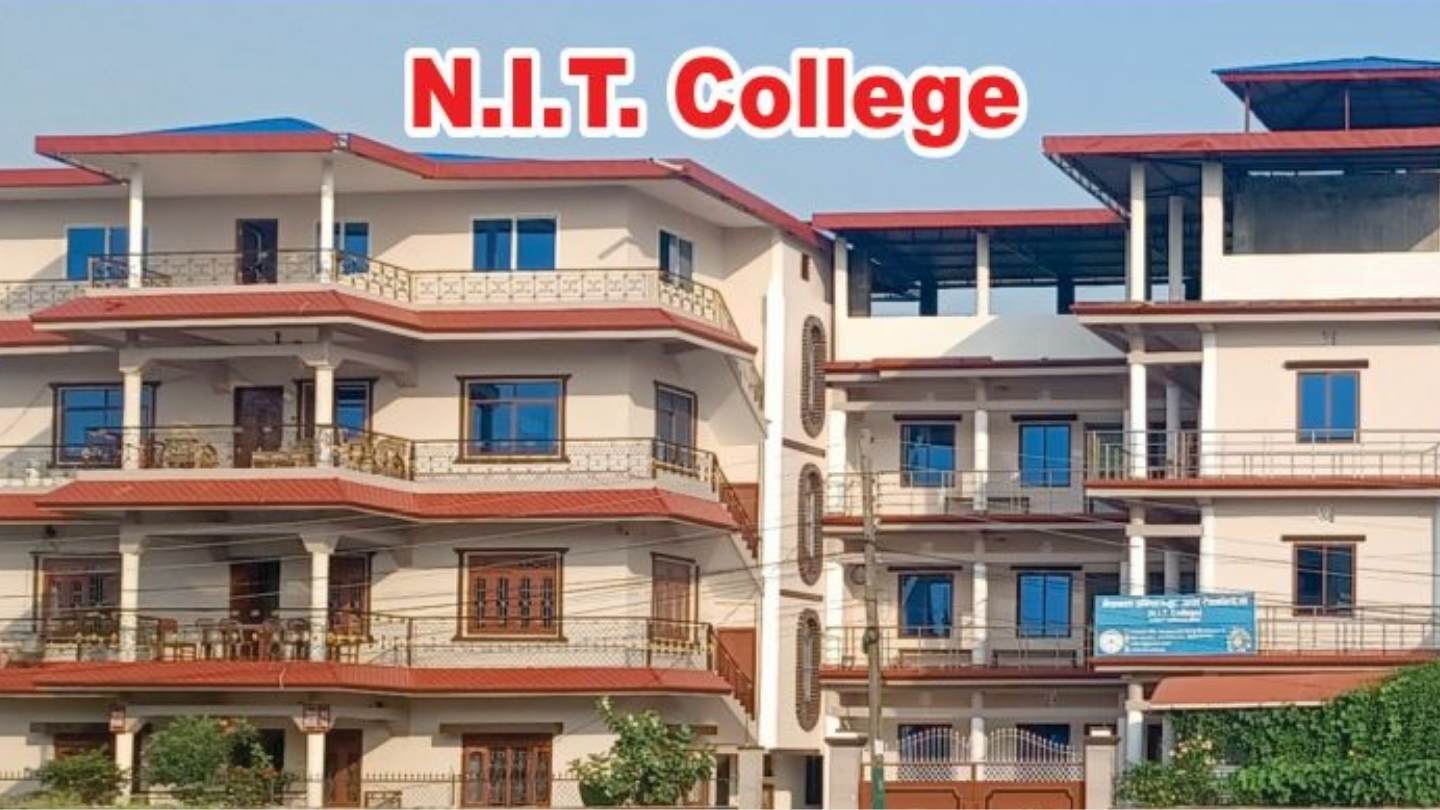
National Institute of Technology (NIT), Bagargachhi, Biratnagar-4, offers the PCL in General Medicine (Health Assistant) program under CTEVT affiliation.
The institute is also recognized by the Nepal Health Professional Council (NHPC). This alignment matters for students who want a structured technical health qualification with a clear pathway toward supervised clinical roles in Nepal.
Duration: 3 years
Seats: 40
Institution type: Private-based technical college established in 1995 AD (2052 BS)
The HA program is oriented toward producing mid-level health workers who can support primary healthcare services. In a city like Biratnagar and surrounding districts of Koshi Province, this role is closely linked with community-level care, outpatient support, basic emergency response, and coordination with doctors and nurses in clinical settings.
NIT highlights a peaceful academic environment, a well-furnished library, and classrooms equipped with projectors. For health programs, the availability of a well-equipped modern laboratory and extra classes for students needing academic support can be especially useful during foundational science and clinical skill-building phases.
The institute also mentions individual counseling and job placement support, which can help students navigate internships, exam preparation, and early career decisions.
Without over-specifying curriculum units, HA training generally focuses on:
Foundational medical sciences
Basic clinical assessment and patient communication
Primary care support and referral practices
Health education, hygiene, and preventive care
Safe handling of basic clinical procedures under guidance
Health programs typically depend on lab practice and clinical exposure. NIT’s stated lab resources and student support systems suggest an environment aimed at strengthening hands-on competence—an important success factor for HA graduates.
Graduates commonly look toward roles in:
Hospitals and clinics
Community health programs
Diagnostic or support units linked to primary care
Public health outreach (role-specific and level-dependent)
This course may suit students who want a structured 3-year clinical pathway after secondary education and prefer a practical role that balances community service and clinical support.