The Bachelor of Arts and Bachelor of Laws (BA.LLB) at Sagarmatha College of Law is a five-year integrated undergraduate program affiliated with Purbanchal University. Offered in morning and day shifts, the program combines arts, humanities, social sciences, and legal studies within a year-based academic structure. Students study constitutional law, criminal law, international law, business law, human rights, legal research, professional ethics, and other related fields.
Practical components include moot courts, court visits, legal drafting, legal aid activities, clinical education, research writing, advocacy exercises, internships, community outreach, and dissertation work. The program has 60 seats across both shifts and carries more than 196 credit hours.
Course Name: Bachelor of Arts and Bachelor of Laws
Abbreviation: BA.LLB
Institution: Sagarmatha College of Law
Affiliation: Purbanchal University
Level: Undergraduate
Duration: Five years
Academic System: Year-based
Credit Hours: 196+
Total Seats: 60 across morning and day shifts
Study Shifts: Morning and day
Language: Nepali and English
Location: Dillibazar, Kathmandu, Nepal
Admission Process: Entrance examination, interview, and group discussion
BA.LLB is an integrated degree that combines legal education with subjects from the arts, humanities, and social sciences. The course examines law in relation to society, governance, economics, politics, human rights, justice, and public institutions.
The curriculum progresses from introductory legal concepts and social science subjects to constitutional law, criminal law, international law, company law, administrative law, professional ethics, legal philosophy, advocacy, and specialised optional subjects.
The program also includes practical and clinical components intended to connect legal theory with legal writing, research, courtroom procedure, community service, and professional practice.
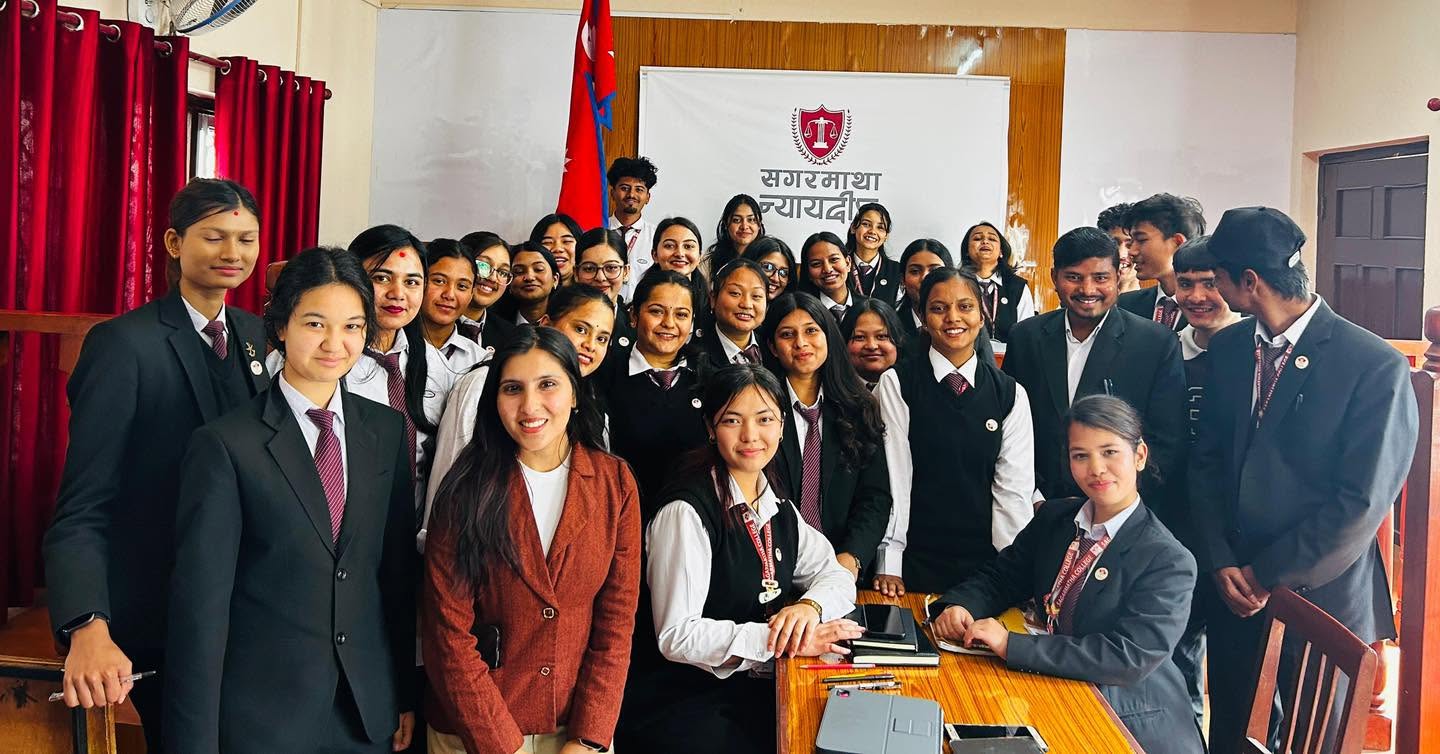
The BA.LLB program may suit students interested in law, justice, governance, public affairs, research, legal writing, and oral advocacy. It may also be relevant to students who wish to understand how legal systems operate within political, social, economic, and international settings.
The course requires sustained reading, written analysis, argument development, research, public speaking, and participation in practical legal activities.
Applicants must have completed +2 or an equivalent qualification in any stream from a recognised board.
The minimum academic requirement is:
A GPA of at least 2.00
No grade below D in any individual subject
Admission involves three stages:
Entrance examination
Interview
Group discussion
The BA.LLB program has 60 seats distributed across the morning and day shifts.
The program runs for five years under a year-based academic system. It carries more than 196 credit hours and combines theoretical courses, optional subject groups, clinical education, advocacy exercises, internships, legal research, and dissertation work.
The curriculum begins with foundational subjects in law and social sciences. Later years cover advanced legal fields, practical legal education, professional ethics, specialisation options, advocacy, and independent research.
The first year introduces social sciences, legal principles, logical reasoning, and basic clinical work.
Subjects include:
Political Theory and Thoughts
Economics
History of Nepal
Sociology
General Principles of Law
General Concept of Law
Theories of Logic and Legal Reasoning
Clinical Works
The second year develops legal language, procedural knowledge, criminal law understanding, and practical awareness.
Subjects include:
Legal English
Legal Nepali
International Relations and Diplomacy
Legislative Principles and Law-Making Process
Principles and Rules of Procedural Law
Sociology of Law
Criminal Law
Clinical Course involving jail visits and report preparation on the sentencing system and reforms
The third year covers constitutional law, international law, evidence, research, professional ethics, legal writing, and community advocacy.
Subjects include:
International Human Rights Law
Principles of Interpretation
Law of Evidence
Public International Law
Constitutional Law and Constitutionalism
Legal Research
Professional Ethics
Clinical Legal Education: Effective Legal Writing in Civil Cases
Clinical Work: Advocacy Service to the Community through an outreach program
The fourth year includes jurisprudence, commercial law, administrative law, criminal legal writing, dispute settlement, and community-based clinical education.
Subjects include:
Clinical Education: Community Outreach and Rural Law Advocacy Service
Advanced Jurisprudence
Contract Law
Company Law
Administrative Law
Clinical Legal Education: Effective Legal Writing in Criminal Cases
Settlement of International Disputes
Students select one optional subject group.
Forensic Science and Medical Jurisprudence
Criminology and Penology
Banking and Insurance Law
International Trade Law
Law on Good Governance
Electoral Law
Environment Law
Water and River Law
The fifth year covers advanced legal studies, advocacy, professional development, dissertation work, and an optional specialisation group.
Subjects include:
Legal Philosophy
Agrarian Law
Labor Law
International Humanitarian Law and Conflict Resolution
Conservation Law
Private International Law
Pre-Trial Presentation, Trial Advocacy, and Appellate Advocacy
Clinical Education Course: Legal Professionalism Development
Dissertation
Students select one optional subject group.
Law Against Organized Crime
Fiscal Crime
Intellectual Property
Taxation Law
Law of Equity, Torts and Consumer Protection
Law on Gender and Disadvantaged Sections of Populations
Energy Law
Civil Aviation and Tourism Law
Practical learning is included throughout the BA.LLB program. Students participate in activities that connect academic study with legal procedure, research, writing, advocacy, and community engagement.
Practical components include:
Moot court sessions and competitions
Court visits
Legal drafting
Legal aid activities
Clinical legal education
Case studies
Community outreach
Research and journal writing
Advocacy exercises
Internships
Dissertation work
Internships generally begin after the third year. Moot court activities take place during the academic year and include internal and external competitions.
The combination of academic and practical study may help students develop:
Legal reading and interpretation
Analytical and argumentative writing
Legal research
Case analysis
Oral advocacy
Public speaking and debate
Legal drafting
Evidence-based reasoning
Professional communication
Understanding of legal ethics
Teamwork through moot courts and group activities
The level of skill developed depends on academic participation, practical engagement, research work, and individual performance.
Students have access to a law library containing textbooks, bare acts, journals, reports, and other legal study materials.
Online legal databases and electronic resources are available for study and research.
A dedicated moot court hall supports courtroom simulations, advocacy exercises, internal moot rounds, and practical legal training.
Classrooms include teaching aids such as screens and projectors. Wi-Fi and internet access are available on campus.
Students may participate in seminars, workshops, guest lectures, legal competitions, academic mentoring, research activities, and specialised clubs.
Course-related student bodies include:
International Law and Diplomacy Club
Sagarmatha Legal Excellence Club
Legal Awareness and Advocacy Club
Moot and Research Society
Sagarmatha Leaders Circle
Activities connected with these clubs include Model United Nations simulations, treaty workshops, mock International Court of Justice hearings, legal literacy programs, street law campaigns, moot court training, research contests, judgment writing, citation workshops, and student leadership events.
The BA.LLB program is taught by faculty members working in areas such as economics, sociology, criminal law, legal Nepali, legal reasoning, legislative principles, general principles of law, and clinical legal education.
Guest lectures are also delivered by practising advocates, judges, social activists, and legal professionals. Students receive academic mentoring and guidance during the program.
The total fee for the five-year BA.LLB program is Rs. 9,50,000.
| Fee Category | Amount |
|---|---|
| Admission Fee | Rs. 1,35,000 |
| First Year Tuition Fee | Rs. 1,65,000 |
| Second Year Tuition Fee | Rs. 1,65,000 |
| Third Year Tuition Fee | Rs. 1,65,000 |
| Fourth Year Tuition Fee | Rs. 1,65,000 |
| Fifth Year Tuition Fee | Rs. 1,55,000 |
| Total Fee | Rs. 9,50,000 |
Merit-based scholarships are available to students who perform well in the entrance examination and maintain satisfactory academic performance. Scholarship provisions include annual academic reviews and partial to full fee waivers.
Need-based financial support is available for students from economically disadvantaged backgrounds, underrepresented groups, and areas outside Kathmandu Valley. Instalment payment arrangements are also available.
Graduates may consider legal and law-related pathways in:
Legal practice and advisory services
Judicial services
Corporate law firms and companies
Civil service
Non-governmental organisations
International organisations
Human rights and legal advocacy
Academia and legal research
Commercial dispute arbitration
Environmental dispute arbitration
Labour dispute arbitration
Independent legal practice
Entry into legal practice and other regulated professions depends on applicable licensing requirements, selection procedures, qualifications, experience, and individual performance.
Graduates may continue to an LLM or another relevant postgraduate program. Further study options may depend on the admission requirements of the university or institution concerned.
Institution: Sagarmatha College of Law
Location: Dillibazar, Kathmandu, Nepal
Website: www.smcollege.edu.np
BA.LLB stands for Bachelor of Arts and Bachelor of Laws. It is an integrated undergraduate degree combining arts, humanities, social sciences, and legal studies.
The program takes five years and follows a year-based academic structure.
The BA.LLB program at Sagarmatha College of Law is affiliated with Purbanchal University.
Applicants must have completed +2 or an equivalent qualification in any stream from a recognised board with a minimum GPA of 2.00 and no grade below D in any individual subject.
Admission involves an entrance examination, an interview, and a group discussion.
The program has 60 seats across morning and day shifts.
Yes. Practical components include moot courts, court visits, legal drafting, legal aid activities, clinical education, research, advocacy exercises, internships, and dissertation work.
Merit-based and need-based financial support provisions are available for eligible students. Instalment payment arrangements are also available.
Graduates may continue to an LLM or another relevant postgraduate program.