



The Bachelor of Public Health (BPH) at Sanjeevani College of Medical Science, Nepalgunj, Banke, is a four-year undergraduate program affiliated with Purbanchal University. The course follows an eight-semester structure and combines biomedical foundations with epidemiology, community health, nutrition, environmental health, health education, statistics, public health management, research, and field-based practice.
The program is part of the college's bachelor-level health sciences portfolio. SCMS also operates a 318-bed hospital and has a separate academic building for allied sciences education, while the BPH curriculum itself places substantial emphasis on community, laboratory, research, and field-based public health learning.
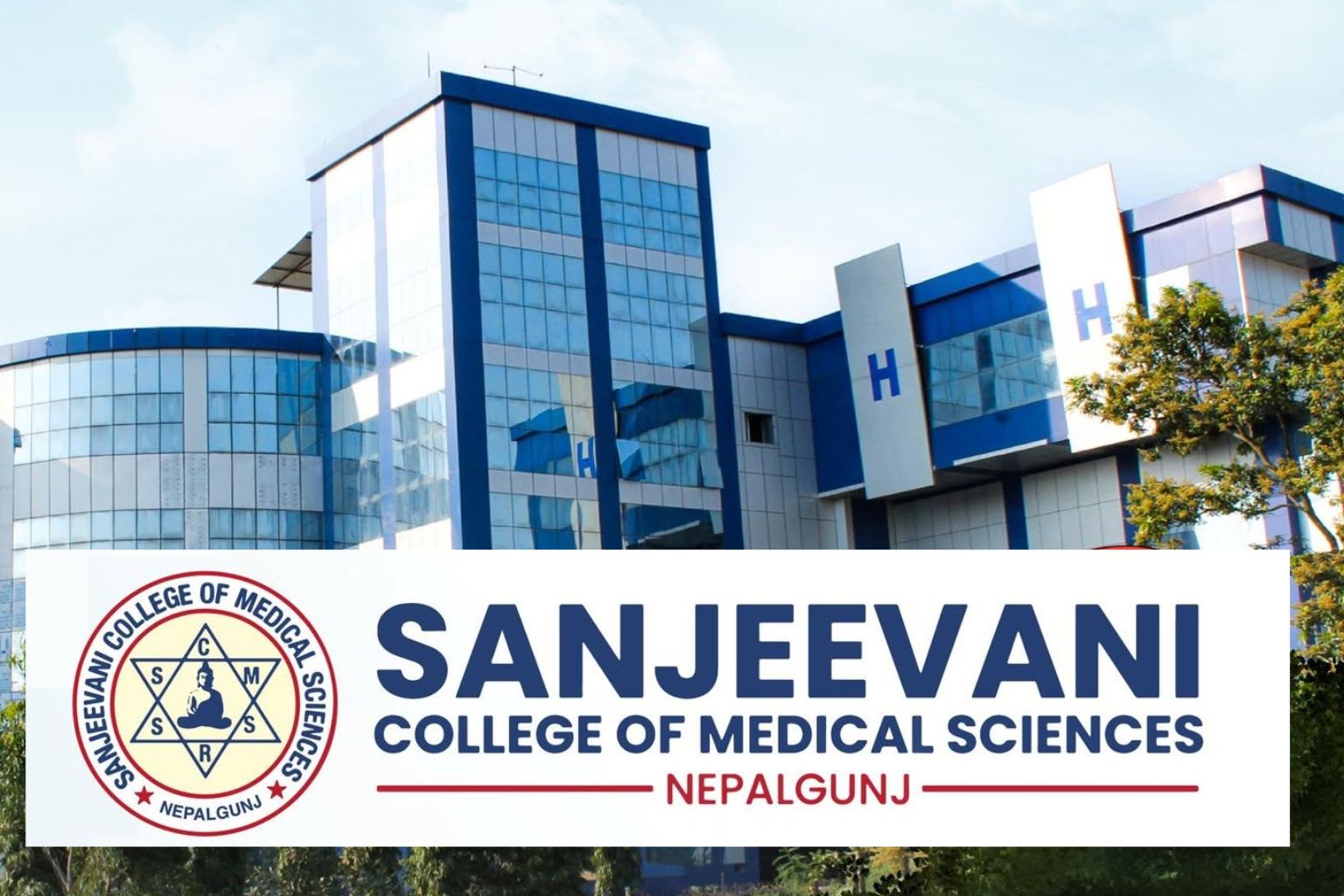
Course: Bachelor of Public Health (BPH)
Level: Undergraduate
Duration: 4 years
Academic Structure: 8 semesters
Affiliation: Purbanchal University
Listed Intake: 10 students
Academic Area: Public health and allied health sciences
Professional Council: Nepal Health Professional Council
The listed intake is 10 students. Final seat allocation may change according to the determination applicable to the respective admission cycle.
The curriculum begins with subjects that establish a scientific and public health foundation. First-semester study includes Introduction to Public Health, Anatomy, Physiology and Pathophysiology, Public Health Microbiology, Public Health Biochemistry, and Applied Professional English. Laboratory-based practice is included with several basic science subjects.
The second semester introduces Public Health Entomology and Rodentology, Public Health Pharmacy, Pharmacology and Toxicology, First Aid and Safety, Basic Foods and Nutrition, Ecosystem and Environmental Health, and epidemiology related to risk factors and communicable diseases.
By the third and fourth semesters, the course moves further into Public Health Core Actions, Family Health, Applied Public Health Nutrition, Environmental and Occupational Health, Demography and Population Studies, Reproductive Health and Gender, Epidemiology of Non-communicable Diseases and Mental Health, and Public Health Epidemiology Methods. Several of these subjects include concurrent field-based practice.
The later semesters give greater attention to applying public health concepts to communities, programs, research, and health systems.
Fifth-semester areas include Public Health Statistics and Computer Application, Community Organization, Participation and Action, Public Health Infrastructure Engineering and Disaster Management, Fundamentals of Health Education, Health-Promoting School Program, and public health service management.
In the sixth semester, students study Applied Health Education and Promotion, Public Health and Medical Services in Nepal, Public Health Policy, Plan and Program in Nepal, and Community Health Diagnosis and Intervention. The curriculum includes residential field-based practice in community health diagnosis and intervention.
The seventh semester covers Public Health Statistics and Computer Application-II, Public Health Research, Health Program Supervision, Monitoring and Evaluation, Health Economics and Financing, Health Management Information System and Logistic Management, research proposal writing, and a residential Comprehensive Public Health Management Field Practicum.
The eighth semester includes Education and Training of Human Resource, Public Health Profession and Entrepreneurship, Public Health Project Management, training program conduction, project proposal writing, and Public Health Research Practicum.
The course is structured around more than classroom study. Laboratory-based practice appears in the early scientific subjects, while concurrent and residential field activities become more prominent as students progress.
Students work with areas such as epidemiological analysis, health education, community diagnosis, statistics, program planning, monitoring and evaluation, research, health policy, and public health project management. These components can help students build an academic foundation for understanding population health problems and planning public health responses.
SCMS has a listed intake of 10 students for BPH. Seat numbers are subject to the determination applicable to the admission year and may vary between admission cycles.
Admission-related provisions, seat allocation, scholarship arrangements, and fees may also be revised under the prevailing framework and schedule of the Medical Education Commission. Applicants should therefore follow the requirements issued for the admission cycle in which they apply.
BPH graduates may consider public health work connected with health education, community health programs, program coordination, research, and public health services. The institutional information also identifies Public Health Officer, Health Educator, Program Coordinator, and Health Researcher among possible professional directions. Employment outcomes depend on professional requirements, individual qualifications, experience, and available positions.
Further academic study may include MPH or DrPH programs. Graduates entering regulated professional practice must meet the applicable requirements of the Nepal Health Professional Council.
The Bachelor of Public Health is a four-year program divided into eight semesters.
The program is affiliated with Purbanchal University.
The listed intake is 10 students, although final seat numbers may change according to the applicable admission-cycle determination.
Yes. The curriculum includes laboratory, concurrent field-based, residential field-based, community diagnosis, public health management, and research practicum components.
Major areas include epidemiology, public health statistics, nutrition, environmental health, reproductive and family health, health education, research, public health policy, management, monitoring and evaluation, and community health.
BPH graduates are connected with the Nepal Health Professional Council and must meet the applicable professional requirements before entering regulated practice.






