



If you’re a Science student planning for a technical health career, the Diploma in Pharmacy at Santa Alpamai Ramnarayan Raya Yadav Nursing College in Malangwa, Sarlahi gives a clear route to professional registration in Nepal.
The college runs this CTEVT-affiliated program with 40 seats, following the Nepal Pharmacy Council framework and the CTEVT curriculum for three academic years.
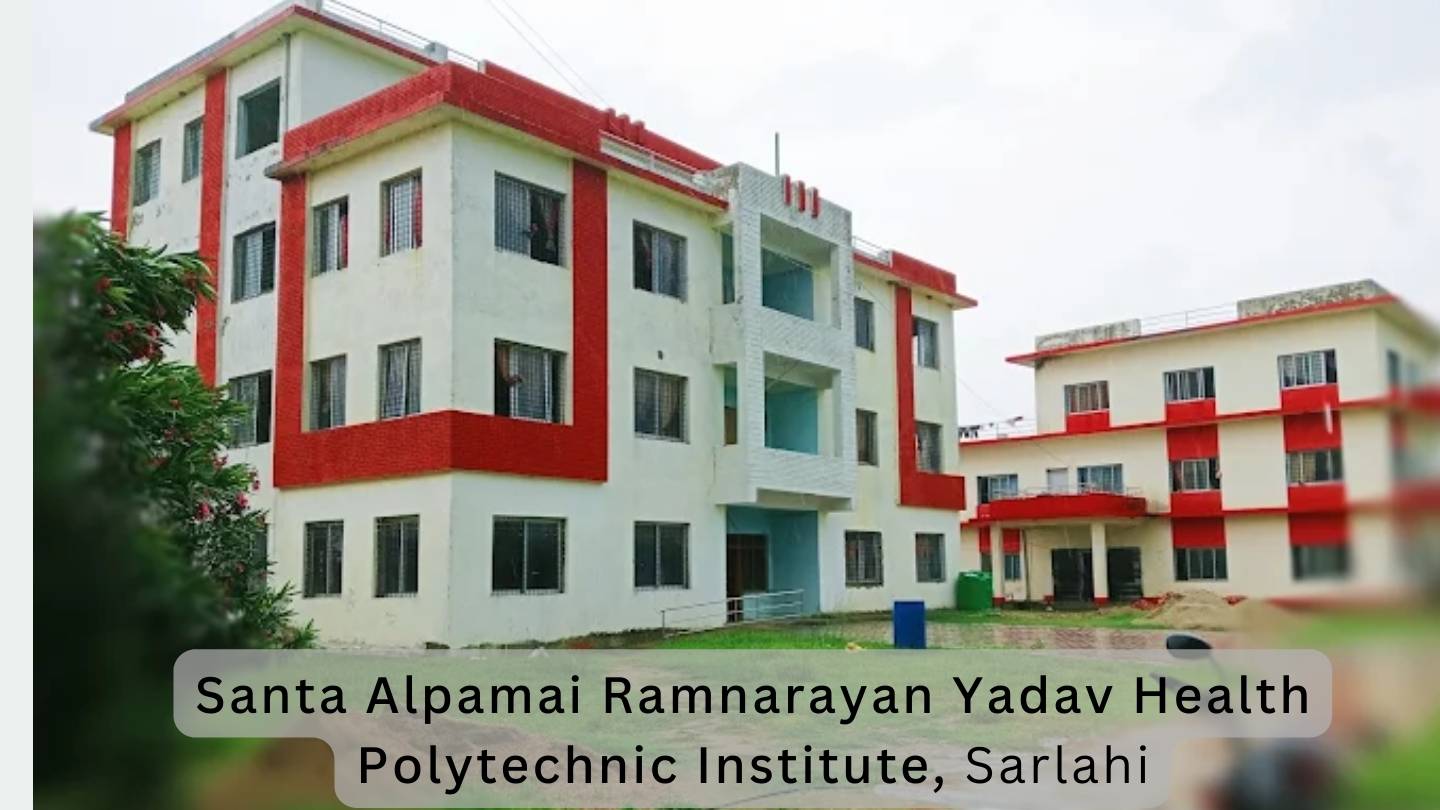
This diploma prepares pharmacy technicians who can dispense medicines safely, counsel clients, and manage inventory under national standards.
Teaching follows CTEVT modules, and practical work meets Nepal Pharmacy Council requirements for registration.
CTEVT affiliation; Nepal Pharmacy Council recognition
Three-year modular program with theory, practical, and field exposure
Campus labs for dispensing, compounding, and quality checks
Logbooks, case discussions, and OSPE/OSCE-style internal evaluations
Student support through library, skills lab, and counselling
Here’s what you study across three years.
Human Anatomy and Physiology, Biochemistry
Pharmaceutics I, Pharmaceutical Chemistry I
Pharmacognosy fundamentals, Mathematics, Computer Application
Practical sessions on measurement, labeling, and documentation
Pharmaceutics II, Pharmaceutical Chemistry II
Hospital & Community Pharmacy concepts
Pharmacology I, Microbiology
Dispensing practice, prescription interpretation, and record-keeping
Pharmacology II, Pharmaceutical Jurisprudence and Ethics
Pharmacy Management, First Aid, Health Education
Field/On-the-Job Training as per CTEVT guidelines
Consolidated practical exams and final board assessments
Build safe dispensing habits and standard documentation
Develop patient-centric counseling based on prescriptions
Maintain store records, stock rotation, and cold-chain where required
Follow ethical rules and national drug regulations
Graduates work in hospital pharmacies, community pharmacies, wholesale outlets, pharmaceutical stores, and public health supply chains. Many pursue higher studies such as Bachelor in Pharmacy after meeting entry criteria of the receiving institution.
Interpret prescriptions and identify drug-related issues
Prepare non-sterile formulations within lab limits
Counsel clients on dose, timing, interactions, and storage
Maintain inventory and handle narcotic/controlled drugs per law
Compounding and packaging
Dispensing calculations and labeling
Communication, counseling, and client privacy
Store management software basics and reporting
Faculty use lesson plans tied to module outcomes. Classes combine lectures, demonstrations, simulations, and supervised lab work. Field posting follows CTEVT scheduling. Internal assessments include unit tests, practical checklists, and viva.
SEE or equivalent with minimum GPA as set by CTEVT (typically GPA 2.0 with C in English, Mathematics, and Science), subject to the latest official notice
CTEVT entrance examination and merit listing
Age and document requirements per CTEVT admission call
Seat allocation and quotas as per national rules
Hospital and community pharmacy services
Pharma retail and wholesale operations
Basic roles in supply and logistics under supervision
Progression to higher studies as per university criteria
Scholarship provisions follow CTEVT and government rules. Notices specify merit and targeted categories. The college publishes details during the admission cycle.
Clear, rule-based pathway to national registration
Structured practical learning with CTEVT oversight
Relevant skills for local healthcare needs in Sarlahi and neighboring districts
The Diploma in Pharmacy at this CTEVT constituent college offers a steady route from classroom to service. Students gain practical competence, ethical grounding, and eligibility for council registration under Nepal’s regulatory system.






