Ten Plus Two (+2) Management at Southwestern State College follows the National Examinations Board (NEB) curriculum across Grades 11 and 12. The stream serves students interested in accounting, economics, business studies, hospitality, banking, and entrepreneurship.
You learn core business concepts, communication skills, and quantitative tools that support both immediate bachelor admissions and skill-based roles.
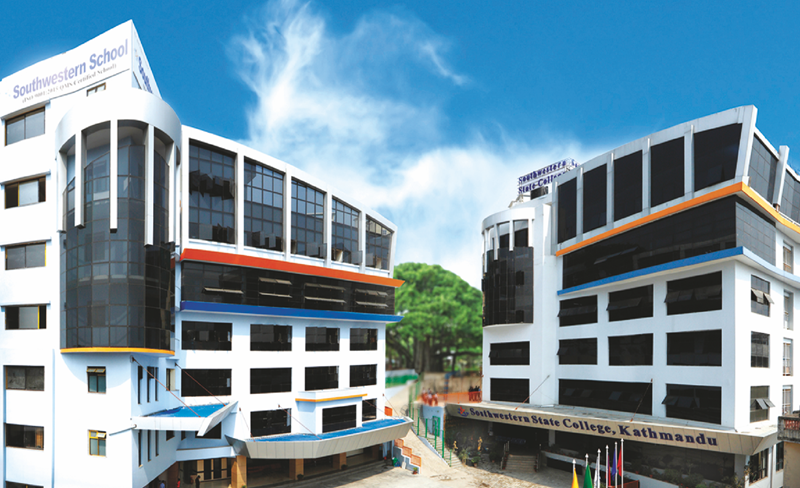
Affiliation: National Examinations Board (NEB)
Duration: Two academic years (Grade 11 and 12)
Shifts: Morning 6:30 AM–11:00 AM; Day 11:00 AM–3:30 PM
Evaluation: Internal assessments and NEB board examinations
Location: Basundhara, Kathmandu (near Ring Road)
NEB Management includes language subjects, social foundations, business courses, and quantitative modules. SWSC schedules presentation slots and case-based tasks to support applied understanding.
Common subject clusters include:
English and Nepali
Accountancy and Economics
Business Studies
Mathematics or Social Studies and Life Skills (as per NEB combinations)
Optional subjects offered under NEB guidelines
Teachers coordinate ledger practice, trial balance tasks, basic financial statements, demand–supply exercises, and short case discussions. Students receive model question sets and periodic unit tests to build exam technique.
The stream develops baseline competence in accounting, economics, business communication, and basic quantitative analysis. Students gain familiarity with Nepal’s business context and prepare for bachelor-level programs such as BBM, BBS, BBA/BHM (as per university rules), and professional pathways like CA foundation.
Management graduates apply to bachelor programs in management and hospitality, banking and finance, and applied business fields. The subject mix also supports entry to information systems or data-focused degrees for students who keep Mathematics as an option in Grade 11/12.
Students who complete +2 Management should be able to:
Prepare basic financial statements from source documents and ledgers.
Interpret tables, graphs, indices, and elasticity concepts in economics.
Write short business reports and deliver concise presentations.
Apply foundational quantitative methods to business problem sets.
Accounting practice: Journal, ledger, trial balance, bank reconciliation, and statements.
Business communication: Formal email, memo, report abstracts, and presentations.
Quant basics: Percentage, ratio, time value basics, and decision tables.
Entrance orientation: CMAT-style reasoning practice and hospitality/business aptitude drills.
Faculty run board-focused lectures, class presentations, group assignments, and case snippets. Weekly problem-solving workshops cover accountancy and economics. Students use past papers and timed mock tests to build speed and accuracy. Mentor meetings review progress and set weekly study targets.
Eligibility: Minimum C in Mathematics and Science with GPA 2.2 or above in SEE (or equivalent)
Documents: SEE mark sheet, character certificate, recent photographs, and copy of citizenship/passport (as applicable)
Placement steps: Form submission, counseling, and seat confirmation as per intake notice
Management graduates move to bachelor programs that lead to roles in banking operations, accounting support, sales and marketing coordination, hospitality services, and administrative functions. Students with strong grades in Mathematics often branch into analytics-focused tracks during bachelor study.
SWSC offers merit scholarships based on SEE results, internal performance scholarships tied to term assessments, and government quota categories as applicable during admission counseling.
The Management stream at SWSC provides NEB-approved subject choices, scheduled practice in accounting and economics, and guided entrance orientation for business-focused bachelor programs. Morning and day shifts give flexibility for commuting students.
+2 Management at Southwestern State College offers a structured, board-approved route into business studies. Students use these two years to build accounting discipline, economic reasoning, communication habits, and exam technique that carry forward into bachelor admissions in Nepal.