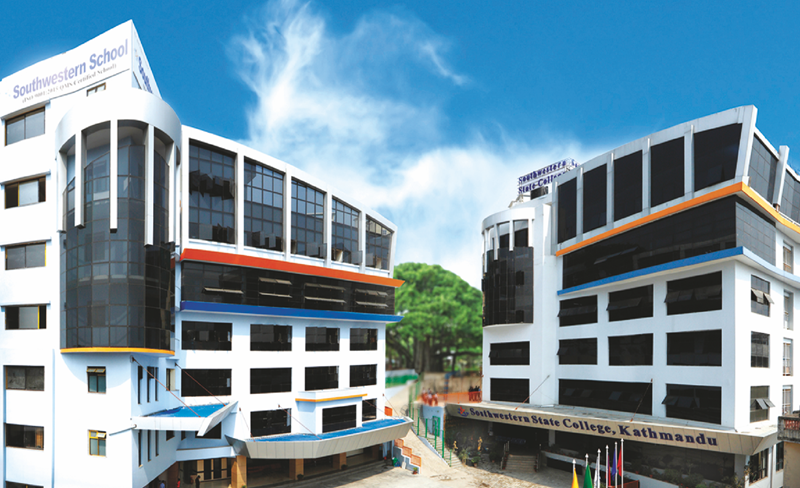
Ten Plus Two (+2) Science at Southwestern State College (SWSC), Basundhara, Kathmandu, follows the National Examinations Board (NEB) curriculum across Grades 11 and 12. The stream suits students targeting engineering, medicine, computer science, or science-focused bachelor’s degrees.
You study classroom theory alongside regular lab work and structured assessments that prepare you for NEB finals and common entrance tests.
Affiliation: National Examinations Board (NEB)
Duration: Two academic years (Grade 11 and 12)
Shift: Day shift 11:00 AM–5:00 PM
Evaluation: Internal assessments and NEB board examinations
Location: Basundhara, Kathmandu (near Ring Road)
NEB prescribes grade-wise courses that combine core language subjects and science subjects with practicals. SWSC organizes timetables to balance theory periods and lab hours.
Typical subject clusters include:
English and Nepali
Physics and Chemistry (with practicals)
Mathematics
Biology or Computer Science (as per NEB combinations)
Teachers sequence unit tests, practical records, viva sessions, and model tests across terms. Students maintain lab notebooks for Physics, Chemistry, and Biology/Computer practicals. The academic calendar signals demonstration sessions, safety drills, and pre-board exams so you can track progress.
The stream builds strong fundamentals in mathematics and the natural sciences. Students learn to interpret phenomena through measurement, models, and data. The aim is to support graduation with NEB certification and readiness for entrance tests run by Nepali universities and councils.
Graduates apply to bachelor-level programs in engineering, medicine, pharmacy, dental science, nursing, computer science/IT, agriculture, forestry, and pure sciences. The subject mix supports both science and quantitative social science pathways for those who later shift interests.
Students who complete +2 Science should be able to:
Solve multi-step quantitative problems using algebra, calculus basics, and statistics fundamentals.
Apply concepts in mechanics, electricity, optics, thermodynamics, chemical reactions, stoichiometry, and organic basics.
Conduct experiments, record observations, analyze error, and present findings.
Read scientific texts, write short reports, and present in small groups.
Laboratory practice: Instrument handling, measurement accuracy, graphing, and lab safety.
Mathematical reasoning: Problem sets that train formula selection, unit analysis, and method steps.
Scientific writing: Practical reports, short research notes, and poster-style presentations.
Entrance readiness: Timed drills and past-paper practice for medical and engineering tests.
Faculty run board-oriented classes, practical sessions in separate labs, problem-solving workshops, and concept recap tutorials. Subject teachers use presentations, unit summaries, and quick quizzes to check understanding. Weekly doubt-clearing hours and periodic parent–student briefings keep study plans on track.
Eligibility: Minimum C+ in Science and Compulsory Mathematics with GPA 2.4 or above in SEE (or equivalent)
Documents: SEE mark sheet, character certificate, recent photographs, and copy of citizenship/passport (as applicable)
Placement steps: Form submission, counseling, and seat confirmation as per intake notice
Science graduates begin bachelor’s study that leads to roles in engineering firms, hospitals and labs, software and IT services, research support, and public agencies after higher degrees. Students who prefer a change of track still carry strong quantitative skills that many non-science programs value.
SWSC provides merit scholarships based on SEE results, internal performance scholarships linked to term scores, and government quota categories as applicable during admission counseling.
The Science stream at SWSC offers NEB-approved combinations, separate laboratories, structured internal tests, and guided practice for common entrance exams. The day schedule suits practical coordination and extended lab time.
+2 Science at Southwestern State College delivers a clear, board-approved pathway with lab support and exam-focused planning. Students use these two years to build fundamentals, document practical skills, and prepare for bachelor-level study in Nepal’s science and technology fields.