If you're a student interested in building a future in business, finance, or administration, the Ten Plus Two (+2) Management program at Urlabari Multiple Campus (UMC) offers a practical start after SEE.
This program is affiliated with the National Examinations Board (NEB) and helps students gain foundational knowledge in accounting, economics, business studies, and mathematics—preparing them for bachelor's degrees in management, business, or economics.
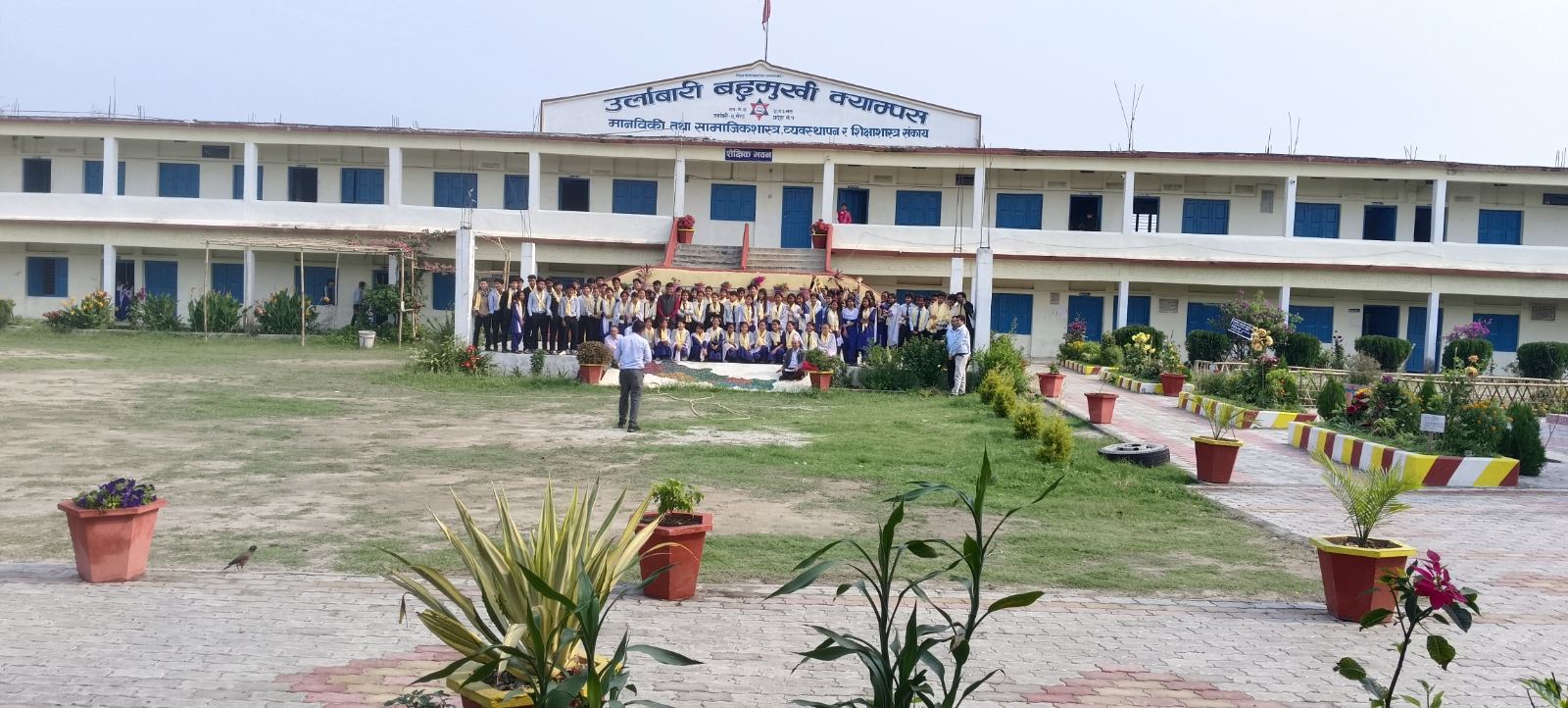
Program: Ten Plus Two (+2) in Management
Duration: 2 Years (Class 11 & 12)
Affiliation: National Examinations Board (NEB)
Offered by: Urlabari Multiple Campus, Morang
Teaching Medium: Nepali and English
Recognized by: Government of Nepal
Location: Urlabari-3, Morang District
The course is divided into two academic years. Students study both core and optional subjects that build their managerial and analytical skills.
Class 11 Subjects:
Compulsory English
Compulsory Nepali
Social Studies and Life Skills
Principles of Accounting – I
Economics
Optional: Business Studies or Mathematics
Class 12 Subjects:
Compulsory English
Principles of Accounting – II
Business Mathematics
Economics
Optional: Business Studies or Marketing
Each subject includes theory, practical sessions, internal assessments, and annual board exams as per NEB guidelines.
The program aims to:
Build a strong base in business, finance, and economics.
Prepare students for undergraduate studies in business or management.
Introduce real-world commercial practices, accounting systems, and basic entrepreneurship.
Foster analytical thinking and decision-making.
This course is ideal for students planning to pursue:
Bachelor of Business Studies (BBS)
Bachelor of Business Administration (BBA)
Bachelor of Hotel Management (BHM)
CA, ACCA, or other business-related professional paths
Graduates can also explore early job opportunities in accounting firms, retail businesses, and junior administrative roles.
By completing this course, students will:
Understand fundamental business principles and economic systems.
Analyze and prepare basic financial statements.
Apply theoretical knowledge to solve business-related problems.
Develop communication and quantitative reasoning skills.
Students build practical skills such as:
Recordkeeping and double-entry accounting
Report writing and office documentation
Business correspondence
Cost and budgeting basics
Teamwork, communication, and presentation
Workshops and interactions with professionals also help broaden their practical understanding.
UMC follows a student-centered approach that includes:
Classroom lectures and group discussions
Regular assignments and project work
Internal tests and NEB exam preparation classes
Use of multimedia tools and basic computer labs
Students also participate in educational tours, seminars, and co-curricular activities.
To apply, students must:
Have passed the SEE examination or equivalent
Submit completed admission forms within the deadline
Provide necessary academic and personal documents
Attend counseling sessions (if applicable)
Admissions follow the academic calendar and guidelines set by NEB and the campus.
After completion, students can:
Join undergraduate programs in business, commerce, or economics
Apply for entry-level jobs in banks, offices, or local businesses
Start small ventures or support family businesses with basic financial knowledge
Urlabari Multiple Campus supports inclusive education through:
Scholarships for Dalit, Janajati, minority, and economically marginalized students
Special quotas from Urlabari Municipality
Tuition waivers for siblings
SHEP HERP support for academically strong but financially disadvantaged students
This program at Urlabari Multiple Campus is especially relevant for SEE graduates from Morang and nearby districts looking for affordable, accessible education. With a strong academic team and supportive environment, students receive the academic foundation they need for further studies and employment readiness.
The Ten Plus Two (+2) Management program at Urlabari Multiple Campus offers a solid, practical foundation in business and management. With structured learning, real-world relevance, and community support, it prepares students to move forward confidently in higher education or entry-level business roles.