



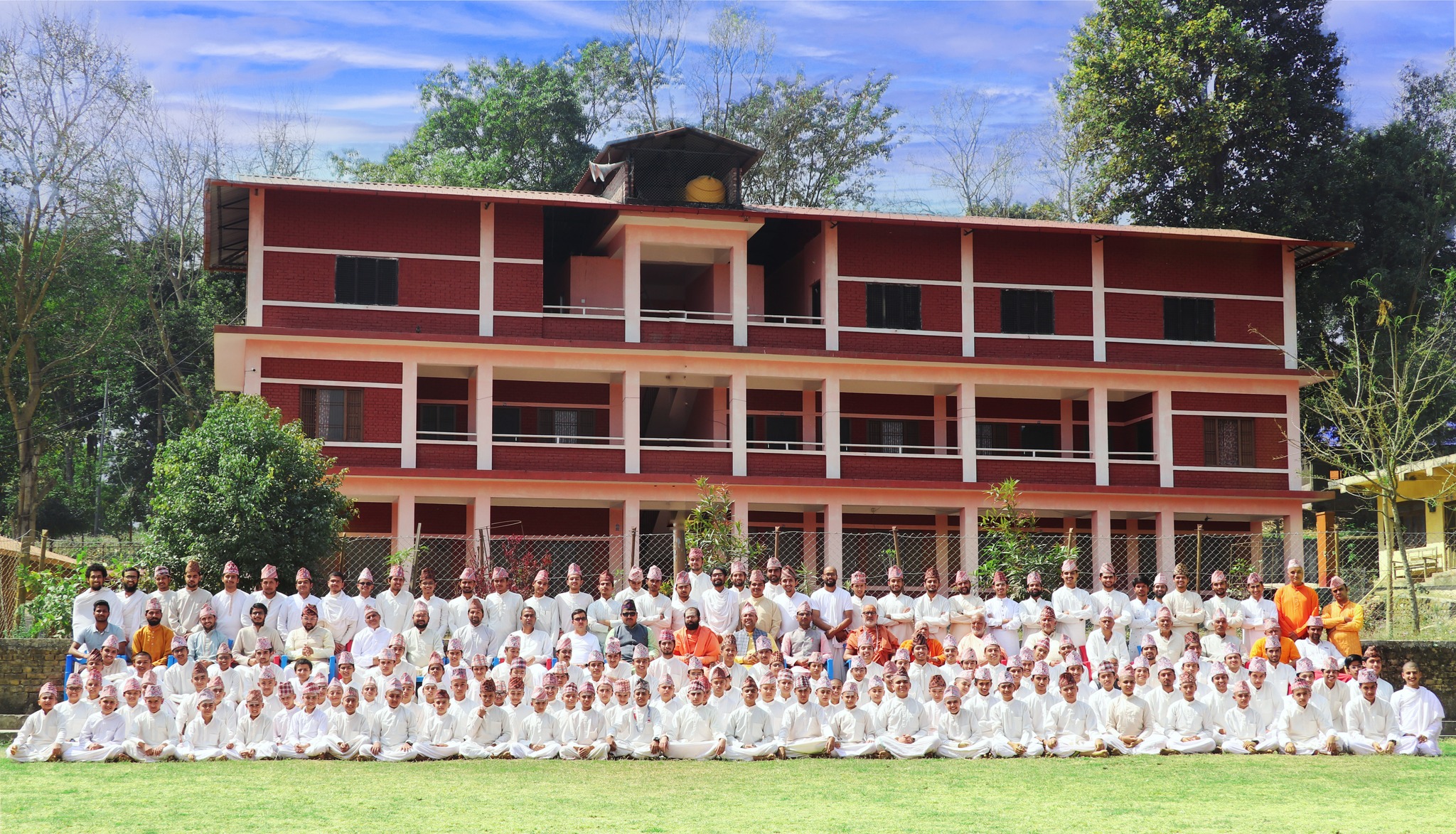
Workshop on ‘Problems and Solutions in Teaching Classical Subjects’ Concludes at Mahesh Sanskrit Gurukulam Vidyapeeth, Devghatdham
Recognizing that national progress cannot be achieved through technology, infrastructure, and economic growth alone, and that the preservation and promotion of civilization, culture, philosophy, and knowledge traditions are equally necessary, an important workshop on teaching classical subjects has concluded in Devghatdham.
Mahesh Sanskrit Gurukulam Vidyapeeth, Devghatdham, organized the three-day workshop seminar on Jestha 22, 23, and 24, 2083 BS to discuss the current state, challenges, and possibilities of Sanskrit literature, the primary source of Nepal’s cultural identity, religious consciousness, philosophical tradition, and linguistic heritage.
The seminar, titled “Problems and Solutions in Teaching Classical Subjects,” was not limited to a formal academic program. It became an important intellectual initiative for reviewing the present realities of Sanskrit education and providing direction for its future.
Exploring New Horizons and a Broader Perspective
In the past, most discussions on Sanskrit education focused only on declining student numbers, limited opportunities, and decreasing interest in society. However, the discussions presented in Devghat established a new conclusion: the problem of Sanskrit education does not lie in Sanskrit itself, but in the way it is presented.
The seminar emphasized the need to change the perception of Sanskrit as merely a remnant of the past and to present it as a knowledge tradition with future potential.
It stressed the need to connect classical studies with the digital age, artificial intelligence, interdisciplinary research, global knowledge dialogue, and innovation.
The seminar discussed the view that Sanskrit education should not remain limited to ritual practices, religious ceremonies, or traditional studies. It should also be connected with linguistics, philosophy, cultural studies, yoga, Ayurveda, and the intellectual history of human civilization.
The discussions declared that the future direction of Sanskrit education lies not only in preserving Sanskrit, but also in its reinterpretation, recreation, and renewed application.
Necessity and Importance of Classical Education
The importance of classical education is not connected only with the glory of the past; it is also related to the deepest questions of human life. While modern education provides the means to manage life, classical education offers a vision that gives life direction.
Sanskrit literature is not limited to religious or spiritual subjects. It includes in-depth discussions on linguistics, logic, psychology, ethics, the philosophy of governance, medicine, mathematical thought, and nature.
For this reason, leading universities around the world continue to conduct research on Sanskrit and Eastern knowledge traditions. Classical thought views human beings not merely as economic beings, but as moral, intellectual, and spiritual beings.
The relevance of classical thought has increased further in the context of the crisis of values, mental stress, cultural disconnection, and environmental imbalance facing the modern world. The seminar concluded that Sanskrit education is not merely an academic program, but an initiative for the self-preservation of civilization, cultural continuity, and intellectual independence.
Although some people understand Sanskrit education only as religious or traditional study, its actual scope is much broader. Countless sources relating to the Vedas, Upanishads, philosophy, Ayurveda, mathematics, astronomy, drama, grammar, political science, ethics, literature, and psychology are preserved in Sanskrit.
The fundamental elements of Nepal’s national identity—including Pashupatinath, Muktinath, Janakpur, Lumbini, Himavat culture, the Guthi tradition, systems of rites and rituals, and religious tourism—are all directly or indirectly connected with the Sanskrit tradition.
The seminar warned that if Sanskrit education continues to weaken, future generations may gradually lose their connection with the original sources of their civilization, creating a risk that the nation’s historical memory and cultural continuity could be broken.
Revival of Sanskrit Education: A National Necessity
Strengthening Sanskrit education is not merely an emotional appeal; it is a rational national necessity. Just as developed nations prioritize the preservation of their civilizational sources—for example, European countries through Latin and Greek studies, and India through Sanskrit and Vedic studies—Nepal must also demonstrate respect for and commitment to its original knowledge traditions.
The knowledge preserved in Sanskrit literature has become an important source for interdisciplinary research. The global importance of Sanskrit sources is increasing in areas such as Ayurveda, yoga, environmental awareness, ethical philosophy, linguistics, and consciousness studies.
In the present era of cultural diplomacy, Sanskrit can also become an effective means of strengthening Nepal’s international identity. Nepal’s Constitution has also recognized the protection of language, culture, and heritage as a responsibility of the state.
Major Problems Facing Classical Education
The seminar seriously examined the current problems facing Sanskrit and classical education and drew attention to the following areas:
Curriculum and Contemporary Relevance
Many classical curricula remain limited to traditional structures. Although the original form of knowledge must be preserved, the methods of presentation, research approaches, and learning materials need to be made contemporary and modern.
Innovation while preserving the originality of tradition was identified as the balanced approach.
Lack of a Research Culture
The pace of original research in the Sanskrit field remains comparatively slow. Financial support for research, publication opportunities, and access to international academic networks are limited.
Failure to Become Technology-Friendly
In the digital age, most knowledge resources are increasingly becoming available online. However, many Sanskrit texts, commentaries, research materials, and teaching methods have not yet been adequately digitized.
The discussions highlighted the importance of expanding digital education and technology-based access to classical learning resources.
Lack of Policy Priority
Although the importance of Sanskrit education has been acknowledged in national education policy, sufficient attention has not been given in practice to the required budget, human-resource development, research grants, and institutional strengthening.
Solutions and Future Direction
The seminar stated that long-term achievements could be made by making the teaching of classical subjects contemporary, research-oriented, and technology-friendly.
Such reforms could increase students’ interest in Sanskrit, develop a new research culture, and bring unpublished manuscripts to light.
The following measures were identified as necessary to address the existing problems:
-
Develop a long-term national action plan for Sanskrit education.
-
Develop Nepal Sanskrit University as a research-oriented centre of excellence.
-
Establish special grants for research projects in Sanskrit subjects.
-
Digitally archive rare texts.
-
Increase academic collaboration between Gurukuls and universities.
-
Build partnerships with international Sanskrit study centres.
-
Expand employment and professional opportunities for Sanskrit graduates.
-
Develop technology-friendly teaching materials and online courses.
-
Conduct continuous capacity-development programs for Sanskrit teachers.
Conclusion
Expressing concern about the future of classical education is not enough. Concrete intellectual, academic, and institutional initiatives are essential for its revival.
The Sanskrit language and classical literature are not remnants of a dead history. They remain enduring sources of knowledge, values, logic, culture, and the philosophy of life. Sanskrit education can reveal its true strength only when it is connected with research, technology, innovation, and practical relevance to life.
The need today is not merely to praise Sanskrit, but to make it practical, research-oriented, technology-compatible, and globally relevant.
Sanskrit education should be viewed not only as the glory of the past, but also as a possibility for the future. Efforts to resolve the problems in teaching classical subjects are efforts to secure Nepal’s intellectual future.
The revival of Sanskrit education can also support the renewal of cultural confidence, original thought, research-based perspectives, and civilizational continuity.


.png)

Comments 0
No comments yet. Be the first to start the conversation.