



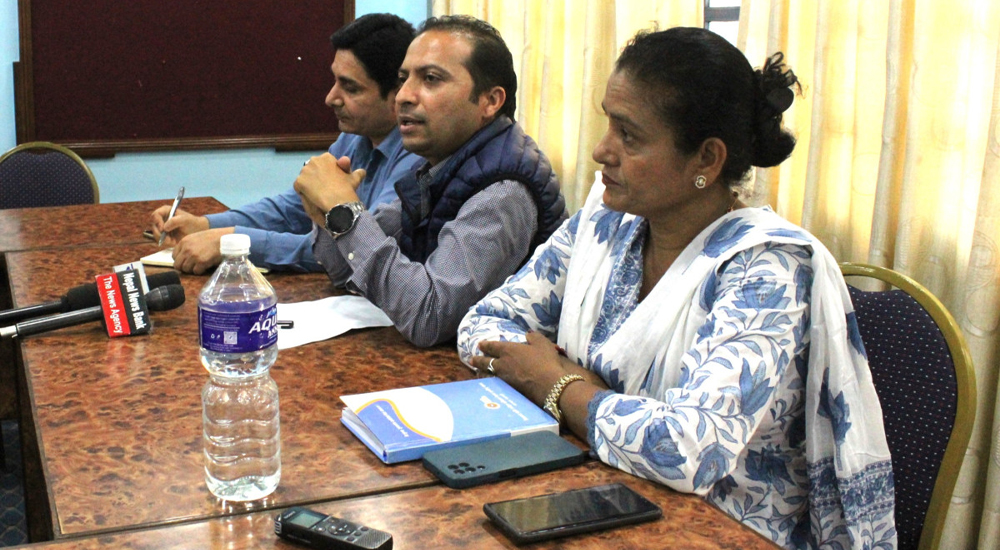
Global Action Week Begins with Call to Allocate 20 Percent Budget to Public Education
Kathmandu — Global Action Week has begun today with the objective of raising awareness among stakeholders on various issues related to public education and creating advocacy and pressure at the policy-making level.
The campaign, which has started simultaneously in 150 countries around the world, is being led in Nepal by the National Campaign for Education (NCE) Nepal.
More than 500 member organizations affiliated with NCE across Nepal will organize various programs for one week at the local, provincial, and federal levels. Through this campaign, stakeholders will be urged to expand adequate, sustainable, and equitable investment in the education sector.
Speaking at a press conference held on Monday to share information about the action week, NCE Chair Lavaraj Oli said that the federal, provincial, and local governments must increase investment to strengthen public education and move toward ensuring its effective and efficient mobilization.
Six-Point Demands Made Public by NCE Nepal
In the context of this year’s action week, NCE Nepal has made public six demands for reform in the education sector. They are as follows:
-
Ensure adequate, sustainable, and equitable financial investment in the education sector by allocating at least 15 to 20 percent of the national budget or 4 to 6 percent of the gross domestic product (GDP) to public education.
-
Along with the federal, provincial, and local governments, international development partners should also increase the share of grants provided to the government for public education and reduce the share of loans.
-
Local governments should increase internal resources and expand investment in education through innovative alternative financing pathways such as a progressive tax system.
-
A system of transparency, participation, accountability, responsibility, and equitable distribution should be developed in the education budget.
-
Quality inclusive education should be prioritized for marginalized children on the basis of gender, caste and ethnicity, disability, geographical location, and language.
-
Capital expenditure, which has been declining in the education sector, should be increased for reform programs such as safe, inclusive, equitable, and quality school education, access to digital education, and learning achievement.


.png)

Comments 0
No comments yet. Be the first to start the conversation.