



Traditional Worship Held with Faith in Nature
Myagdi, April 1, 2026 (Chaitra 18, 2082 BS).
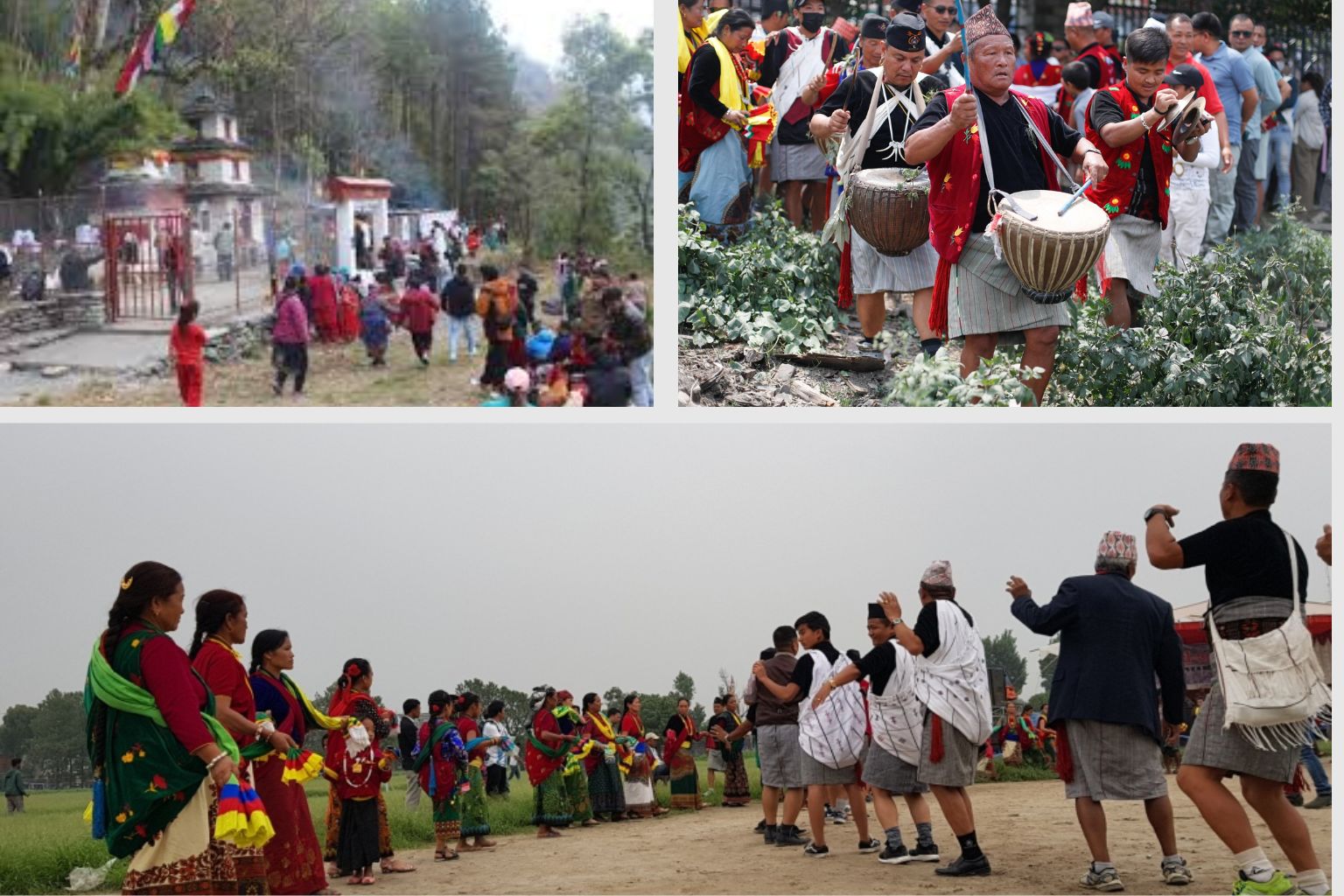
With the belief that pleasing nature helps protect them from natural disasters, the Magar community in Myagdi has gathered to observe the traditional Bhume Puja.
Bhume Puja was celebrated with great enthusiasm on the bright Tuesday of Chaitra in Beg and Banduk of Raghuganga Rural Municipality Ward No. 1, and in Doba of Annapurna Rural Municipality Ward No. 1, along with cultural programs.
On the occasion of Bhume Puja, Magar communities perform their indigenous ancestral songs and dances, turning settlements into festive spaces.
As the celebration includes traditional ancestral dancing and singing to the sounds of Naumati and Panchebaja instruments, settlements with Magar populations have started to become lively with celebration.
Villagers Return Home for the Ritual
People who had left the village for different occupations, businesses, and employment have also returned home to take part in Bhume Puja.
Beg Bahadur Purja of Banduk, Ward No. 1 of Raghuganga Rural Municipality, said that the Magar community, which traditionally follows farming as its occupation and usually lives near forests and woodlands, has long practiced Bhume Puja with the belief that honoring nature helps prevent natural disasters and calamities.
Bhume Puja as Ancestral Culture
He said, “Bhume Puja is the ancestral culture of the Magar community. We have continued the tradition followed since the time of our forefathers. We are making efforts to keep this old indigenous culture alive by passing it on to future generations.”
He added that there is a tradition of celebrating Bhume Puja in a grand manner in settlements inhabited by the Magar community.
According to him, the ritual is performed as a form of nature worship before the onset of the monsoon, with prayers to prevent floods, landslides, hailstorms, and other natural disasters through the worship of Bhume, or the earth.
Worship at Historical Bhume Sites
In Chhimgkhola village of Raghuganga Rural Municipality Ward No. 7, there is a tradition of offering पूजा at the historic Mandali Than on the hilltop and at the Bhume Than in Sewang during the last week of Chaitra, with the belief that wishes will be fulfilled.
During Bhume Puja, offerings of a bull and a male goat are made at the shrines of Mandali Bajai and Sandh. Devotees visiting Mandali Than also traditionally offer a rooster, pigeon, coconut, and other items.
Khama Thapa, President of the Nepal Magar Association Myagdi, said that the practice of drinking millet-based chhyang, enjoying the celebration, and performing ancestral dances to please the Bhume deity is still alive in the Magar community. Such traditions reflect the living music and dance heritage of Nepali culture.
Cultural Transmission and Community Identity
He said, “There are various indigenous cultural traditions and religious beliefs that have existed within the Magar community for many years. Our identity can be preserved only if culture is passed from the older generation to the new generation.”
According to Thapa, after worship is performed at the Bhume Than according to traditional cultural practices, people return to the village singing and dancing to songs such as the ancestral Sedo song and Bhaich Mayale, both of which are now considered endangered. During the return, there is also a tradition of honoring senior citizens and community leaders by carrying them on the shoulders.
Bhume Puja Observed at Different Times
In Dagnam and Darmija of Raghuganga Ward No. 4, where there is a dense Magar population, Bhume Puja is observed on the bright Tuesday of Jestha.
Bhume Puja in Pakhapani
In Ward No. 6 Pakhapani, the tradition is to observe Bhume Puja in Baisakh. The practice remains an important part of the cultural heritage of Nepal.
Chaitra 18, 2082 BS

.png)

Comments 0
No comments yet. Be the first to start the conversation.