



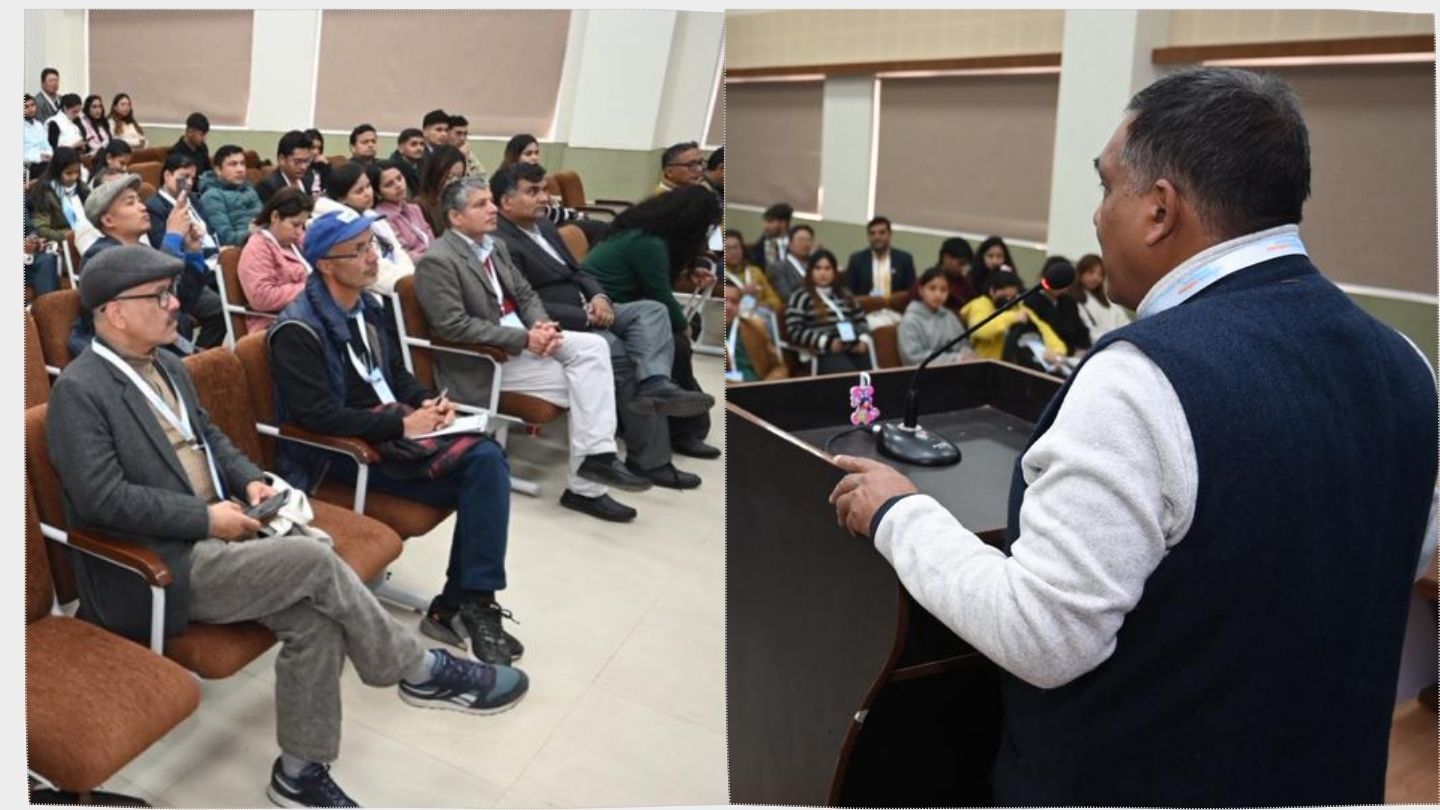
Two-Day Kathmandu Conference Against Misinformation Concludes
Kathmandu, Magh 11, 2082 — A two-day Kathmandu conference organized against misinformation has concluded. The conference concluded that news and information should be made more credible by relying on facts, and that people should not follow rumors.
Key Conclusion of the Conference
The conference emphasized the following:
-
News and information should be made more reliable by using facts as the foundation
-
Rumors should not be followed
-
Information should be selected carefully, and only verified facts should be trusted
Experts Stress Fact-Based Information Selection
Experts and researchers at the conference stated that the growing access to technology has led to a surge in misinformation. They stressed the need to filter information and rely only on factual content.
They also noted that misinformation has affected all sectors of society. To counter misinformation, they pointed out the need to understand the pace of technology and time, and to increase information literacy.
Views from Political Scientist Hari Sharma
Political scientist Hari Sharma stated that misinformation has impacted politics and all other sectors, and that even what is seen with one’s own eyes may not be accurate in the current situation.
He expressed the view that if questioning ends, democracy dies, and added that if questioning ends, misinformation spreads even more.
UNESCO Nepal Representative on Democracy and Accurate Information
UNESCO’s Nepal Representative, Jaco du Toit, stated that correct information is the core foundation of democracy, and that misinformation has spread very quickly due to the ease of technology.
He said that to reduce misinformation, all stakeholders must stand together for the right to information and the proactive flow of accurate information. He also expressed the view that the government, technology sector, democratic forces, civil society, media, and academia should be transparent and accountable.
Sessions and Panel Discussions
On Sunday, the conference included three sessions focused on fighting misinformation, covering:
-
Journalism education
-
The role of media
-
Programs against misinformation
Panel discussions were also held on:
-
Regulation of social media platforms
-
Climate change
Discussions took place in sessions related to the role of journalism education against misinformation and the role of media in countering misinformation.
Research Presentations and Participation
In the two-day conference, around a dozen research studies related to media, social media, and media literacy were presented. Topic-based discussions were held among experts, policymakers, journalists, and others.
The conference recorded participation of more than 200 people over the two days.



.png)

Comments 0
No comments yet. Be the first to start the conversation.