The ever-increasing role of science and technology in our society is undeniable. Among its numerous applications, forensic science stands out as a critical component in safeguarding the community against hazards and abuses. By meticulously processing physical evidence, forensic science laboratories play a pivotal role in the administration of justice. This makes the services of a forensic science laboratory indispensable to society.
Around the world, nations have recognized the need for robust forensic science laboratories. These institutions are dedicated to the processing and analysis of physical evidence in the quest for truth. Equipped with cutting-edge technology and staffed by expert scientists, these laboratories provide essential services that support law enforcement and the judicial system.
In Nepal, the need for a modern forensic science laboratory was first recognized by the Judicial Reform Commission in 1983. The commission recommended the establishment of a well-equipped and independent forensic science laboratory. Following this recommendation, the National Forensic Science Laboratory (NFSL) was established and operated under the aegis of the Nepal Academy of Science and Technology (NAST) from 1986 to 1995.
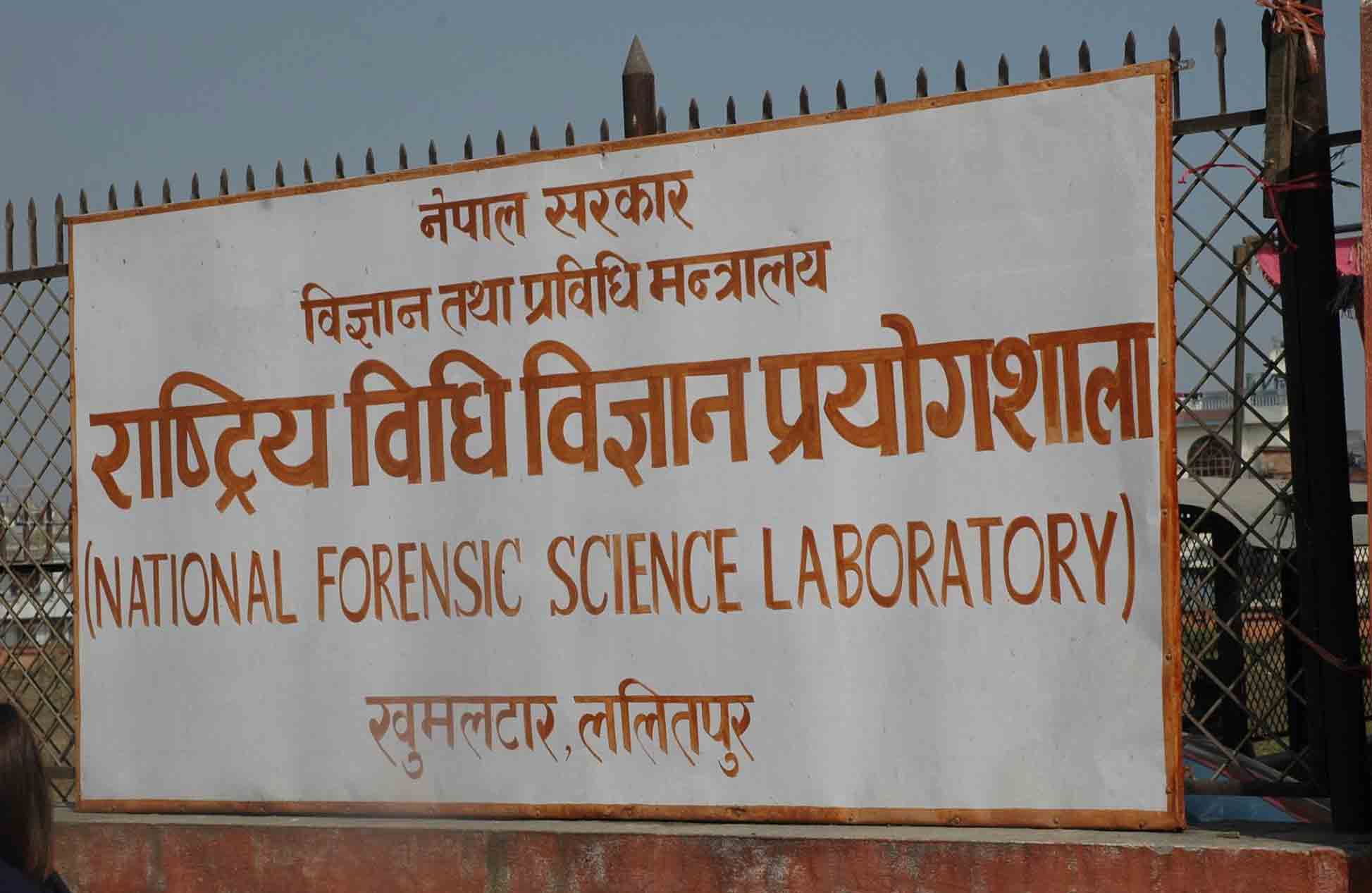
From 1995 to 2000, the laboratory functioned as an autonomous organization under the Ministry of Law, Justice & Parliamentary Affairs. In 2000, the Government of Nepal made a significant decision to bring the laboratory under the Ministry of Education, Science & Technology, where it continues to operate as an autonomous entity. This transition has enabled the NFSL to maintain its independence and continue its mission of providing critical forensic services.
The NFSL has outlined several key objectives that guide its operations:
Service Provision: The laboratory provides essential services to various agencies by analyzing and testing physical evidence related to investigations and the administration of justice.
Expert Witness: NFSL helps tribunals find facts by providing scientific opinions and appearing in court as expert witnesses.
Research and Development: The laboratory conducts research activities and develops appropriate technologies in various aspects of forensic science.
Training Programs: NFSL conducts training programs for individuals involved in investigations and judicial practices, enhancing their skills and knowledge.
Satellite Laboratories: To make forensic services more accessible, NFSL aims to establish and operate satellite laboratories in different parts of the country.
International Relations: NFSL interacts and establishes relationships with national and international organizations concerned with forensic sciences to stay updated with global standards and practices.
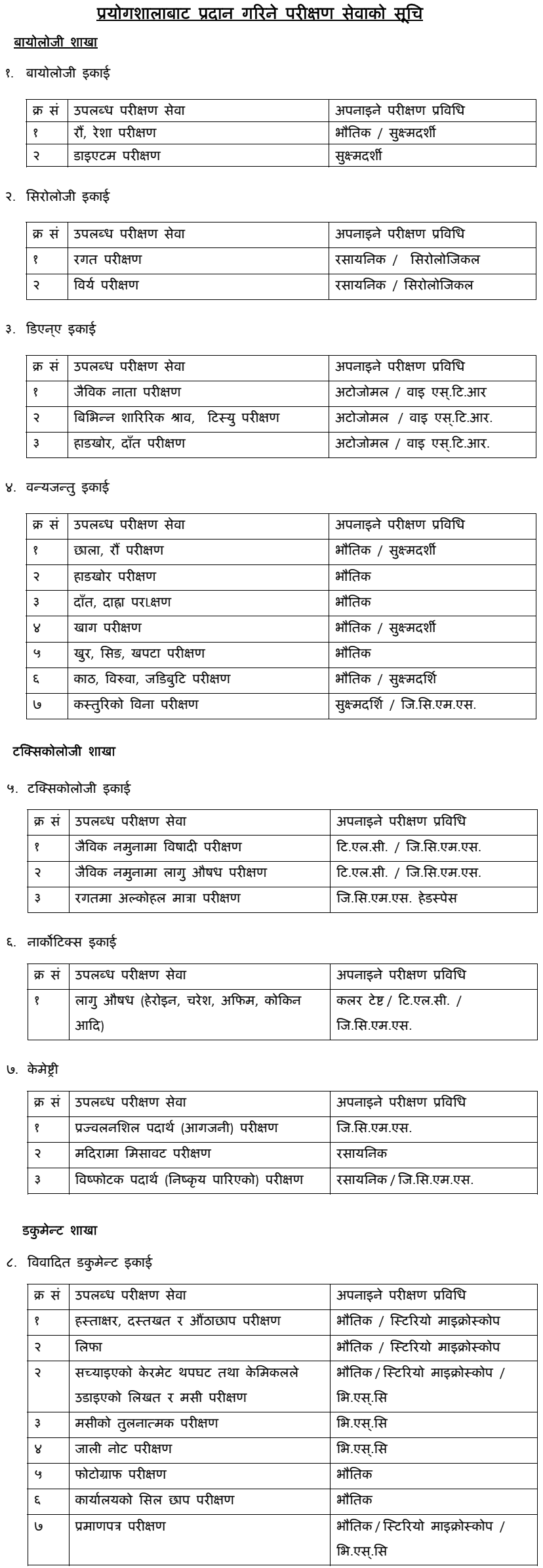
The NFSL is equipped with state-of-the-art facilities and modern equipment, ensuring that it can handle a wide range of forensic analyses. Some of the key equipment includes:
Each technical unit within the laboratory is headed by qualified and experienced forensic scientists, supported by trained staff, ensuring that the highest standards of forensic analysis are maintained.
The primary users of the NFSL's services are the judiciary. However, the laboratory also receives samples from a wide range of other organizations, including:
This broad client base underscores the laboratory's critical role in supporting various facets of governance and public service.
To further enhance its service delivery, NFSL has established branch offices in strategic locations across the country. These branches include:
These branch offices ensure that forensic services are accessible to a larger segment of the population, facilitating timely and efficient forensic analysis.
The governance of the NFSL is overseen by a Board of Directors, which includes representatives from various key governmental bodies. The composition of the board is as follows:
This diverse and experienced board ensures that the laboratory operates with the highest standards of governance, integrity, and scientific excellence.
The National Forensic Science Laboratory in Khumaltar, Lalitpur, Nepal, is a cornerstone institution that upholds justice and safety through scientific excellence. Its establishment and evolution reflect Nepal's commitment to integrating advanced scientific methods into its judicial and investigative processes. By providing essential forensic services, conducting groundbreaking research, and offering comprehensive training programs, the NFSL continues to play a vital role in the pursuit of truth and justice. As it moves forward, the laboratory remains dedicated to expanding its reach, enhancing its capabilities, and maintaining its position as a critical asset to the nation.


.png)
.png)

-Logo.png)
-Logo.png)


.jpg)