



Eight New Curricula to Be Added at School Level, Recommended to Ministry for Approval
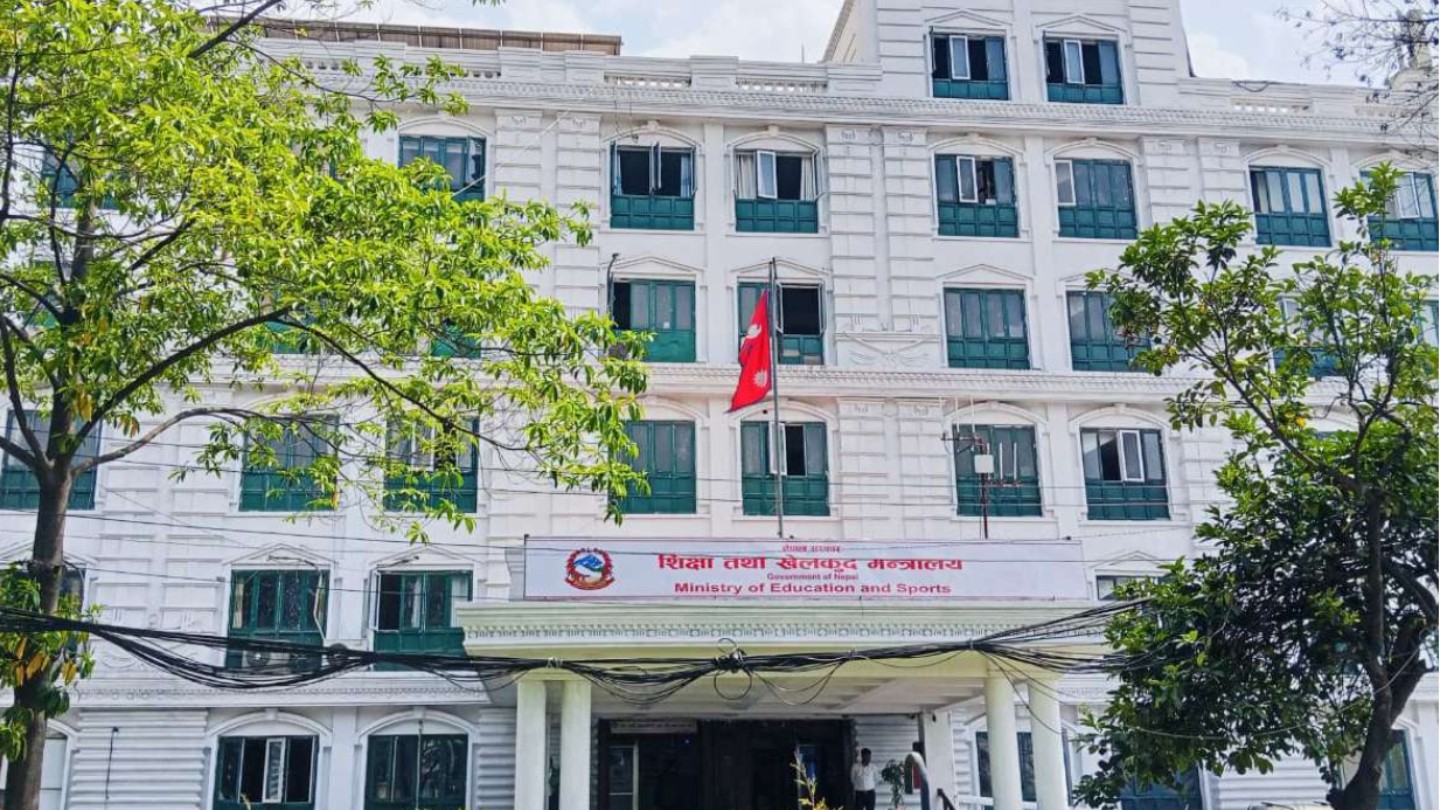
Eight additional curricula have been developed for the school level, covering Grades 1 to 12. The draft curricula have been submitted to the Ministry of Education and Sports for approval. Including the newly recommended curricula, the total number of school-level curricula developed has now exceeded 300.
A recent meeting of the National Curriculum Development and Evaluation Council, chaired by the Minister for Education and Sports, recommended the eight new curricula to the Ministry for approval.
Yubaraj Poudel, Director-General of the Curriculum Development Center and Member-Secretary of the Council, said that although the meeting was chaired by the Education Minister, the curricula must be submitted to the Ministry for final approval under the existing legal provision. The curricula will enter the implementation process at the school level only after receiving final approval from the Ministry.
The new curricula recommended for approval are listed by level as follows:
Basic Education (Grades 6–8):
Under the mother-tongue group:
-
‘Awadhi’
-
‘Magar Dhut’
Secondary Education (Grades 9–10):
-
‘Population Studies’
-
‘Tantra Shastra’
Secondary Education (Grades 11–12):
-
‘Constitutional Law’
-
‘Civil and Criminal Law and Justice’
-
‘Procedural Law’
-
‘Legal Drafting, Jurisprudence and the Nepali Legal System’
According to Purushottam Ghimire, Director and Information Officer at the Curriculum Development Center, new curricula are generally developed on the basis of suggestions and demands received from experts and stakeholders. However, teaching and learning have not been conducted at the school level under all the curricula that have been developed.
Stakeholders have criticised the failure to implement curricula developed with state investment. In response, the Center has stated that some curricula could not be implemented because of a lack of students, while others could not be implemented due to a shortage of qualified teaching personnel.
Information Officer Ghimire clarified that the Center’s primary responsibility is limited to developing curricula on the basis of demand and that curriculum implementation does not fall under its authority.
Explaining why the number of curricula is so high, he said that separate curricula must be developed for the same subject at different levels. For example, even for Nepali, one curriculum must be prepared for Grades 1–3, another for Grades 4–5, and separate curricula for Grades 6–8, Grades 9–10, and Grades 11–12. This requirement has resulted in a large total number of curricula, he said.


Comments 0
No comments yet. Be the first to start the conversation.