



Table of Content
- Integrated Procedure Applied for VC Selection in Eight Universities
- Objective of the Procedure
- Application Call and Deadline
- Minimum Qualifications for the Vice-Chancellor Post
- Special Qualifications for Lumbini Buddhist University and Agriculture and Forestry University
- Documents to Be Submitted with the Application
- Vision Paper and Strategic Action Plan
- One Person May Apply to Two Universities
- Conditions for Approval or Cancellation of Applications
- Selection Method
- Preliminary List and Shortlist
- Second Stage: Evaluation of Vision Paper and Action Plan
- Presentation and Interview
- Total Evaluation Marks
- Expert Subcommittee May Be Formed
- Participation in Evaluation Prohibited in Case of Conflict of Interest
- Recommendation Process
- Document Preservation and Secretariat
- What Details Are Requested in the Application Format?
- Research Project and Publication Details
- Provisions on Conduct, Complaints, and Investigation
- New Standards in University Leadership Selection
- Conclusion
- Download
Integrated Procedure Applied for VC Selection in Eight Universities
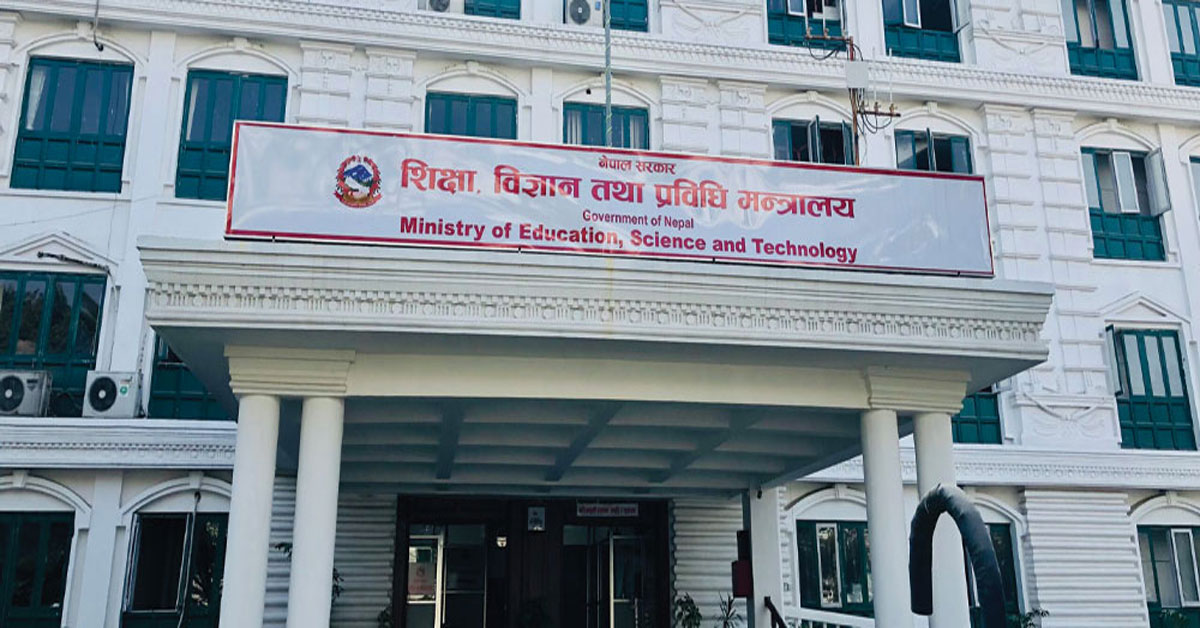
Kathmandu. The government has applied an integrated procedure for the selection and recommendation of appointments to vacant vice-chancellor posts in eight universities. The procedure was approved to move forward with new appointments after the vice-chancellor posts became vacant under the provisions of the “Special Arrangement Ordinance Relating to the Removal of Public Office Holders, 2083.”
The “Integrated Procedure for the Selection and Recommendation of Vice Chancellors of Various Universities, 2083” was approved on Baisakh 24, 2083. The procedure determines the process for selecting qualified, experienced persons with academic leadership capacity through open competition and recommending them to the Chancellor for vacant vice-chancellor posts.
After the procedure comes into effect, the selection and recommendation process for vice-chancellor posts at Tribhuvan University, Purbanchal University, Pokhara University, Lumbini Buddhist University, Agriculture and Forestry University, Mid-Western University, Far Western University, and Rajarshi Janak University will proceed on the basis of integrated standards.
Earlier, separate procedures were used for recommending vice chancellors for different universities. The new procedure has standardized the methods, bases, process, evaluation marks, vision paper, strategic action plan, presentation, interview, and recommendation criteria for candidate selection.
Objective of the Procedure
The preamble of the procedure states that the methods, bases, and process for selecting candidates have been determined because qualified persons with experience in higher education must be selected through open competition and recommended for appointment to the post of vice chancellor.
Accordingly, qualifications, experience, publications, research, vision paper, action plan, presentation, and interview have been included in the evaluation with clear marks to make the vice-chancellor appointment process organized, measurable, and comparatively transparent.
The procedure came into effect from the date it was approved by the recommendation committee. It will remain in force until vice chancellors are appointed.
Application Call and Deadline
A public notice will be published in a national daily newspaper and on the websites of the Government of Nepal, the Ministry of Education, Science and Technology, and the University Grants Commission so that interested and qualified persons can apply for vice-chancellor appointments.
A period of 10 days will be given for applications. If fewer than three applications are received within the prescribed period, the committee may retain the applications already received and provide an additional period of up to three days. If the deadline is extended, applications received during that period will also be included in the evaluation process.
According to the Ministry, the application, screening, shortlist publication, presentation, interview, and recommendation processes are estimated to take about three to four weeks.
Minimum Qualifications for the Vice-Chancellor Post
According to the procedure, candidates for the vice-chancellor post must have obtained at least a PhD degree from a recognized university. Candidates must have at least 10 years of experience in research and the academic field.
Similarly, they must have demonstrated excellent management skills and competence in the field of educational or academic advancement. The candidate must have completed at least 40 years of age.
The candidate must be of high moral character, must not be disqualified under prevailing law for appointment to a public post, must have no conflict of interest with the university to which they are applying, must be a Nepali citizen, and must not be a member of any political party at the time of application.
Special Qualifications for Lumbini Buddhist University and Agriculture and Forestry University
Although a PhD degree has generally been made mandatory for all universities, subject-specific special provisions have been made for two universities.
For the post of vice chancellor at Lumbini Buddhist University, the candidate must have obtained at least a PhD degree in a subject related to Buddhist philosophy from a recognized university.
In the case of Agriculture and Forestry University, the candidate must have obtained at least a PhD degree in Agriculture, Veterinary Science, or Forestry.
Documents to Be Submitted with the Application
Candidates who meet the minimum qualifications must submit their applications in the format prescribed in Schedule 1 of the procedure. Certified documents and details must be included with the application.
Candidates must submit the following documents and details:
-
Copy of certificates for master’s degree and PhD degree
-
Copy of appointment letter if appointed to the post of professor at a university
-
Copy of any book written and published in the fields of higher education development, advancement, educational administration, and management, if any
-
Details and copies of evidence if the candidate has experience as an official of a university or academy established under prevailing law, or as an official of any domestic or foreign university or equivalent higher educational institution or body
-
Details and copies of evidence showing at least 10 years of experience in research and the academic field
-
DOI or webpage address of research articles related to higher education and the candidate’s subject area, if published in a Ranked Journal or Peer-Reviewed Journal
-
Details and copies of evidence if academic research projects have been successfully completed
-
Vision paper and strategic action plan for the university to which the candidate is applying
-
Copy of Nepali citizenship certificate
-
Self-declaration stating that the candidate has no conflict of interest with the university to which they are applying, is not disqualified for appointment to a public post, is not currently a member of any political party, and has not committed plagiarism in any article or publication
Vision Paper and Strategic Action Plan
Candidates must submit a vision paper and strategic action plan of up to 5,000 words. It must be divided into two sections.
The first section must contain the vision paper related to the university. The second section must include the strategic action plan of the university.
If the vision paper and action plan are in English, they must be prepared in Times New Roman 12 font. If they are in Nepali, they must be prepared in Unicode 12 font size. Double line spacing must be used in both cases.
Candidates must disclose their details only on the cover page. Apart from that, from the first page to the final page, the document must be submitted in a separate sealed envelope without any sign, mark, or detail identifying the applicant.
This provision aims to keep the candidate’s identity separate during the evaluation of the vision paper and action plan and to evaluate them on the basis of content and capacity.
One Person May Apply to Two Universities
According to the procedure, one candidate may apply for the post of vice chancellor at a maximum of two universities. While submitting the application, candidates must go to the prescribed link, fill in the required details, and upload the necessary documents.
This allows one candidate to compete for up to two universities based on their qualifications and experience. However, applications for more than two universities are not permitted.
Conditions for Approval or Cancellation of Applications
According to Section 7 of the procedure, applications received after completing the required process will be approved and candidates will be listed for the selection process.
However, if a candidate is found not to have met the minimum qualifications or to have submitted false or incorrect documents, the committee may cancel such candidate’s application at any time.
This means that even if an application is initially approved, the candidacy will not remain valid if the documents, qualifications, or details are later found to be false.
Selection Method
The committee will evaluate candidates on the basis of qualifications, experience, books, research projects, research articles, vision paper, strategic action plan, presentation, and interview submitted with the application.
Candidates will be evaluated on the basis of a total of 100 marks. The three candidates securing the highest marks will be selected and recommended to the Chancellor for appointment as vice chancellor in alphabetical order.
The bases of evaluation are as follows:
-
Experience in the post of professor
-
Experience as an official of a domestic or foreign university or academy
-
Publication of books in the fields of higher education development, advancement, educational administration, and management
-
Academic research projects
-
Research articles published in Ranked Journals and Peer-Reviewed Journals
-
Evaluation of the vision paper and strategic action plan related to the university
-
Presentation of the vision paper and strategic action plan
-
Interview
Preliminary List and Shortlist
In the first stage, marks obtained on the basis of qualifications, experience, books, research projects, and published articles will be calculated. Based on this, a shortlist of the 10 candidates securing the highest marks will be published.
A public call will be made for opinions and suggestions regarding the shortlisted candidates.
If the number of candidates who submitted applications and were approved is 10 or fewer, all candidates will be allowed to participate in all stages of evaluation.
Second Stage: Evaluation of Vision Paper and Action Plan
In the second stage, the university-related vision paper and strategic action plan of shortlisted candidates will be evaluated. This will be followed by the presentation of the vision paper and action plan and the interview.
The vision paper and strategic action plan will be evaluated by more than one expert. The candidate’s marks will be determined by calculating the average of the marks given by the experts.
To maintain transparency and impartiality in evaluation, the vision paper and action plan will be double-coded so that the applicant’s name is not disclosed. After evaluation by experts, the documents will be sealed and kept confidential. The documents will be opened only at the time of recommending names after the presentation and interview are completed.
The procedure also provides that the experts who evaluate books, research, published works, and articles, and the experts who attend the presentation and interview, will be different.
Presentation and Interview
Shortlisted candidates will be given five days’ notice and invited for presentation and interview through a public notice published on the Ministry’s website. Candidates will also be informed through the email or phone number provided during the application process.
If a candidate fails to appear on the specified date, place, and time, they will not be included in the selection process. In special circumstances, a candidate may be allowed to make a virtual presentation as decided by the committee.
The marks obtained will be determined by calculating the average of the marks given by the interviewers.
Total Evaluation Marks
Schedule 2 of the procedure divides marks for qualifications, experience, vision paper, action plan, presentation, and interview. The total full marks are 100.
Experience as Professor — 10 Marks
A maximum of 10 marks will be provided at the rate of two marks for each year of work experience as a professor at a recognized domestic or foreign university.
Full marks will be given for completed years. For months, marks will be calculated by dividing two marks by 12. No marks will be provided for days.
Experience as Official — 4 Marks
Candidates who have experience as officials of domestic or foreign universities or academies will receive one mark per year, up to a maximum of four marks for four years.
For this, candidates must state in the application that they served as officials. If documents are not submitted with the legal basis proving that the post is an official post, marks will not be provided.
Book Publication — 5 Marks
If a book related to the relevant subject or higher education has been written, published, and assigned an ISBN, five marks will be provided for up to two books.
Marks will be given at the rate of 2.5 marks per book. If the book was written individually, the author will receive the full marks. If it was written jointly, 2.5 marks will be divided proportionally among the number of authors.
Academic Research Project — 6 Marks
If the candidate has completed an international-level academic research project in higher education as the principal investigator, a maximum of six marks will be provided for two research projects at the rate of three marks per research project.
If the candidate has completed a national-level academic research project as the principal investigator, a maximum of six marks will be provided for four research projects at the rate of 1.5 marks per research project.
The procedure states that candidates may receive marks for research projects even if they have both international and national research projects. However, if the candidate participated as a member of a research team, marks will be provided proportionally based on the number of team members.
Research Article Publication — 10 Marks
A maximum of 10 marks has been allocated for publication of research articles in the field of higher education.
For articles published in Ranked Journals from Q1 to Q2 under the SCImago Journal Ranking, two marks will be given per article if the candidate is the single author. If there are co-authors, one mark will be given to the first author, and the remaining one mark will be divided proportionally among the remaining co-authors.
For articles from Q3 to Q4 under the SCImago Journal Ranking, 1.5 marks will be given per article if the candidate is the single author. If there are co-authors, 0.75 marks will be given to the first author, and the remaining 0.75 marks will be divided proportionally among the remaining co-authors.
For research articles published in Peer-Reviewed Journals, one mark will be given per article if the candidate is the single author. If there are co-authors, 0.5 marks will be given to the first author, and the remaining 0.5 marks will be divided proportionally among the remaining co-authors.
Vision Paper Evaluation — 15 Marks
A total of 15 marks has been allocated for the vision paper related to the university. Under this, 2.5 marks will be provided for each of six criteria.
The bases for evaluating the vision paper are as follows:
-
Quality enhancement and effectiveness of the university — 2.5 marks
-
Utilization, earning, and self-reliance of the university’s assets — 2.5 marks
-
Strengthening of schools and colleges — 2.5 marks
-
Development of the university as a center of academic excellence — 2.5 marks
-
Strategy to bring the university within the top 1,000 in world rankings — 2.5 marks
-
Strategy related to human resource management — 2.5 marks
Four-Year Strategic Action Plan Evaluation — 10 Marks
A total of 10 marks has been allocated for the four-year strategic action plan of the university. Two marks will be provided for each of five criteria.
The bases for evaluating the strategic action plan are as follows:
-
Existing condition of the university — 2 marks
-
SWOT analysis including problems seen in the existing situation — 2 marks
-
Analysis of the university’s interrelationship with other universities and related stakeholders — 2 marks
-
Identification of areas requiring strategic reform — 2 marks
-
Annual reform action plan for four years, including the monitoring and evaluation framework of the university — 2 marks
Presentation Evaluation — 20 Marks
A total of 20 marks has been allocated for the presentation of the vision paper and action plan. According to Schedule 4 of the procedure, the candidate’s presentation style, completeness of subject matter, knowledge of the vision paper, knowledge of the action plan, analytical ability, and time management will be evaluated during the presentation.
The bases for evaluating the presentation are as follows:
-
Presentation style — 3 marks
-
Completeness of subject matter related to the university — 4 marks
-
Knowledge of the vision paper and subject matter included in it — 4 marks
-
Knowledge and clarity regarding the action plan, human resource plan, and implementation framework — 4 marks
-
Logical and analytical ability — 4 marks
-
Time management — 1 mark
Interview Evaluation — 20 Marks
A total of 20 marks has also been allocated for the interview. According to Schedule 5 of the procedure, the candidate’s presentation style, subject knowledge, leadership capacity, problem-solving ability, analytical ability, and time management will be evaluated in the interview.
The bases for evaluating the interview are as follows:
-
Presentation style — 2 marks
-
Subject knowledge, including relevant Acts and laws — 6 marks
-
Leadership capacity — 5 marks
-
Problem-solving ability — 3 marks
-
Analytical ability — 3 marks
-
Time management — 1 mark
Expert Subcommittee May Be Formed
The committee may form an expert subcommittee or invite subject experts and use their services for the candidate selection and recommendation work. For this purpose, the committee will prepare a panel of experts.
The vision paper and strategic action plan of the university may be evaluated by experts or a subcommittee. The presentation and interview evaluation of the action plan and vision paper will be conducted by experts with the participation of committee members.
Persons selected as members of the subcommittee or as experts must be selected from among serving or retired professors of domestic and foreign universities who have obtained a PhD degree.
The committee may also use the services of employees of the Ministry of Education, Science and Technology for its work.
Participation in Evaluation Prohibited in Case of Conflict of Interest
The procedure clearly addresses situations involving conflict of interest. If a person who is a close relative of any committee member, any subcommittee formed by the committee, or any expert submits an application for the vice-chancellor post, such member or expert will not be allowed to participate in the evaluation process.
The definition of close relatives includes husband, wife, son, daughter, adopted son, adopted daughter, father, mother, parents who have adopted a son or daughter, stepfather, stepmother, grandfather, grandmother, grandson, granddaughter, elder brother, younger brother, elder sister, younger sister, father’s elder brother, paternal uncle, paternal aunt, father’s younger brother, father’s younger brother’s wife, nephew, niece, sister’s son, sister’s daughter, maternal uncle, maternal uncle’s wife, mother-in-law, father-in-law, husband’s elder brother, wife of husband’s elder brother, wife of husband’s younger brother, husband’s sister, husband’s younger brother, brother’s wife, daughter-in-law, son-in-law, and related relations.
If such a situation arises in the case of the committee chairperson or member, necessary arrangements will be made by the Chancellor. In the case of a subcommittee or expert, necessary arrangements will be made by the committee.
Recommendation Process
After completing the evaluation, the committee will recommend the names of candidates to the Chancellor for appointment to the post of vice chancellor, along with a report.
While making recommendations, the names of the three candidates securing the highest marks will be sent to the Chancellor in alphabetical order. Thus, the final recommendation will use alphabetical order instead of marks-based ranking.
Document Preservation and Secretariat
After the selection and recommendation work is completed, all documents, evidence, and decisions related to it will be safely kept at the Ministry of Education, Science and Technology.
The secretariat of the committee will also be located at the Ministry of Education, Science and Technology. Expenses related to notice publication, secretariat management, meetings, and evaluation processes will be paid by the Ministry as per rules.
What Details Are Requested in the Application Format?
Schedule 1 of the procedure mentions the application format. Candidates must submit their application addressed to the chairperson of the vice-chancellor selection and recommendation committee of the concerned university.
In the application, candidates must declare that they have the required qualifications and experience for appointment to the vacant vice-chancellor post, are not members of any political party at the time of application, have no institutional conflict of interest with the concerned university, and have not committed plagiarism.
The application also requires candidates to express a commitment that, if recommended and appointed, they will honestly fulfill the responsibilities of the post as per prevailing law.
The main details requested in the application are as follows:
-
Name of the public body
-
Post sought for appointment
-
Personal details of the candidate
-
Full name in Devanagari and English block letters
-
Current organization and position
-
Nepali citizenship certificate number, issue date, and district
-
Permanent address
-
Temporary address
-
Date of birth
-
Contact number and email
-
Details of educational qualifications
-
Details of master’s degree and PhD degree
-
Details of experience, including official position if any
-
Details of academic research projects
-
Details of articles published in Ranked Journals and Peer-Reviewed Journals
-
Details related to books
-
Attached documents and details
Research Project and Publication Details
When submitting details of academic research projects, candidates must mention the project title, the body to which the project was submitted, names of the research team, project completion date, and remarks.
The applicant’s role in the research team, whether as principal investigator or co-investigator, must be stated. A copy of the certificate confirming project completion from the body to which the project was submitted must also be attached.
For details of articles published in Ranked Journals, candidates must mention the article title, name and issue of the journal, name of the researcher, publisher, publication date, and SCImago Rank. For Peer-Reviewed Journals, the article title, journal name and issue, researcher’s name, publisher and country, publication date, and remarks must be mentioned.
For book-related details, the title of the book, publisher, names of the book authors, ISBN, and remarks must be stated.
Provisions on Conduct, Complaints, and Investigation
The procedure provides that candidates must have integrity and must not have faced allegations related to corruption or personal conduct.
It states that if any such complaint or grievance is received against a candidate, there will be no obstacle to rejecting such applications. While resolving any question in this regard, the committee may write to the concerned bodies and conduct checks and investigations.
This makes not only academic qualifications but also conduct, ethics, and eligibility to hold public office important bases for evaluating candidates for the vice-chancellor post.
New Standards in University Leadership Selection
The new procedure has emphasized academic qualifications, academic research, institutional leadership, planning, and public presentation in vice-chancellor selection.
Candidates will not be able to proceed by presenting only a general view for running the university. They must understand the existing condition of the university, identify problems, conduct a SWOT analysis, analyze relations with stakeholders, determine areas for reform, and prepare a four-year annual reform action plan.
Similarly, the vision paper must present clear strategies on the university’s quality, effectiveness, asset utilization, self-reliance, strengthening of schools and colleges, academic excellence, world ranking, and human resource management.
Conclusion
The integrated procedure applied for appointments to vacant vice-chancellor posts in eight universities has made the selection process marks-based, phased, and comparatively structured. It provides for the overall evaluation of professor experience, official experience, book publication, research, article publication, vision paper, strategic action plan, presentation, and interview.
With the integrated procedure in effect, the vice-chancellor appointment process will move forward on the basis of open competition, qualifications, experience, academic contributions, and institutional vision. In the final stage, the three candidates securing the highest marks will be recommended to the Chancellor.
Download
Integrated Procedures for Selection and Recommendation of Vice Chancellors of Universities, 2083.PDF

.jpg)



Comments 0
No comments yet. Be the first to start the conversation.